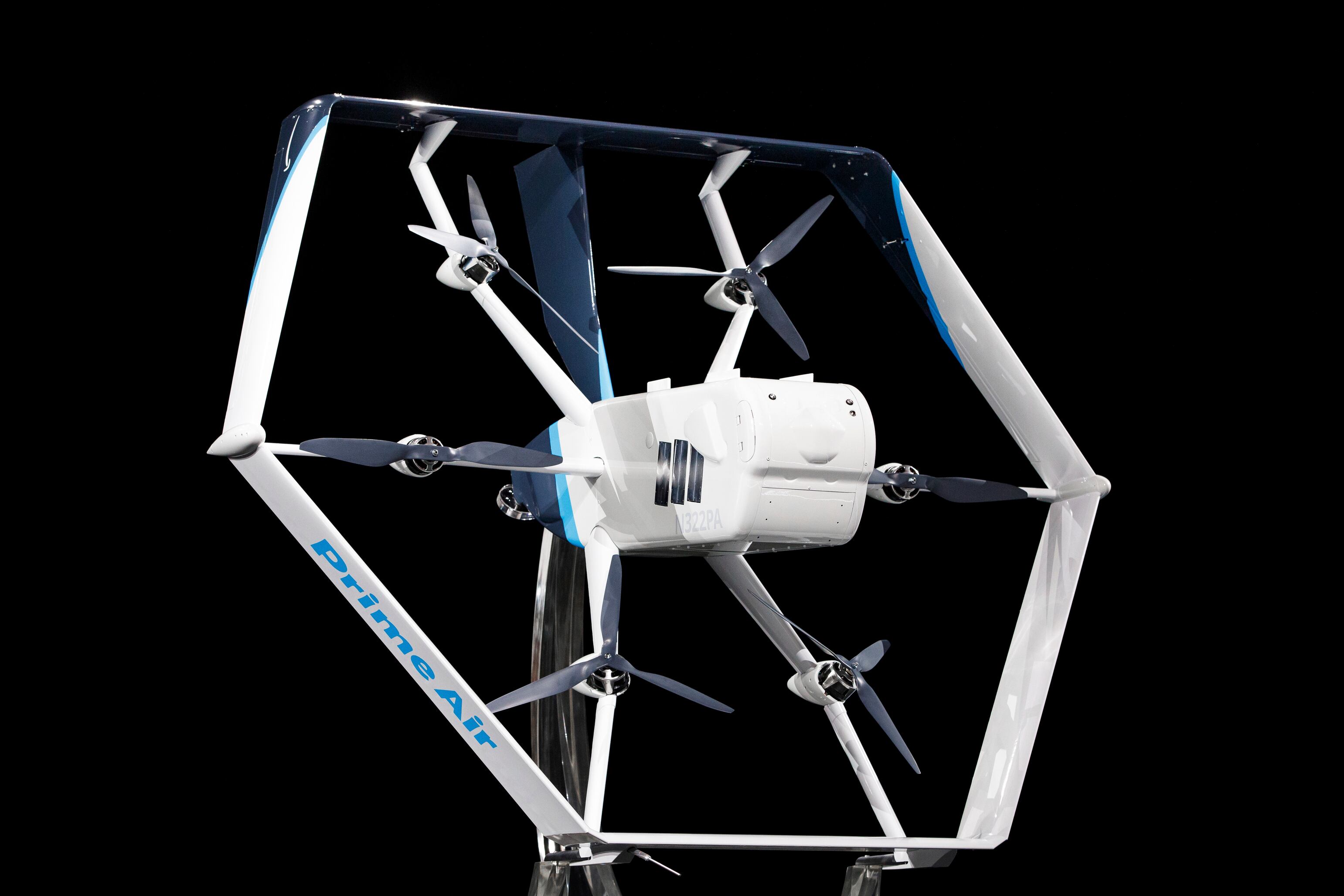
This undated image provided by Amazon shows one of the company's delivery drones. Amazon won approval to deliver packages by drones from the Federal Aviation Administration, the agency said Monday, Aug. 31, 2020. (Jordan Stead/Amazon via AP, File)
By Joseph Pisani
Getting an Amazon package delivered from the sky is closer to becoming a reality.
The Federal Aviation Administration said Monday it had granted Amazon approval to deliver packages by drones.
Amazon said that the approval is an "important step," but added that it is still testing and flying the drones. It did not say when it expected drones to make deliveries to shoppers.
The online shopping giant has been working on drone delivery for years, but it has been slowed by regulatory hurdles. Back in December 2013, Amazon CEO and founder Jeff Bezos said in a TV interview that drones would be flying to customer's homes within five years.
Last year, Amazon unveiled self-piloting drones that are fully electric, can carry 5 pounds of goods, and are designed to deliver items in 30 minutes by dropping them in a backyard. At the time, an Amazon executive said deliveries to shoppers would be happening "within months," but more than 14 months have passed since then.
Seattle-based Amazon is the third drone delivery service to win flight approval, the FAA said. Delivery company UPS and a company owned by search giant Google won approval last year.
Fast Company's Christopher Zara breaks down the OpenAI-Apple legal battle, the AI chip race, and what's next for the future of artificial intelligence.
Glacier CEO Rebecca Hu-Thrams explains how AI-powered robots are making recycling smarter, reducing landfill waste, and transforming the future of waste.
Deep Fission CEO Liz Muller discusses underground nuclear reactors, powering AI, cutting energy costs, and why the future of clean power may be below ground.
Adidas shares how FIFA World Cup 2026 will drive innovation, fan engagement, and billions in opportunity with new gear, technology, and business strategy.
Kristian Kerr, Head of Macro Strategy at LPL Financial, breaks down the firm's 2026 Mid-Year Outlook, recession risks, AI, the Fed, and what's next for markets.
Jess Inskip, Director of Investor Research at StockBrokers.com, breaks down Q2, the AI trade, Fed policy, earnings, and where investors should look next.
Quantum computing is moving from science fiction to national strategy. Infleqtion CEO Matt Kinsella explains Trump's new executive order and what it means.
Americans traveled in record numbers over July 4th despite rising costs. Skift's Sarah Kopit explains what it says about consumers, airfares, and summer travel.