By Jennifer Peltz
Updated 4:20 pm ET
After three gloomy months and 21,000 deaths that made it the nation's most lethal hot spot, New York City slowly began reopening Monday in the biggest test yet of Americans' ability to keep the coronavirus in check.
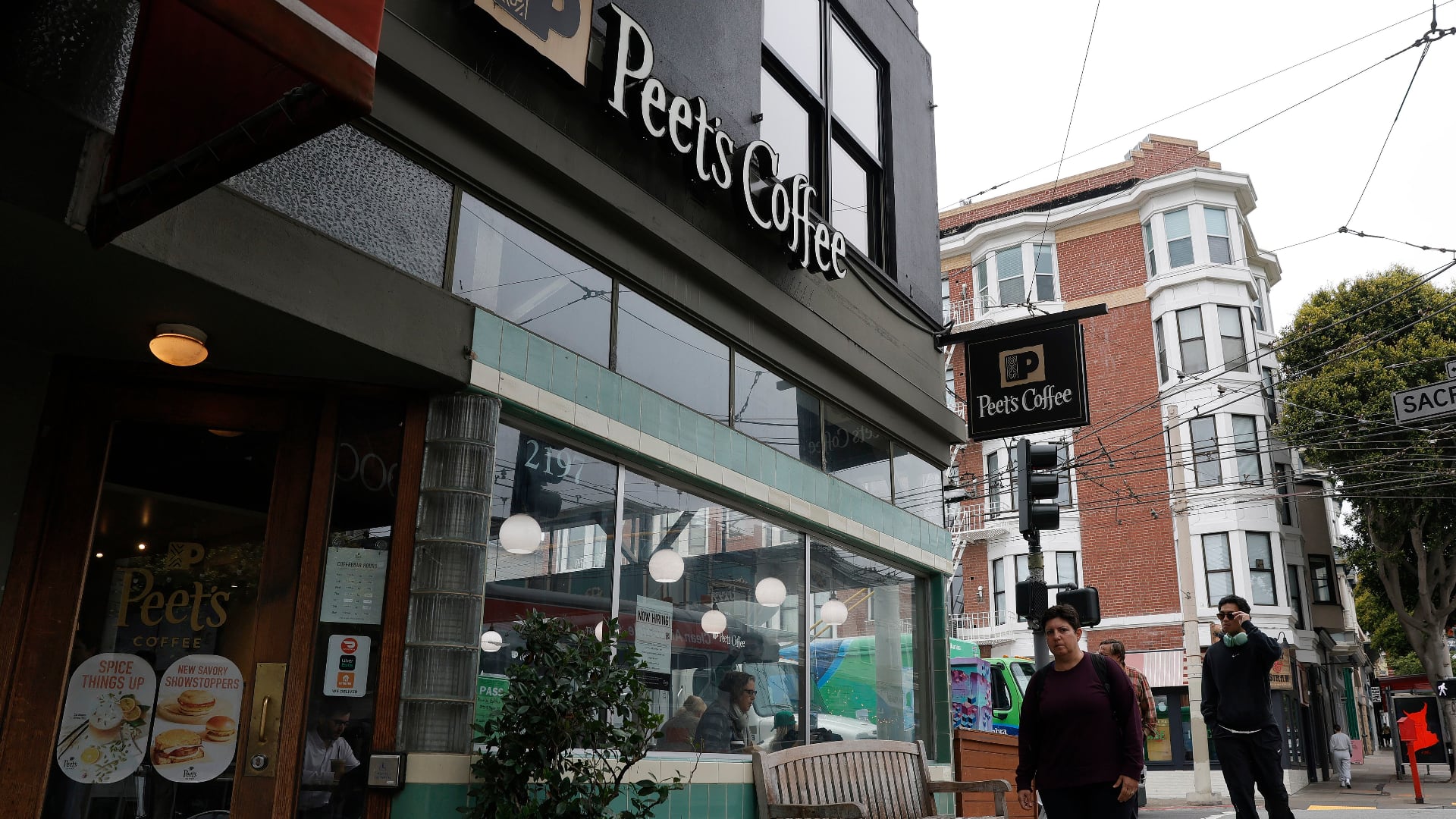
Stores previously deemed nonessential were cleared to reopen for delivery and curbside pickup, though customers cannot yet browse inside. Construction, manufacturing, and wholesalers also received the go-ahead to resume work.
“So far, so good,” construction management company owner Frank Sciame said as job sites started humming again, with new precautions such as health screening questionnaires and lower limits on the number of workers allowed in construction hoists. “Let’s hope it continues.”
“New York,” he said, “will always come back.”
Some major store chains took it slow: Macy's declined to give a date for starting curbside pickup at its flagship store, where smash-and-grab thieves hit amid last week’s protests over George Floyd’s death. Saks Fifth Avenue, which girded itself with razor wire last week, and Tiffany’s may launch pickup service later this week.
Owners of smaller shops were eager to reopen, even if they didn't expect much business.
“We are going to be open every day for the sake of showing life,” said eyewear designer Ahlem Manai-Platt, who was reopening a lower Manhattan store.
Mayor Bill de Blasio welcomed the reopenings as a sign of New York's resilience. But he also warned the city against letting its guard down and jeopardizing its hard-won progress against the virus: "Let’s hold onto it. Let's build on it.”
Unrest over racism and police brutality could compound the challenges facing the nation's biggest city as it tries to move past the coronavirus crisis. Officials who had focused for months on public health and economic woes are now also facing urgent pressure for police reform.
New York City accounts for roughly 1 in 5 of the more than 110,000 coronavirus deaths nationwide.
At its peak, the virus killed more than 500 people a day in the city in early to mid-April. The number has since dropped below two dozen. New hospitalizations, which topped 800 a day for a time, were down to 67 on Saturday.
Reopening the economy could spark a resurgence of the virus as people circulate more.
“All eyes will be on New York this next couple of months,” said urban policy expert Jonathan Bowles, executive director of the Center for an Urban Future. “The city now has to prove that it really knows what it’s doing, that it can still be a dense city like New York and yet figure this out.”
Sam Solomon wondered what normal will look like from now on.
“I don’t know if it’s ever going to be like it was,” said Solomon, 22, who has a health-related job. After months of relative isolation, “it’s going to be an adjustment being around so many people,” said the native New Yorker, who never thought she would have to get used to crowds.
Restaurant chef Edwin Arce, 31, said he sees a city “ready to be back, start going out, living life — with the new reality, though.”
Around the world, the coronavirus has killed more than 400,000 people, with the toll rising by thousands every day. The virus is sill raging in places such as Brazil, which over the weekend stopped reporting its death toll after it had passed 34,000, the third-highest in the world, behind the U.S. and Britain.
World Health Organization chief Tedros Adhanom Ghebreyesus cautioned that the pandemic is worsening, with a record-breaking 136,000 cases reported worldwide on Sunday.
New York City, population 8.3 million, has already reawakened somewhat as warm weather drew people outdoors, more restaurants offered takeout service, and thousands of people marched in protest over Floyd's death at the hands of Minneapolis police.
Subway ridership is ticking back up after plunging from 5.4 million rides per weekday in February to under 450,000 in April, the city's transit agency says. Subway schedules are returning to normal, though workers are dispensing masks and hand sanitizer, signs show riders how far apart to stand on platforms, and the 1 a.m.-to-5 a.m. shutdowns that began in May will continue so trains can be cleaned.
Gov. Andrew Cuomo took a subway ride Monday to send a message of safety.
Many activities, such as indoor dining and gym workouts, aren’t allowed yet, Broadway theaters and other big venues remain shuttered, and New Yorkers are still required to wear face masks when close to others in public.
Months of social distancing and mask-wearing have made New Yorkers better prepared to keep the virus under control, said Dr. Bruce Polsky, chairman of medicine at NYU Winthrop Hospital in suburban Mineola.
Still, he said, reopening is “going to be a big test."
___
Associated Press Medical Writer Carla K. Johnson contributed from Washington state, and Anne D’Innocenzio, Karen Matthews and Brian Mahoney contributed from New York.