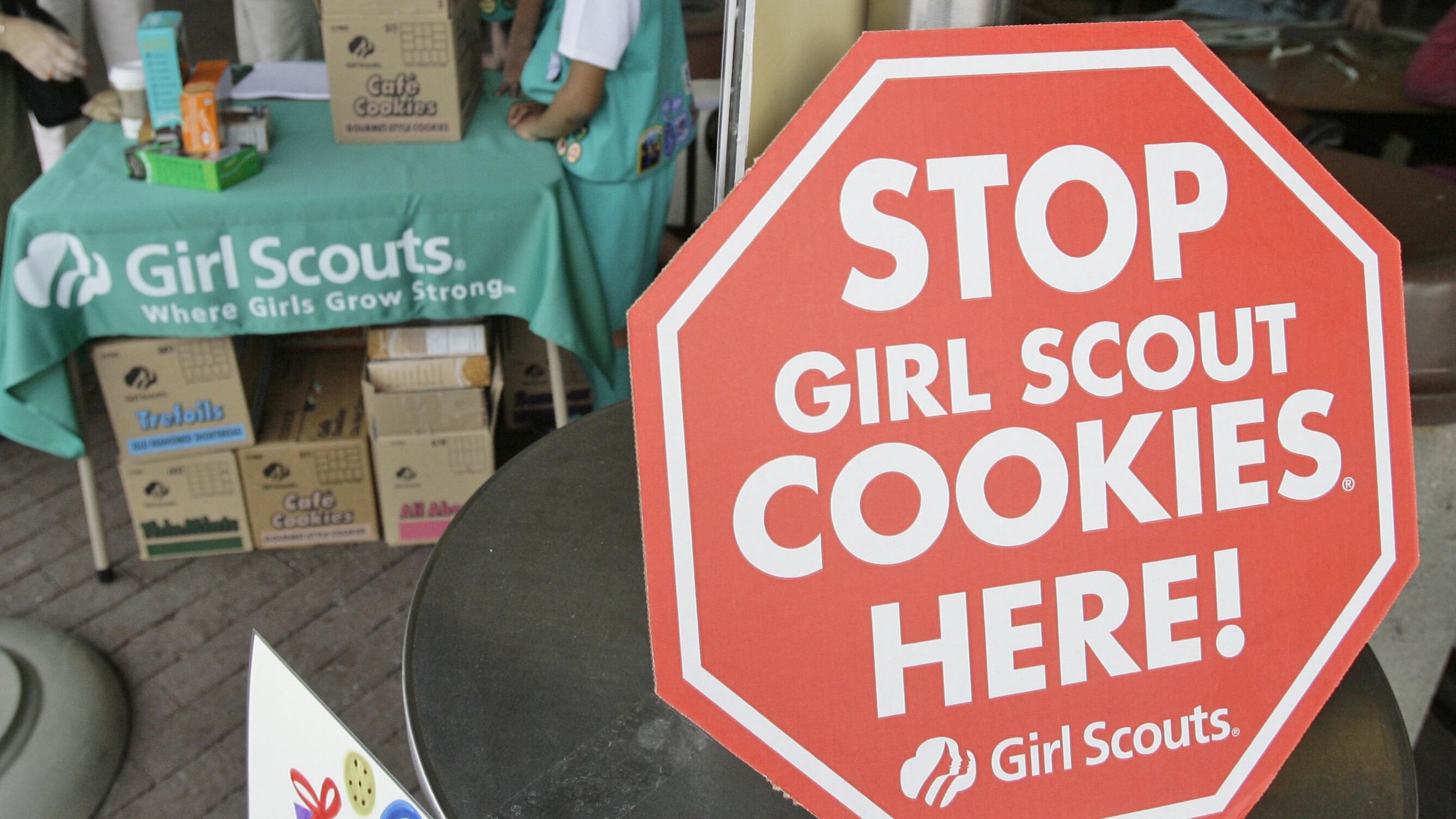
File photo of Girl Scouts selling cookies, Friday, Feb. 23, 2007. (AP Photo/Matt Slocum, File)
By Anchorage Daily News
Selling Girl Scout cookies is normally a foolproof business model, but the coronavirus outbreak cooled sales of the treats in Alaska.
The Girl Scouts of Alaska sought assistance, and the organization is expected to receive a federal recovery loan to help compensate for lost cookie sales.
First National Bank Alaska facilitated the federal Paycheck Protection Program loan, The Anchorage Daily News reported Sunday.
Leslie Ridle, head of one of two Girl Scouts councils in Alaska, said fears of girls becoming infected with COVID-19 forced the organization to cut its six-week sales season in half.
Sales of the famed cookies fund nearly everything the council does, including camps and scholarships for 3,500 girls and wages for 20 full-time employees.
“It was frenzied shopping, and people were hoarding cookies like they were toilet paper,” Ridle said of sales before the state ordered business closures last month.
Now her Anchorage-based council is sitting on about 144,000 unsold boxes filling the homes of scouting families in southern Alaska, Ridle said.
“I’m hearing from lots of families: ‘When am I getting these out of my living rooms?’ ” Ridle said.
The First National Bank Alaska loan officer called at night and on weekends, including Easter Sunday, to gather information to obtain the loan, which arrived in the council’s bank account last week, Ridle said.
The funding allowed employees to continue working and provide online programs for Girl Scouts stuck at home, like magic trick lessons and flamenco dancing. A new COVID-19 badge emphasizes good hygiene.
"It’s our bridge to keep things going,” Ridle said.
Companies including ConocoPhillips Co., GCI LLC and First National Bank Alaska have also made big cookie purchases to help the Girl Scouts.
People whose lives have been altered by the pandemic still want the cookies, the “ultimate comfort food," Ridle said.
For most people, the new coronavirus causes mild or moderate symptoms, such as fever and cough that clear up in two to three weeks. For some, especially older adults and people with existing health problems, it can cause more severe illness, including pneumonia, and death. The vast majority of people recover.
Wealthfront’s CFO Alan Iberman talks the $2.05B IPO and the major moment for robo banking as the company bets on AI, automation, and “self-driving money."
A rare magnum of Dom Pérignon Vintage 1961 champagne that was specially produced for the 1981 wedding of Prince Charles and Lady Diana has failed to sell during an auction. Danish auction house Bruun Rasmussen handled the bidding Thursday. The auction's house website lists the bottle as not sold. It was expected to fetch up to around $93,000. It is one of 12 bottles made to celebrate the royal wedding. Little was revealed about the seller. The auction house says the bids did not receive the desired minimum price.
The New York Times and President Donald Trump are fighting again. The news outlet said Wednesday it won't be deterred by Trump's “false and inflammatory language” from writing about the 79-year-old president's health. The Times has done a handful of stories on that topic recently, including an opinion column that said Trump is “starting to give President Joe Biden vibes.” In a Truth Social post, Trump said it might be treasonous for outlets like the Times to do “FAKE” reports about his health and "we should do something about it.” The Republican president already has a pending lawsuit against the newspaper for its past reports on his finances.
OpenAI has appointed Slack CEO Denise Dresser as its first chief of revenue. Dresser will oversee global revenue strategy and help businesses integrate AI into daily operations. OpenAI CEO Sam Altman recently emphasized improving ChatGPT, which now has over 800 million weekly users. Despite its success, OpenAI faces competition from companies like Google and concerns about profitability. The company earns money from premium ChatGPT subscriptions but hasn't ventured into advertising. Altman had recently announced delays in developing new products like AI agents and a personal assistant.
President Donald Trump says he will allow Nvidia to sell its H200 computer chip used in the development of artificial intelligence to “approved customers” in China. Trump said Monday on his social media site that he had informed China’s leader Xi Jinping and “President Xi responded positively!” There had been concerns about allowing advanced computer chips into China as it could help them to compete against the U.S. in building out AI capabilities. But there has also been a desire to develop the AI ecosystem with American companies such as chipmaker Nvidia.