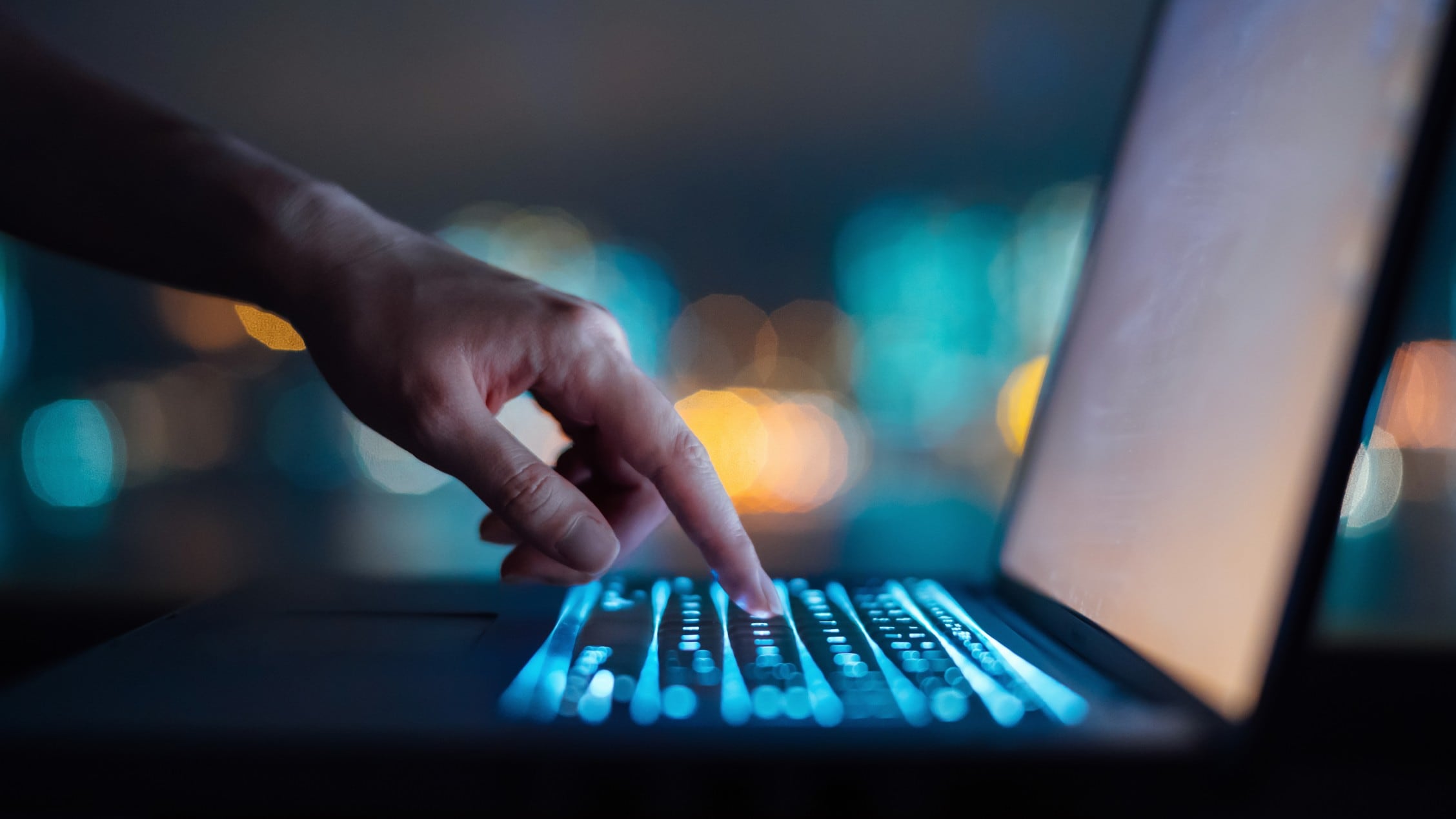
Close up of woman's hand typing on computer keyboard in the dark against colourful bokeh in background, working late on laptop at home (d3sign/Getty Images)
By Michelle Chapman
Google will soon require that political ads using artificial intelligence be accompanied by a prominent disclosure if imagery or sounds have been synthetically altered.
AI-generated election ads on YouTube and other Google platforms that alter people or events must include a clear disclaimer located somewhere that users are likely to notice, the company said in an update to its political content policy.
The new rule starts in mid-November, just under a year before the U.S. presidential election. It will also affect campaign ads ahead of next year's elections in India, South Africa, the European Union and other regions where Google already has a verification process for election advertisers.
Though fake images, videos or audio clips are not new to political advertising, generative AI tools are making it easier to do, and more realistic. Some presidential campaigns in the 2024 race — including that of Florida GOP Gov. Ron DeSantis — already are using the technology.
The Republican National Committee in April released an entirely AI-generated ad meant to show the future of the United States if President Joe Biden is reelected. It employed fake but realistic photos showing boarded-up storefronts, armored military patrols in the streets, and waves of immigrants creating panic.
In June, DeSantis’ campaign shared an attack ad against his GOP primary opponent Donald Trump that used AI-generated images of the former president hugging infectious disease expert Dr. Anthony Fauci.
Last month the Federal Election Commission began a process to potentially regulate AI-generated deepfakes in political ads ahead of the 2024 election. Such deepfakes can include synthetic voice of political figures saying something they never said.
Democratic U.S. Sen. Amy Klobuchar, co-sponsor of pending legislation that would require disclaimers on deceptive AI-generated political ads, said in a statement that Google's announcement was a step in the right direction but “we can’t solely rely on voluntary commitments.”
Several states also have discussed or passed legislation related to deepfake technology.
Google is not banning AI outright in political advertising. Exceptions to the ban include synthetic content altered or generated in a way that’s inconsequential to the claims made in the ad. AI can also be used in editing techniques like image resizing, cropping, color, defect correction, or background edits.
The ban will apply to election ads on Google's own platforms, particularly YouTube, as well as third-party websites that are part of Google's ad display network.
Wealthfront’s CFO Alan Iberman talks the $2.05B IPO and the major moment for robo banking as the company bets on AI, automation, and “self-driving money."
A rare magnum of Dom Pérignon Vintage 1961 champagne that was specially produced for the 1981 wedding of Prince Charles and Lady Diana has failed to sell during an auction. Danish auction house Bruun Rasmussen handled the bidding Thursday. The auction's house website lists the bottle as not sold. It was expected to fetch up to around $93,000. It is one of 12 bottles made to celebrate the royal wedding. Little was revealed about the seller. The auction house says the bids did not receive the desired minimum price.
The New York Times and President Donald Trump are fighting again. The news outlet said Wednesday it won't be deterred by Trump's “false and inflammatory language” from writing about the 79-year-old president's health. The Times has done a handful of stories on that topic recently, including an opinion column that said Trump is “starting to give President Joe Biden vibes.” In a Truth Social post, Trump said it might be treasonous for outlets like the Times to do “FAKE” reports about his health and "we should do something about it.” The Republican president already has a pending lawsuit against the newspaper for its past reports on his finances.
OpenAI has appointed Slack CEO Denise Dresser as its first chief of revenue. Dresser will oversee global revenue strategy and help businesses integrate AI into daily operations. OpenAI CEO Sam Altman recently emphasized improving ChatGPT, which now has over 800 million weekly users. Despite its success, OpenAI faces competition from companies like Google and concerns about profitability. The company earns money from premium ChatGPT subscriptions but hasn't ventured into advertising. Altman had recently announced delays in developing new products like AI agents and a personal assistant.
President Donald Trump says he will allow Nvidia to sell its H200 computer chip used in the development of artificial intelligence to “approved customers” in China. Trump said Monday on his social media site that he had informed China’s leader Xi Jinping and “President Xi responded positively!” There had been concerns about allowing advanced computer chips into China as it could help them to compete against the U.S. in building out AI capabilities. But there has also been a desire to develop the AI ecosystem with American companies such as chipmaker Nvidia.