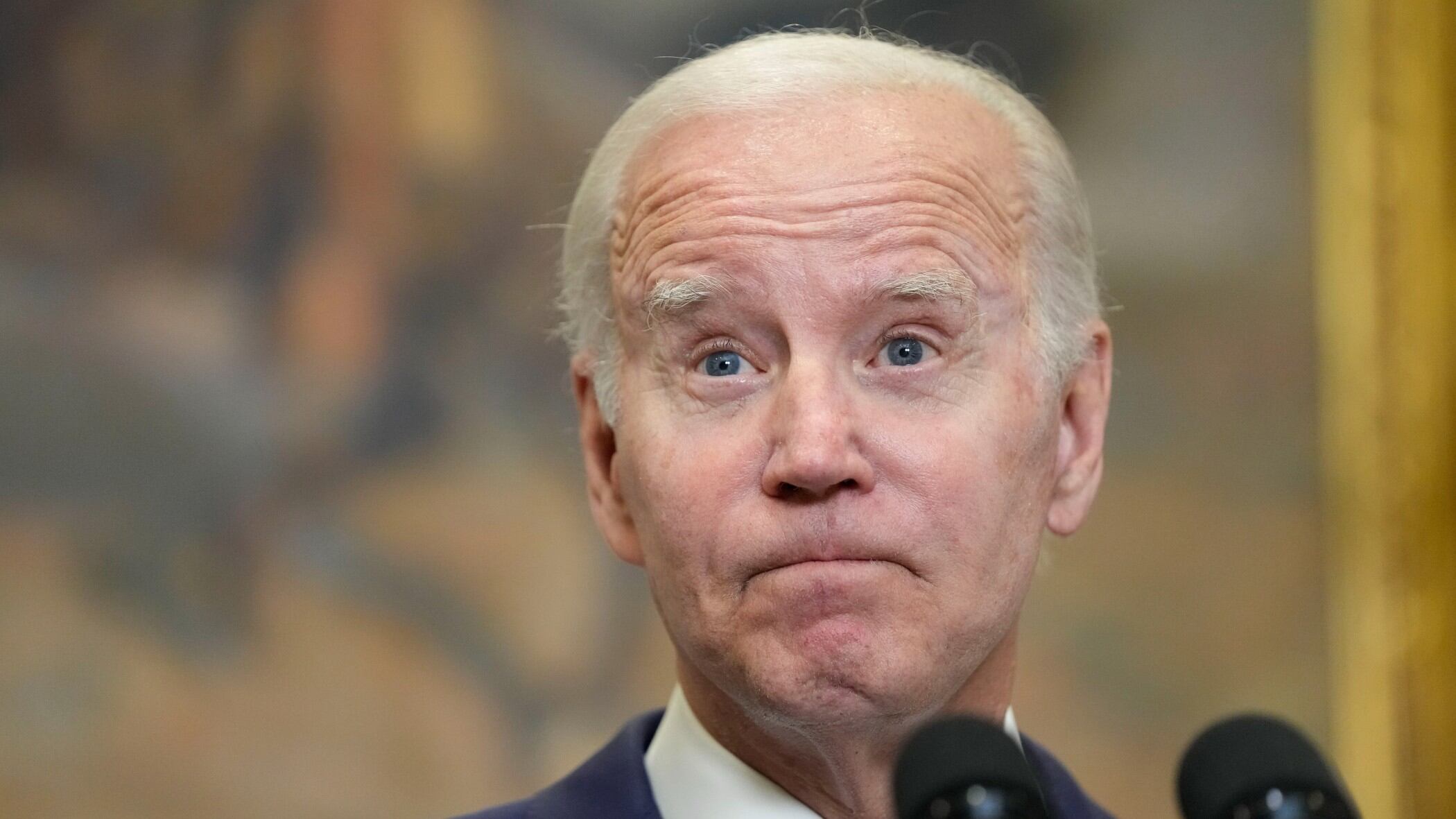
Hard-fought to the end, the debt ceiling and budget cuts package is heading toward a crucial U.S. House vote as President Joe Biden and Speaker Kevin McCarthy assemble a coalition of centrist Democrats and Republicans to push it to passage over fierce blowback from conservatives and some progressive dissent.
Biden is sending top White House officials to meet early Wednesday at the Capitol to shore up support ahead of voting. McCarthy is working furiously to sell skeptical fellow Republicans, even fending off challenges to his leadership, in the rush to avert a potentially disastrous U.S. default.
Despite deep disappointment from right-flank Republicans that the compromise falls short of the spending cuts they demanded, McCarthy insisted he would have the votes needed to ensure approval.
“We’re going to pass the bill,” McCarthy said as he exited a lengthy Tuesday night meeting at the Capitol.
Quick approval by the House and later in the week the Senate would ensure government checks will continue to go out to Social Security recipients, veterans and others and would prevent financial upheaval at home and abroad. Next Monday is when the Treasury has said the U.S. would run short of money to pay its debts, risking an economically dangerous default.
The package leaves few lawmakers fully satisfied, but Biden and McCarthy are counting on pulling majority support from the political center, a rarity in divided Washington, testing the leadership of the Democratic president and the Republican speaker.
Overall, the 99-page bill restricts spending for the next two years, suspends the debt ceiling into January 2025 and changes policies, including new work requirements for older Americans receiving food aid and greenlighting an Appalachian natural gas line that many Democrats oppose.
For more than two hours late Tuesday as aides wheeled in pizza at the Capitol, McCarthy walked Republicans through the details, fielded questions and encouraged them not to lose sight of the bill’s budget savings.
The speaker faced a sometimes tough crowd. Leaders of the hard-right House Freedom Caucus spent the day lambasting the compromise as falling well short of the spending cuts they demand, and they vowed to try to halt passage by Congress.
“This deal fails, fails completely," Rep. Scott Perry, R-Pa., the chairman of the Freedom Caucus, said earlier in the day, flanked by others outside the Capitol. “We will do everything in our power to stop it.”
A much larger conservative faction, the Republican Study Committee, declined to take a position. Even rank-and-file centrist conservatives were unsure, leaving McCarthy desperately hunting for votes.
Rep. Nancy Mace, R-S.C., said after the “healthy debate” late into the night she was still a no.
Ominously, the conservatives warned of potentially trying to oust McCarthy over the compromise.
“There’s going to be a reckoning,” said Rep. Chip Roy of Texas.
Biden was speaking directly to lawmakers, making more than 100 one-on-one calls, the White House said.
The nonpartisan Congressional Budget Office said the spending restrictions in the package would reduce deficits by $1.5 trillion over the decade, a top goal for the Republicans trying to curb the debt load.
McCarthy told lawmakers that number was higher if the two-year spending caps were extended, which is no guarantee.
But in a surprise that could further erode Republican support, the GOP's drive to impose work requirements on older Americans receiving food stamps ends up boosting spending by $2.1 billion over the time period. That's because the final deal exempted veterans and homeless people, expanding the food stamp rolls by 78,000 people monthly, the CBO said.
House Democratic leader Hakeem Jeffries said it was up to McCarthy to turn out votes from some two-thirds of the Republican majority, a high bar the speaker may not be able to reach. In the 435-member House, 218 votes are needed for passage.
Still, Jeffries said the Democrats would do their part to avoid failure.
“It is my expectation that House Republicans would keep their promise and deliver at least 150 votes as it relates to an agreement that they themselves negotiated,” Jeffries said. “Democrats will make sure that the country does not default.”
Liberal Democrats decried the new work requirements for older Americans, those age 50-54, in the food aid program. And some Democratic lawmakers were leading an effort to remove the surprise provision for the Mountain Valley Pipeline natural gas project. The energy development is important to Sen. Joe Manchin, D-W.Va., but many others oppose it as unhelpful in fighting climate change.
The top Democrat on the House Natural Resources Committee, Rep. Raul Grijalva of Arizona, said including the pipeline provision was “disturbing and profoundly disappointing.”
Rep. Pramila Jayapal, D-Wash., chair of the Congressional Progressive Caucus, had this warning for McCarthy: “He got us here, and it’s on him to deliver the votes."
Wall Street was taking a wait-and-see approach. Stock prices were mixed in Tuesday's trading. U.S. markets had been closed when the deal was struck over the weekend.
The House aims to hold procedural votes Wednesday afternoon with final action expected in the evening. It would then send the bill to the Senate, where Democratic Majority Leader Chuck Schumer and Senate Republican leader McConnell are working for passage by week's end.
Schumer called the bill a “sensible compromise.” McConnell said McCarthy “deserves our thanks.”
Senators, who have remained largely on the sidelines during much of the negotiations between the president and the House speaker, began inserting themselves more forcefully into the debate.
Some senators are insisting on amendments to reshape the package from both the left and the right flanks. But making any changes to the package at this stage seemed unlikely with so little time to spare before Monday's deadline.