U.S. markets had a strong open Monday morning on President Trump's announcement that U.S. and Chinese officials are willing to continue talks in an effort to de-escalate mounting trade tensions.
Speaking from the G7 summit in Biarritz, France, Trump said that Chinese negotiators had called U.S. officials and requested a new round of talks. "We'll be getting back to the table. And I think they want to do something," he said. "This is a very positive development for the world."
China's Foreign Ministry spokesperson Geng Shuang, however, said at a press conference Monday that he was not aware of any calls, but that the trade feud should be solved "through dialogue and consultation."
Meanwhile, Chinese Vice Premier Liu He said at an economics conference in Chongqing that China favored "calm negotiations" to resolve trade tension. "We resolutely oppose the escalation of the trade war, which is not beneficial for the U.S. or China. It is also not beneficial to the world," Liu said, according to multiple reports citing government transcripts.
By midday, the Dow was up more than 250 points, while the S&P 500 and Nasdaq Composite were up more than one percent. Yet the news came too late for Asian markets, which had plummeted by close Monday local time.
The Hang Seng Index in Hong Kong and the Shanghai Composite Index ended the day down 1.91 percent and 1.17 percent respectively. The Nikkei in Tokyo closed down 2.17 percent and South Korea's Kospi Index fell 1.6 percent.
On Monday, Trump also repeatedly lauded Chinese President Xi Jinping as a "great leader" and a "brilliant man" — a far cry from the "enemy" characterization that Trump gave Xi last week.
The enduring trade dispute between the U.S. and China, which has both ebbed and surged in recent months, significantly escalated last week. China announced on Friday that it would hit $75 billion worth of U.S. goods with new retaliatory tariffs and proceed with a steep tariff levied on U.S. vehicles and car parts.
In response, Trump announced that the U.S. would hike its 25 percent tariff on $250 billion worth of Chinese imports to 30 percent, and increase the forthcoming 10 percent tariff on $300 billion worth of goods to 15 percent. Friday's culmination sent U.S. stocks into a nosedive and led to an outcry from industry against the escalation.
Trump added he was confident that Liu's remarks on calm negotiations were sincere and were not a bid to quell market woes. "I think they want to make a deal. I think they should make a deal, and I think if they don't make a deal it will be very bad for China," he said during a press conference with President Emmanuel Macron of France.
At a separate event, Treasury Secretary Steven Mnuchin said Liu's remarks were "very significant statements" and that the U.S. was communicating with the vice premier, who is China's chief negotiator, through intermediaries.
China, nonetheless, urged the U.S. on Monday not to "miscalculate the situation" and to cease its "erroneous ways."
"China firmly opposes and rejects such stark trade bullying and maximum pressuring tactics," Shuang said. "I would like to remind the U.S. once again that threats and intimidation will never work on China."
In response to a question on the trade uncertainty fueling market volatility, Trump said "Sorry, it's the way I negotiate ... and it has done very well for me over the years."
After a vote in one Buffalo, New York-area Starbucks created the first workers union in the coffee chain's history, the company has announced that it is ready to negotiate in good faith with the new bargaining unit. But a tense process where labor organizers leveled accusations of anti-union activity at the coffee giant may make that difficult. Cortlin Harrison, a barista at the unionized store, spoke to Cheddar about making a deal. "We can move past all the dirty tricks, the union-busting, the captive audience meetings," he said. "I'm ready to go to the table, and my fellow baristas are ready to go to the table, and just move forward."
This year's worldwide semiconductor shortage limited the supply of everything from new cars to smartphones; and now, many in the chip industry expect the shortage to continue deep into 2022, and maybe even 2023. Semiconductor senior research analyst for Robert W. Baird & Co., Tristan Gerra, joins Cheddar News' Closing Bell to discuss.
Direct health care company Nomi Health recently raised $110 million in a Series A round. Nomi Health lets public and private organizations directly purchase healthcare at reduced costs, and pay providers in real-time. It also delivers healthcare directly to under-served communities via its fleet of mobile care units, which the company says is the largest in the country. Nomi Health says its mission is to improve the health care experience for all Americans. Nomi Health CEO Mark Newman joined Cheddar News' Closing Bell to discuss.
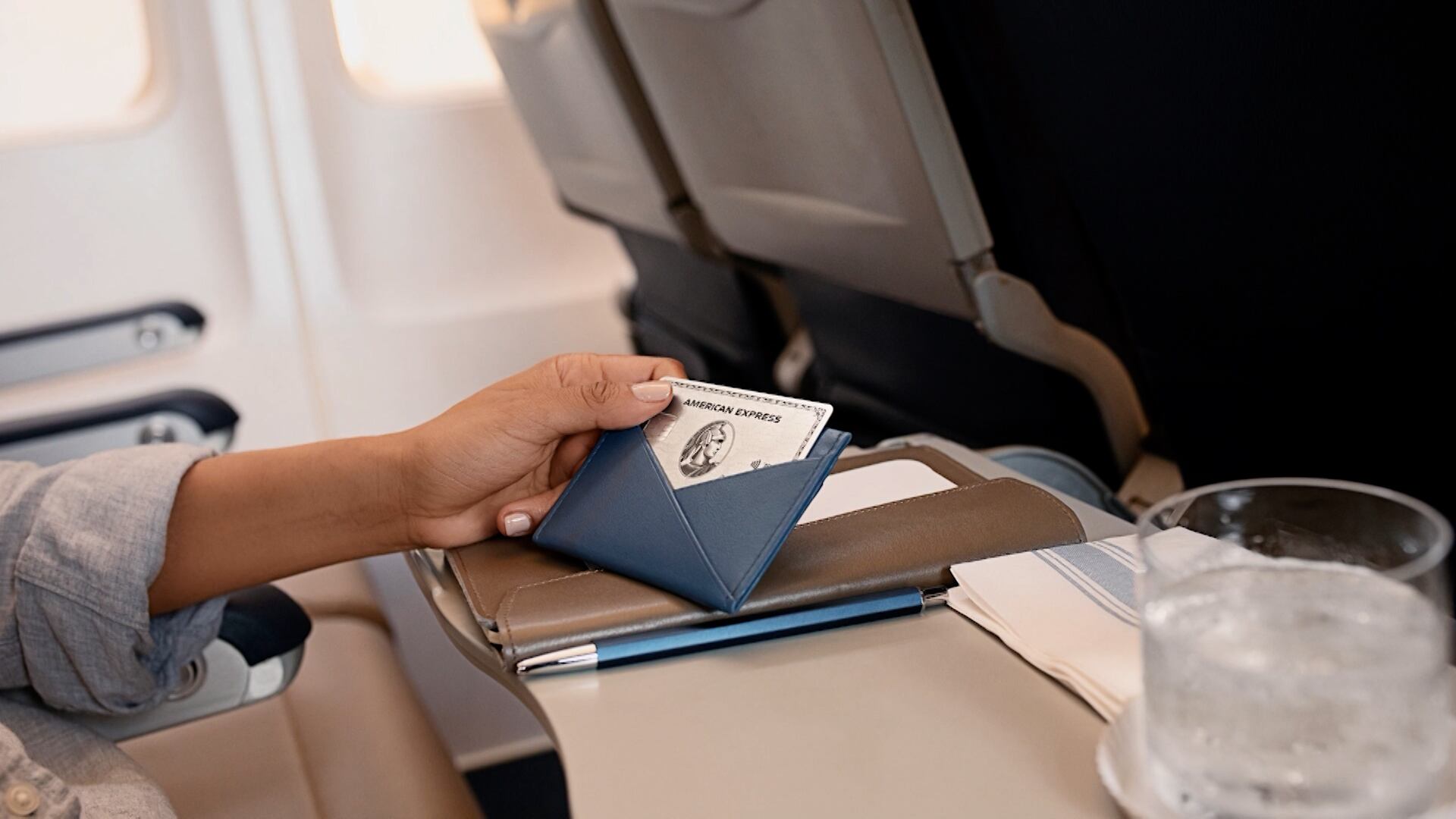
American Express and Nova Credit have partnered the credit passport program aimed at expanding access to credit for immigrants from the Dominican Republic, Nigeria, Kenya, and Brazil. Misha Esipov, co-founder and CEO of Nova Credit, joined Cheddar's Ken Buffa to talk about the program's benefits for immigrants who have to start over in the U.S. and are looking to establish a credit history. "If you were a good borrower in your home country — and you can prove you were a borrower in your home country — when you first arrive here, you can use that information to continue to be a good borrower," he said of the service.
Despite the rising cost of a home in the U.S., sales rose 1.9 percent in November, and according to Zillow, prices are expected to climb even higher in 2022. M. Ryan Gorman, president and CEO of Coldwell Banker Real Estate, told Cheddar's "Closing Bell" that while median prices are high, demand for a new home is just as high, particularly in "tax and weather favorable" destinations like Florida, Tennessee, and Texas. Gorman also said he sees buyer demand remaining high next year even if interest rates rise somewhat, noting that the already tight housing inventory is expected to slim down even more and foreign purchasers return to the market. "As we get past the holidays and those foreign buyers are able to come back and actually acquire homes and go shopping, I think that may be a bigger driver of some of that increase in buyer demand," he said.
The airline industry says it is contending with staff shortages that threaten to hamper operations amid the COVID resurgence, andDelta Airlines CEO Ed Bastian called on the CDC to revise its guidance for vaccinated workers who test positive from a 10-day quarantine to just five. Chuck Liberman, chief investment officer and managing partner at Advisors Capital Management LLC, joined Cheddar to talk about the current guidance on isolation and why he believes the omicron variant calls for more relaxed guidance given its reportedly mild symptoms.
A new series is looking to advance Black founders who have disruptive ideas and companies. 'Bet on Black' is a new series that allows black entrepreneurs to pitch their businesses in the hopes of securing $200,000 in funding. Revolt TV and Target teamed up to create the show. Detavio Samuels, CEO of Revolt, joins Cheddar News to discuss.
Bitcoin's rise to the mainstream has been a wild ride this year. The cryptocurrency is trading a little under $49,000 Wednesday morning and is set to finish the year sharply higher than where it began earlier this year. Ether prices also soared this year, rising from $730 per coin to nearly $4,000. Ben Armstrong, founder of Bitboy Crypto, joins us to discuss what's in store for crypto in 2022.
The fitness industry was one of the most severely impacted at the start of the pandemic. As the omicron variant of COVID-19 threatens fitness centers and gyms, the Global Health and Fitness Association, along with the Community Gyms Coalition, are calling on the federal government to provide pandemic relief before the close of 2021. Crunch Fitness Franchise CEO Ben Midgely joined Cheddar to talk about proactive steps gyms are taking to maximize business as COVID resurges. "It should be a little bit easier," he said. "We hate to have to deal with it again, but it's what businesses in this country have to work with."