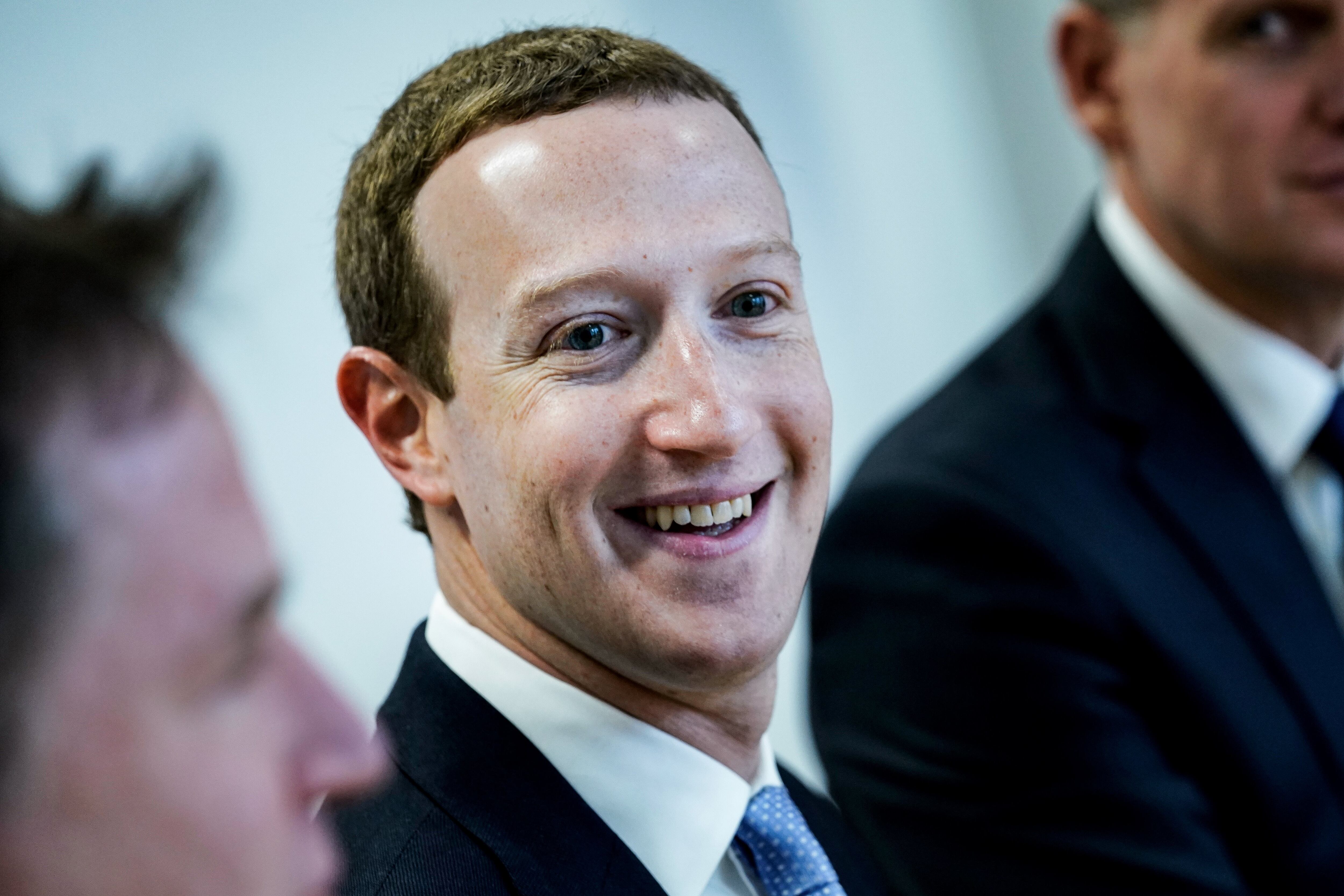
Founder and CEO of US online social media and social networking service Facebook Mark Zuckerberg. Photo by KENZO TRIBOUILLARD/AFP via Getty Images/FILE)
Mark Zuckerberg and his wife Priscilla Chan have donated $25 million through their foundation to a philanthropic effort organized by Bill Gates to explore new coronavirus treatments.
The Gates Foundation donated $50 million last week to what it’s calling the “COVID-19 Therapeutics Accelerator.” The initiative brings together life sciences companies to collaborate on the development of new vaccines, diagnostics, and treatments for COVID-19.
“The Therapeutics Accelerator will enable researchers to quickly determine whether or not existing drugs have a potential benefit against COVID-19,” Chan and Zuckerberg said in a press release. “We hope these coordinated efforts will help stop the spread of COVID-19 as well as provide shared, reusable strategies to respond to future pandemics.”
The two donations are the largest from tech billionaires since the coronavirus outbreak. Wellcome and Mastercard are supporting the effort as well.
The goal of the initiative is to either develop a new drug or adapt an existing treatment that it could help distribute alongside partnering pharmaceutical companies.
The 15 companies participating in the project kicked off the effort by sharing their proprietary libraries of molecular compounds that have some history of being tested with COVID-19.
The lineup includes big names in biotech such as Johnson & Johnson, Merck, Pfizer, Sanofi, and Bristol-Myers Squibb.
Reusable rocket developer Stoke Space Technologies raised $65 million in a Series A round led by Breakthrough Energy Ventures, a firm founded by Bill Gates. Stoke says its reusable rockets provide the satellite industry with low-cost, on-demand access to and from orbit. As companies like SpacX and Blue Origin are also making commitments to rocket reusability, Stoke says it is taking a different approach with a system designed to be 100% reusable, comprised of rockets designed to fly daily, like an airplane. Stoke co-founder and CEO Andy Lapsa joins Cheddar News' Closing Bell to discuss.
Humans are set to return to a place we have not been in nearly 50 years: the moon. NASA's Artemis program is expected to have astronauts back on the lunar surface by 2025. NASA says it will use what it learns on the moon to take the next giant leap - sending the first astronauts to Mars. The Artemis program also includes contributions from private companies like SpaceX, as well as academic research institutions like Georgia Tech. Georgia Tech professor of practice and former NASA astronaut Sandra Magnus joins Future of Space: Humankind's Leap Forward to discuss.
Global delivery service FedEx just received the first five of an order of 500 light commercial electric vehicles from GM's BrightDrop brand. Mitch Jackson, chief sustainability officer for FedEx, joined Cheddar to discuss the deployment of the EV600 delivery vehicles, if the new fleet will get the company to carbon neutrality by 2040, and how cost-effective they might be. "We've been working with electric vehicles for 10 years, and what we've find over that time frame is that we save over half of our operational and maintenance costs with the use of EVs over internal combustion engines, "Jackson said. "So they're economically viable."
Matt Faubion, Wealth Manager and Investment Adviser at Faubion Wealth Management, joins Cheddar to break down the pros and cons to gifting and receiving investments, like stock or cryptocurrency, as a gift this holiday season.
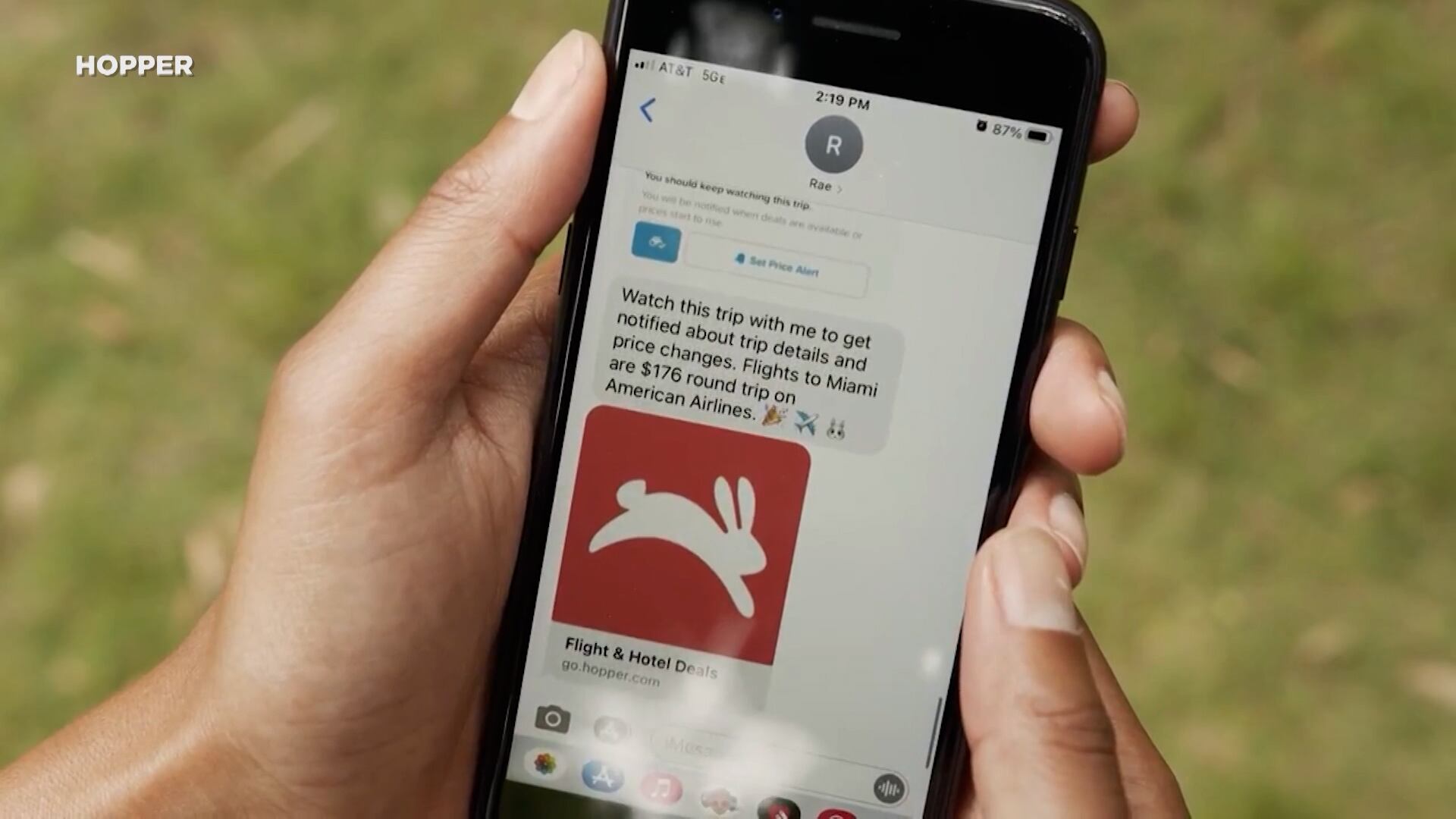
Trip.com is now adding Hopper's price freeze feature for its users. The feature will help travelers save money by protecting them from pricing volatility when booking their next trip. The company is the first online travel agency to partner with Hopper's B2B initiative, Hopper Cloud. Dakota Smith, chief strategy officer at Hopper, joins Cheddar News to walk us through the feature and how the company is addressing Omicorn concerns.
Ahead of the new year, award-winning journalist and TV anchor Soledad O'Brien and financial expert Jean Chatzky are teaming up to launch a brand-new podcast called "Everyday Wealth," aimed at helping listeners unlock their financial potential. O'Brien and Chatzky joined Cheddar's "Opening Bell" to discuss which topics to expect, as well as the importance of financial literacy. "I think what I'm good at is asking uncomfortable questions," said O'Brien, detailing how the podcast might stand out from others. "And sometimes when it comes to talking about money, a lot of those questions are uncomfortable."
As companies figure out how to adapt to the ever-changing COVID world, mergers and acquisitions are on the rise. A new report from PwC reveals 2021 saw the most megadeals, transactions of at least $5 billion, in the U.S. Colin Wittmer, PwC's U.S. deals leader, tells Cheddar how companies can set themselves up for deals success.
The last year saw a massive uptick in CEO turnover, with over 1,200 chief executives leaving their posts in 2021. According to a recent report from Challenger, Gray & Christmas, the main reasons cited were talent management, retention, hiring, and reimagining the workplace post-covid. Andrew Challenger, Senior Vice President, Challenger, Gray & Christmas, Inc. joined Cheddar's Opening Bell to discuss.
As supply chain issues continue to impact holiday shopping, many consumers are discovering that certain items are harder to find and are more expensive than in past years. However, secondary market platforms are one solution to that problem, offering shoppers an alternative place to find their favorite gifts. Jesse Einhorn, StockX senior economist, joined Cheddar to discuss how are platforms like StockX are a viable way for shoppers to avoid supply chain delays this holiday season.