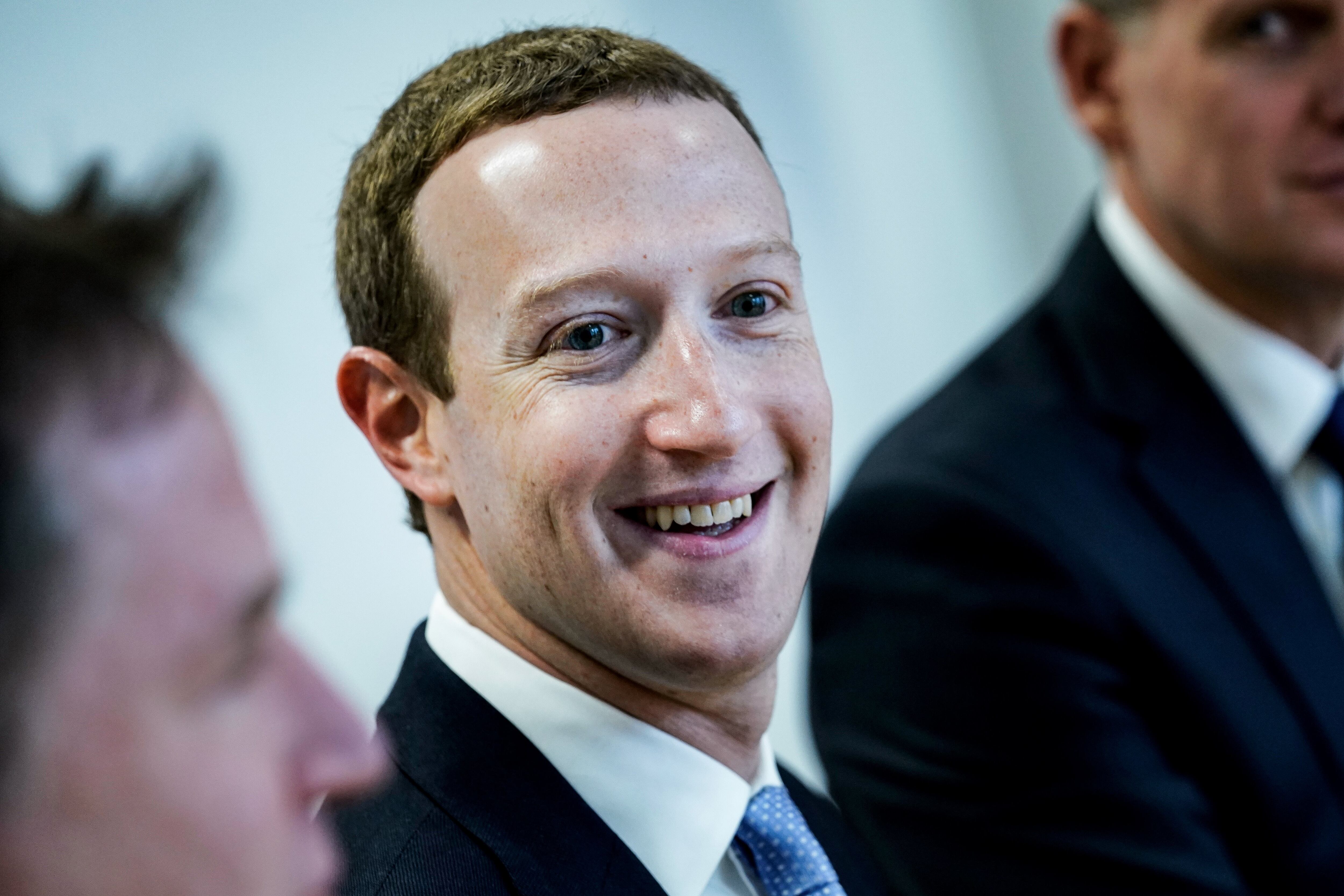
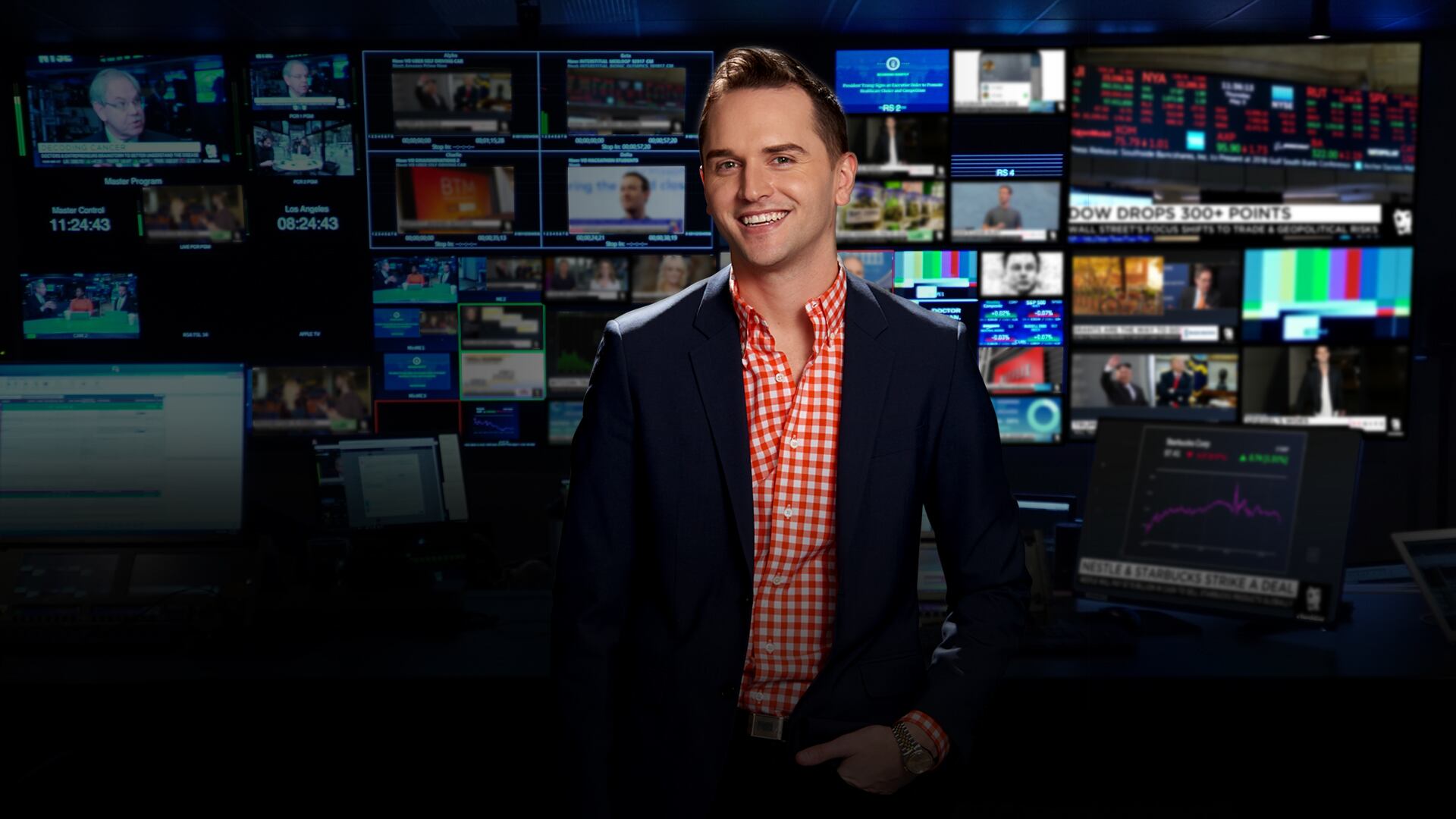
Founder and CEO of US online social media and social networking service Facebook Mark Zuckerberg. Photo by KENZO TRIBOUILLARD/AFP via Getty Images/FILE)
Mark Zuckerberg and his wife Priscilla Chan have donated $25 million through their foundation to a philanthropic effort organized by Bill Gates to explore new coronavirus treatments.
The Gates Foundation donated $50 million last week to what it’s calling the “COVID-19 Therapeutics Accelerator.” The initiative brings together life sciences companies to collaborate on the development of new vaccines, diagnostics, and treatments for COVID-19.
“The Therapeutics Accelerator will enable researchers to quickly determine whether or not existing drugs have a potential benefit against COVID-19,” Chan and Zuckerberg said in a press release. “We hope these coordinated efforts will help stop the spread of COVID-19 as well as provide shared, reusable strategies to respond to future pandemics.”
The two donations are the largest from tech billionaires since the coronavirus outbreak. Wellcome and Mastercard are supporting the effort as well.
The goal of the initiative is to either develop a new drug or adapt an existing treatment that it could help distribute alongside partnering pharmaceutical companies.
The 15 companies participating in the project kicked off the effort by sharing their proprietary libraries of molecular compounds that have some history of being tested with COVID-19.
The lineup includes big names in biotech such as Johnson & Johnson, Merck, Pfizer, Sanofi, and Bristol-Myers Squibb.
Cann, a cannabis-infused beverage company, announced today a $27 million Series A funding round from existing investors like Imaginary Ventures and a roster of new celebrity investors including Nina Dobrev, Adam Devine, Zoey Deutch, Jordan Cooper, Sara Foster, and Rosario Dawson. Cann is also announcing its first international expansion with the brand's launch in Canada. Jake Bullock, co-founder and CEO of Cann, joins Cheddar News' Closing Bell to discuss.
Soul Machines is a company that creates autonomously animated digital people in the metaverse and the digital worlds of today. The startup based in New Zealand recently raised the equivalent of $70 million USD, in a funding round led by Softbank's Vision Fund 2. Soul Machines says it helps to bring digital workforces to life for some of the biggest brands in the world, and creates digital twins of celebrities to reimagine the future of digital entertainment. Greg Cross, co-founder and CBO of Soul Machines, joins Cheddar News' Closing Bell to discuss.
By 2050, nuclear power share of total energy consumption will dip to just 3.7% down from the already measly 4.5% it is today, according to the U. S. Energy Information Administration. However, a group of world powers including the U.S. and Japan is looking to reverse the trend. John Kotek, SVP of Policy Development and Public Affairs at the Nuclear Energy Institute, joined Cheddar News to discuss.
A new startup says they are about to take A.I.-generated voices up a notch by giving the tool the ability to feel much more real. Zeena Qureshi, CEO of Sonantic, joined Cheddar News to discuss further.
The end of 3G is upon us. On Tuesday, AT&T became the first major provider to disable its 3G services, and T-Mobile and Verizon plan to follow suit later this year. The shutdowns are expected to impact millions of vehicles that use 3G networks for updates, remote connection, and certain emergency and convenience features. Lance Ulanoff, the U.S. Editor-in-Chief of TechRadar, joined Cheddar's Closing Bell to discuss the ramifications of the changeover.