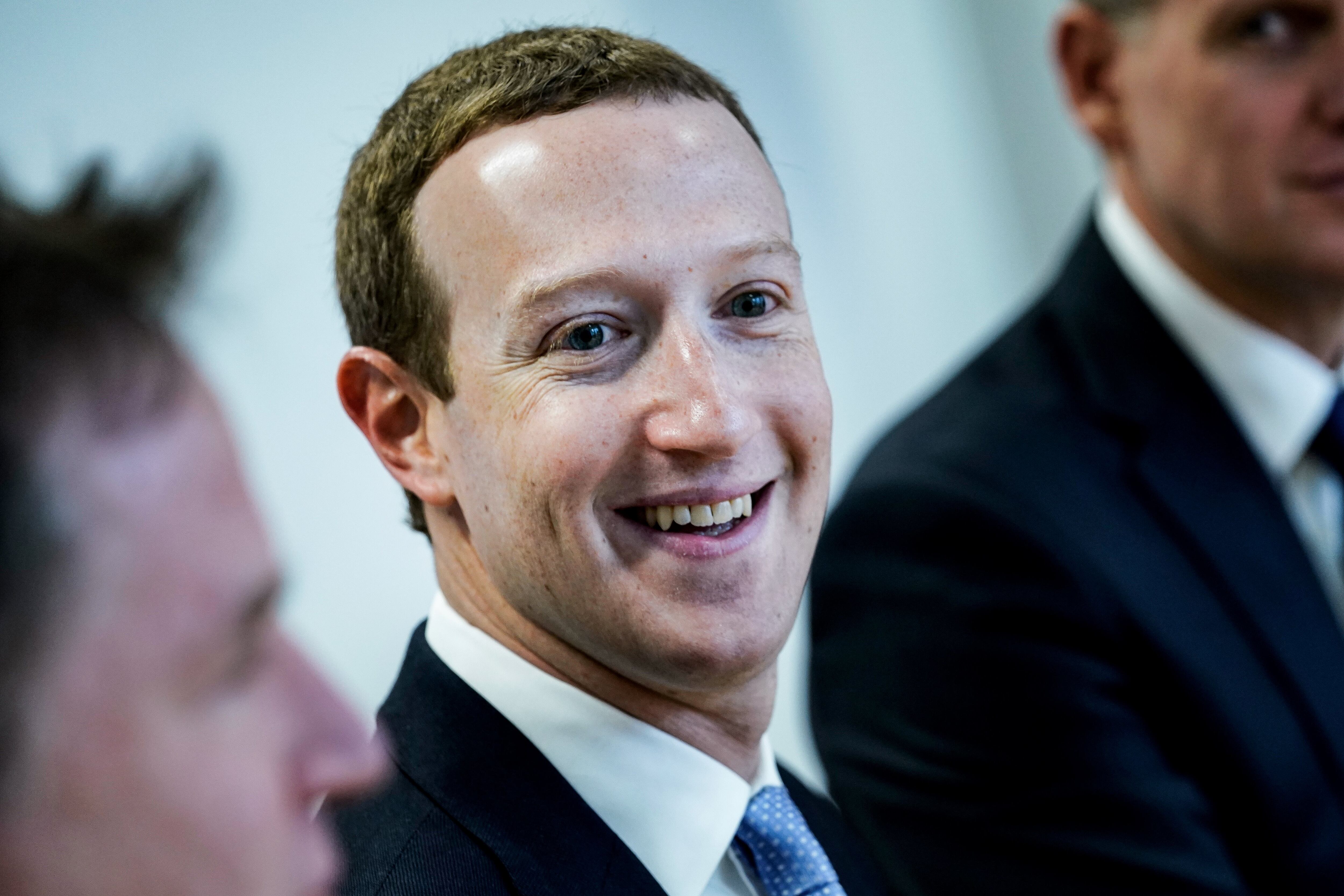
Founder and CEO of US online social media and social networking service Facebook Mark Zuckerberg. Photo by KENZO TRIBOUILLARD/AFP via Getty Images/FILE)
Mark Zuckerberg and his wife Priscilla Chan have donated $25 million through their foundation to a philanthropic effort organized by Bill Gates to explore new coronavirus treatments.
The Gates Foundation donated $50 million last week to what it’s calling the “COVID-19 Therapeutics Accelerator.” The initiative brings together life sciences companies to collaborate on the development of new vaccines, diagnostics, and treatments for COVID-19.
“The Therapeutics Accelerator will enable researchers to quickly determine whether or not existing drugs have a potential benefit against COVID-19,” Chan and Zuckerberg said in a press release. “We hope these coordinated efforts will help stop the spread of COVID-19 as well as provide shared, reusable strategies to respond to future pandemics.”
The two donations are the largest from tech billionaires since the coronavirus outbreak. Wellcome and Mastercard are supporting the effort as well.
The goal of the initiative is to either develop a new drug or adapt an existing treatment that it could help distribute alongside partnering pharmaceutical companies.
The 15 companies participating in the project kicked off the effort by sharing their proprietary libraries of molecular compounds that have some history of being tested with COVID-19.
The lineup includes big names in biotech such as Johnson & Johnson, Merck, Pfizer, Sanofi, and Bristol-Myers Squibb.
Space travel is growing rapidly, and one billionaire businessman has purchased three SpaceX flights in order to push the industry forward. The Polaris Dawn, the first of three flights, will launch later this year, and its crew will conduct the first commercial spacewalk after they've reached the highest orbit in over 50 years. Jared Isaacman, Polaris Program Mission Commander and Founder & CEO of Shift4, joins Closing Bell to discuss the Polaris program's mission, when the first launch will happen and what it will entail, balancing his business with space exploration efforts, charitable efforts with St. Jude Children's Research Hospital, and more.
Following Russia's incursion into Ukraine, the U.S. is warning businesses and major banks to brace themselves for cyberattacks. Lester Munson, a senior fellow at the National Security Institute, joined Cheddar News to break down what this means for financial institutions “So we need to be concerned about not just intentional Russian hacks against American entities but also what Russia is doing in Ukraine. Those things can impact us as well," he said
romantic scams have hit a record high, according to the FTC. Last year alone, victims lost an estimated $547 million, which is six times more than the recorded total from 2017. Debbie Montgomery- Johnson, a victim of romantic scams and the author of the 'Woman Behind the Smile,' joined Cheddar to discuss more.
Dr. Brian Moore, CEO & Co-founder of sports performance and technology company Orrecco, joins Cheddar Innovates to discuss how the @thlete platform is helping pro athletes and Olympians improve their performance, and what the future of tech in the world of sports may look like.
Tom and Darr Aley, Co-Founders of Aidentified, join Cheddar Innovates to discuss how the platform is becoming the next social network for companies to make connections in an increasingly digital world.
Cloud-based marketing technology firm, Zeta Global reported strong Q4 earnings after the bell on Wednesday, with revenue up 18 percent. David Steinberg, CEO and co-founder, joined Cheddar's Opening Bell to discuss the company's big results, how marketers are turning to its first-party tech solutions and its plans for future growth. "We raised our guidance pretty dramatically for this year," he said. "We publicly announced our Zeta 2025 plan, which we have been focused on internally since 2020 but to get to over a billion dollars in revenue per year and a 20 percent operating margin by 2025."