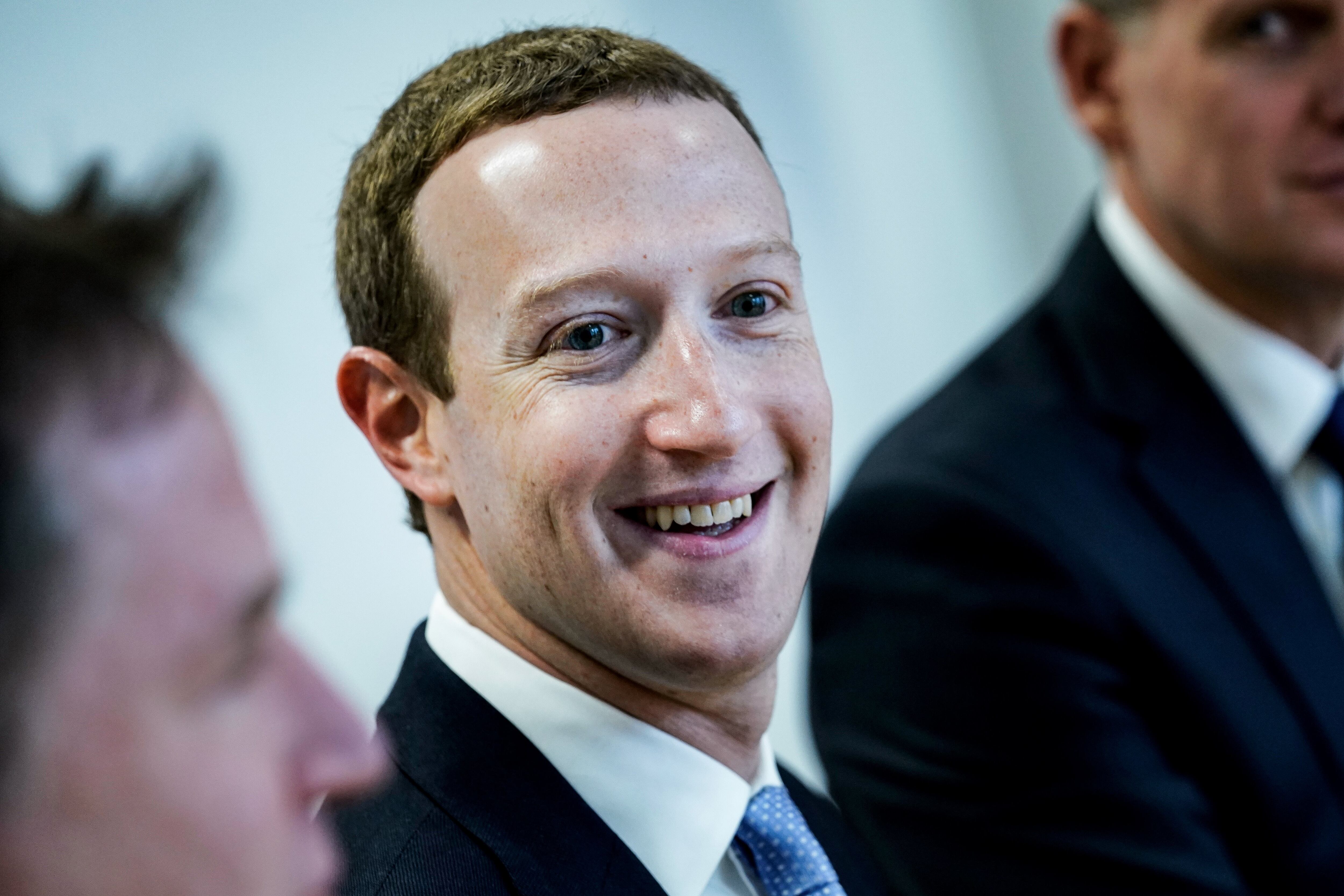
Founder and CEO of US online social media and social networking service Facebook Mark Zuckerberg. Photo by KENZO TRIBOUILLARD/AFP via Getty Images/FILE)
Mark Zuckerberg and his wife Priscilla Chan have donated $25 million through their foundation to a philanthropic effort organized by Bill Gates to explore new coronavirus treatments.
The Gates Foundation donated $50 million last week to what it’s calling the “COVID-19 Therapeutics Accelerator.” The initiative brings together life sciences companies to collaborate on the development of new vaccines, diagnostics, and treatments for COVID-19.
“The Therapeutics Accelerator will enable researchers to quickly determine whether or not existing drugs have a potential benefit against COVID-19,” Chan and Zuckerberg said in a press release. “We hope these coordinated efforts will help stop the spread of COVID-19 as well as provide shared, reusable strategies to respond to future pandemics.”
The two donations are the largest from tech billionaires since the coronavirus outbreak. Wellcome and Mastercard are supporting the effort as well.
The goal of the initiative is to either develop a new drug or adapt an existing treatment that it could help distribute alongside partnering pharmaceutical companies.
The 15 companies participating in the project kicked off the effort by sharing their proprietary libraries of molecular compounds that have some history of being tested with COVID-19.
The lineup includes big names in biotech such as Johnson & Johnson, Merck, Pfizer, Sanofi, and Bristol-Myers Squibb.
World leaders are currently dealing with a handful of pressing issues, including Russia's invasion of Ukraine, inflation, and not to mention the COVID-19 pandemic; but it could be argued that the most pressing issue is one that has experienced its fair share of neglect in the past -- climate change. As tensions escalate between Russia and Ukraine, there is fear the focus on climate will once again be pushed aside. However, the White House appears to be making some effort to prevent that from happening. The White House Office of Science and Technology held a first-of-its-kind roundtable discussion with some of the nation's leading climate scientists on Thursday. Michael Mann, Director of the Earth System Science Center at Pennsylvania State University, and author of the book 'The New Climate War' joins Cheddar News' Closing Bell to discuss his experience as one of the climate scientists at the White House event.
U.S. stocks rebounded to end higher on Thursday after President Biden announced new sanctions against Russia following the country's attack on Ukraine. The Dow was down 859 points at its lowest point of the session, before ultimately finishing the day in the green. Melissa Armo, founder and owner of the Stock Swoosh, joins Cheddar News' Closing Bell to discuss.
HearHere bills itself as a mobile audio entertainment app for road trips. The company just announced $3.2 million in seed funding led by Camping World, a retail company that sells recreational vehicles and camping supplies. HearHere's GPS-powered app offers over 8,880 stories across the continental U.S. and serves up the stories based on a users' geographic location and interests. The stories are narrated by some big-name celebrities including actor Kevin Costner, who is a co-founder of the company. Woody Sears, co-founder and CEO of HearHere, joins Cheddar News' Closing Bell to discuss.
On December 25, 2021, NASA got into the holiday spirit by launching the James Webb Space Telescope, the largest and most powerful space science observatory in history.
It is intended to succeed the Hubble Space Telescope as NASA's flagship mission in astrophysics and is able to view objects too old and distant for Hubble. Gregory Robinson, director of NASA's James Webb Space Telescope program, joins Cheddar News' Closing Bell to discuss the mission. "I think a lot of what we don't know today is what I'm expecting to find and certainly really understand what took place more than 13.5 billion years ago and see the formation of some of the first galaxies in our universe," said Robinson.
YouTube creator platform Spotter recently announced $200 million in Series D financing at a valuation of $1.7 billion, led by SoftBank Vision Fund 2. Spotter allows YouTubers to license the rights to their video catalogs in exchange for large sums of cash paid upfront. The company's clients include some of YouTube's most popular personalities, with a combined total of more than 1.2 billion subscribers. Aaron Debevoise, founder and CEO of Spotter, joins Cheddar News' Closing Bell to discuss.
The Russia-Ukraine conflict drags on — and global economies could see pandemic-era prices and supply chain issues come back full force. Both countries supply key commodities and materials, including semiconductor production. That sector, in particular, was hit hard by the pandemic and was just beginning to see a recovery when the invasion began. What happens next? Do companies have enough to fall back on and can they rely on pandemic-era measures to stay afloat? Everett Millman, Chief Market Analyst at Gainesville Coins, joins Closing Bell to discuss which sectors are being hit the hardest, rising prices, how consumers could feel the impact, and more.
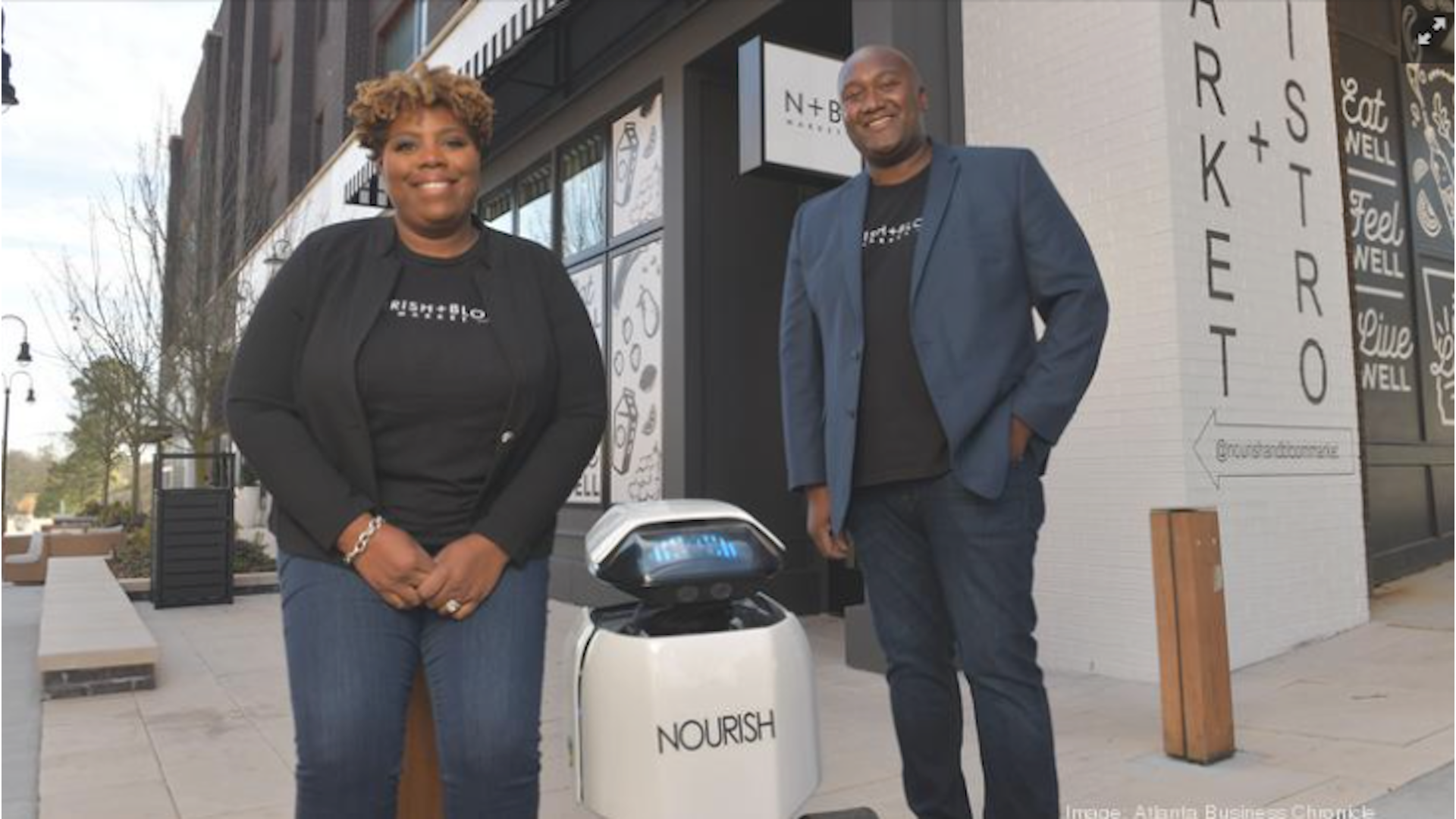
Jamie Hemmings and Jilea Hemmings, owners and founders of Nourish + Bloom Market, join Cheddar News to talk about the inspiration behind creating their cashierless grocery store.