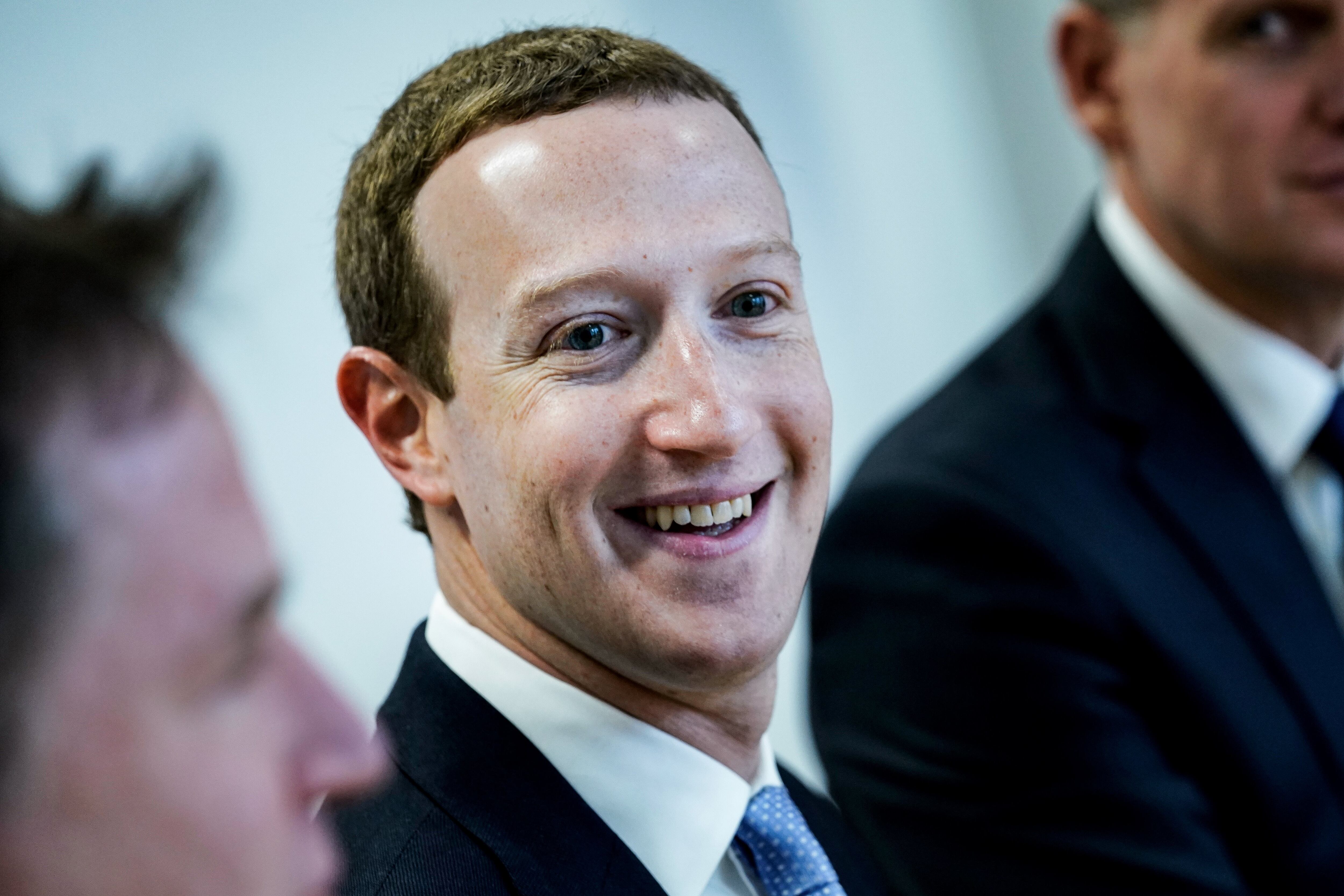
Founder and CEO of US online social media and social networking service Facebook Mark Zuckerberg. Photo by KENZO TRIBOUILLARD/AFP via Getty Images/FILE)
Mark Zuckerberg and his wife Priscilla Chan have donated $25 million through their foundation to a philanthropic effort organized by Bill Gates to explore new coronavirus treatments.
The Gates Foundation donated $50 million last week to what it’s calling the “COVID-19 Therapeutics Accelerator.” The initiative brings together life sciences companies to collaborate on the development of new vaccines, diagnostics, and treatments for COVID-19.
“The Therapeutics Accelerator will enable researchers to quickly determine whether or not existing drugs have a potential benefit against COVID-19,” Chan and Zuckerberg said in a press release. “We hope these coordinated efforts will help stop the spread of COVID-19 as well as provide shared, reusable strategies to respond to future pandemics.”
The two donations are the largest from tech billionaires since the coronavirus outbreak. Wellcome and Mastercard are supporting the effort as well.
The goal of the initiative is to either develop a new drug or adapt an existing treatment that it could help distribute alongside partnering pharmaceutical companies.
The 15 companies participating in the project kicked off the effort by sharing their proprietary libraries of molecular compounds that have some history of being tested with COVID-19.
The lineup includes big names in biotech such as Johnson & Johnson, Merck, Pfizer, Sanofi, and Bristol-Myers Squibb.
Independent artists were caught off-guard and the Epic acquisition of Bandcamp quickly sparked fears it could ruin what many saw as their last best hope of getting paid online for their work.
Trying to meet people online has become a predictable routine. Now, one app is switching it up by allowing users to swipe right on plans and outings rather than faces. Pitch Social co-founders Daniel Antonio and Ryan Snowden joins Between Bells to talk about their app.
AI-based adtech firm Adtheorent released its first earnings report as a public company Thursday after the bell. The company went public via SPAC deal in December and has since seen strong profit and revenue growth, with connected TV increasing 220 percent in Q4. Jim Lawson, CEO, AdTheorent, joined Cheddar's Opening Bell to discuss.
Adam Battle, research assistant at University of Arizona's Lunar and Planetary Laboratory, joins Cheddar News to discuss space junk heading to the moon and if more should be done to prevent space junk in the future.
The capital of Kyiv is home to more than 1,000 tech startups.
Some of the prominent tech companies founded in Ukraine include names like 'Grammarly' and 'GitLab,' but even companies that aren't based in Ukraine rely on the massive amount of tech talent in the country. Andy Kurtzig, CEO of Justanswer, joins Cheddar News to discuss how he's aiding hundreds of his employees in Ukraine.
Mark Clerkin, Head of Trading at CoinList, joins Cheddar News' Closing Bell, where he elaborates on the range of features his platform offers, from investing in up-and-coming tokens to trading, and says his company is eager to partner with Block CEO Jack Dorsey on future projects.
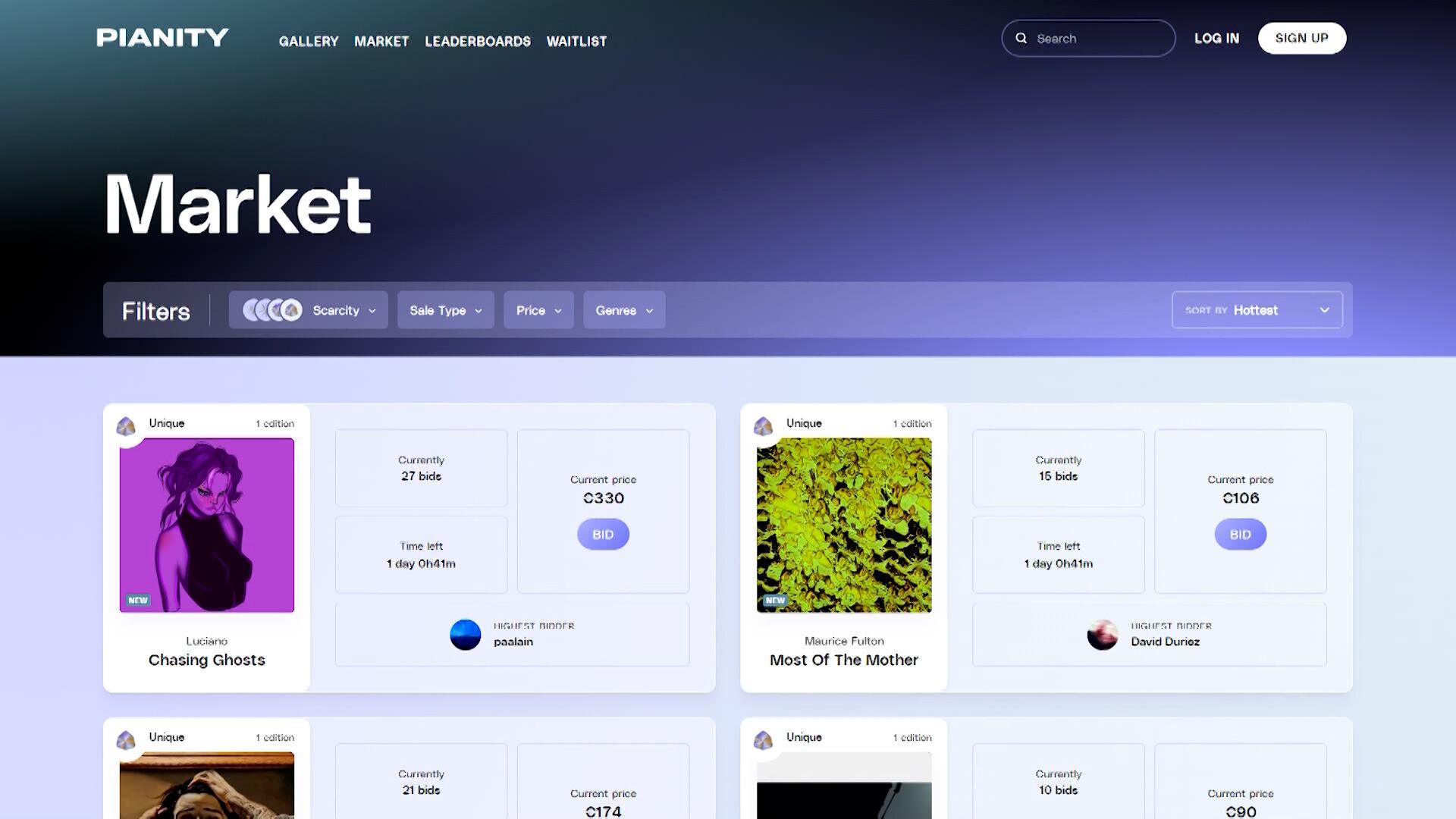
Music-focused NFT platform Pianity raising $6.5 million in a seed funding round. Pianity has developed a marketplace that allows musicians to sell their tracks as limited edition NFTs. Since its launch last year, the company says it has already sold 11,000 NFTs and artists have earned over $1.1 million from NFT sales. Kevin Primicerio, co-founder and CEO of Pianity, joins Cheddar News' Closing Bell to discuss.
ZipRecruiter reported revenue growth for the fourth quarter of 2021 and raised its forecast for the coming year, beating Wall Street expectations. The recruitment site has benefited from one of the tightest labor markets in history as companies desperately try to fill empty positions. Ian Siegel, CEO of ZipRecruiter, joined Cheddar to discuss how the company has adapted to The Great Resignation, a tight labor market, and record inflation.
Ford is looking to charge its electric business forward -- splitting its EVs and legacy internal combustion engine models into separate units. Ford says the split will streamline its EV business and boost profits, while giving it a better competitive edge. Ford's new EV focused business will be called Ford Model e. Greg Martin, Co-Founder, Rainmaker Securities joined Cheddar's Opening Bell to discuss.