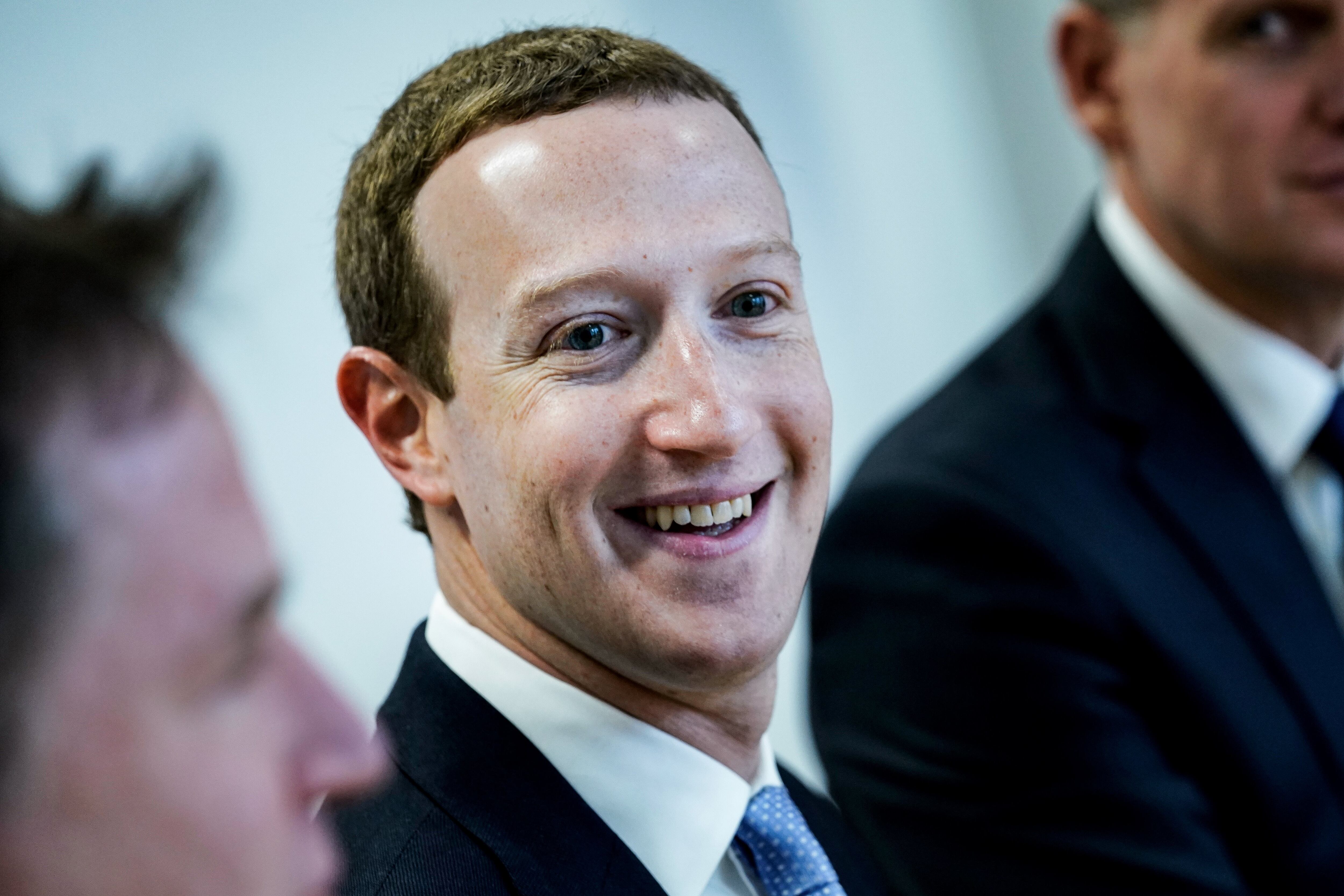
Founder and CEO of US online social media and social networking service Facebook Mark Zuckerberg. Photo by KENZO TRIBOUILLARD/AFP via Getty Images/FILE)
Mark Zuckerberg and his wife Priscilla Chan have donated $25 million through their foundation to a philanthropic effort organized by Bill Gates to explore new coronavirus treatments.
The Gates Foundation donated $50 million last week to what it’s calling the “COVID-19 Therapeutics Accelerator.” The initiative brings together life sciences companies to collaborate on the development of new vaccines, diagnostics, and treatments for COVID-19.
“The Therapeutics Accelerator will enable researchers to quickly determine whether or not existing drugs have a potential benefit against COVID-19,” Chan and Zuckerberg said in a press release. “We hope these coordinated efforts will help stop the spread of COVID-19 as well as provide shared, reusable strategies to respond to future pandemics.”
The two donations are the largest from tech billionaires since the coronavirus outbreak. Wellcome and Mastercard are supporting the effort as well.
The goal of the initiative is to either develop a new drug or adapt an existing treatment that it could help distribute alongside partnering pharmaceutical companies.
The 15 companies participating in the project kicked off the effort by sharing their proprietary libraries of molecular compounds that have some history of being tested with COVID-19.
The lineup includes big names in biotech such as Johnson & Johnson, Merck, Pfizer, Sanofi, and Bristol-Myers Squibb.
As major social media and tech companies like Facebook and Microsoft announce plans for metaverse technology, chipmakers like Nvidia, AMD, Intel, and more stand to benefit as the technology rolls out and evolves. But who will take the lead and benefit the most? Paul Meeks, Portfolio Manager at Independent Solutions Wealth Management, joins Cheddar News' Closing Bell to discuss the metaverse chipmaker race, who could come out on top, the timeline of how this sector will heat up, and more.
IBM's spinoff, Kyndryl, is officially an independent public company. The $19 billion business is now listed on the NYSE under the ticker KD, becoming one of the largest players in the IT services market. David Wyshner, CFO of Kyndryl, joined Cheddar to discuss what this milestone means for the company moving forward.
Emma Searson, an author on the just-released Renewables on the Rise report and the director, 100% Renewable Campaign at Environment America, joined Cheddar to discuss the rapidly growing renewable energy sector. Between 2011 and 2020, the report shows that wind, solar, and geothermal energy production grew about 15 percent annually and that wind and solar alone account for 11 percent of electricity in the country. "There are a few really important drivers of the renewable energy progress that we're seeing all across the country," Searson said, highlighting falling prices, technology improvements, and supportive policies.
Wendy O, host of 'The O Show' joins Cheddar News to discuss the recent rally from cryptocurrency, Ether. She also discussed incoming New York City mayor Eric Adams wanting to teach kids crypto in schools.
Cryptocurrencies are getting off to a good week. Ethereum surged more than 4% in 24 hours on Monday, hitting a new all-time high above $4,700. Meanwhile, Bitcoin surged 7% to a price of $66,250. Haohan Xu, founder and CEO of Apifiny, joins Cheddar News with thoughts on the growing sector.
Payment processor Paypal will roll out a Venmo option for Amazon customers beginning in 2022 as the payment app continues to grow the number of merchants it works with.