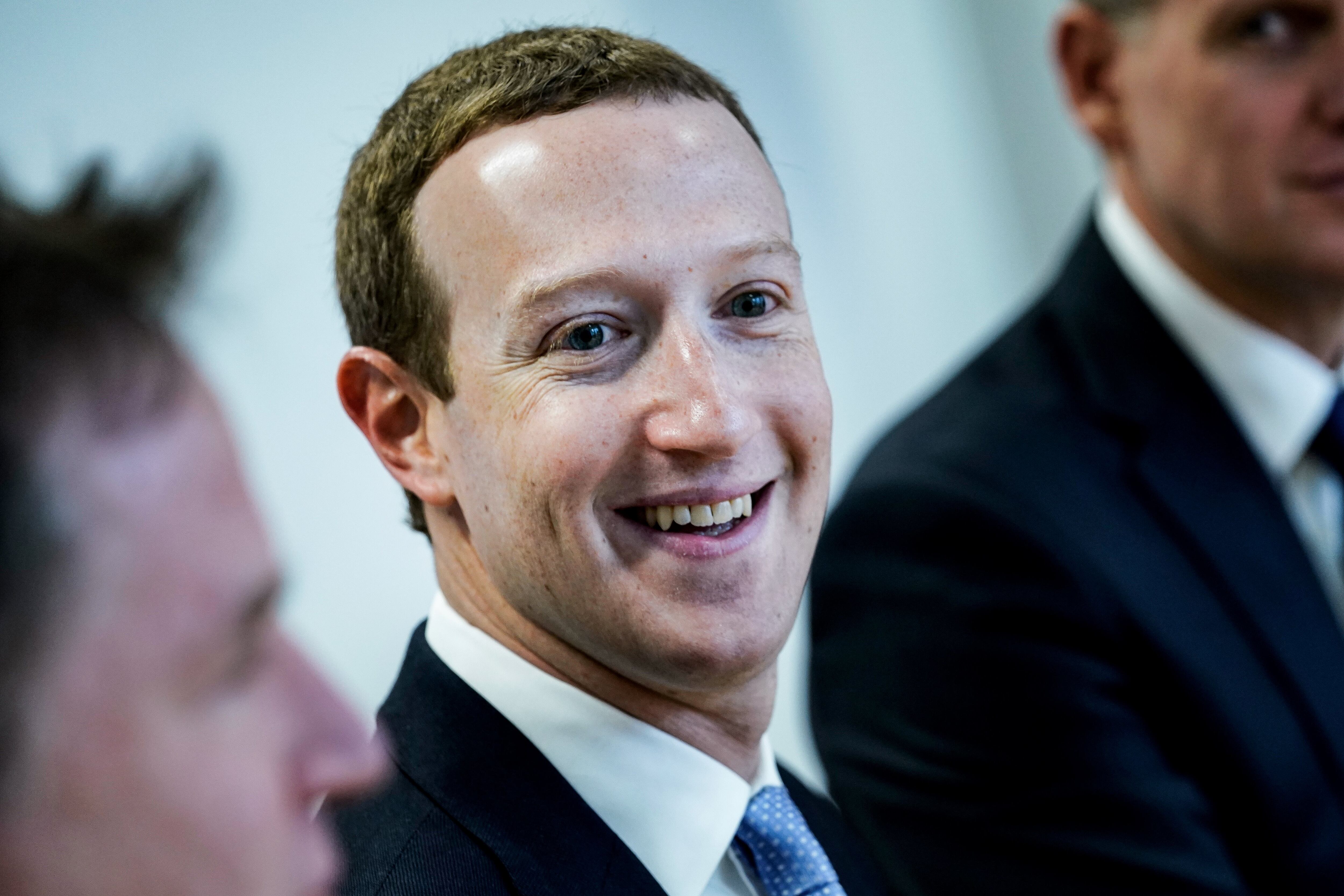
Founder and CEO of US online social media and social networking service Facebook Mark Zuckerberg. Photo by KENZO TRIBOUILLARD/AFP via Getty Images/FILE)
Mark Zuckerberg and his wife Priscilla Chan have donated $25 million through their foundation to a philanthropic effort organized by Bill Gates to explore new coronavirus treatments.
The Gates Foundation donated $50 million last week to what it’s calling the “COVID-19 Therapeutics Accelerator.” The initiative brings together life sciences companies to collaborate on the development of new vaccines, diagnostics, and treatments for COVID-19.
“The Therapeutics Accelerator will enable researchers to quickly determine whether or not existing drugs have a potential benefit against COVID-19,” Chan and Zuckerberg said in a press release. “We hope these coordinated efforts will help stop the spread of COVID-19 as well as provide shared, reusable strategies to respond to future pandemics.”
The two donations are the largest from tech billionaires since the coronavirus outbreak. Wellcome and Mastercard are supporting the effort as well.
The goal of the initiative is to either develop a new drug or adapt an existing treatment that it could help distribute alongside partnering pharmaceutical companies.
The 15 companies participating in the project kicked off the effort by sharing their proprietary libraries of molecular compounds that have some history of being tested with COVID-19.
The lineup includes big names in biotech such as Johnson & Johnson, Merck, Pfizer, Sanofi, and Bristol-Myers Squibb.
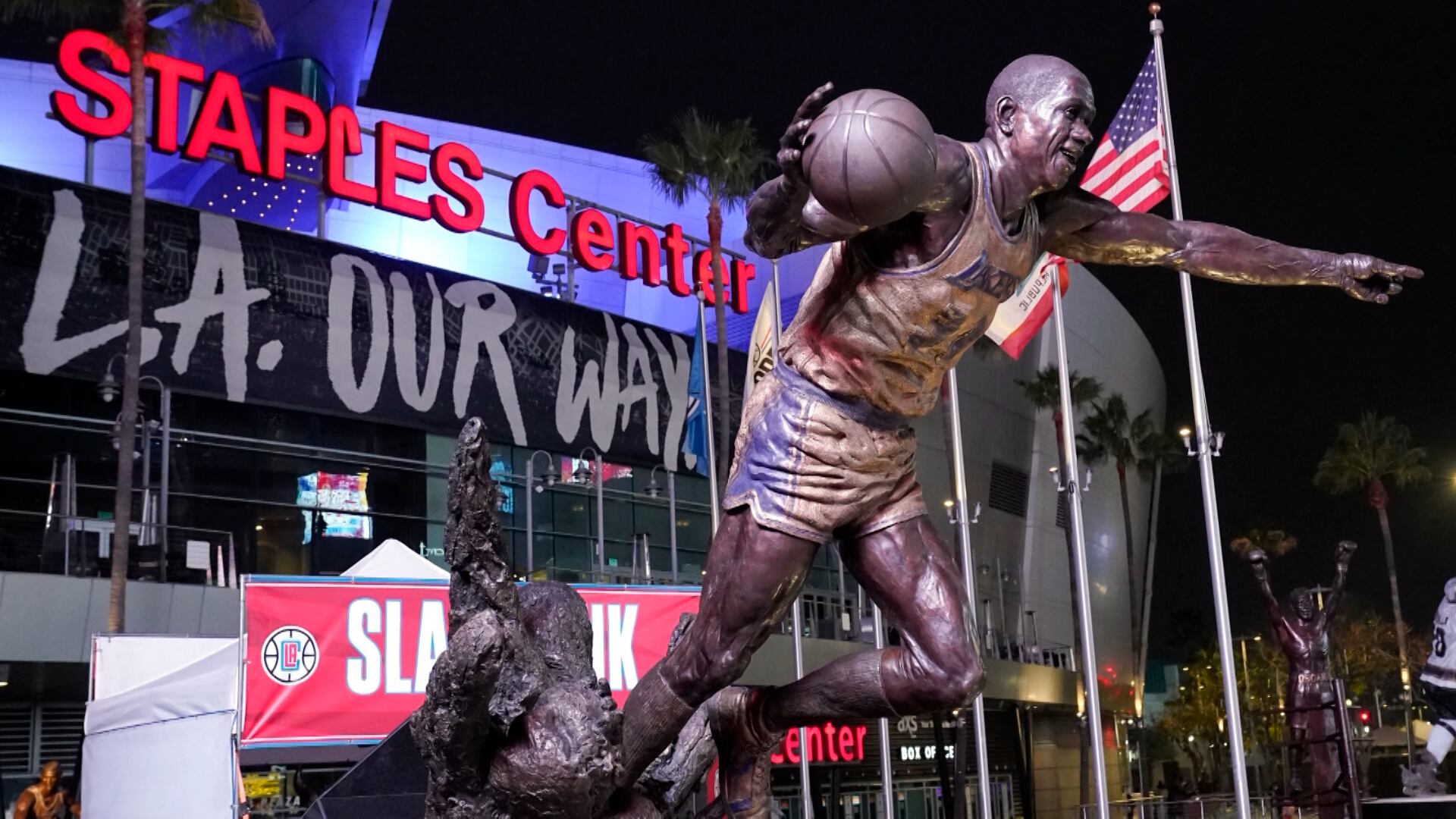
Beginning Christmas Day, the home of the Los Angeles Lakers, Clippers, Kings, and Sparks, the Staples Center, will go by the name Crypto.com Arena after a massive $700 million deal with AEG. Steven Kalifowitz, the chief marketing officer at Crypto.com, and Todd Goldstein, the chief revenue officer at AEG, joined Cheddar to talk about the historic changeover in naming rights and what other changes that fans entering the arena might expect.
Earlier this week, Qualcomm announced an extension of its partnership with BMW as it moves to help build the technology for automated driving. Nakul Duggal, general manager at Qualcomm, joined Cheddar to provide some background on the collaboration and how the company has been able to navigate the global chip shortage amid the pandemic. "We have invested in advance, in very specific packaging capacity and technology, with our suppliers so that we actually have the capacity available to be able to service that demand," Duggal said.
Some of the most popular social media and streaming platforms like Snapchat, Spotify, and Discord were offline for several hours on Tuesday after Google Cloud experienced a technical issue. The problem was resolved as of that afternoon.
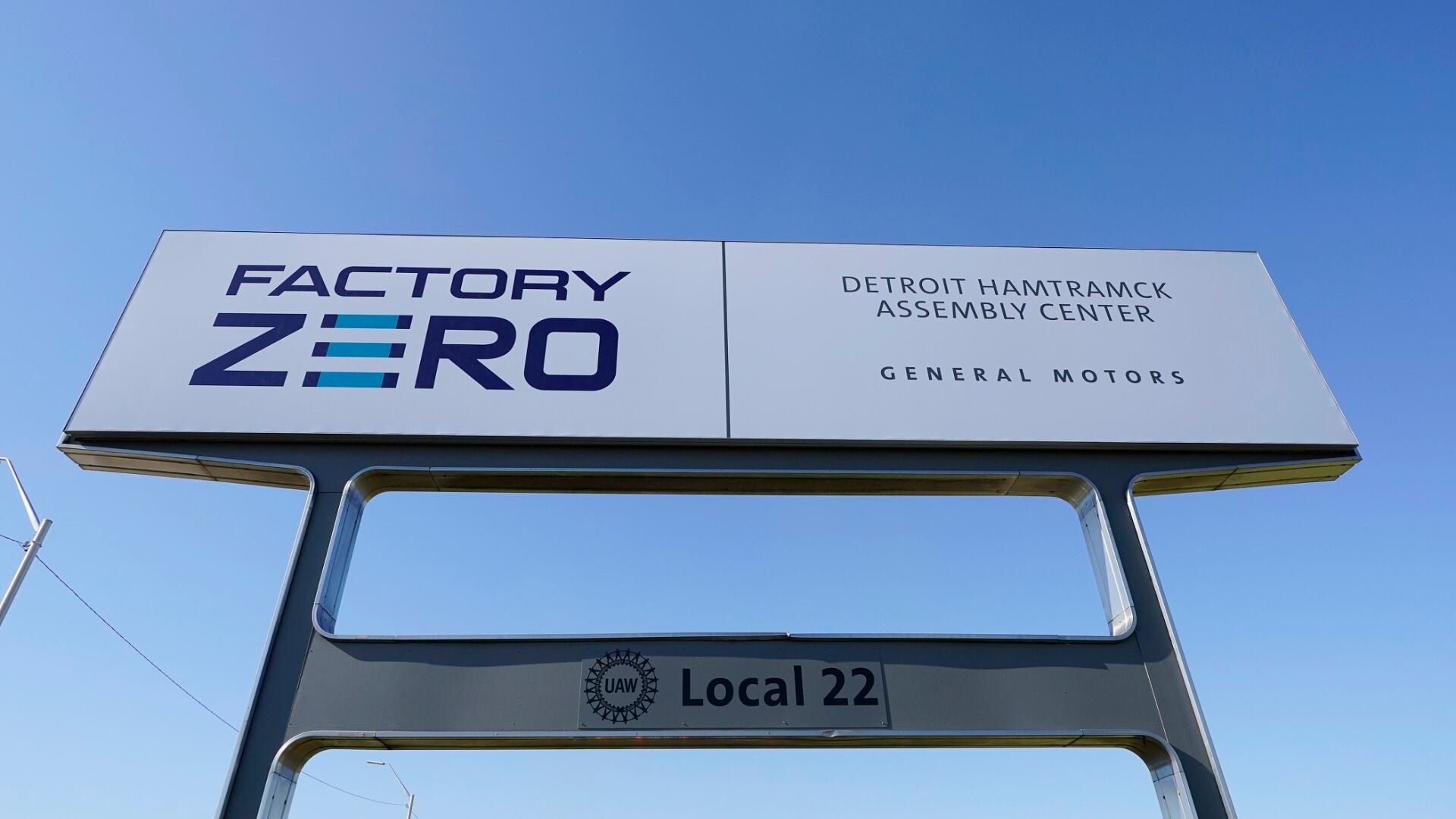
President Joe Biden is expected to visit GM's 'Factory Zero' plant in Detroit, where mass production of its electric vehicle fleet will get underway. Biden is likely to tout his recently passed $1.2 trillion infrastructure plan, which allocates $7.5 billion toward EV infrastructure.
No one is ever fully "ready" for the future. However, the past two years have clearly shown us that some businesses can be better prepared for the future than others. Shelly Kramer, Founding Partner & Lead Analyst of Futurum Research, joins Cheddar News to discuss how businesses of all sizes can stay agile enough to adapt to whatever the future may bring.
Jill is joined by “Friend of the Pod” Mosheh Oinounou to talk booster shots, and whether “fully vaccinated” will eventually mean three shots, not two. Plus, the latest on the Kyle Rittenhouse trial. And the research is in: we know now the perfect way to hug. Also, Jill and Mosheh debate whether Airpods are passé.
A deal was reached as the COP26 Summit in Glasgow came to a close. Dr. Katharine Hayhoe, Chief Scientist at the Nature Conservancy and Author of 'Saving Us: A Climate Scientist's Case for Hope and Healing in a Divided World,' joined Cheddar News' Closing Bell to discuss the deal.