By María Teresa Hernández
Ana Martínez is eager to welcome her deceased loved ones back home.
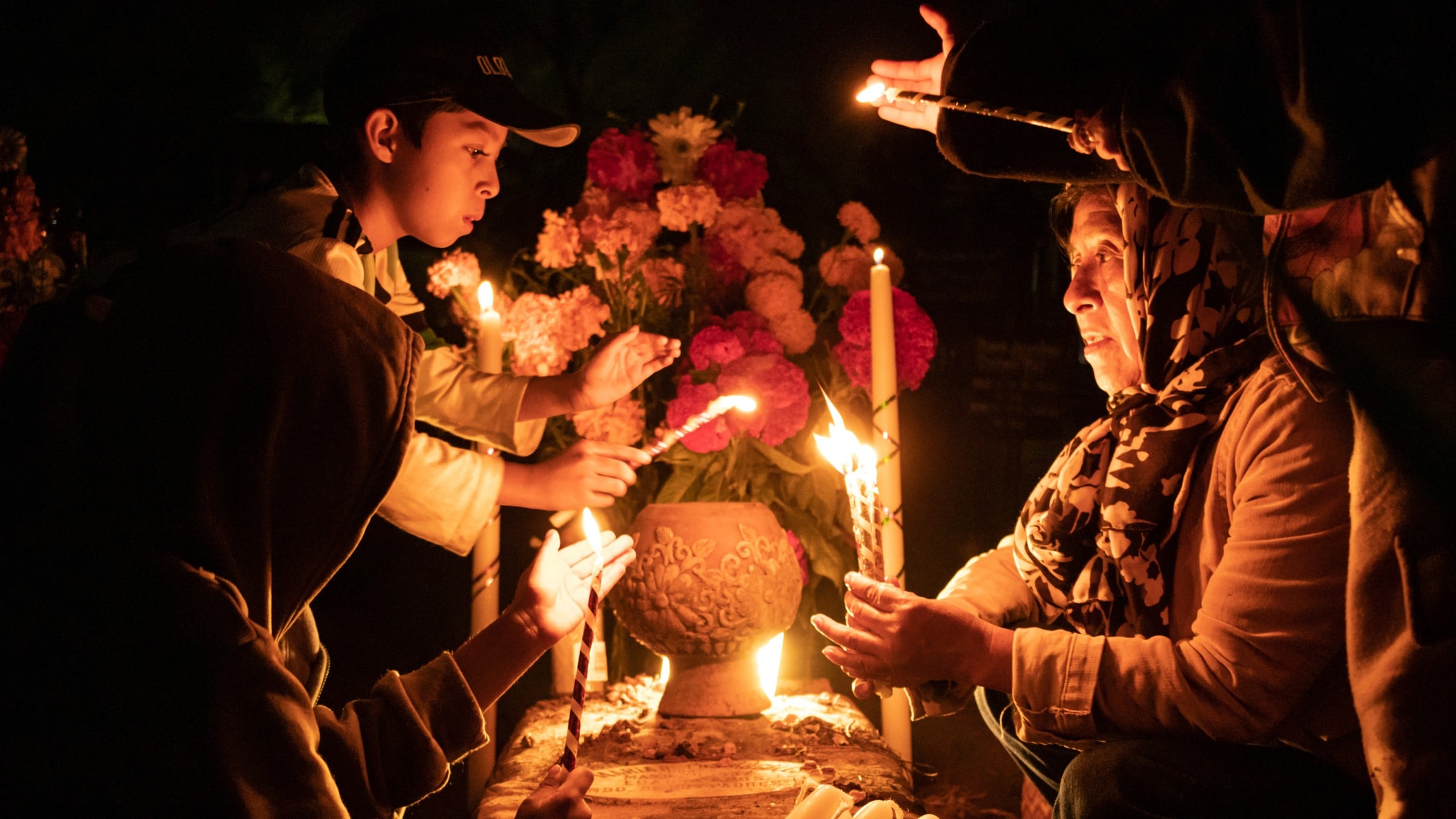
Martínez and others in southern Mexico's Oaxaca state wait with anticipation for Day of the Dead celebrations every Nov. 1, when families place homemade altars to honor their dearly departed and spend the night at the cemetery, lighting candles in the hope of illuminating their paths.
“We preserve the culture of our ancestors, and that is why we make our altars,” said Martínez, 41, who lives in the town of Santa María Atzompa.
Each Oct. 31, Martínez builds a three-level altar on her terrace. First come the flowers, a type of marigold known as cempasúchil. Martínez ties them in an arch over the altar.
“For us, that arch is a portal so that they (the deceased) can reach our house,” she said. “We also create a path of flowers to the door as a welcoming sign.”
Next, she lights copal, an incense which is believed to guide the souls, and places foods such as apples, peanuts and bread. Chocolates are for her grandma, she said.
“She was like my mother, so everything I’m going to offer is with the hope that she can be here," Martínez said.
On this date, Oaxacans don’t honor death but rather their ancestors, said the local secretary of culture, Victor Cata. “It’s a celebration of those with whom we shared a time and a roof, who were flesh and blood like us.”
Santa María Atzompa traditions are embraced from childhood and passed from parents to children. Martínez’s 8-year-old daughter asked if she could help arrange the fruit on the altar, and her mother assigned an additional task: Make sure the candles stay lit in the afternoon so that our deceased don’t lose their way.
As soon as the sun sets, locals gather at the cemetery to light candles over their family tombs and start a vigil known as “vela."
María Martínez, 58, paid a visit to her late husband by noon. “I do feel that they are returning today but I also think they are with us daily, not just on this date,” she said.
Oaxacan traditions vary among the 16 indigenous groups and the Afro-descendant community, but according to Cata, there’s a shared ancient knowledge that relates to the land.
“October and November are the dry season, when the land languishes,” Cata said. “But it is reborn, so there is this thought that the dead return to enjoy what they loved in life.”
Felipe Juárez, 67, offered mezcal and beer for one of his brothers. For other family members, his wife cooked Oaxacan delicacies such as mole, a traditional sauce.
It will be a long night, Juárez said, until they go home at 6 a.m., but these are joyful times.
“On the day we die, we will meet them again,” Juárez said. “We will reach that place where they have come to rest.”
Associated Press religion coverage receives support through the AP’s collaboration with The Conversation US, with funding from Lilly Endowment Inc. The AP is solely responsible for this content.