By María Teresa Hernández

Ana Martínez is eager to welcome her deceased loved ones back home.

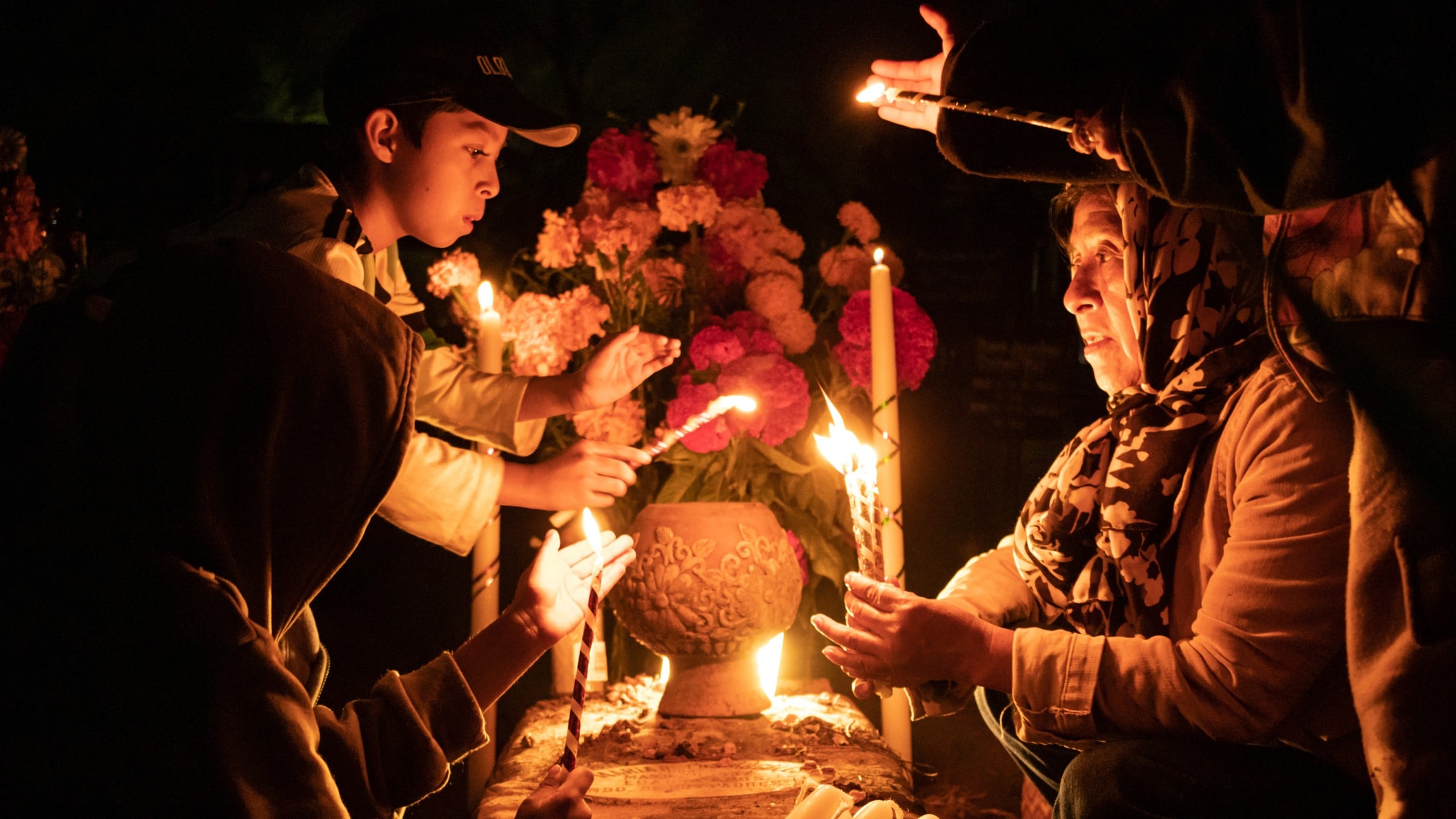
Martínez and others in southern Mexico's Oaxaca state wait with anticipation for Day of the Dead celebrations every Nov. 1, when families place homemade altars to honor their dearly departed and spend the night at the cemetery, lighting candles in the hope of illuminating their paths.

“We preserve the culture of our ancestors, and that is why we make our altars,” said Martínez, 41, who lives in the town of Santa María Atzompa.

Each Oct. 31, Martínez builds a three-level altar on her terrace. First come the flowers, a type of marigold known as cempasúchil. Martínez ties them in an arch over the altar.

“For us, that arch is a portal so that they (the deceased) can reach our house,” she said. “We also create a path of flowers to the door as a welcoming sign.”

Next, she lights copal, an incense which is believed to guide the souls, and places foods such as apples, peanuts and bread. Chocolates are for her grandma, she said.

“She was like my mother, so everything I’m going to offer is with the hope that she can be here," Martínez said.

On this date, Oaxacans don’t honor death but rather their ancestors, said the local secretary of culture, Victor Cata. “It’s a celebration of those with whom we shared a time and a roof, who were flesh and blood like us.”

Santa María Atzompa traditions are embraced from childhood and passed from parents to children. Martínez’s 8-year-old daughter asked if she could help arrange the fruit on the altar, and her mother assigned an additional task: Make sure the candles stay lit in the afternoon so that our deceased don’t lose their way.

As soon as the sun sets, locals gather at the cemetery to light candles over their family tombs and start a vigil known as “vela."

María Martínez, 58, paid a visit to her late husband by noon. “I do feel that they are returning today but I also think they are with us daily, not just on this date,” she said.

Oaxacan traditions vary among the 16 indigenous groups and the Afro-descendant community, but according to Cata, there’s a shared ancient knowledge that relates to the land.

“October and November are the dry season, when the land languishes,” Cata said. “But it is reborn, so there is this thought that the dead return to enjoy what they loved in life.”

Felipe Juárez, 67, offered mezcal and beer for one of his brothers. For other family members, his wife cooked Oaxacan delicacies such as mole, a traditional sauce.

It will be a long night, Juárez said, until they go home at 6 a.m., but these are joyful times.

“On the day we die, we will meet them again,” Juárez said. “We will reach that place where they have come to rest.”

Associated Press religion coverage receives support through the AP’s collaboration with The Conversation US, with funding from Lilly Endowment Inc. The AP is solely responsible for this content.

Share:
More In Culture
Burrito Brothers Launch New Dos Toros App
Taco chain Dos Toros launched a new app this week, "Burrito Time," which gives away 10 free burritos daily. At a random time, users will receive an alert that it's "Burrito Time," and the first 10 to open the app win a free meal.
With $4 Billion Investment, Corona Brewer Makes Huge Bet on Weed
Cannabis represents a fourth pillar of Constellation Brands' beer, wine, and spirits strategy, says the CEO Rob Sands. The company, which makes Corona beer, Svedka vodka, and Robert Mondavi wine invested $4 billion in the Canadian marijuana company Canopy Growth ー the largest weed deal by a major publicly traded company.
Mom Launches Lovevery, a Subscription Service for Baby Toys
Jessica Rolph, the co-founder and CEO of Lovevery, a subscription service for children's toys and books, says her company was borne out of her wish "meet my child where they were." The subscription service sends boxes every other month with age-appropriate items to help new parents and their babies get through those early, clumsy years.
Remembering Four Loko, Alcoholic Energy Drink Known as 'Blackout In a Can'
You may not remember Four Loko, the stimulant-spiked malt liquor known as "blackout in a can" that was temporarily taken off the market in 2010. An oral history by The Strategist's Maxine Builder recounts the party drink's rapid rise in 2010 and its dizzying fall soon after state regulators cracked down on alcoholic energy drinks.
Eurovision Winner Netta: 'I Can Be Whatever I Want to Be'
Netta, the first Israeli artist to win the Eurovision song contest in 20 years, says her singing career took off when she finally learned to ignore other people's expectations and began expressing herself in a way she never felt comfortable as a child. Her hit "Toy" has more than 88 million views on YouTube and has established itself on Billboard's Dance and EDM charts.
Liquor Giant Constellation Makes $4 Billion Bet on Weed Business
Constellation Brands, the alcoholic beverage giant, is making a big bet that marijuana will be legalized in the United States by upping its investment in the Canadian cannabis company Canopy Growth. With legal marijuana coming to Canada in the fall, investors are preparing for a potential legal U.S. market to open up soon.
Exclamation-Point Anxiety Mounts
Years of overuse have stripped the punctuation mark of its meaning, turning it into an emotional catchall that could suggest anything from actual excitement and friendliness to reassurance and anger.
Congressman Wants to Bar House Members From Corporate Boards
Rep. Tom Reed says he plans to propose a ban on House members serving on corporate boards, a bipartisan proposal designed to eliminate "potential conflict and the appearance of impropriety." The move comes a week after his New York Republican colleague Rep. Chris Collins was indicted on insider trading charges.
Load More