By María Teresa Hernández
Ana Martínez is eager to welcome her deceased loved ones back home.
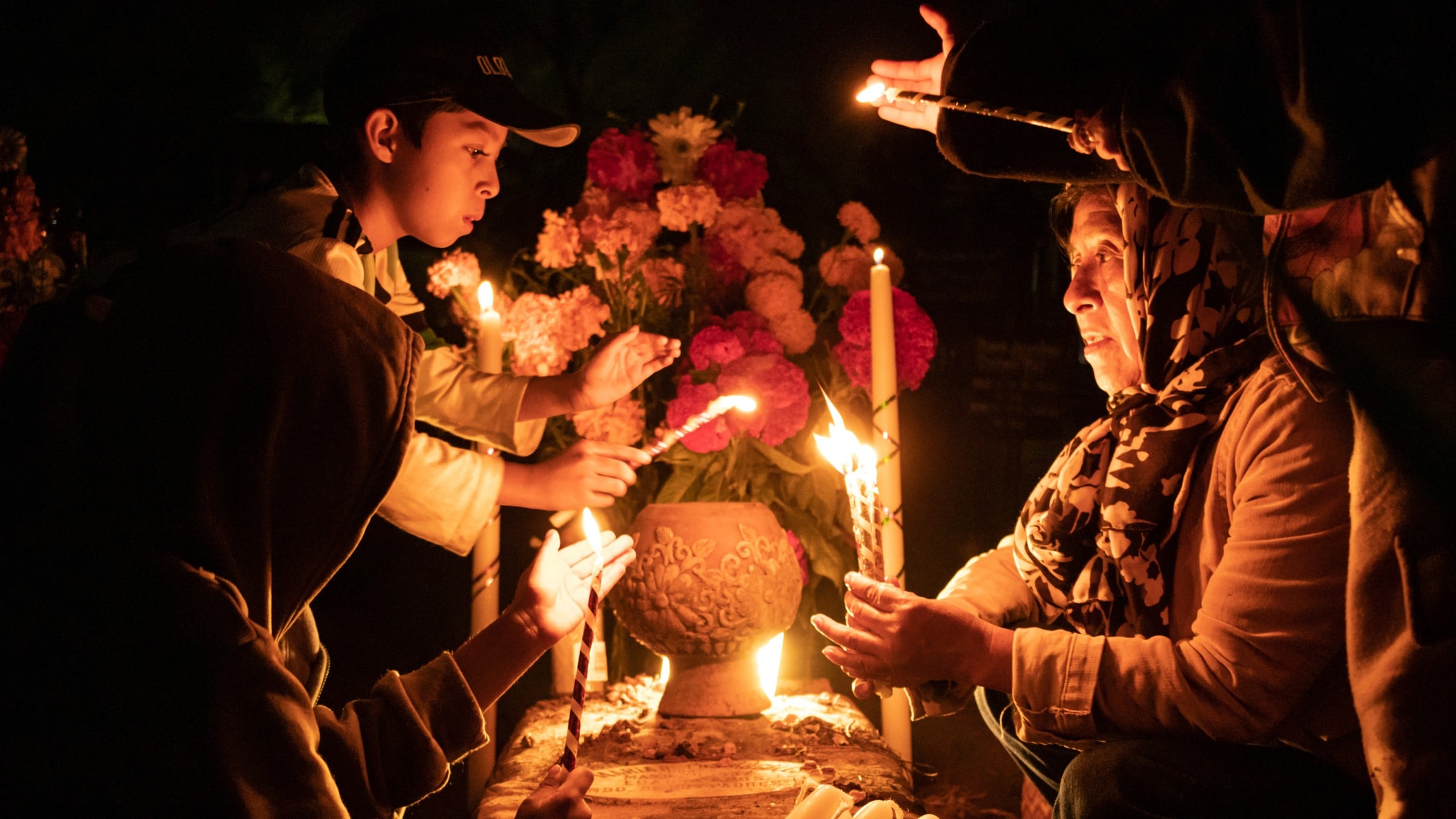
Martínez and others in southern Mexico's Oaxaca state wait with anticipation for Day of the Dead celebrations every Nov. 1, when families place homemade altars to honor their dearly departed and spend the night at the cemetery, lighting candles in the hope of illuminating their paths.
“We preserve the culture of our ancestors, and that is why we make our altars,” said Martínez, 41, who lives in the town of Santa María Atzompa.
Each Oct. 31, Martínez builds a three-level altar on her terrace. First come the flowers, a type of marigold known as cempasúchil. Martínez ties them in an arch over the altar.
“For us, that arch is a portal so that they (the deceased) can reach our house,” she said. “We also create a path of flowers to the door as a welcoming sign.”
Next, she lights copal, an incense which is believed to guide the souls, and places foods such as apples, peanuts and bread. Chocolates are for her grandma, she said.
“She was like my mother, so everything I’m going to offer is with the hope that she can be here," Martínez said.
On this date, Oaxacans don’t honor death but rather their ancestors, said the local secretary of culture, Victor Cata. “It’s a celebration of those with whom we shared a time and a roof, who were flesh and blood like us.”
Santa María Atzompa traditions are embraced from childhood and passed from parents to children. Martínez’s 8-year-old daughter asked if she could help arrange the fruit on the altar, and her mother assigned an additional task: Make sure the candles stay lit in the afternoon so that our deceased don’t lose their way.
As soon as the sun sets, locals gather at the cemetery to light candles over their family tombs and start a vigil known as “vela."
María Martínez, 58, paid a visit to her late husband by noon. “I do feel that they are returning today but I also think they are with us daily, not just on this date,” she said.
Oaxacan traditions vary among the 16 indigenous groups and the Afro-descendant community, but according to Cata, there’s a shared ancient knowledge that relates to the land.
“October and November are the dry season, when the land languishes,” Cata said. “But it is reborn, so there is this thought that the dead return to enjoy what they loved in life.”
Felipe Juárez, 67, offered mezcal and beer for one of his brothers. For other family members, his wife cooked Oaxacan delicacies such as mole, a traditional sauce.
It will be a long night, Juárez said, until they go home at 6 a.m., but these are joyful times.
“On the day we die, we will meet them again,” Juárez said. “We will reach that place where they have come to rest.”
Associated Press religion coverage receives support through the AP’s collaboration with The Conversation US, with funding from Lilly Endowment Inc. The AP is solely responsible for this content.
Swedish startup Amuse looking to re-invent the record label through machine learning. The company, the world's first mobile record company, just launched a new feature called 'Fast Forward' that uses data to predict and pay artists for their future royalties. "We allow artists around the world to use our digital distribution service," explained Co-Founder and CEO Diego Farias. "They upload the music to us, we deliver it to Apple, Spotify, etc. Whatever earnings they get they keep, so 100 percent of what they make."
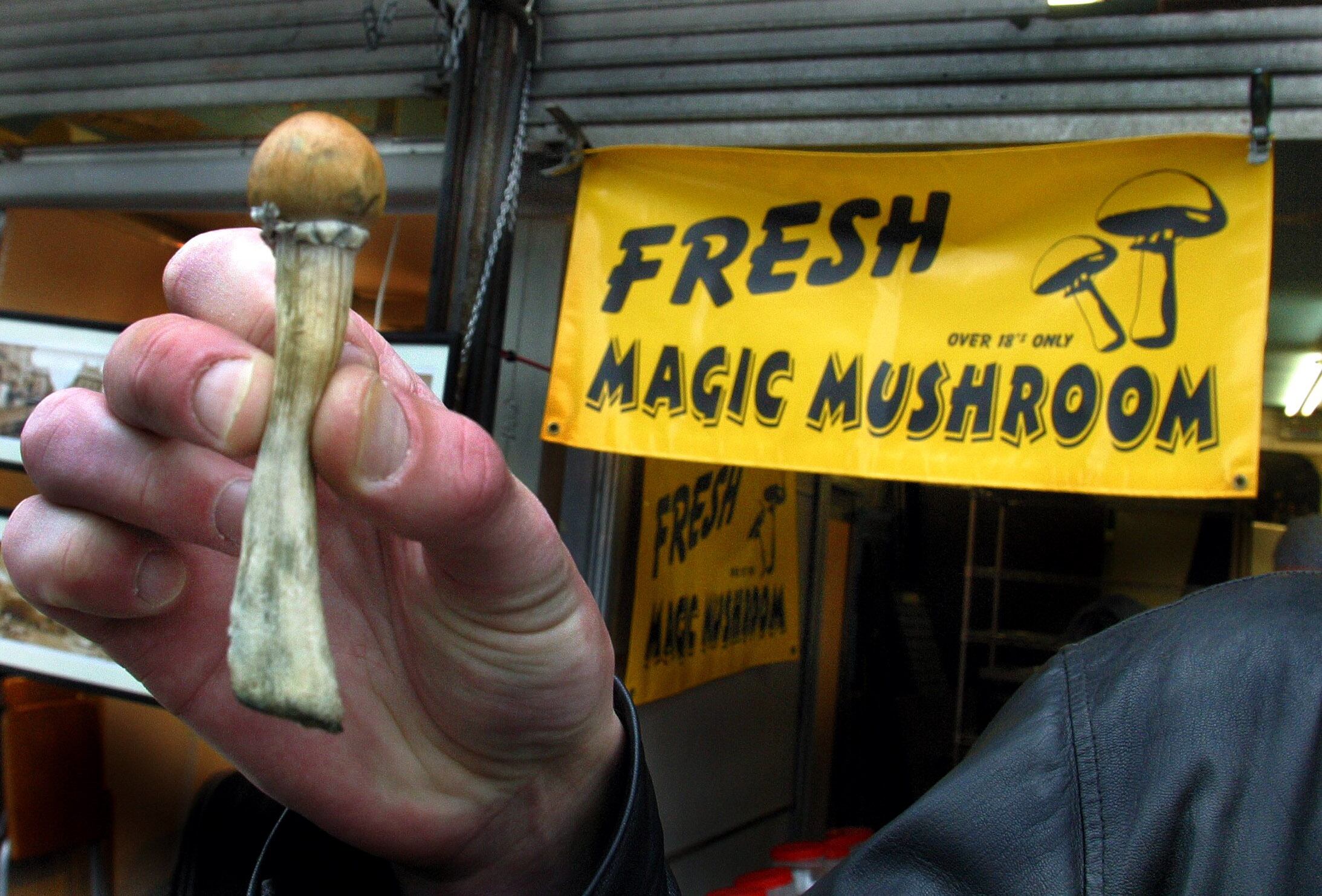
More than 50 years after the psychedelic Summer of Love, psilocybin, the psychoactive component in magic mushrooms, is having a moment. Researchers at leading universities have been conducting research on the purported medical benefits of mushrooms for years, but as studies yield promising results, the opioid epidemic persists and sentiment warms toward cannabis, mushrooms are earning a lot more attention. Lawmakers and psychotropic advocates have concurrently advanced separate measures in Oregon, Colorado, and, most recently, Iowa, that attempt to loosen restrictions on these hallucinogenic fungi.
Sen. Kamala Harris, weeks into her campaign for president, not only acknowledged that she has smoked pot, but said she isn't opposed to federal legalization of marijuana. "I think it gives a lot of people joy and we need more joy," Harris said, laughing, during an interview on the influential hip-hop radio show The Breakfast Club Monday morning.
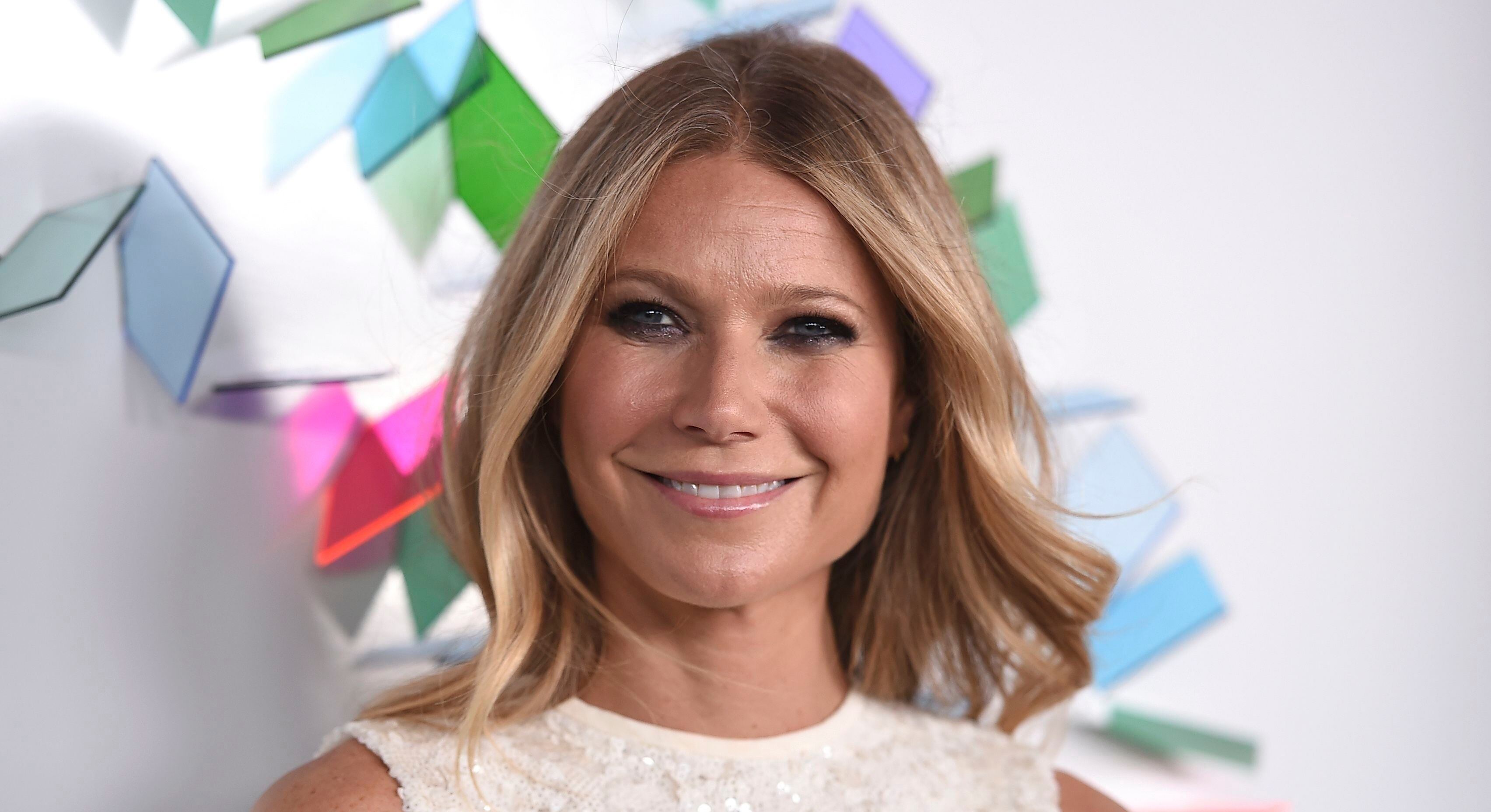
Gwyneth Paltrow didn't mean to start a wellness empire. "It was quite accidental," Paltrow told Cheddar's Alyssa Julya Smith in an interview from the Los Angeles Goop Lab, her company's first brick-and-mortar store. Ten years after embarking on a journey to better understand "all aspects of wellness" in the wake of her late father's cancer diagnosis, Paltrow's Goop is now a multi-faceted wellness and lifestyle brand, with a hand in retail, digital media, publishing, events and, soon, a presence on Netflix.
These are the headlines you Need 2 Know for Monday, Feb. 11, 2019.
From Wall Street to Silicon Valley, these are the top stories that moved markets and had investors, business leaders, and entrepreneurs talking this week on Cheddar.
Gavin de Becker has been operating in elite, high-profile circles for nearly four decades, but very few knew his name before Jeff Bezos mentioned it on Thursday in his explosive allegations that a tabloid publisher attempted to blackmail him over explicit photos. De Becker, Bezos' longtime private security consigliere, has a star-studded pedigree that spans 40 years.
About half of U.S. gamers are women, but you wouldn't necessarily know it by looking at hardware design. Vivian Lien, chief marketing officer at ASUS North America, joined Cheddar Friday to discuss how her company is trying to make gaming more welcoming for women.
Jonah Larson has threaded a small empire with his even smaller hands. The 11-year-old Wisconsin native and crocheting prodigy who learned his craft at age five has a massive following online 40,000 and counting through his viral Instagram account. He even has a business manager ー his mother, Jennifer Larson.
John Henry has some advice for young entrepreneurs ー but he'd rather they didn't listen too closely to it. "My advice is always the same," the entrepreneur and investor told Cheddar. "My advice is not to listen to so much advice." On Henry's new unscripted series, "Hustle," which premieres on Viceland later this month, he coaches a diverse group of real-life budding entrepreneurs struggling to make their dreams a reality in New York City.