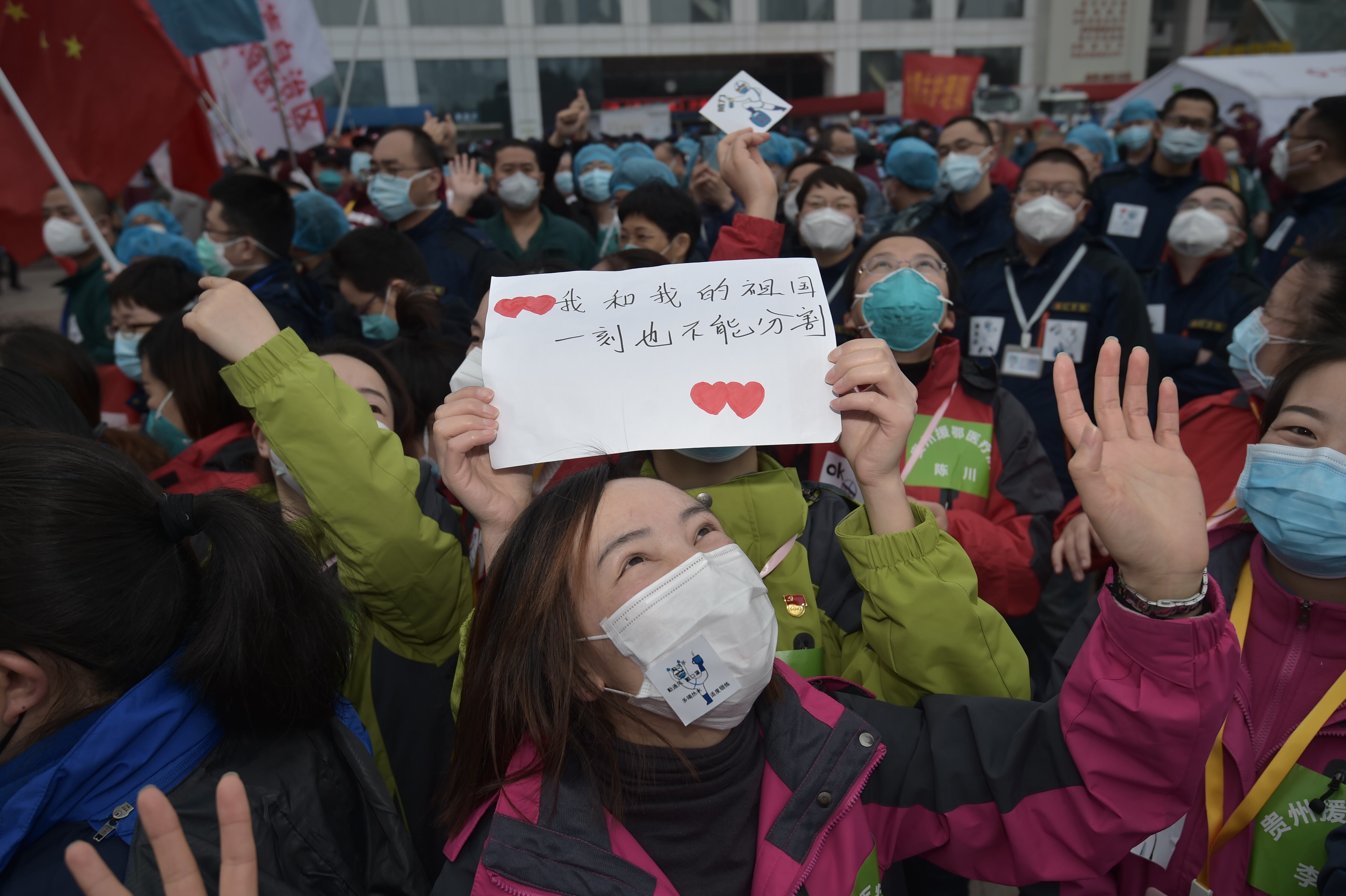
Medical workers celebrate the shutting down of Jianghan Fangcang temporary hospital for COVID-19 patients in Wuhan in central China's Hubei province Monday, March 09, 2020. (Photo credit should read Feature China/Barcroft Media via Getty Images)
Officials at the World Health Organization said Monday that of about 80,000 people who have been sickened by COVID-19 in China, more than 70 percent have recovered and been discharged from hospitals.
Patients are typically released when they test negative twice for the virus within 24 hours, meaning they’re no longer carrying the virus, although some countries may be using a slightly different definition, which may include when people have no more respiratory symptoms or a clear CT scan.
The World Health Organization said it could take considerably longer for people to be “recovered,” depending on the severity of the disease.
Dr. Mike Ryan, the World Health Organization's emergencies chief, said it can take up to six weeks for people to fully recover from COVID-19 infections, which could include pneumonia and other respiratory problems in serious cases. He said the numbers of reported patients have not always been systematically provided to World Health Organization although the U.N. health agency is asking every country with cases for further information.
Marjorie Woods, Owner of Epic Food Group, joins ChedHER to discuss the story behind her company, challenges during the pandemic, and her plans for growth.
The Department of Justice is suing Texas over the state's new abortion law that prohibits abortions after six weeks, well before many women even know they're pregnant. The lawsuit argues the law is unconstitutional under long-standing Supreme Court precedent. It was filed last week in federal court in Texas, but could go all the way to the high court within weeks. Josh Blackman, a constitutional law professor at South Texas College of Law Houston, discusses the DOJ lawsuit and what it could mean for other abortion laws across the country.
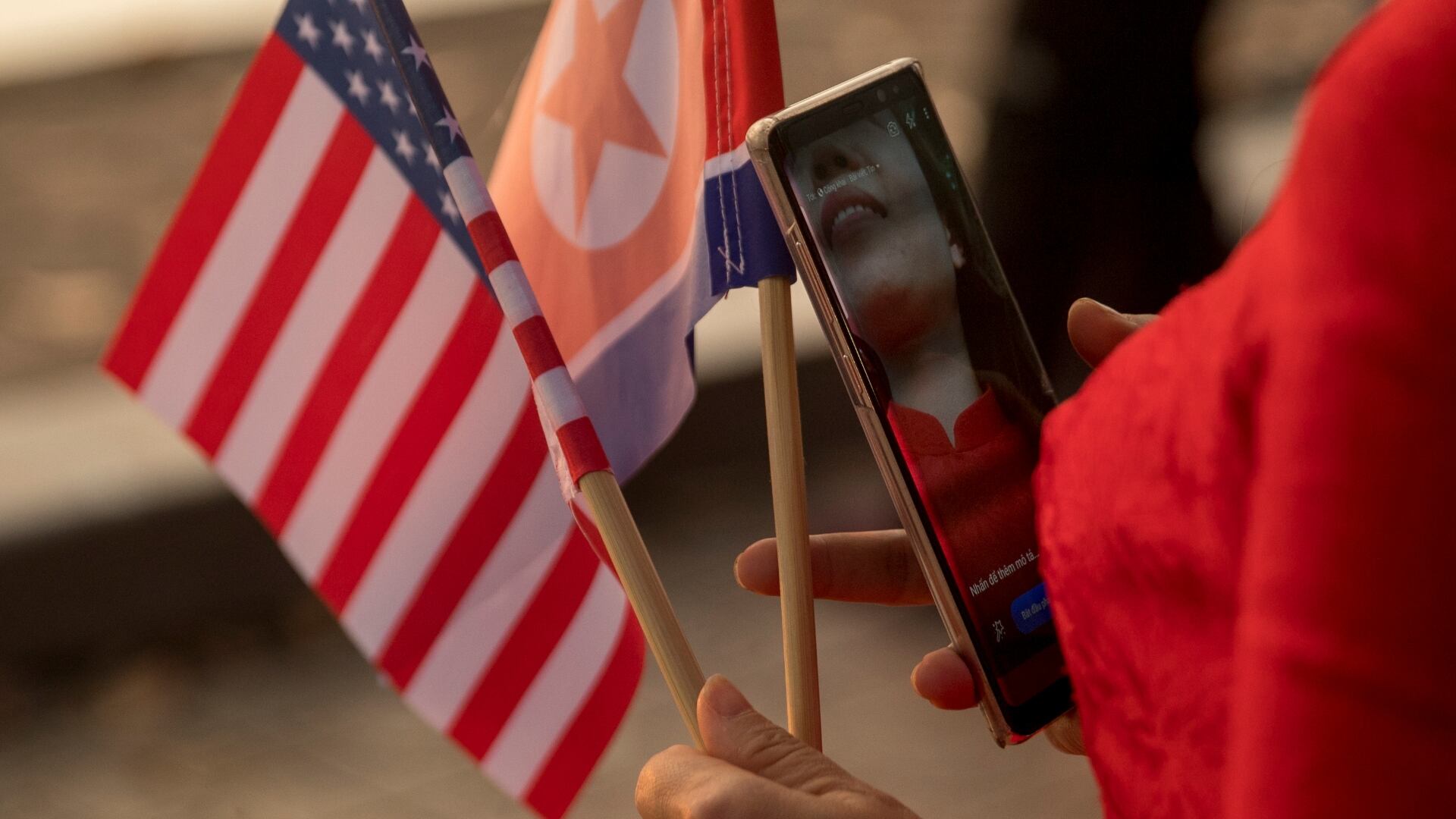
The Biden Administration has officially extended a ban on a Trump-era policy that prohibits traveling with a U.S. passport to North Korea. The extension is expected to last until August 2022. The ban was initially enforced after the death of Otto Warmbier, who entered a vegetative state while in North Korean custody. Advocates against the ban argue that it has caused crippling impacts on Korean Americans who have not been able to reunite with their families back home. Senior Fellow at The Foundation For Defense of Democracies Anthony Ruggiero joined Cheddar's News Wrap to discuss more.
In this edition of Tik Talk None Of The Above's J.D. Durkin breaks down the latest trend on TikTok where people sit down to tape a scholarship application video and it all goes off the rails.