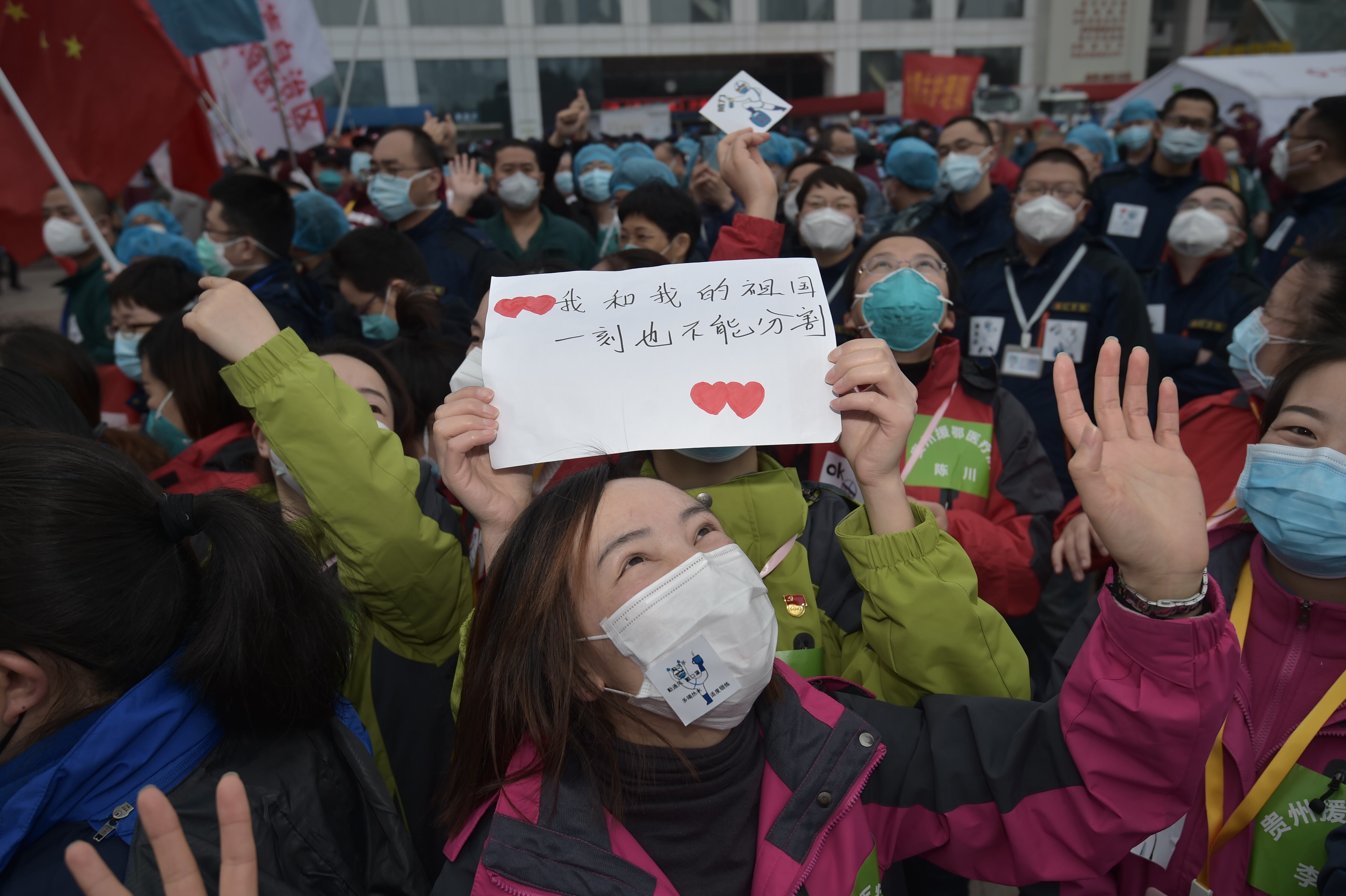
Medical workers celebrate the shutting down of Jianghan Fangcang temporary hospital for COVID-19 patients in Wuhan in central China's Hubei province Monday, March 09, 2020. (Photo credit should read Feature China/Barcroft Media via Getty Images)
Officials at the World Health Organization said Monday that of about 80,000 people who have been sickened by COVID-19 in China, more than 70 percent have recovered and been discharged from hospitals.
Patients are typically released when they test negative twice for the virus within 24 hours, meaning they’re no longer carrying the virus, although some countries may be using a slightly different definition, which may include when people have no more respiratory symptoms or a clear CT scan.
The World Health Organization said it could take considerably longer for people to be “recovered,” depending on the severity of the disease.
Dr. Mike Ryan, the World Health Organization's emergencies chief, said it can take up to six weeks for people to fully recover from COVID-19 infections, which could include pneumonia and other respiratory problems in serious cases. He said the numbers of reported patients have not always been systematically provided to World Health Organization although the U.N. health agency is asking every country with cases for further information.
On this episode of Cheddar Innovates: Vision Marine Technologies CEO discusses how e-boats will play a role in the fight against the climate crisis; Lasso CEO breaks down how the design behind these compression socks can prevent injuries and improve performance; Cheddar gets a look at Curiosity Stream's 'The Tombs Of Egypt.'
Catriona Campbell, CTIO, UK and Ireland, EY, joins Cheddar News to discuss how business leaders can bridge the gap between their technology investments and their aspirations, and breaks down the human aspects of A.I.
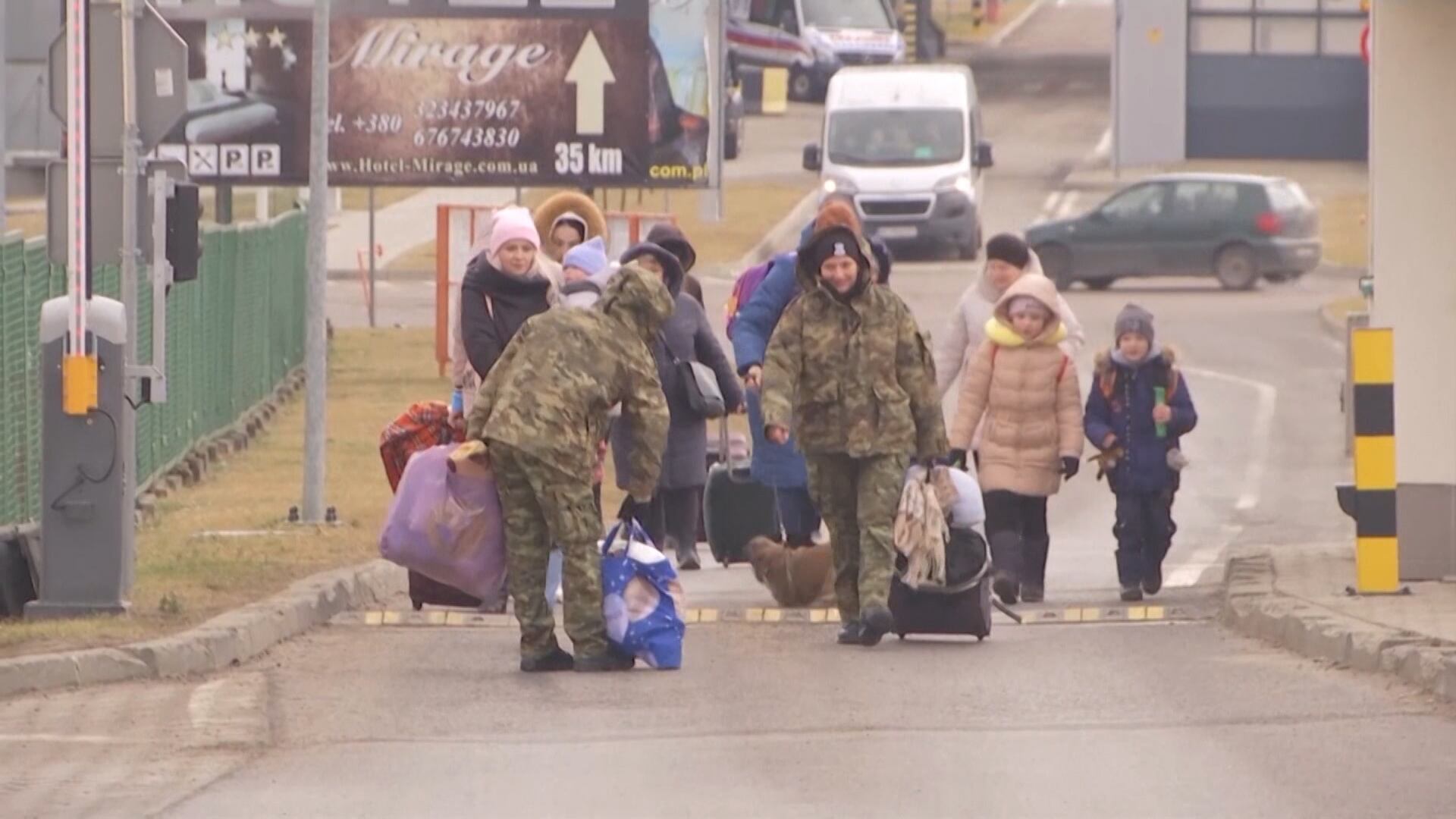
Tens of thousands of people have fled Ukraine in attempts to escape the Russian Invasion. According to the U.N. neighboring countries like Poland, Hungary, and even Romania have seen half a million refugees. While the hospitality is being welcomed by many, it also highlights the mistreatment of migrants and refugees from the Middle East and Africa. Professor of Philosophy and Director of Politics at Northeastern University Serena Parekh, joined Cheddar, to discuss more.
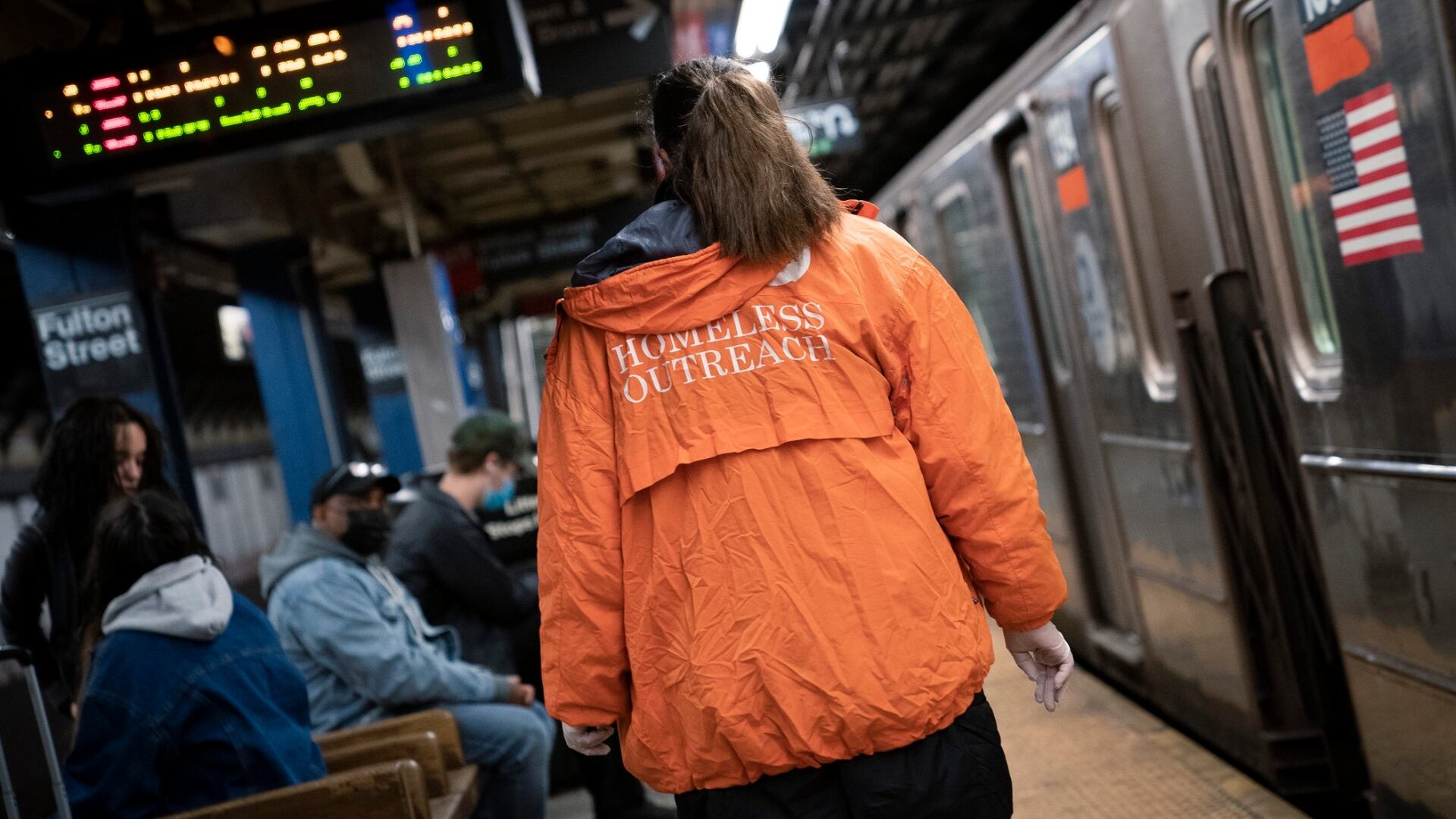
New York's MTA unveiled a new plan to boost the safety for the Big Apple's public transit system to go into effect on the heels of a violent weekend on the subways. The six separate attacks follow a rise of 60 percent in violent subway crimes year to date. The plan will attempt to address the surge in violence, as well as separately offer services to the homeless found within the system, according to the transportation authority. Cheddar's Chloe Aiello explains.
On this episode of Cheddar Reveals, Kim Severson, National Food Correspondent, The New York Times, dives into some of the top trends in the food industry for the upcoming year; Renowned Harlem chef & restaurateur Melba Wilson discusses her inspirations and rise in the food industry, and giving back to her community through food; Cheddar gets a look at Curiosity Stream's 'The History of Food.'
Kim Severson, National Food Correspondent, The New York Times, joins Cheddar Reveals to dive into some of the top trends in the food industry for the upcoming year.
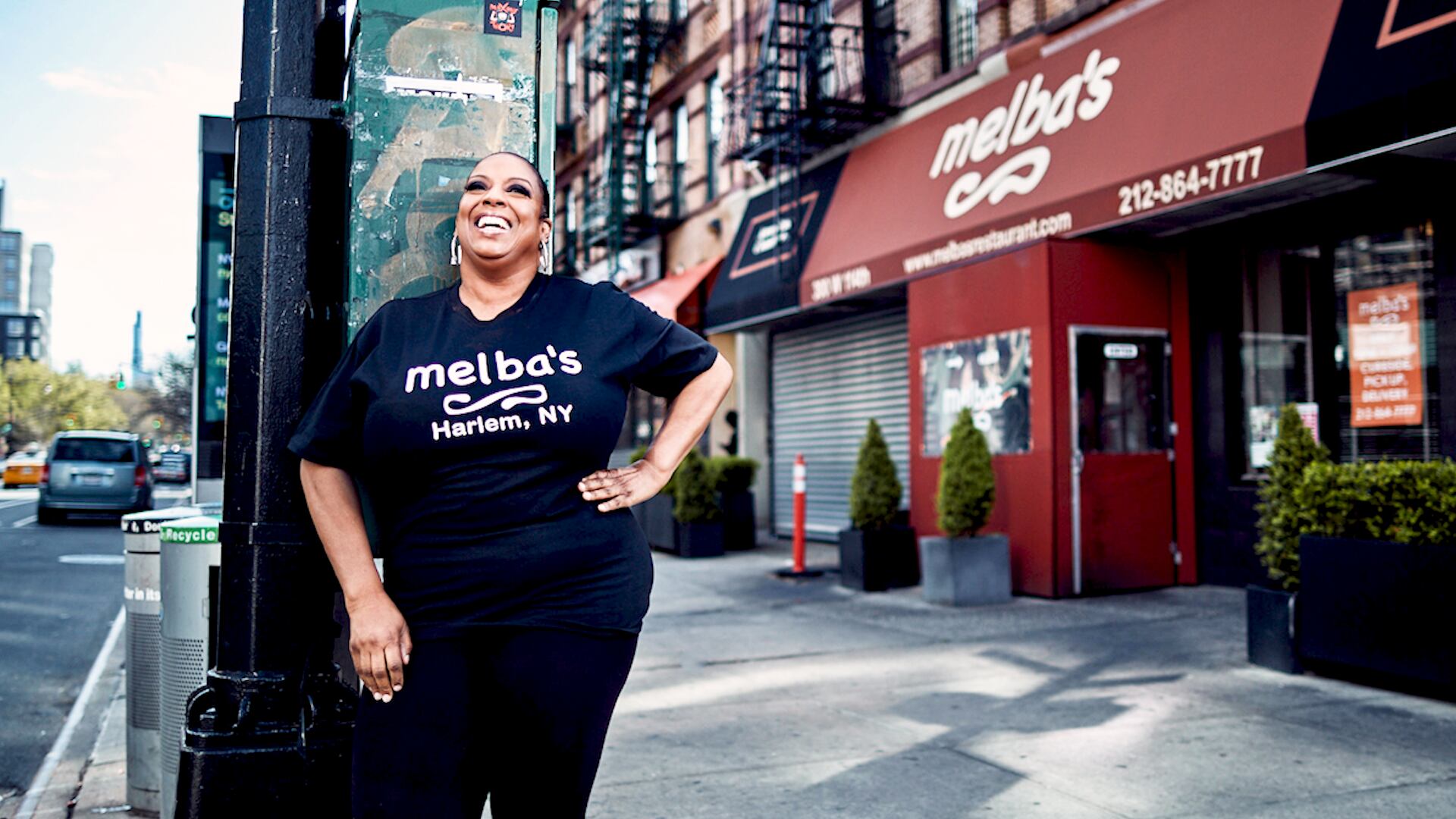
Renowned Harlem chef & restaurateur Melba Wilson joins Cheddar to discuss her inspirations and rise in the food industry, and giving back to her community through food.
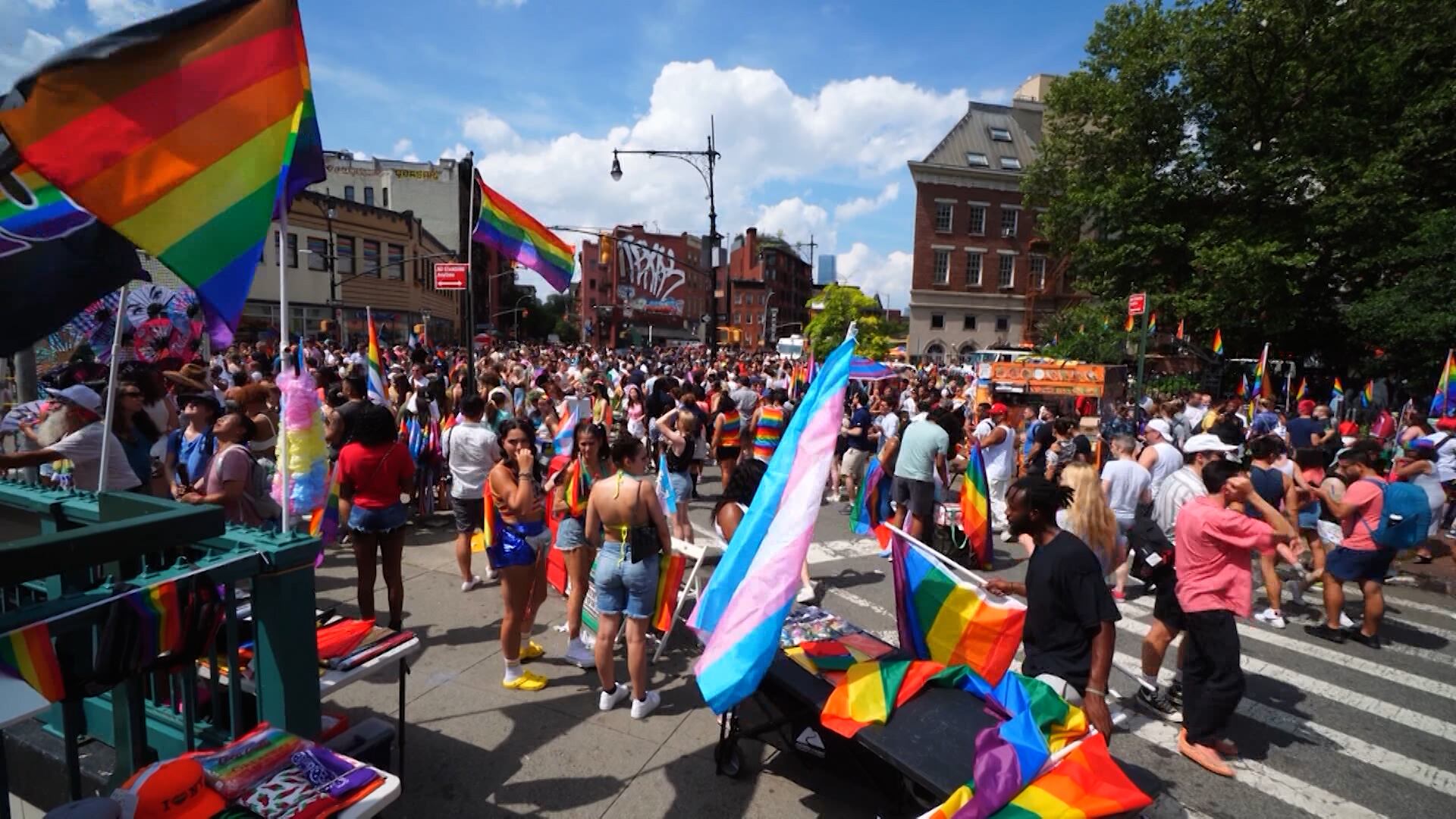
A Gallup poll finds that now 7.1% of American adults identify as LGBTQ, jumping from 3.5% in 2012. The increase is driven by Generation-Z – those born between 1997 and 2003 – of whom one out of five identify as LGBTQ. Cheddar News speaks with Washington Blade reporter Chris Johnson about the significant shift.