The Biden administration on Wednesday announced a new program under the Bipartisan Infrastructure Law that aims to expand the infrastructure needed to keep electric vehicles charged.
Here are some of the biggest takeaways:
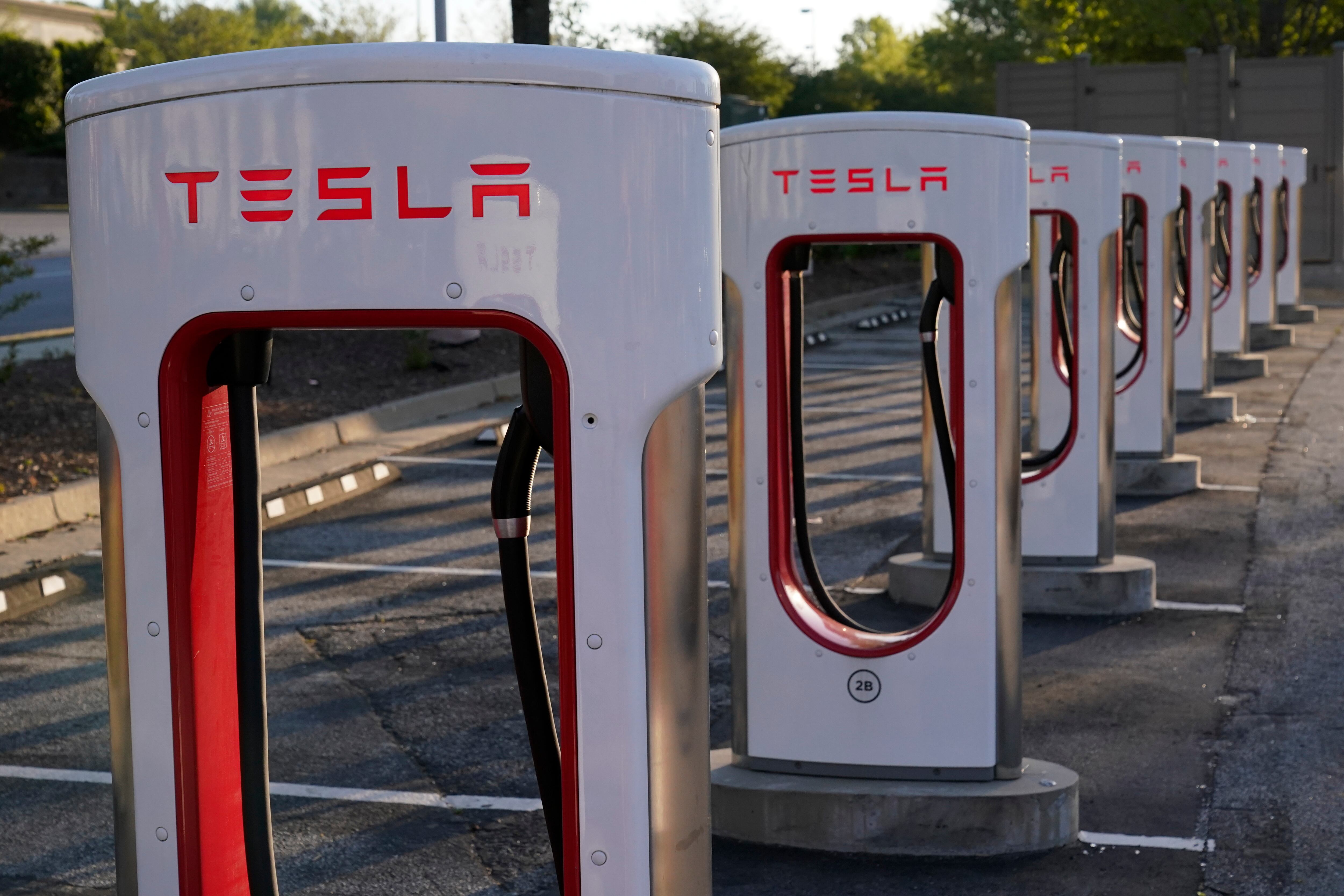
The White House also highlighted actions from several companies to help expand access to EV chargers, including Tesla's decision to open at least 7,500 stations in its U.S. Supercharger and Destination Charger network to non-Tesla vehicles by the end of 2024.
"All EV drivers will be able to access these stations using the Tesla app or website," the White House said in a statement. "Additionally, Tesla will more than double its full nationwide network of Superchargers, manufactured in Buffalo, New York."
Hertz and bp, meanwhile, plan to build a national network of fast-charging stations designed to serve rideshare, tax drivers, car rental customers, and the general public near "high-demand locations, such as airports."
The White House also championed efforts by companies such as General Motors, Mercedes-Benz, Volvo Cars, and Starbucks to expand the EV charging network.
The administration said all of these initiatives support President Joe Biden's goal of making electric vehicles 50 percent of all auto sales by 2030. In 2022, they made up about 10 percent of all sales.
On this episode of Cheddar Innovates: President of The Pillow Bar breaks down how everyone can benefit from a pillow customized to their unique way of sleeping; CEO of H2Pro explains how to bring environmentally friendly hydrogen to scale; Cheddar gets a look at Curiosity Stream's 'Suppressed Science.'
On this episode of Cheddar Innovates: Gardenuity CEO breaks down how gardening can improve your wellbeing; Augmedix CEO discusses how this technology is helping doctors fight burnout; Cheddar gets a look at Curiosity Stream's 'Suppressed Science.'
On this episode of Cheddar Innovates: Atom Limbs CEO breaks down how the Atom Touch prosthetic is different from other prosthetics on the market; CEO & Chief Scientific Officer of MyMD explains how the MYMD-1 is on track to be the first FDA-approved drug to treat aging and age-related diseases; A look at Curiosity Stream's 'The Future of Warfare.'
On this episode of Cheddar Innovates: SkilsVR CEO explains how virtual reality is being used to train frontline workers to handle difficult customers; Rubicon CEO breaks down how technology and sustainability will go hand in hand in the future; Cheddar gets a look at 'Our Infinite Universe.'
As Russian forces invade Ukraine, millions of dollars in cryptocurrency has flowed into the country to lend support. Russian citizens are also seeing the appeal after sanctions have made their traditional banks unreliable. Robbie Heeger, president and CEO of Endaoment, joins Cheddar News to discuss.
Amazon unveiled its new mobile app called Amp as a direct competitor to Clubhouse, allowing people to host live radio shows. Although it is still in beta, users can join the waitlist from the iOS store.
The war in Ukraine continues to reveal heartbreaking gut-wrenching stories. The war in itself is not only devastating but also expensive. Experts estimate that Russia is draining nearly $20 million dollars each day to continue occupying and invading Ukraine. All this could force the country to turn to cryptocurrencies. It's a major turn for the country that briefly considered outlined digital assets entirely, but it could also have serious implications for cryptos. Managing Director at Quantum Fintech Group, Harry Yeh, joined Cheddar to discuss more.