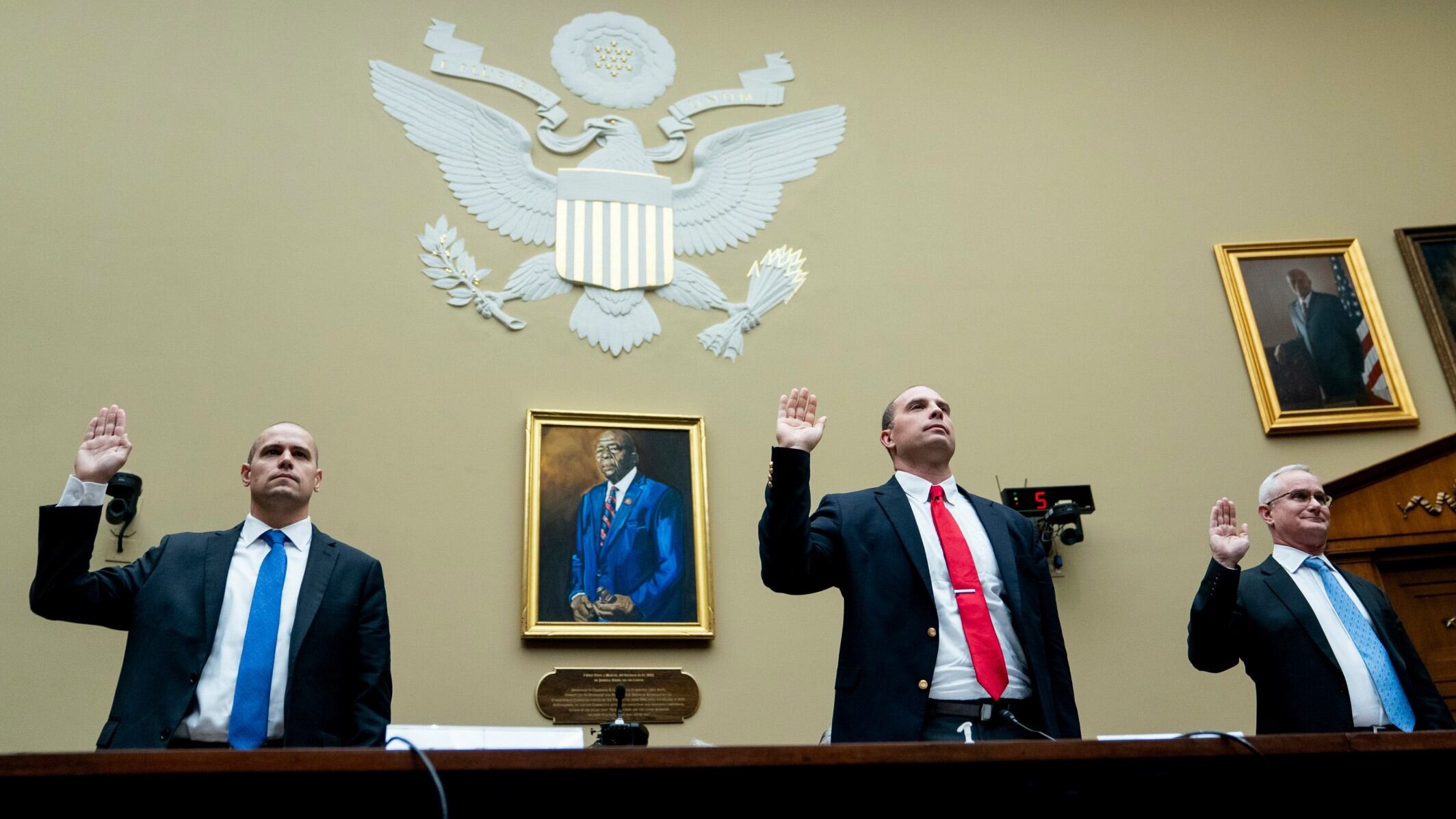
Ryan Graves, Americans for Safe Aerospace Executive Director, from left, U.S. Air Force (Ret.) Maj. David Grusch, and U.S. Navy (Ret.) Cmdr. David Fravor, are sworn in during a House Oversight and Accountability subcommittee hearing on UFOs, Wednesday, July 26, 2023, on Capitol Hill in Washington. (AP Photo/Nathan Howard)
By Nomaan Merchant
The U.S. is concealing a longstanding program that retrieves and reverse engineers unidentified flying objects, a former Air Force intelligence officer testified Wednesday to Congress. The Pentagon has denied his claims.
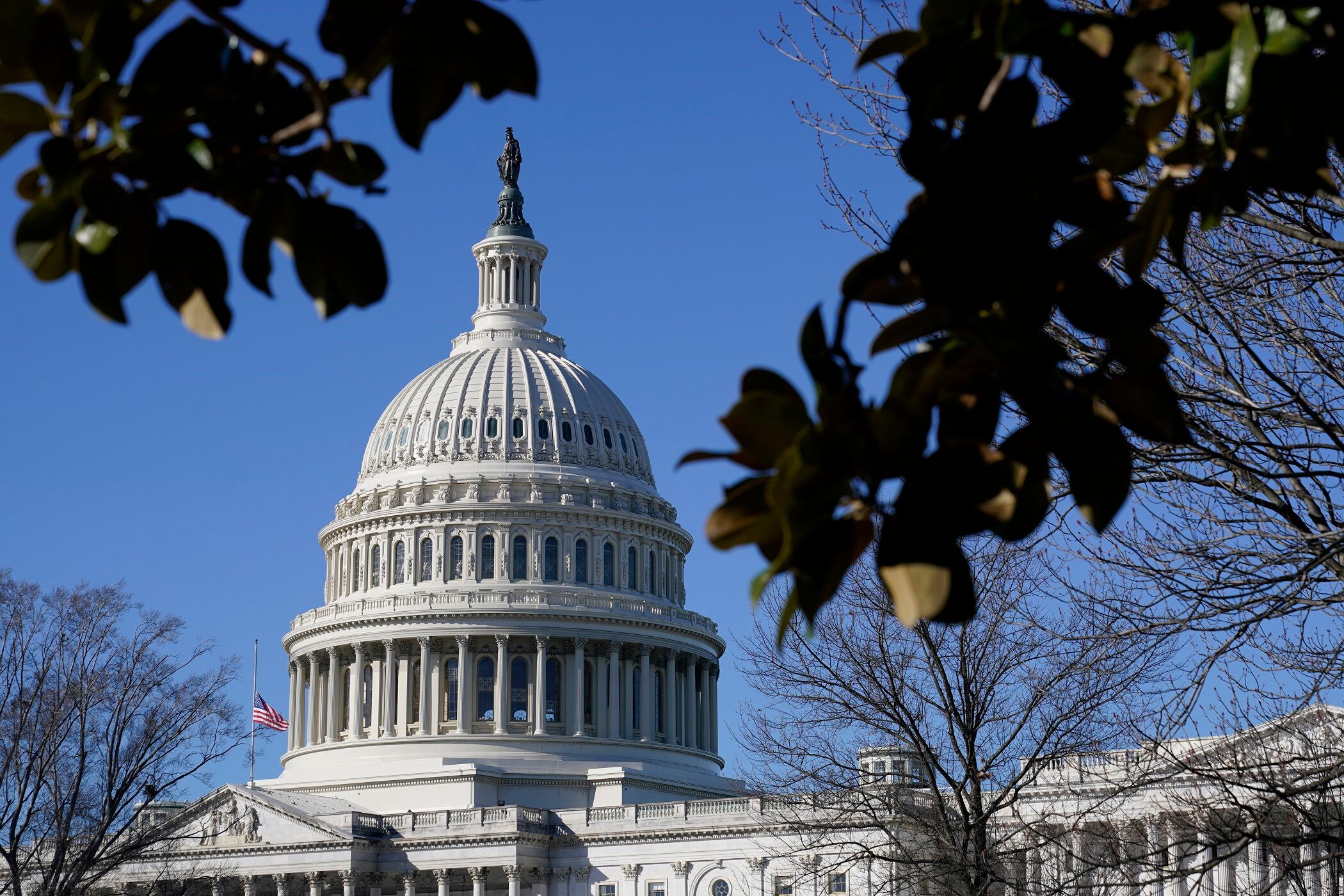
Retired Maj. David Grusch's highly anticipated testimony before a House Oversight subcommittee was Congress' latest foray into the world of UAPs — or “unidentified aerial phenomena," which is the official term the U.S. government uses instead of UFOs. While the study of mysterious aircraft or objects often evokes talk of aliens and “little green men,” Democrats and Republicans in recent years have pushed for more research as a national security matter due to concerns that sightings observed by pilots may be tied to U.S. adversaries.
Grusch said he was asked in 2019 by the head of a government task force on UAPs to identify all highly classified programs relating to the task force's mission. At the time, Grusch was detailed to the National Reconnaissance Office, the agency that operates U.S. spy satellites.
“I was informed in the course of my official duties of a multi-decade UAP crash retrieval and reverse engineering program to which I was denied access,” he said.
Asked whether the U.S. government had information about extraterrestrial life, Grusch said the U.S. likely has been aware of “non-human” activity since the 1930s.
The Pentagon has denied Grusch's claims of a coverup. In a statement, Defense Department spokeswoman Sue Gough said investigators have not discovered “any verifiable information to substantiate claims that any programs regarding the possession or reverse-engineering of extraterrestrial materials have existed in the past or exist currently.” The statement did not address UFOs that are not suspected of being extraterrestrial objects.
Grusch says he became a government whistleblower after his discovery and has faced retaliation for coming forward. He declined to be more specific about the retaliatory tactics, citing an ongoing investigation.
“It was very brutal and very unfortunate, some of the tactics they used to hurt me both professionally and personally,” he said.
Rep. Glenn Grothman, R-Wis., chaired the panel's hearing and joked to a packed audience, “Welcome to the most exciting subcommittee in Congress this week.”
There was bipartisan interest in Grusch’s claims and a more sober tone than other recent hearings featuring whistleblowers celebrated by Republicans and criticized by Democrats. Lawmakers in both parties asked Grusch about his study of UFOs and the consequences he faced and how they could find out more about the government’s UAP programs.
“I take it that you’re arguing what we need is real transparency and reporting systems so we can get some clarity on what’s going on out there,” said Rep. Jamie Raskin, D-Md.
Some lawmakers criticized the Pentagon for not providing more details in a classified briefing or releasing images that could be shown to the public. In previous hearings, Pentagon officials showed a video taken from an F-18 military plane that showed an image of one balloon-like shape.
Pentagon officials in December said they had received “several hundreds” of new reports since launching a renewed effort to investigate reports of UFOs.
At that point, “we have not seen anything, and we’re still very early on, that would lead us to believe that any of the objects that we have seen are of alien origin,” said Ronald Moultrie, the undersecretary of defense for intelligence and security. “Any unauthorized system in our airspace we deem as a threat to safety.”
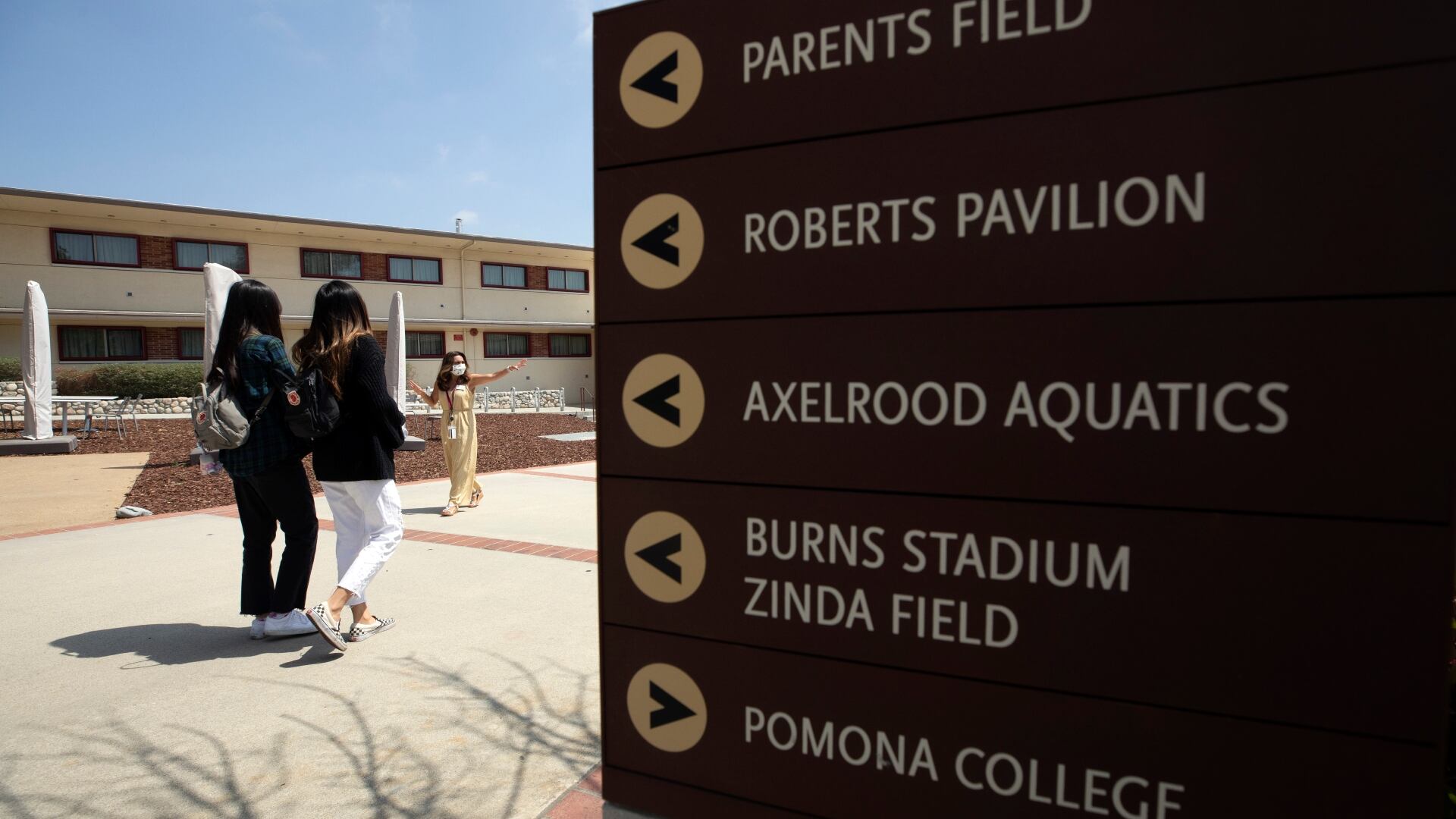
In February, Senator Jeff Merkley (D-Ore.) and Representative Jamaal Bowman (D-N.Y. 16th District) introduced the Fair College Admissions for Students Act. The bill looks to curb the admissions advantage given to the children of alumni and donors for colleges and universities. Sen. Merkley joined Cheddar news to discuss the push behind the legislation. "My dad was a mechanic. I was applying to schools around the country. I never thought about the fact that those students who came from the most privileged backgrounds also got a special advantage in applying to college," he said. "They take up 10-25 percent of the slots at many of our universities, and so this is kind of affirmative action for those who need it least rather than a level playing field for everyone else." If enacted, the law would amend the Higher Education Act of 1965 doing away with legacy or donor status admissions for any school participating in the federal student aid program.
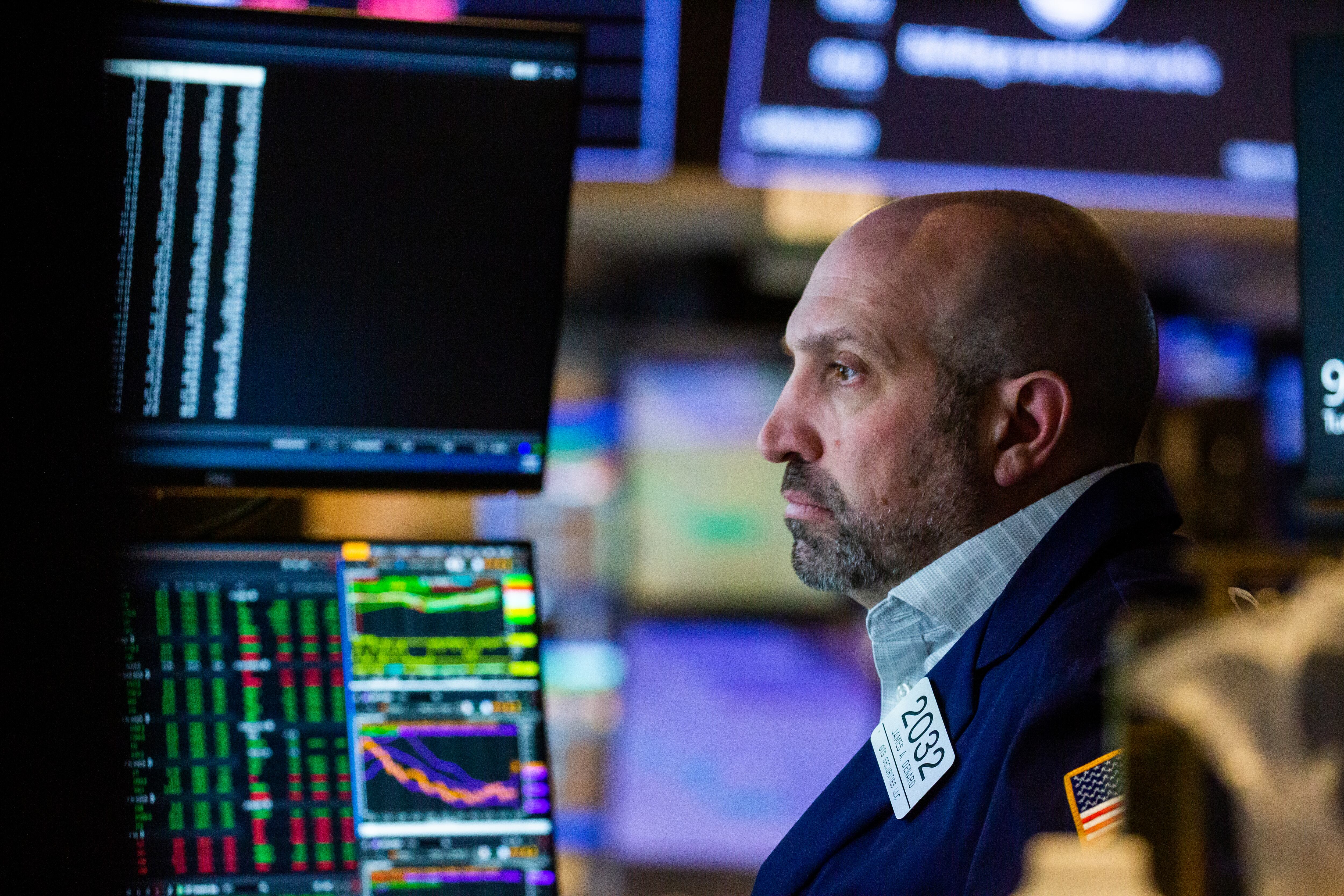
Nancy Daoud, a private wealth adviser for Ameriprise Financial, joins Cheddar News' Closing Bell, where she discusses what led to a sharp spike on Wall Street during Tuesday's session and what she will be watching for most closely when the Fed announces it latest policy decision on Wednesday.
Russia's economy is effectively at a standstill after it was slapped with extensive western sanctions, and now it has to make the first of four monthly interest payments on dollar bonds. It's likely the country will not be able to pay — so what happens next? Major credit ratings agencies have downgraded Russian sovereign debt, with Fitch issuing a 'C' rating and S&P Global Ratings issuing a 'CCC-' rating. Caleb Silver, Editor in Chief of Investopedia, joins Closing Bell to discuss what a Russian debt default could mean for Russia's economy, U.S. consumers who have pensions with exposure to Russian assets, and whether this could create a global financial crisis.
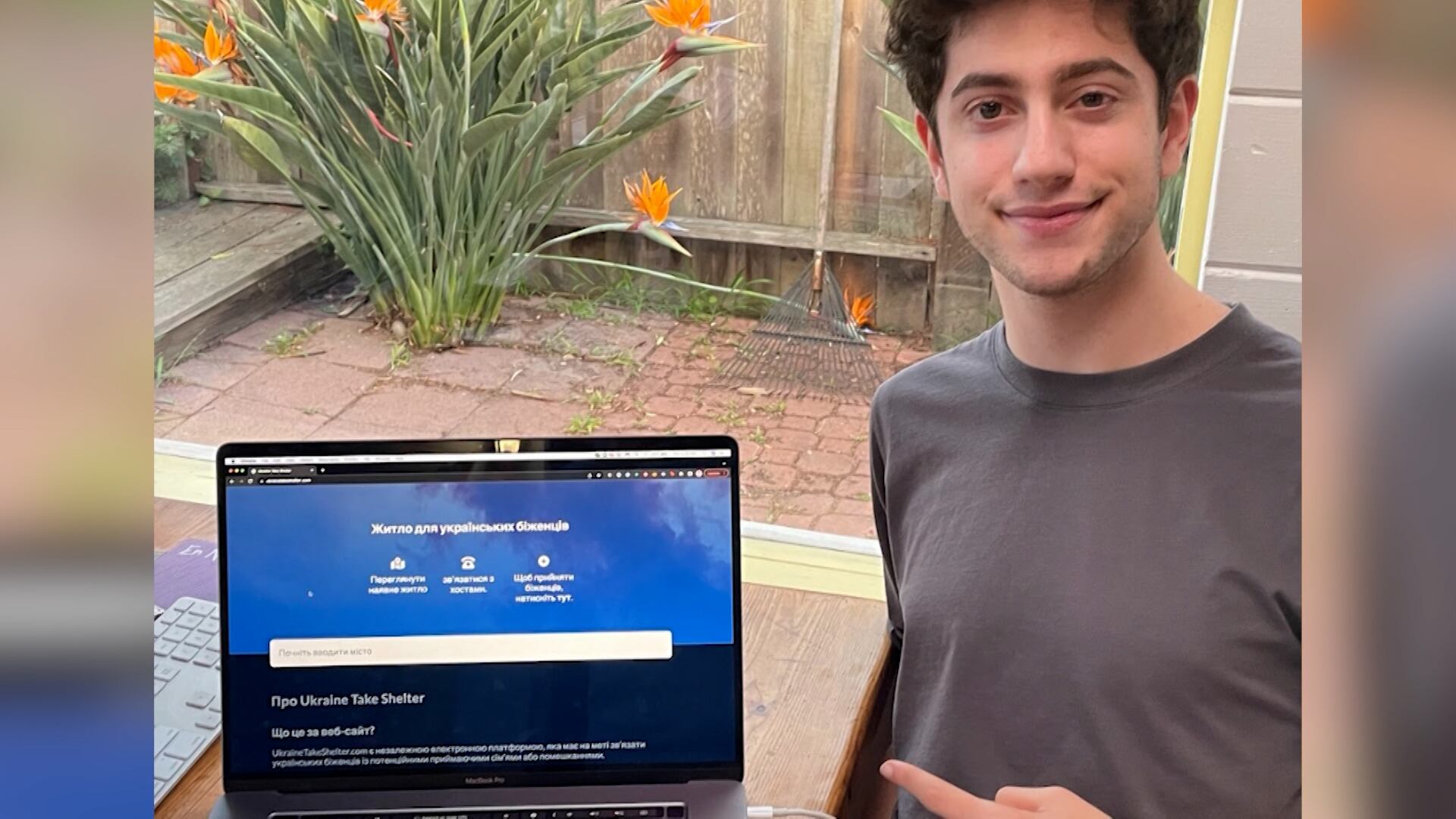
With the number of Ukrainians being displaced due to the Russian invasion surging, two students from Harvard took it on themselves to develop a website to help connect potential hosts with refugees seeking housing. The co-founder of the website Ukraine Takes Shelter, Marco Burstein, joined Cheddar news to discuss working together with fellow freshman Avi Schiffmann to streamline the effort to aid Ukrainian refugees. "We basically worked for three days straight developing the website, and since then the response has been pretty incredible," Burstein said.
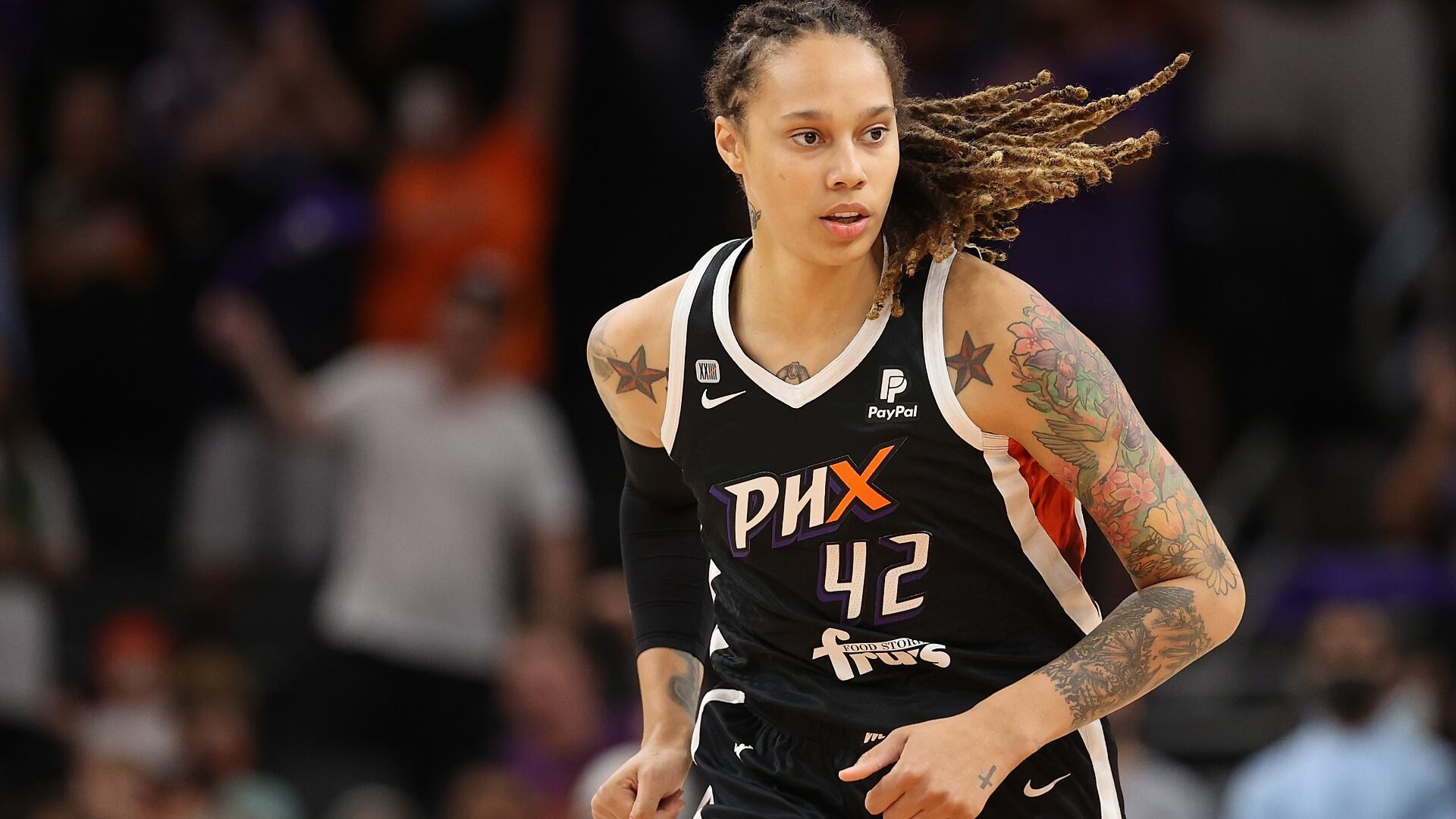
Over three weeks ago, WNBA player Brittney Griner was arrested in Russia on drug charges. According to reports, the Star arrived at an airport near Moscow where authorities found Vape cartridges and hashish oil in her luggage. Grindr faces serious charges that could carry a possible sentence of 5-10 years in a Russian prison. Experts warn that Griner's arrest could be used as a bargaining chip. Partner at Stroock & Stroock & Lavan, Thomas Firestone, joined Cheddar to discuss more.
On a live broadcast, an employee on a Russian state news television channel held up a sign protesting propaganda about the war in Ukraine. Ruslan Deynychenko, executive director of the Ukrainian fact-checking organization StopFake, joined Cheddar News to discuss what he called the misinformation spread to the Russian people about the invasion. "They are not about informing people they are about brainwashing people," he said. "Russian government uses their media as an instrument, as a tool, of their foreign policy."
Student loan payments for millions of borrowers are set to resume on May 1st. However, signals from the Department of Education show that the date may be pushed back. Once again, it's been pushed back a few times. Initially, the Biden Administration stated loan payments would resume as the economy continues to show signs of recovery. Student Loan Expert and Author of "How to Appeal for More College Financial Aid", Mark Kantrowitz, joined Cheddar to discuss more.