More than a decade after the term was coined by columnist Thomas Friedman in the New York Times, there is a Green New Deal proposal in Congress.
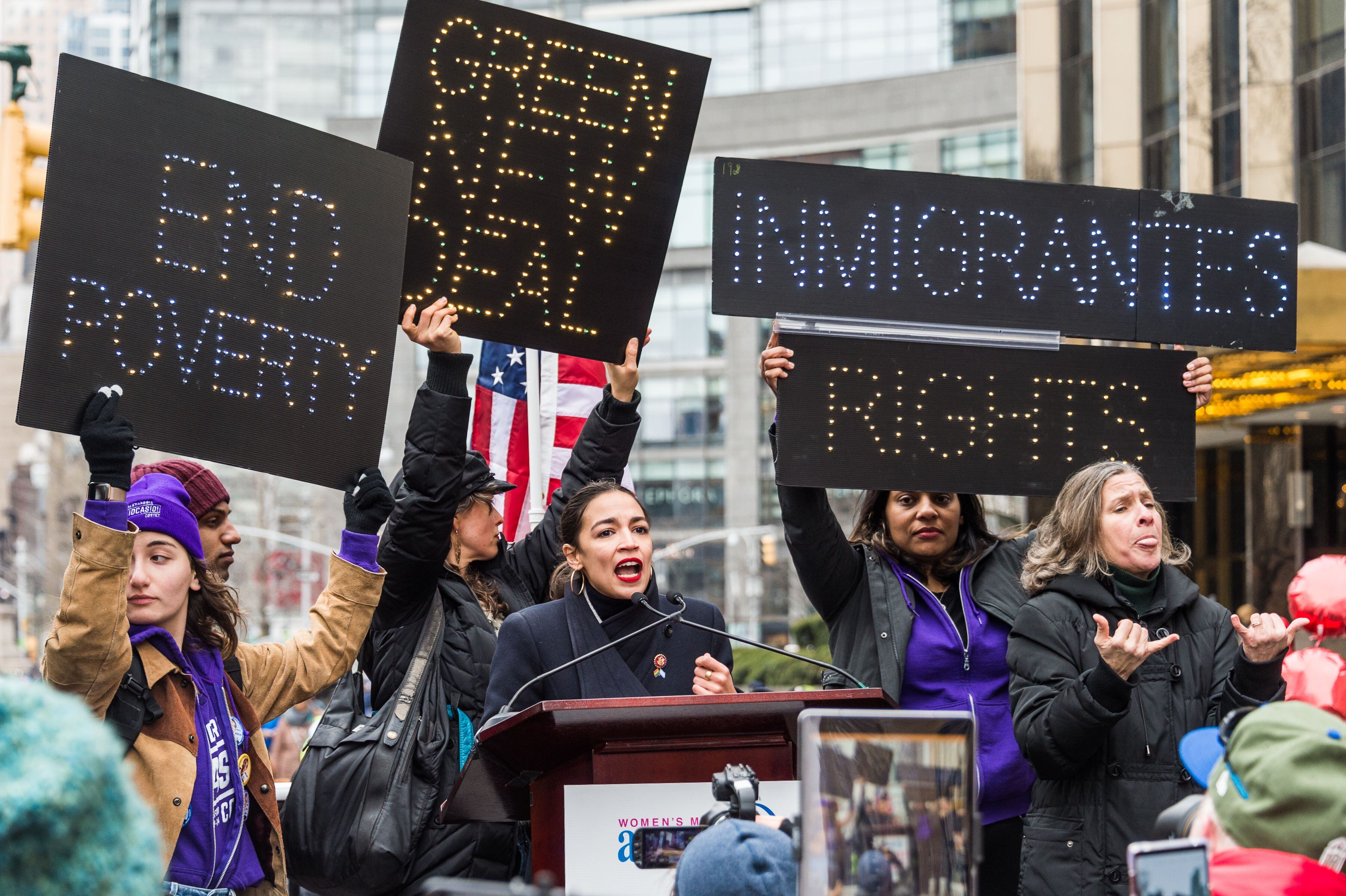
Rep. Alexandria Ocasio-Cortez (D-NY) and Sen. Ed Markey (D-MA) have proposed a formal resolution that would frame climate change, economic sustainability and social justice together under a unifying theme, calling for a Depression-era national mobilization similar to FDR's New Deal, and serving as a litmus test for Democratic presidential candidates going forward.
History of the Green New Deal
A Green New Deal has long been an amorphous idea kicking around progressive circles. President Obama attempted to make it part of his platform in the form of a cap-and-trade bill that died in the Senate early in his presidency. His other climate policies were largely undone by President Trump.
It wasn't under Rep. Ocasio-Cortez made it a tentpole of her insurgent 2018 congressional campaign that it began to coalesce into an actual set of policies and a major piece of the Democratic agenda. AOC's platform called for “transitioning the United States to a carbon-free, 100-percent renewable energy system, and a fully modernized electrical grid by 2035.”
What Does it Do?
The Green New Deal attempts to tie that goal to broader issues of inequality, infrastructure modernization and access to healthcare. The plan calls for a 10-year national mobilization to aggressively curb greenhouse gas emissions, including neutralizing human-caused greenhouse emissions entirely by 2050 and a goal of increasing U.S. renewable energy production to near 100 percent within a decade.
The GND proposal goes on to tie the need for a massive national infrastructure overhaul to climate change and the effects of worsening natural disasters. It also proposes that every existing building in the country be retrofitted to more efficiently use energy and water.
What Comes Next?
As a non-binding resolution, the proposal would not change any laws even if it were to pass. Instead, it's meant as a stake in the ground around which Democrats can rally their base, and as a framework for candidates running for office to endorse. So far, every major Democrat running for president in 2020 has endorsed a Green New Deal in concept. Thursday's resolution would add specific policy goals for candidates to either endorse or refute.
The sweeping resolution goes beyond climate change proposals to include other pieces of a progressive platform, like a call for a federal jobs guarantee, universal basic income and universal healthcare. By framing those items as part and parcel of environmental policy, supporters hope to galvanize voters around a holistic "big idea," the way FDR garnered support for the New Deal during the Depression.