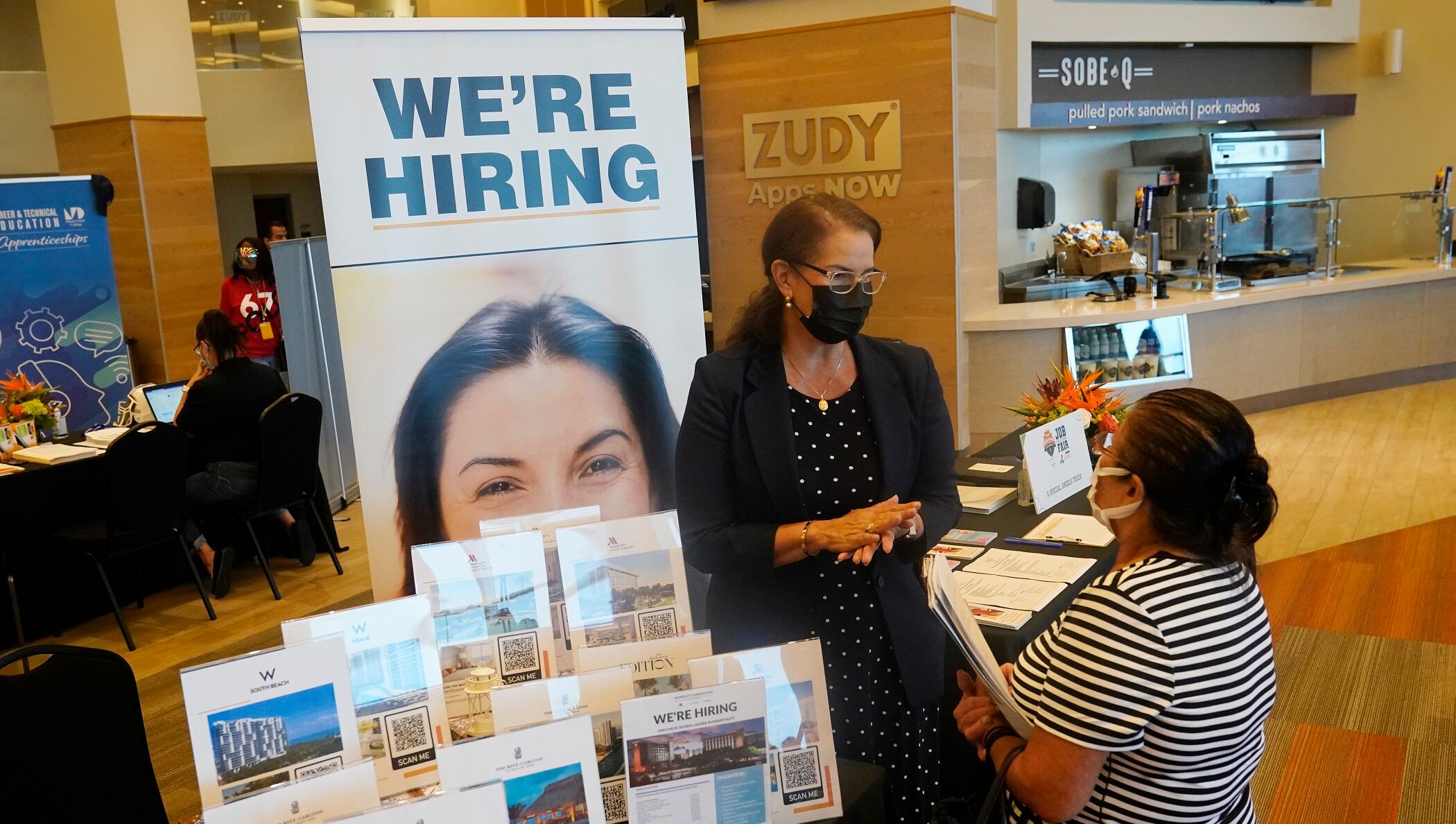
Americans applied for fewer unemployment benefits at the end of 2019, the Labor Department announced Thursday. The number dropped by 2,000 to 222,000 in the seven days up until December 28, although the four-week average ticked up by 4,750 to 233,250.
The report beat expectations that had predicted 225,000 new claims, according to Reuters. The result marks the third consecutive weekly decline.
“I think we’re definitely going to see slightly smaller growth month by month than what we saw in 2019 and that’s consistent with economists expectations’ of the macroeconomy weakening slightly,” in the labor market, Beth Akers, Manhattan Institute senior fellow, told Cheddar.
She will be keeping an eye on manufacturing trends and changes in policy regarding trade for indications about how job numbers will grow (or shrink) in 2020.
“If you’re looking to something to be concerned about, you can look at the four-week moving average, which is up from what it’s been over the course of the year,” Akers said. “But, by and large, these are really strong, positive numbers for the labor market.”
Applications for U.S. unemployment benefits rose last week, but remain near historically low levels, reflecting relatively few layoffs across the economy
Marc DeBevoise, Incoming CEO of Brightcove, talks about the company's position within the streaming space and what the overall industry needs to do to attract more enterprise clients.
As the Beijing winter Olympics start to wind down, its ratings are heading towards a historic low. An average of only 12.3 million viewers per day have tuned into NBC to watch the games, compared with about 23 million viewers for the 2018 games in South Korea. Seth Schachner, managing director of StratAmericas and digital business executive, breaks down what could be behind this trend.
As coronavirus cases decline, many people are going out again, eating at restaurants, taking long-delayed vacations, attending concerts, and more. But, despite social activities returning to normal, many companies are still working remotely. In fact, only a third of U.S. employees have returned to the office, according to Kastle Systems, which monitors building-access cards. Brian Kropp, chief of research for Gartner's HR practice, joined Cheddar's Opening Bell to discuss the state of the return-to-work debate.
Matthew Tuttle, CEO & Chief Investment Officer at Tuttle Capital, breaks down the economic factors impacting the technology sector and the future pricing power of Big Tech.
Inflation rose 7.5% percent from last January to this January, higher than expected and the fastest rate of growth in 40 years. Consumer prices were up 0.6% percent from the previous month, with increases in food, electricity, and shelter as the biggest drivers. Veronique De Rugy, senior research fellow of the Mercatus Center at George Mason University, joined Cheddar to give her biggest takeaways on the latest CPI report.
Jason Ware, Chief Investment Officer at Albion Financial Group, talks about the sectors to be affected by higher interest rates and highlights the pockets within tech that have room for growth.
Matthew Tuttle, CEO and Chief Investment Officer at Tuttle Capital Management, talks about the geopolitical and economic uncertainty impacting market performance.