Americans applied for fewer unemployment benefits at the end of 2019, the Labor Department announced Thursday. The number dropped by 2,000 to 222,000 in the seven days up until December 28, although the four-week average ticked up by 4,750 to 233,250.
The report beat expectations that had predicted 225,000 new claims, according to Reuters. The result marks the third consecutive weekly decline.
“I think we’re definitely going to see slightly smaller growth month by month than what we saw in 2019 and that’s consistent with economists expectations’ of the macroeconomy weakening slightly,” in the labor market, Beth Akers, Manhattan Institute senior fellow, told Cheddar.
She will be keeping an eye on manufacturing trends and changes in policy regarding trade for indications about how job numbers will grow (or shrink) in 2020.
“If you’re looking to something to be concerned about, you can look at the four-week moving average, which is up from what it’s been over the course of the year,” Akers said. “But, by and large, these are really strong, positive numbers for the labor market.”
Deputy Commerce Secretary Don Graves spoke to Cheddar's Alex Vuocolo about the ongoing semiconductor shortages and the push from the Biden administration to cover the supply chain problem as well as look ahead to future-proofing it.
With real estate being a largely male-dominated industry, Stephanie Shojaee, vice president and chief marketing officer at development company Shoma Group, joined Cheddar News to discuss how she took on the gender gap for women to achieve leadership roles, starting at her own company. “It's been very important to teach all the women that work here, especially the younger ones, that they shouldn't change themselves," she said. "You need to be happy with who you are and just keep breaking barriers."
DocuSign saw high growth levels due to high demand in going paperless during the pandemic, but the e-signature company also posted lower guidance going forward. CEO Dan Springer joined Cheddar News to discuss the revenue. "The challenge for our business was more that we got used to that very high level of demand during COVID, where we were a beneficiary of people needing to move so much faster, to drive, to accelerate their transformation," he said. "And now as we come off that acceleration, we didn't move quickly enough, we didn't adjust our business back to the mode we had pre-pandemic."
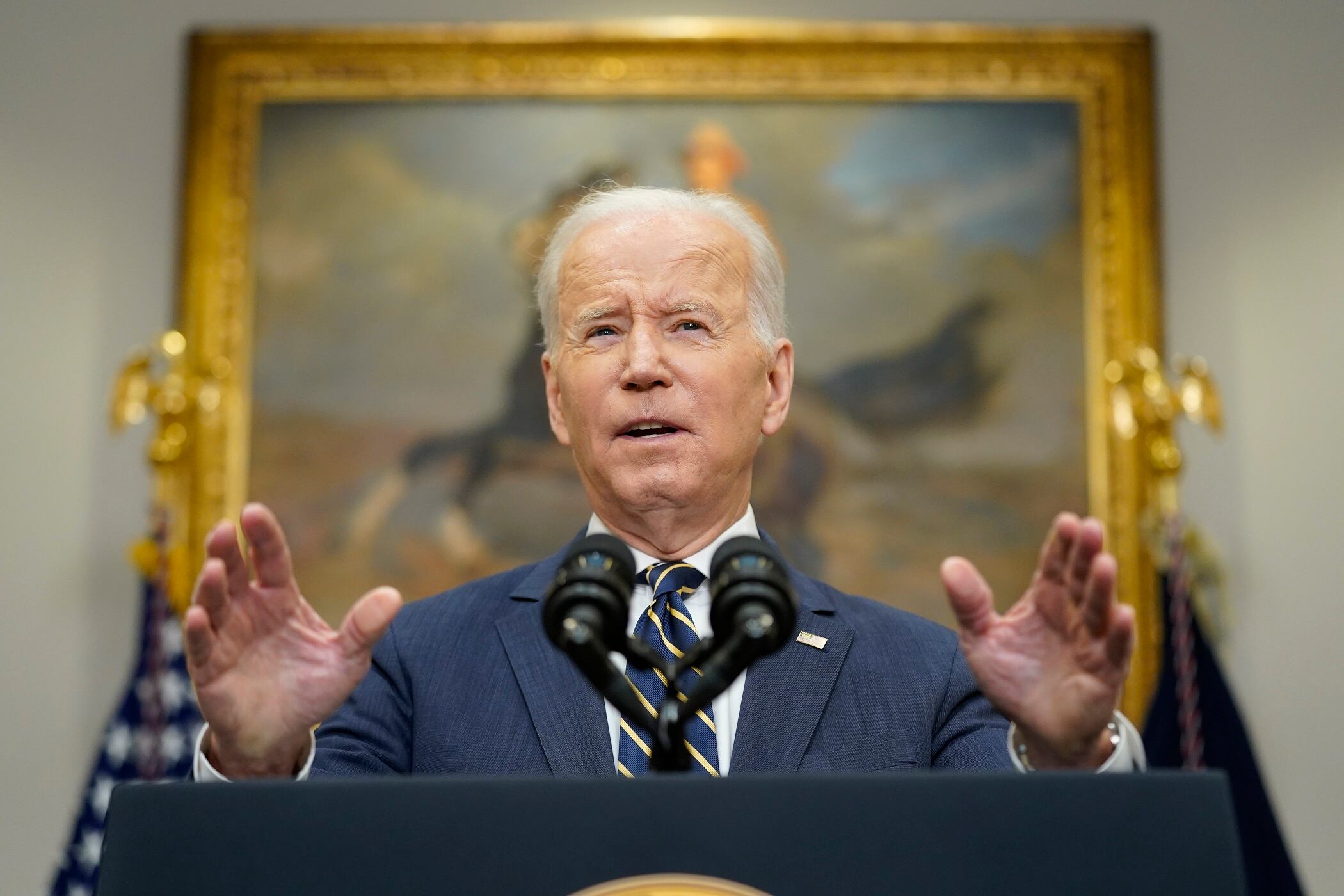
President Joe Biden announced Friday that along with the European Union and the Group of Seven countries, the U.S. will revoke “most favored nation” trade status for Russia over its invasion of Ukraine.
The consumer price index jumped 7.9 percent in February, marking a 40-year high for inflation in the U.S. This report comes less than a week ahead of the Fed's all important meeting. Kayla Bruun, Economic Analyst, Morning Consult, joined Cheddar's Opening Bell to discuss.
Markets opened lower amid hotter-than-expected inflation data, which surged to its highest level in nearly 40 years. Lisa Erickson, Senior Vice President and Co-Head, Public Markets Group, U.S. Bank joined Cheddar's Opening Bell to discuss the significance of this figure ahead of the Federal Reserve's FOMC meeting.
As the Russia-Ukraine war disrupts the global economy, sending markets on a roller coaster ride, gold remains hovering around $2,000 an ounce. Often seen as a safe haven in times of economic crisis, Jason Cozens, founder and CEO of gold-as-currency platform Glint Pay, joined Cheddar’s Opening Bell to discuss the latest gold rush, how the war is impacting prices, and how people can use Glint to trade in the precious metal. “You know the stock markets and cryptocurrencies are risky investments," he stated. "Whereas gold is just reliable money. It's no one else's liability if you own."
As Western sanctions weigh on Russia's economy, the country is at the risk of defaulting on its debt. Fitch ratings agency has downgraded Russia's debt for the second time in a week, warning a "sovereign default is imminent." Jesse Wheeler, Economic Analyst at Morning Consult, explains what that means, and how it could have ripple effects across the global economy.