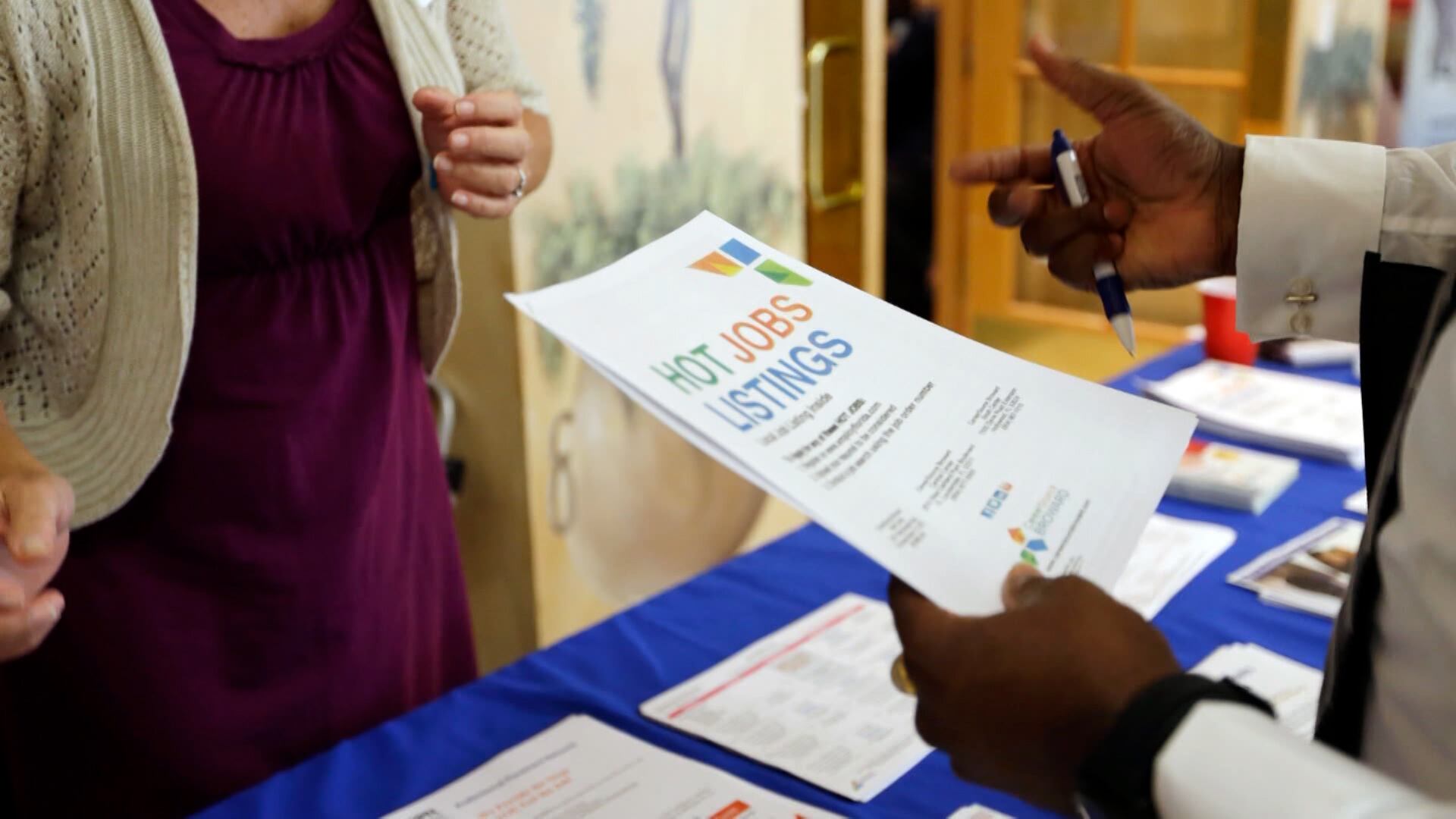
Americans applied for fewer unemployment benefits at the end of 2019, the Labor Department announced Thursday. The number dropped by 2,000 to 222,000 in the seven days up until December 28, although the four-week average ticked up by 4,750 to 233,250.
The report beat expectations that had predicted 225,000 new claims, according to Reuters. The result marks the third consecutive weekly decline.
“I think we’re definitely going to see slightly smaller growth month by month than what we saw in 2019 and that’s consistent with economists expectations’ of the macroeconomy weakening slightly,” in the labor market, Beth Akers, Manhattan Institute senior fellow, told Cheddar.
She will be keeping an eye on manufacturing trends and changes in policy regarding trade for indications about how job numbers will grow (or shrink) in 2020.
“If you’re looking to something to be concerned about, you can look at the four-week moving average, which is up from what it’s been over the course of the year,” Akers said. “But, by and large, these are really strong, positive numbers for the labor market.”
Francis Oh, APAC CEO at Qraft Technologies, discusses how inflationary pressures could impact corporate earnings, and why the electric vehicle market is one to watch as ESG investing picks up.
Bitcoin has successfully activated Taproot, the cryptocurrency's first major upgrade since 2017 and a highly anticipated change to the blockchain. Taproot will introduce what's known as Schnorr signatures, which will help transactions become more private, efficient and perhaps even less expensive. Robert Hackett, a cryptocurrency expert and journalist, breaks down the new upgrade and what it means for bitcoin users.
Jharonne Martis, director of consumer spending at Refinitiv, joined Wake Up With Cheddar's Brad Smith to break down positive earnings results from Home Depot and Walmart. Martis also discussed what October's retail sales data means for the upcoming holiday season.
The housing market is hot right now - so hot it was too much for Zillow to handle. While the pandemic is playing a major part in that, now it has reached a point where houses on average are only on the market for about a week before being sold. Cheddar News was joined by Tushar Garg, CEO and Co-Founder of Flyhomes to talk about how this came to be and what comes next.
Markets were pointing to a higher open to kick off the third trading week in November. It comes as stocks come off a losing week in reaction to October's consumer price index--which showed inflation at its highest point in over 30 years.
Ryan Detrick, Chief Market Strategist for LPL Financial joined Wake Up with Cheddar to discuss.
Harvard Business School Professor Ranjay Gulati joined Wake Up With Cheddar to break down the massive challenge the Biden Administration faces in ensuring projects in the $1.2 trillion infrastructure bill are completed on time and on budget.
Jill is joined by Baker Machado to talk all things infrastructure: where will the money go and who’s in charge? Plus, Sesame Street has its first Asian-American muppet. And a trailer for the trailer for Spiderman. Huh?
New York has always been home to some of the world’s tallest towers, but in the last 10 years the city has seen an influx of super skinny buildings towering over Central Park, built exclusively for the ultra-rich. With demand for luxury high-rise vistas being higher than ever, building developers are using every zoning opportunity they can to push height limits – and there’s one loophole that’s helping make that happen.