Imagine walking up to a bar and the bartender hands you a scotch because you posted an Instagram picture of your trip to Scotland. Or your prime rib dinner is pre-selected for you based on the fact you recently dined at a prime rib restaurant. Frankly, you wouldn’t have to struggle with indecision because data insights could predict what you would like.
For two nights in mid-January, it was the reality for a select crowd of diners at NoMad Las Vegas. HBO’s futuristic drama Westworld and marketing agency Giant Spoon worked together to track the social media and online presences of its diners. Organizers then curated an entire dinner experience with that data in mind, from what they ate to what conversation starters they talked about.
A native Spanish speaker was seated near other Spanish speakers, despite the fact they had never exchanged words in real life. Two people who were a decade apart in age, but had worked at the same organization at the same time, met at the dinner for the first time.
“You realize that every interaction you have in the real world and the online world, how much data is being collected on you -- and in the background, how much information is being traded about you,” said Marshall Erwin, senior director of trust and security at Mozilla.
In this age of personalization, information is collected from your online movements whether you’re aware of it or not. If you feel a bit eerie about it, you’re not alone.
At the same time, we willingly give information to companies. Health trackers keep us on our fitness goals and allow insurers to provide discounts to those who seem to be trying to stay fit. DNA tests can tell us more about our ancestors and where we came from. Location services help rideshare vehicles come to us.
“In the longer term, it’s about being able to personalize and add context to make your life better and easier,” said location data company Factual chief marketing officer Brian Czarny.
Here lies the struggle: sharing our personal information can make our lives easier, but when used inappropriately, it can make our lives much, much harder.
What Data Says About You Today
It’s not so far of a stretch to think that 20 minutes into the future our decisions could be made for us based on artificial intelligence that is sorting through our behavior. Companies collect information on each user and generally use it to target ads to our social feeds and the websites we use.
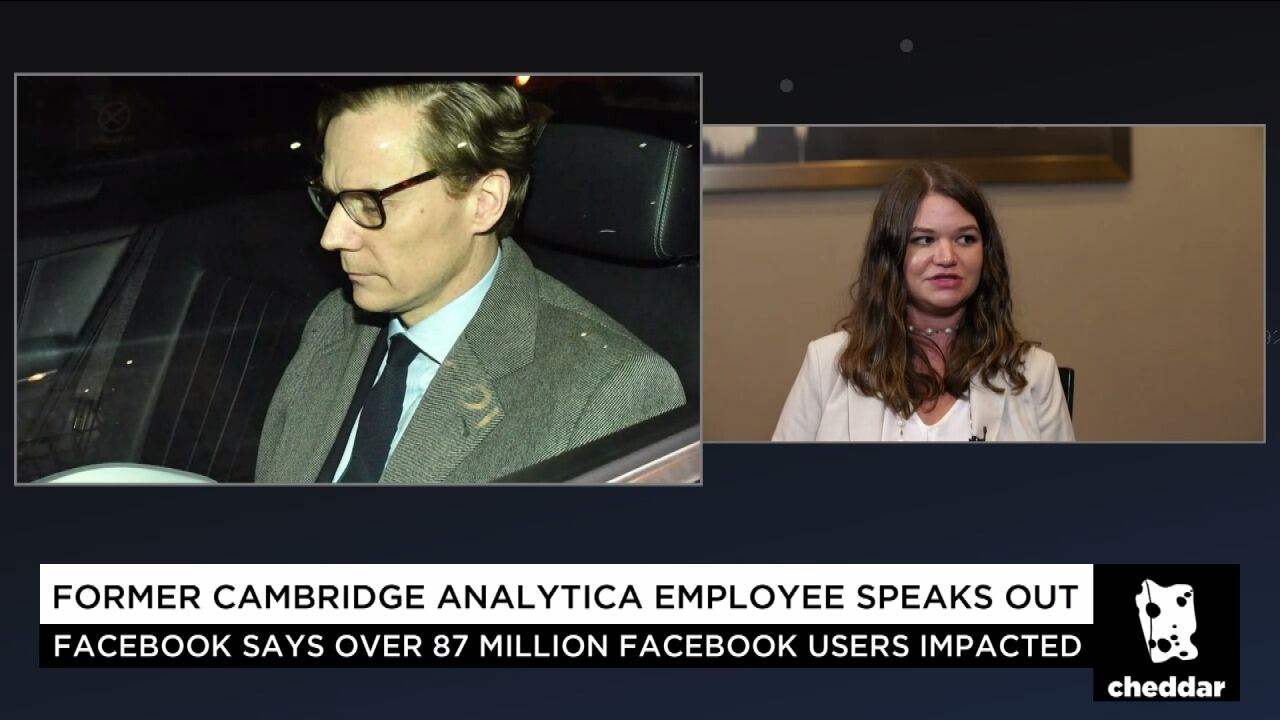
“Cambridge Analytica and other data scandals have made consumers really wake up,” said Ray Walsh, digital privacy advocate at ProPrivacy. “Companies are releasing more tools and more privacy tools, which is a step in the right direction. But in the background, those companies are still very data-driven and they are still trying to create data databases about people to create detailed secondary inferences.”
While diners at the Westworld/Giant Spoon dinner had actual choices made for them without lifting a finger, today’s reality is still a little far off. Though there is a lot of individual-specific information online, most companies only use anonymized and aggregated data. Mastercard may know card numbers, but it doesn’t link that with personal information like email addresses. So, it may know a client is looking for a handbag online, but it doesn’t know who that person is.
“[Using personal data directly] would be a little bit of an affront, and I would be very cautious about it because people would get a little antsy,” said Raja Rajamannar, chief marketing and communications officer for Mastercard. “You don’t have to do that.”
There’s also a subtle difference in the marketing world between personalized and recommended content. When over-the-top content provider Xumo gives users recommendations, it takes into account what is popular right now across all of its users. It also compares what people like you are watching, using demographics like people who live near you, those who own the same model of TV, or people who watch similar topics.
“Sometimes there’s a tendency to confuse recommendations with personalization,” said Xumo CEO Colin Petrie-Norris. “The two things don’t have to be the same thing,”
Still, sometimes data can be sloppily used. We’ve all seen ads for products we just purchased and are unlikely to purchase soon again. Worse, we might be pigeonholed, blocking us from opportunities. Last year, Facebook changed their policies to stop advertisers from being allowed to target users by age, gender and zip code for housing, employment and credit offers. A ProPublica study had found housing-related ads could exclude ethnic groups and minorities.
“It’s nice they know you like scotch,” said Mozilla’s Erwin. “But they might know your race and only show you certain ads because of your race and ethnicity.”
The Future of Personal Privacy
While policies like General Data Protection Regulation in Europe and the California Consumer Privacy Act are trying to place limits on what information companies can collect without direct user knowledge, it’s still a relatively unregulated industry.
“Even when regulations like GDPR come in and people are allowed to contact the company and ask for their data to be deleted, what happens if they sell that data?” said ProPrivacy’s Walsh. “What you can’t do is you can’t know where that data has gone down the line.”
There needs to be more uniform best practices for handling and using data, Mastercard’s Rajamannar agreed. Marketers should cooperate in regulations for the benefit of the entire ecosystem.
“Consumers should, first, be transparently told what data about them is being collected, what data is being stored, what data is being integrated with other things and what is the data being used for,” he said. “Number two, I should also have a right to be forgotten…and number three, I should be opting in and not opting out.”
That being said, there are certainly benefits to data personalization which can be great for consumers when done responsibly. Data should be used to find connected audiences that may like similar things, said Lizzie Widhelm, senior vice president of ad innovation at Pandora.
Data can help identify people with similar behaviors and in similar life stages, which can help companies offer content for products you may not have found on your own.
“I think there’s something there about the future of marketing not being about who you are, but what community you engage in,” Widhelm said. “How do you interact with these services to tell more about your active preferences and affinity for things rather than just using demographics or psychographics?”
And, no matter how we feel about it, data insights are here to stay.
“We’re moving into a space of wearables and the internet of things where we’re going to see the potential to make money from people’s data is increasing,” ProPrivacy’s Walsh said.