If you're looking for ways to further expand your virtual life in the metaverse, maybe consider fostering a dog.
Pet food maker Pedigree is offering metaverse users a chance to foster a pet from the real world — in the comfort of the virtual one. It's being dubbed as the 'FOSTERVERSE' and the goal of the virtual activation is to find sheltered pets forever homes.
In order to be eligible for virtual fostering, a user must be a "landowner" on the metaverse platform Decentraland. Landowners will be given access to the pet adoption site 'Adopt a Pet' and will be able to choose the furry friend they want. Those that do not own land can still interact with pets but cannot adopt.
As part of the activation, Pedigree is also set to match donations to its Pedigree Foundation up to $100,000. The organization specifically focuses on helping dogs find forever homes.
Jean-Paul Jansen, the vice president of marketing for Mars Petcare North America, said that virtual fostering is an expansion of the company's mission to end pet homelessness.
"Both the Pedigree brand and Pedigree Foundation have long histories of supporting animal shelters and promoting dog adoption, and this program enables people to support deserving dogs in a new way through virtual fostering," he said in a statement.
This year's worldwide semiconductor shortage limited the supply of everything from new cars to smart phones.
Looking ahead, several experts in the chip industry expect the shortage to continue deep into 2022, and maybe even 2023. Syed Alam, Accenture's Global Semiconductor Lead, joined Cheddar Movers to discuss.
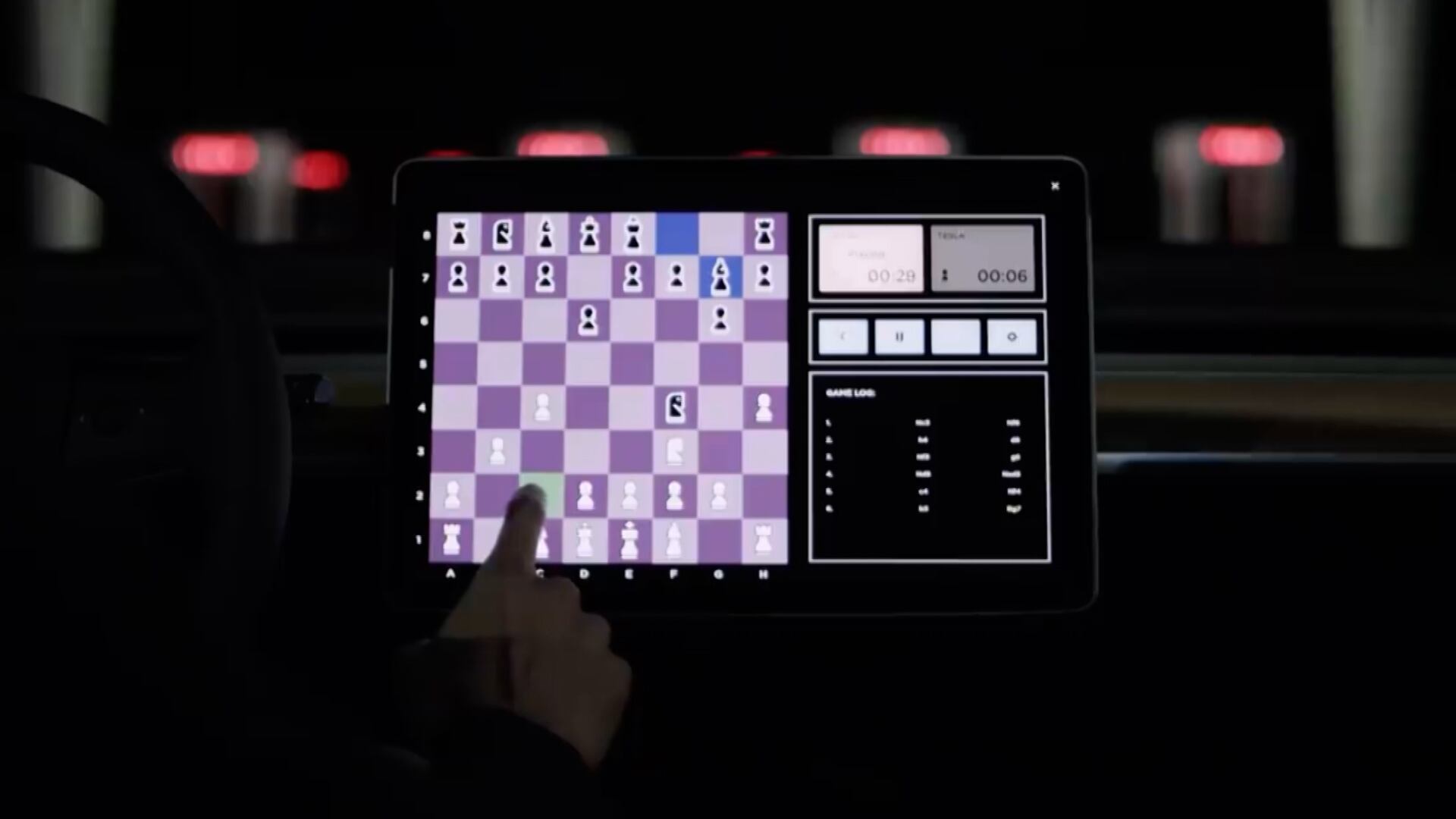
The National Highway Traffic Safety Administration is investigating roughly 580,000 Tesla vehicles due to their front touch screen 'passenger play' gaming feature amid concerns over possible distracted driving. The investigation covers Tesla models ranging from the years 2017-2022. Brian Moody, Executive Editor at Autotrader, joined Cheddar Movers for more.
After a two-week delay of 5G deployment at airports due to the airline industry's claims it will cause "catastrophic disruption," AT&T and Verizon are set to roll out the service on January 19. Michael Boyd, CEO of aviation consultancy Boyd Group International, joined Cheddar to discuss the concerns being voiced by the airlines. "If the airline industry thinks it's going to be something to disrupt our system or impair safety, it shouldn't roll out at all, period," Boyd said, noting that the telecom giants should rethink the activation over safety and security.
Breakthrough Energy Catalyst, a private-public fund backed by Bill Gates, is planning to invest up to $15 billion in clean technology initiatives across the U.S., UK, and European Union. It will target four key areas and help fund large projects that otherwise would not be financially possible. Bobby Hollis, Director of Breakthrough Energy Catalyst, joins Cheddar News' Closing Bell to discuss.
An economic development agency, the Northwest Arkansas Council, is looking to draw technology professionals to their region of the Southern state with incentives like $10,000 worth of Bitcoin and a new bicycle. Nelson Peacock, president and CEO of the private nonprofit made up of companies like Walmart and Tyson Foods, joined Cheddar to talk about the program to further power his local economy. "By offering the payment in Bitcoin, we're looking to identify those people with interest and expertise in the underlying technologies, the blockchain technologies," he said.
After months of investors turning to crypto as a hedge against inflation, instead of the traditional hedge of gold, one crypto exchange is working with a token creator to launch a digital coin backed by a physical asset. GCOIN gives customers a digital title of ownership to 99.99% pure physical gold which is stored in a secured vault. Brent de Jong, GCoin's founder and Kristin Boggiano, Co-Founder and President of CrossTower, a cryptocurrency exchange, join Cheddar News' Closing Bell to discuss the GCOIN rollout, customer interest, why crypto is used as an inflation hedge, and more.