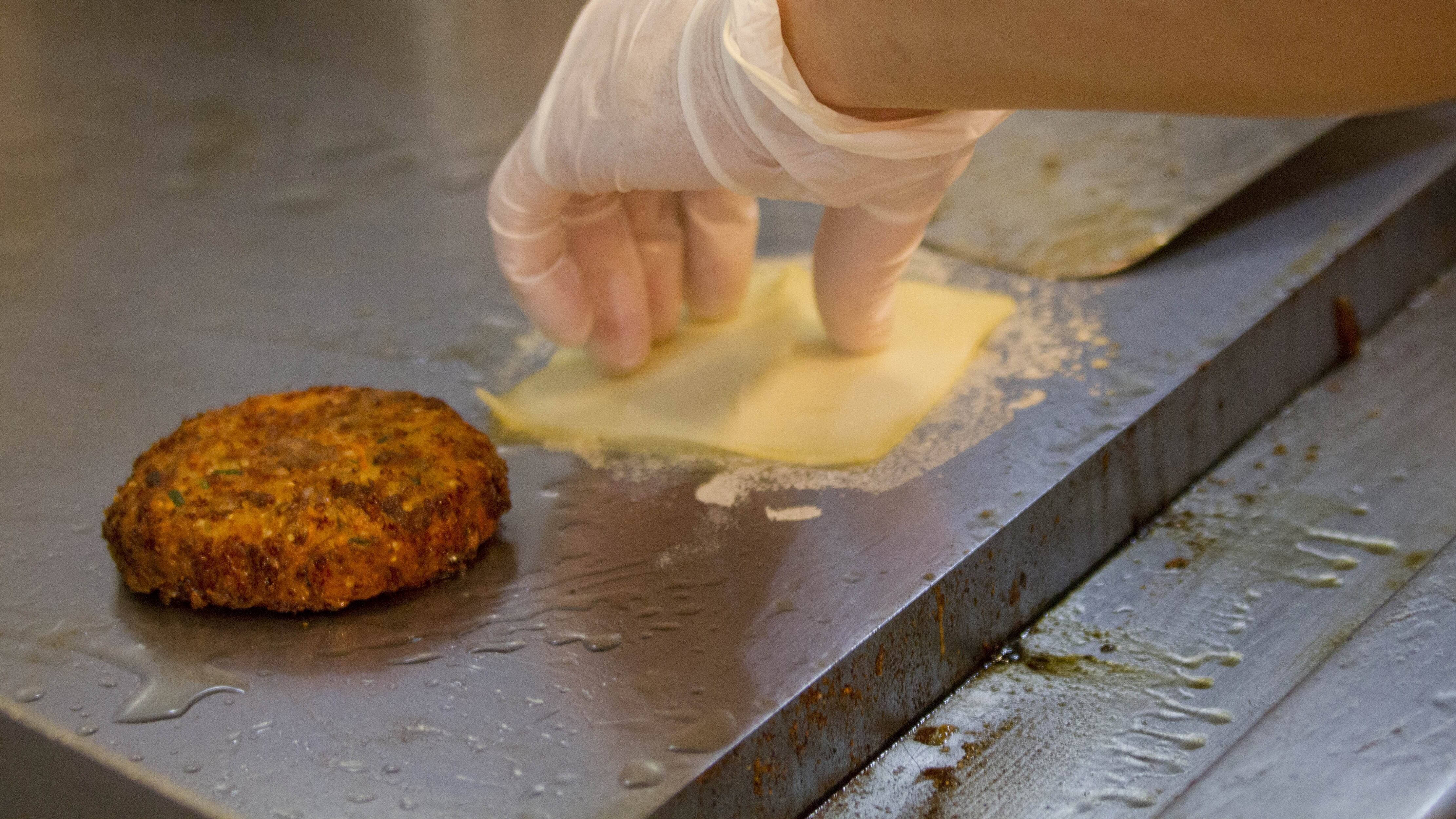
In this file photo from Tuesday, Jan. 27, 2015, a BurgerFi restaurant employee prepares to add cheese to a veggie burger as she grills an order at the Aventura, Fla., restaurant. (AP Photo/Wilfredo Lee)
Plant-based products that do not contain meat can continue to be labeled “sausages” or “burgers,” European lawmakers said Friday, when they rejected a proposal back by the meat industry to ban the terms.
In votes on issues relating to agricultural products, the European Parliament said that so-called veggie burgers, soy steaks and vegan sausages can continue to be sold as such in restaurants and shops across the union.
Europe’s largest farmers' association, Copa-Cogeca, had supported a ban, arguing that labeling vegetarian substitutes with designations bringing meat to mind was misleading for consumers.
On the opposite side of the debate, a group of 13 organizations including Greenpeace and WWF urged lawmakers to reject the proposed amendments, arguing that a ban would have not only exposed the EU “to ridicule," but also damaged its environmental credibility.
They said promoting a shift toward more plant-based diet is in line with the EU Commission's ambition to tackle global warming. Losing the ability to use the terms steak or sausage might make those plant-based products more obscure for consumers.
After the vote, the European Consumer Organization, an umbrella group bringing together consumers' associations, praised the MEPs for their “common sense."
“Consumers are in no way confused by a soy steak or chickpea-based sausage, so long as it is clearly labeled as vegetarian or vegan," the group said in a statement. “Terms such as ‘burger’ or ‘steak’ on plant-based items simply make it much easier for consumers to know how to integrate these products within a meal."
Together with Greenpeace, the group regretted that lawmakers accepted further restrictions on the naming of alternative products containing no dairy. Terms like ‘almond milk’ and ‘soy yogurt’ are already banned in Europe after the bloc's top court ruled in 2017 that purely plant-based products can't be marketed using terms such as milk, butter or cheese, which are reserved for animal products.
Texas is suing Meta over its use of facial recognition. Attorney General Ken Paxton filed a lawsuit against the social media giant, alleging it illegally collected data on users without their consent, violating the state's privacy laws. Daniel Newman, Futurum Research founding partner & principal analyst, breaks down Texas' allegations and what it means for Meta moving forward.
David Mazza, Managing Director & Head of Product at Direxion, joins Cheddar News to discuss how traders and investors can start planning for volatility, and ways to use leveraged and inverse ETFs during these volatile times.
Jeff Powell, Managing Partner and Chief Investment Officer at Polaris Wealth Advisory Group, joins Cheddar News' Closing Bell, where he says the market was looking for - and received - a little bit of relief when it came to the geopolitical conflict between Russia and Ukraine.
Nikil Viswanathan, Co-Founder and CEO of Alchemy, joins Cheddar News' Closing Bell, where he says his company has tripled its business over the past several months and that it will be heavily investing into global expansion following its $200 million funding round.
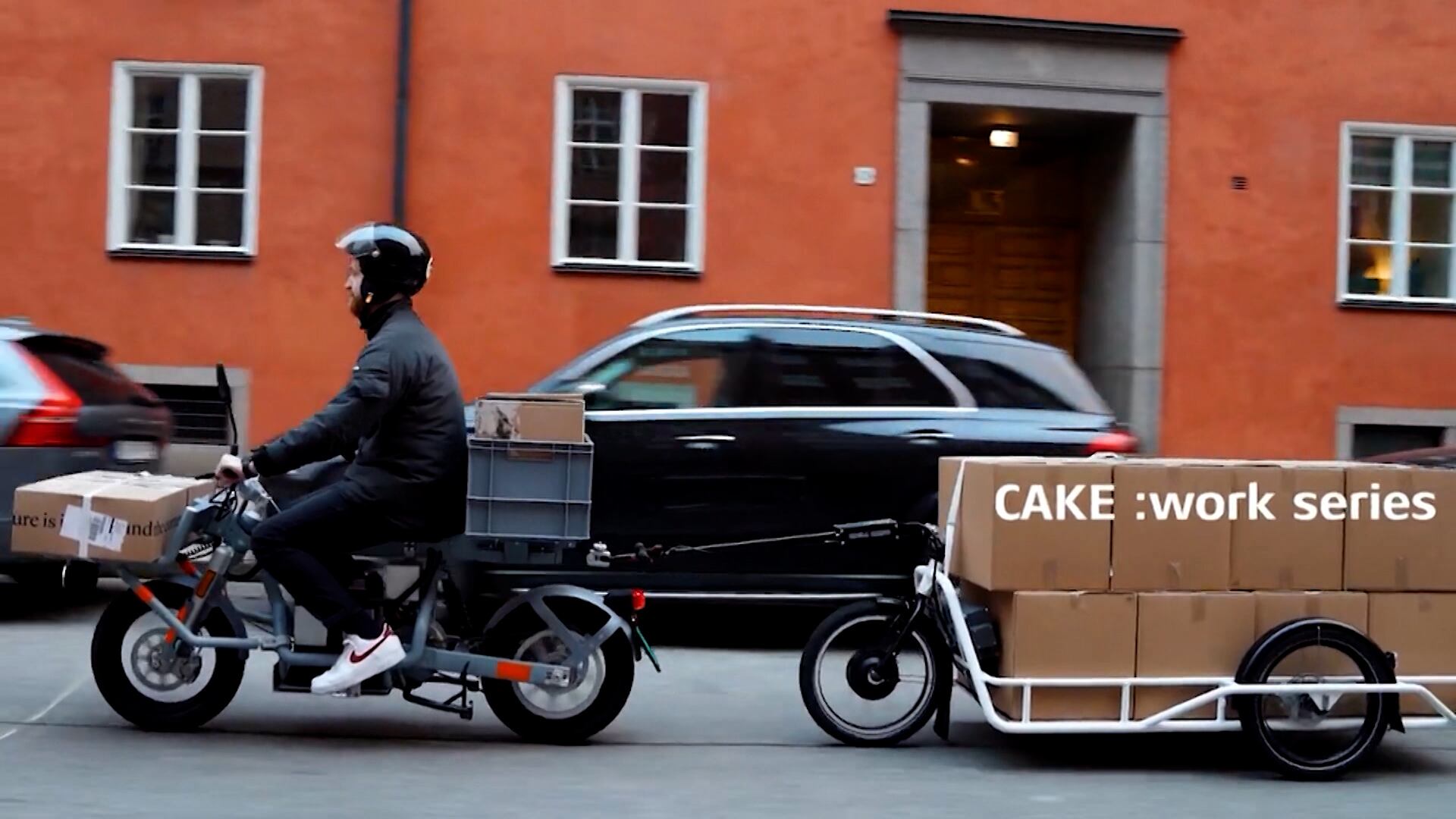
Swedish electric motorcycle maker Cake says its mission is to inspire society to adopt a zero-emission lifestyle. The company admits this is a lofty goal that covers a lot of ground - so it's starting with the world of urban mobility and last-mile deliveries. The company also has an agreement in place with NorthVolt to continually improve the environmental impact of batteries for electric vehicles. Stefan Ytterborn, Founder & CEO of Cake, joins Cheddar Climate to discuss.
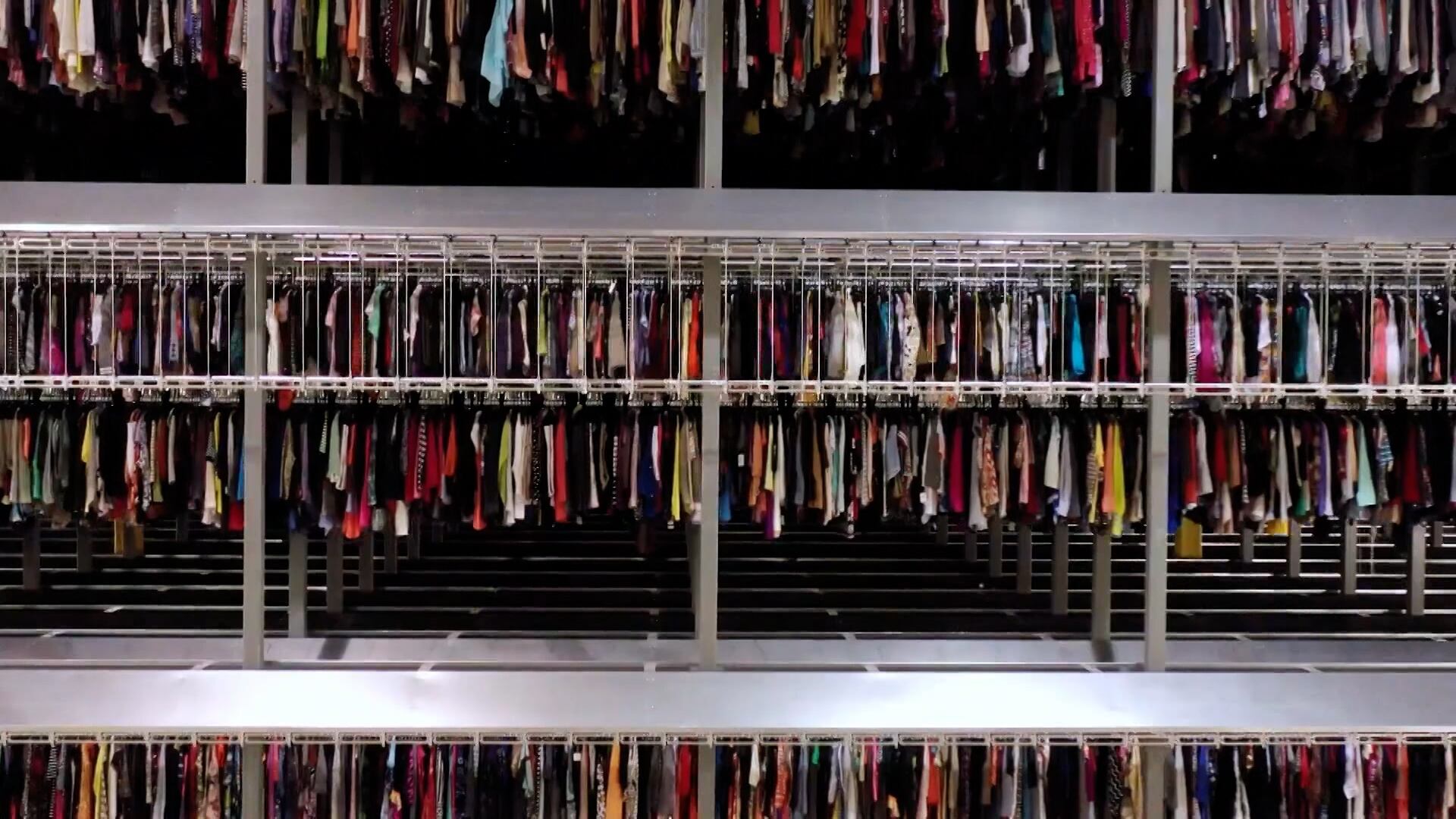
One retailer and publicly-traded company says it is on a mission to inspire a new generation of consumers to think secondhand - first. thredUP is one of the world's largest resale platforms for women's and kids' apparel, shoes, and accessories. The company says it is changing the way consumers shop and ushering in a more sustainable future for the fashion industry. Anthony Marino, President of thredUP, joins Cheddar Climate to discuss.
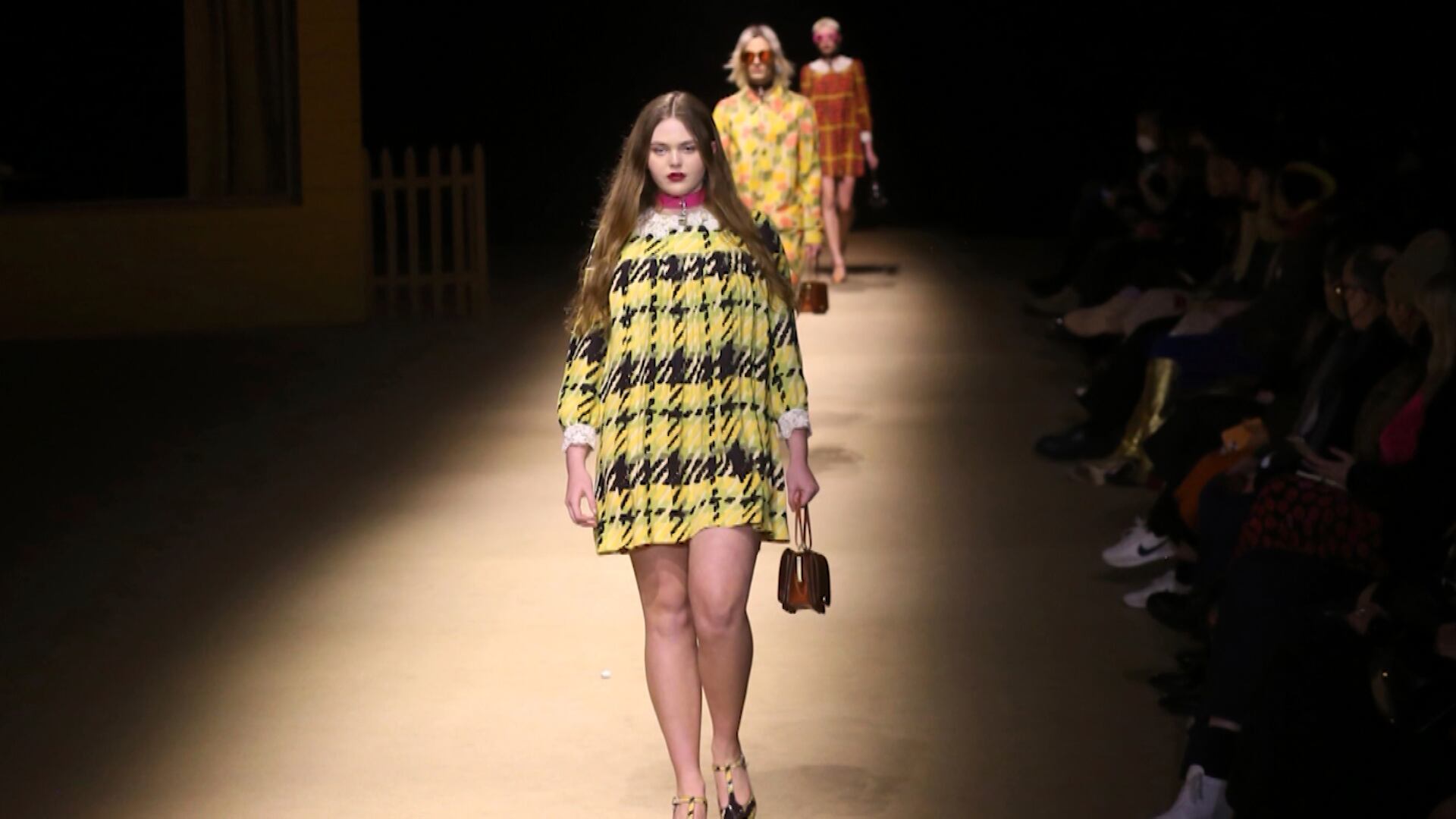
The fashion industry relies on trends and consumerism, and collections have historically been produced in a seasonal cycle. But in recent years, fast fashion has led to a higher turnover of collections and has created massive industry waste. As designers at New York Fashion Week tout their sustainable practices, has the industry fully committed to lessening its waste and potentially cutting back on production? Amy Odell, fashion journalist & author of 'ANNA: The Biography,' joins Cheddar Climate to discuss how the fashion industry is incorporating sustainable practices (or not), any potential accountability measures including the New York State Fashion Act, and more.