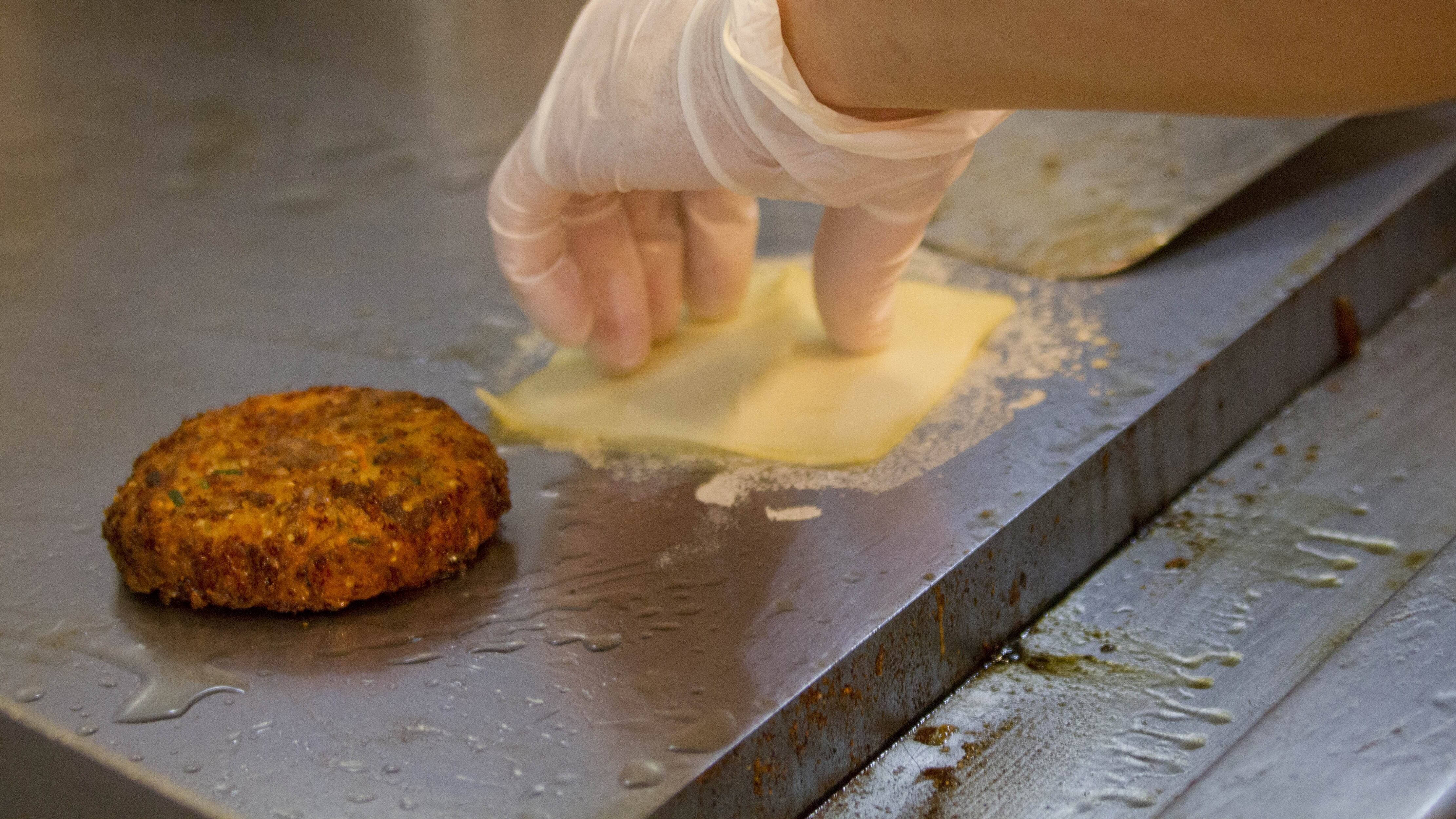
In this file photo from Tuesday, Jan. 27, 2015, a BurgerFi restaurant employee prepares to add cheese to a veggie burger as she grills an order at the Aventura, Fla., restaurant. (AP Photo/Wilfredo Lee)
Plant-based products that do not contain meat can continue to be labeled “sausages” or “burgers,” European lawmakers said Friday, when they rejected a proposal back by the meat industry to ban the terms.
In votes on issues relating to agricultural products, the European Parliament said that so-called veggie burgers, soy steaks and vegan sausages can continue to be sold as such in restaurants and shops across the union.
Europe’s largest farmers' association, Copa-Cogeca, had supported a ban, arguing that labeling vegetarian substitutes with designations bringing meat to mind was misleading for consumers.
On the opposite side of the debate, a group of 13 organizations including Greenpeace and WWF urged lawmakers to reject the proposed amendments, arguing that a ban would have not only exposed the EU “to ridicule," but also damaged its environmental credibility.
They said promoting a shift toward more plant-based diet is in line with the EU Commission's ambition to tackle global warming. Losing the ability to use the terms steak or sausage might make those plant-based products more obscure for consumers.
After the vote, the European Consumer Organization, an umbrella group bringing together consumers' associations, praised the MEPs for their “common sense."
“Consumers are in no way confused by a soy steak or chickpea-based sausage, so long as it is clearly labeled as vegetarian or vegan," the group said in a statement. “Terms such as ‘burger’ or ‘steak’ on plant-based items simply make it much easier for consumers to know how to integrate these products within a meal."
Together with Greenpeace, the group regretted that lawmakers accepted further restrictions on the naming of alternative products containing no dairy. Terms like ‘almond milk’ and ‘soy yogurt’ are already banned in Europe after the bloc's top court ruled in 2017 that purely plant-based products can't be marketed using terms such as milk, butter or cheese, which are reserved for animal products.
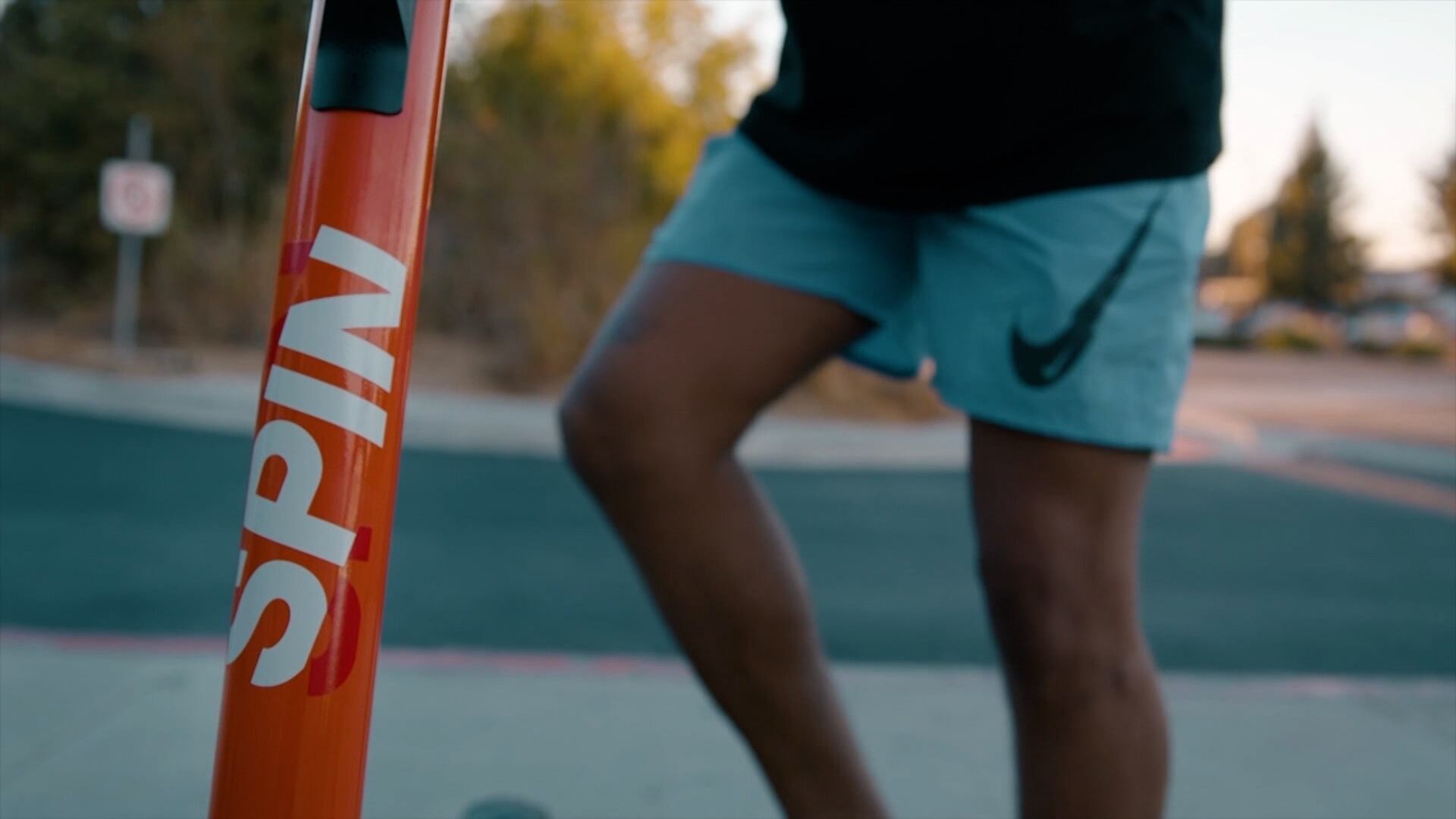
Electric scooter company Spin is teaming up exclusively with ride-hailing business Lyft to provide scooter rentals in cities across the country, beginning with Nashville. Spin CEO Ben Bear joined Cheddar News to talk about the rollout and detail how Lyft users will be able to access Spin scooters. "It's a completely native integration, and we think reducing that friction it's just gonna be key to getting more people out of personal cars and onto bikes and scooters across the country."
Users can now call for a traditional cab on the Uber app in New York City. The company that started out looking to disrupt yellow cabs and car services is now hoping to be a host for all taxi services globally in the future.
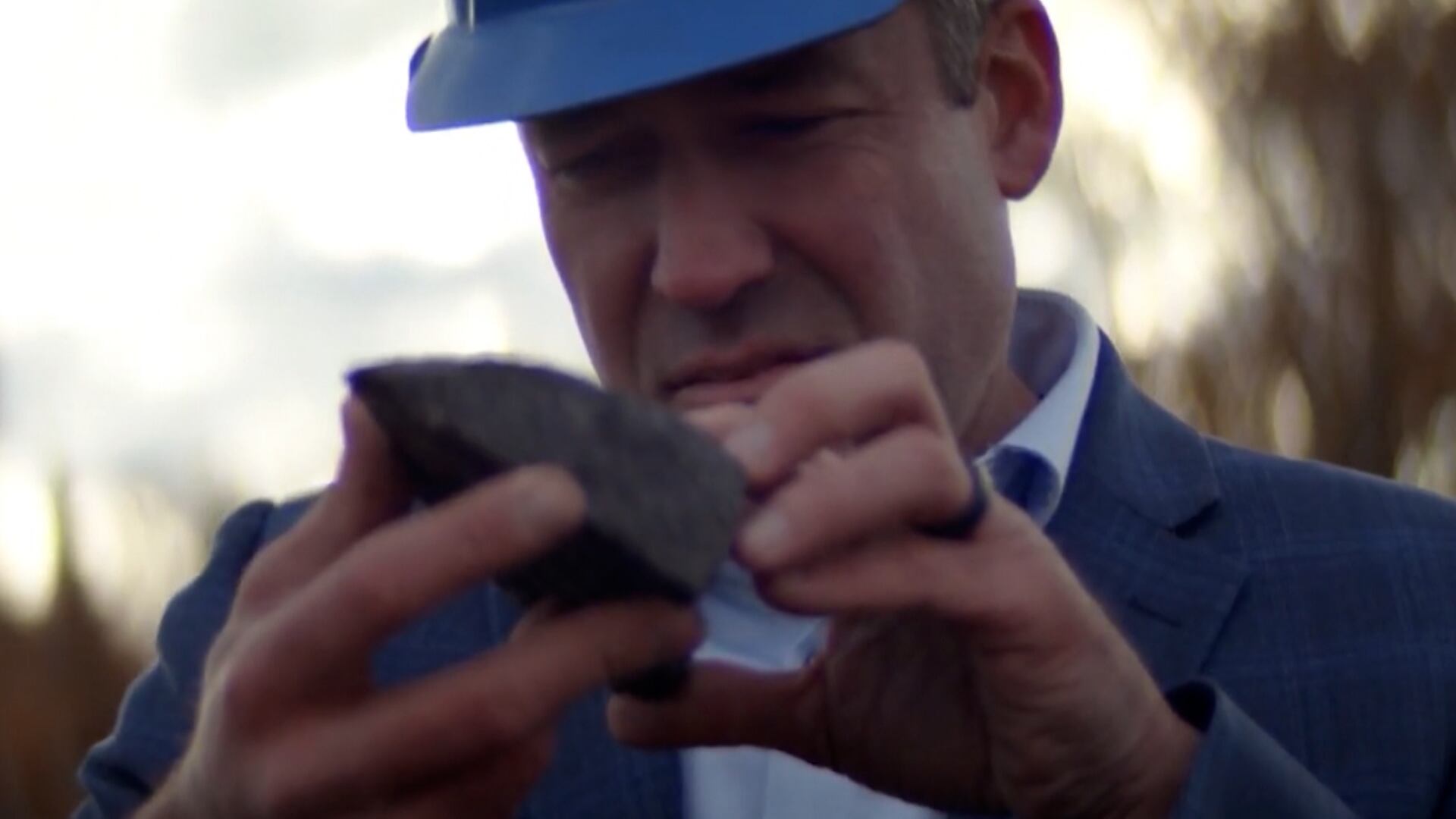
Nouveau Monde Graphite says it wants to power the sustainable energy revolution. The Canadian company is developing carbon-neutral battery materials to serve the growing EV and cleantech markets and is doing so via a mining and manufacturing operation in Quebec. Eric Desaulniers, founder, president & CEO of Nouveau Monde Graphite, joins Cheddar News' Closing Bell to discuss.
Stocks closed near session lows Wednesday as investors showed concerns about rising oil prices, supply shortages, and renewed risk of inflation. While investors began the week on a confident note, today's jump in oil prices has them once again worried that inflation will not go away any time soon. John Traynor, Chief Investment Officer at People's United Advisors, joins Closing Bell to discuss today's market close, the Federal Reserve's comments and actions taken to combat inflation, and more.
John Logan, Director of Labor and Employment Studies at San Francisco State University, joined Cheddar News to discuss the growing unionization push by employees at Starbucks and Amazon, and the wider implications of employee organization at these big companies.
Adidas is now the first major sports brand to create a program for paying college athletes. The new "name, image and likeness" network will allow more than 50,000 students across NCAA Division 1 schools to become paid spokespeople for the brand. Thilo Kunkel, Associate Professor and Director of Sport Industry Research Center at Temple University, tells us why this new program is only the beginning of an exciting time for student athletes.