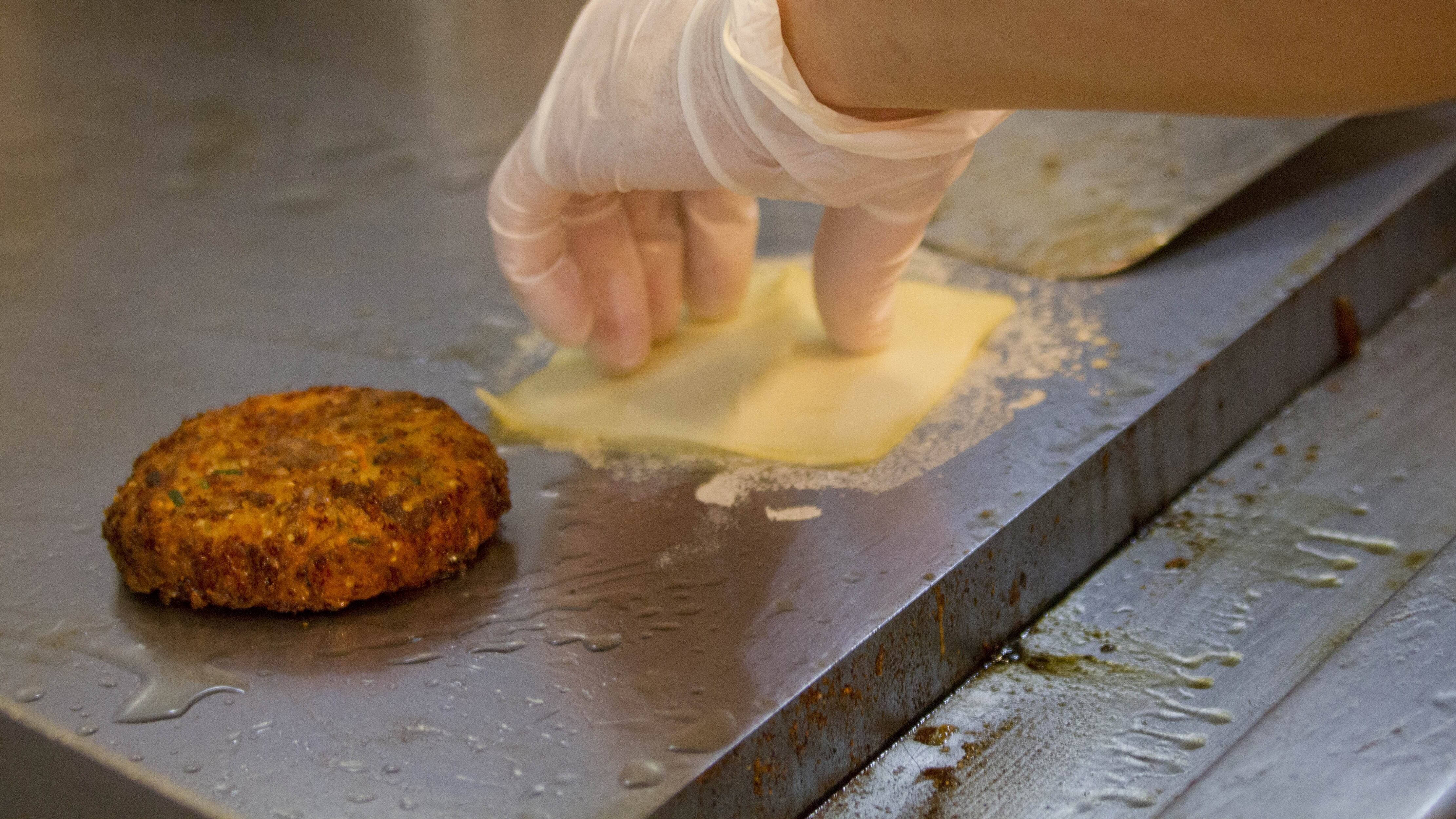
In this file photo from Tuesday, Jan. 27, 2015, a BurgerFi restaurant employee prepares to add cheese to a veggie burger as she grills an order at the Aventura, Fla., restaurant. (AP Photo/Wilfredo Lee)
Plant-based products that do not contain meat can continue to be labeled “sausages” or “burgers,” European lawmakers said Friday, when they rejected a proposal back by the meat industry to ban the terms.
In votes on issues relating to agricultural products, the European Parliament said that so-called veggie burgers, soy steaks and vegan sausages can continue to be sold as such in restaurants and shops across the union.
Europe’s largest farmers' association, Copa-Cogeca, had supported a ban, arguing that labeling vegetarian substitutes with designations bringing meat to mind was misleading for consumers.
On the opposite side of the debate, a group of 13 organizations including Greenpeace and WWF urged lawmakers to reject the proposed amendments, arguing that a ban would have not only exposed the EU “to ridicule," but also damaged its environmental credibility.
They said promoting a shift toward more plant-based diet is in line with the EU Commission's ambition to tackle global warming. Losing the ability to use the terms steak or sausage might make those plant-based products more obscure for consumers.
After the vote, the European Consumer Organization, an umbrella group bringing together consumers' associations, praised the MEPs for their “common sense."
“Consumers are in no way confused by a soy steak or chickpea-based sausage, so long as it is clearly labeled as vegetarian or vegan," the group said in a statement. “Terms such as ‘burger’ or ‘steak’ on plant-based items simply make it much easier for consumers to know how to integrate these products within a meal."
Together with Greenpeace, the group regretted that lawmakers accepted further restrictions on the naming of alternative products containing no dairy. Terms like ‘almond milk’ and ‘soy yogurt’ are already banned in Europe after the bloc's top court ruled in 2017 that purely plant-based products can't be marketed using terms such as milk, butter or cheese, which are reserved for animal products.
A container ship the length of more than three football fields has finally been pried from the muddy bottom of the Chesapeake Bay more than a month after it ran aground.
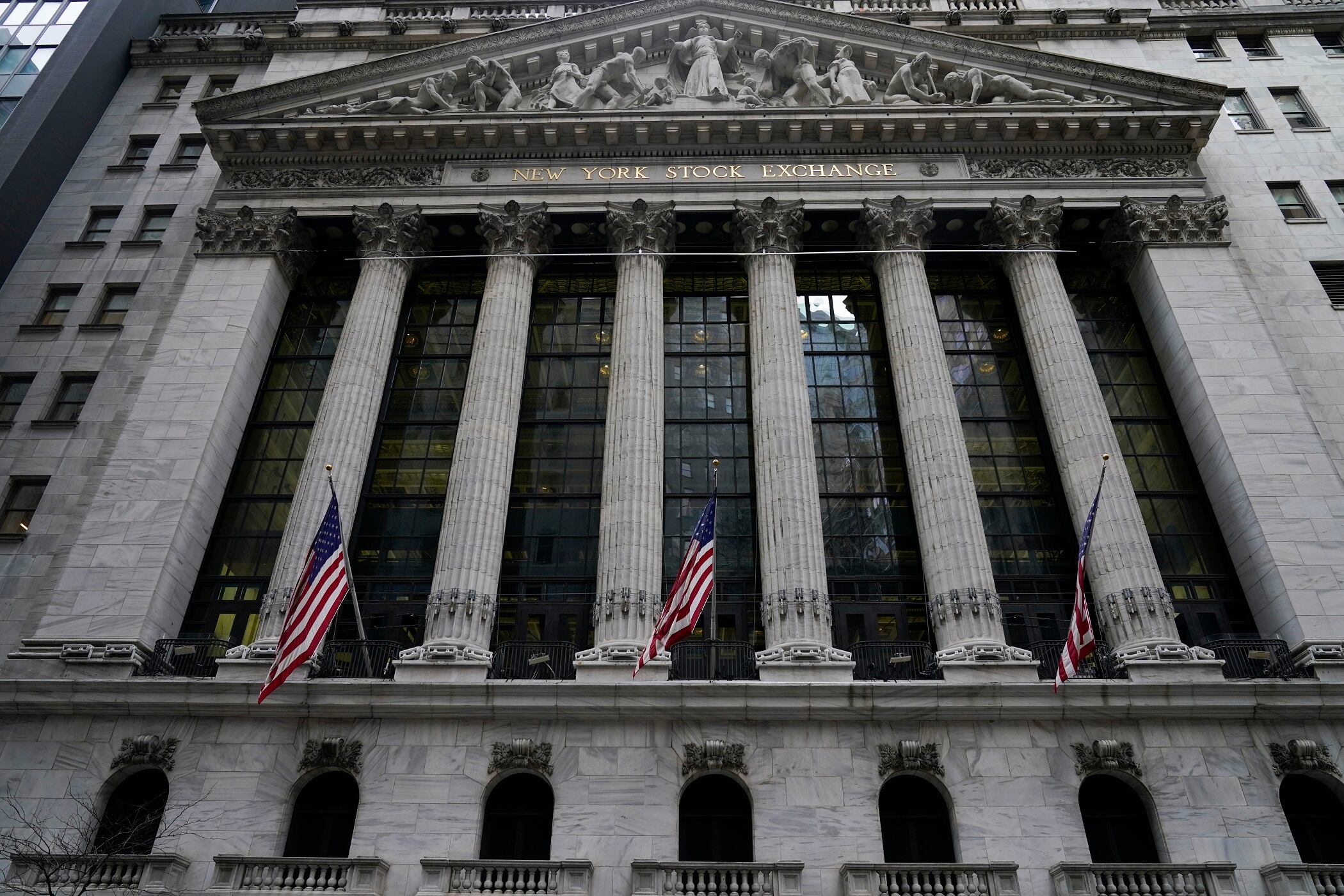
Stocks closed slightly lower after a wobbly day of trading Monday as worries about rising interest rates and high inflation keep a lid on Wall Street despite some better-than-expected profit reports from banks.
The Week's Top Stories is a guided tour through the biggest market stories of the week, from winning stocks to brutal dips to the facts and forecasts generating buzz on Wall Street.
Josh Thorngren, vice president of growth at the cybersecurity company Torq, joined Cheddar News to talk about staffing shortages hitting his industry, and what he thinks is behind it. "Over 70 percent of cybersecurity professionals say they're unhealthily stressed, and it's stress because we only talk about them when they failed," he said. "That makes the job harder day in and day out, and so it's not just a how do we keep up with the rising challenge, it's how do we actually retain folks who are in these positions today." Thorngren also stated that cybersecurity needs to transform into a less technical field in order to appeal to a bigger group of potential workers.
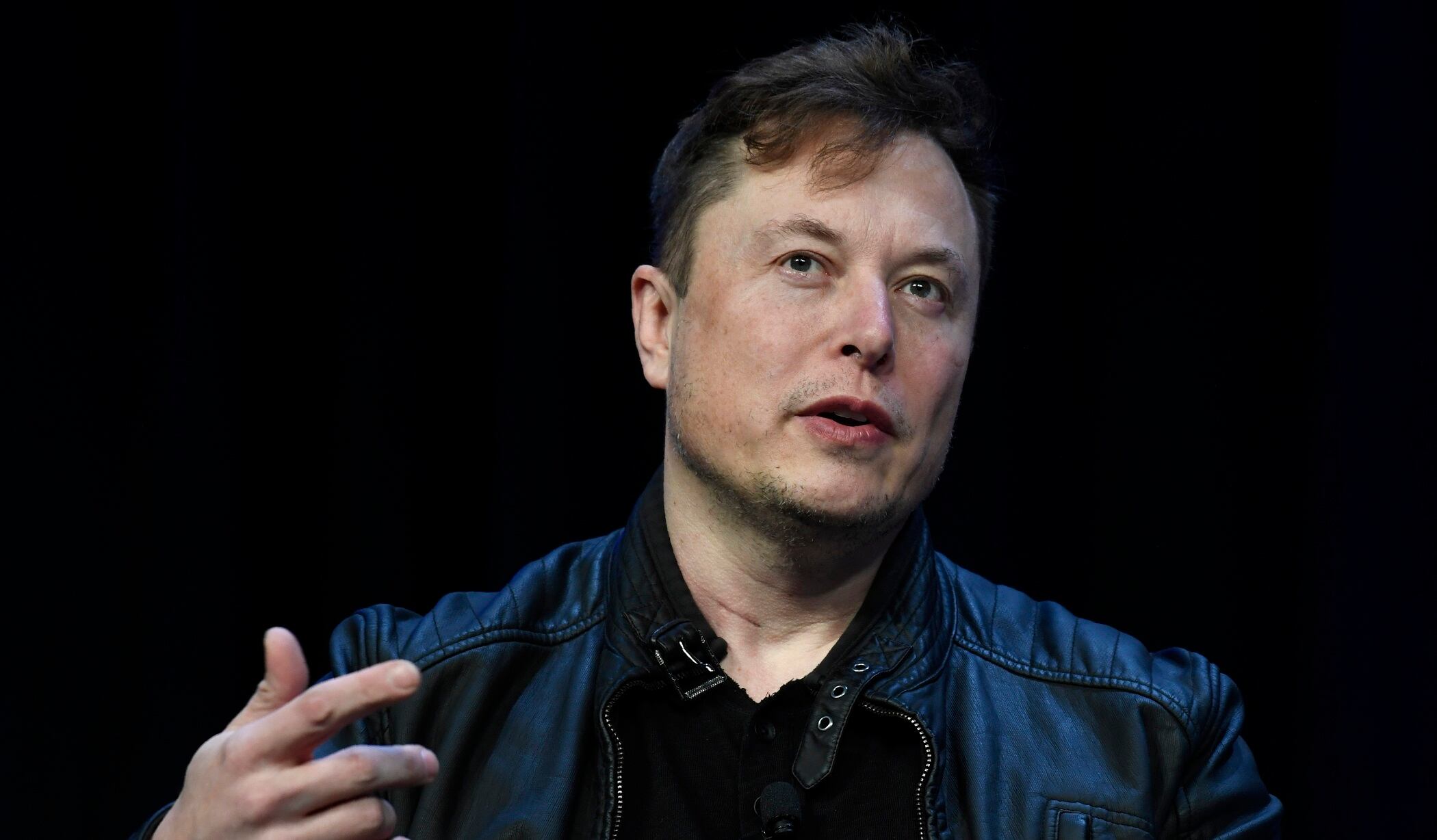
Twitter said in a statement Friday that its board of directors has unanimously adopted a “poison pill” defense in response to Tesla CEO Elon Musk’s proposal to buy the company and take it private.
Suz Hernandez, Owner of MamaP, joins ChedHER to break down how her company is combining eco-friendly and sustainable products with a mission to donate to non-profits that help people and the planet.
Brittany Merrill-Yeng, co-founder Skrewball Whiskey, joins ChedHER to reveal the origins of Skrewball Whisky, experiencing a period of rapid growth, and navigating a male-dominated industry.