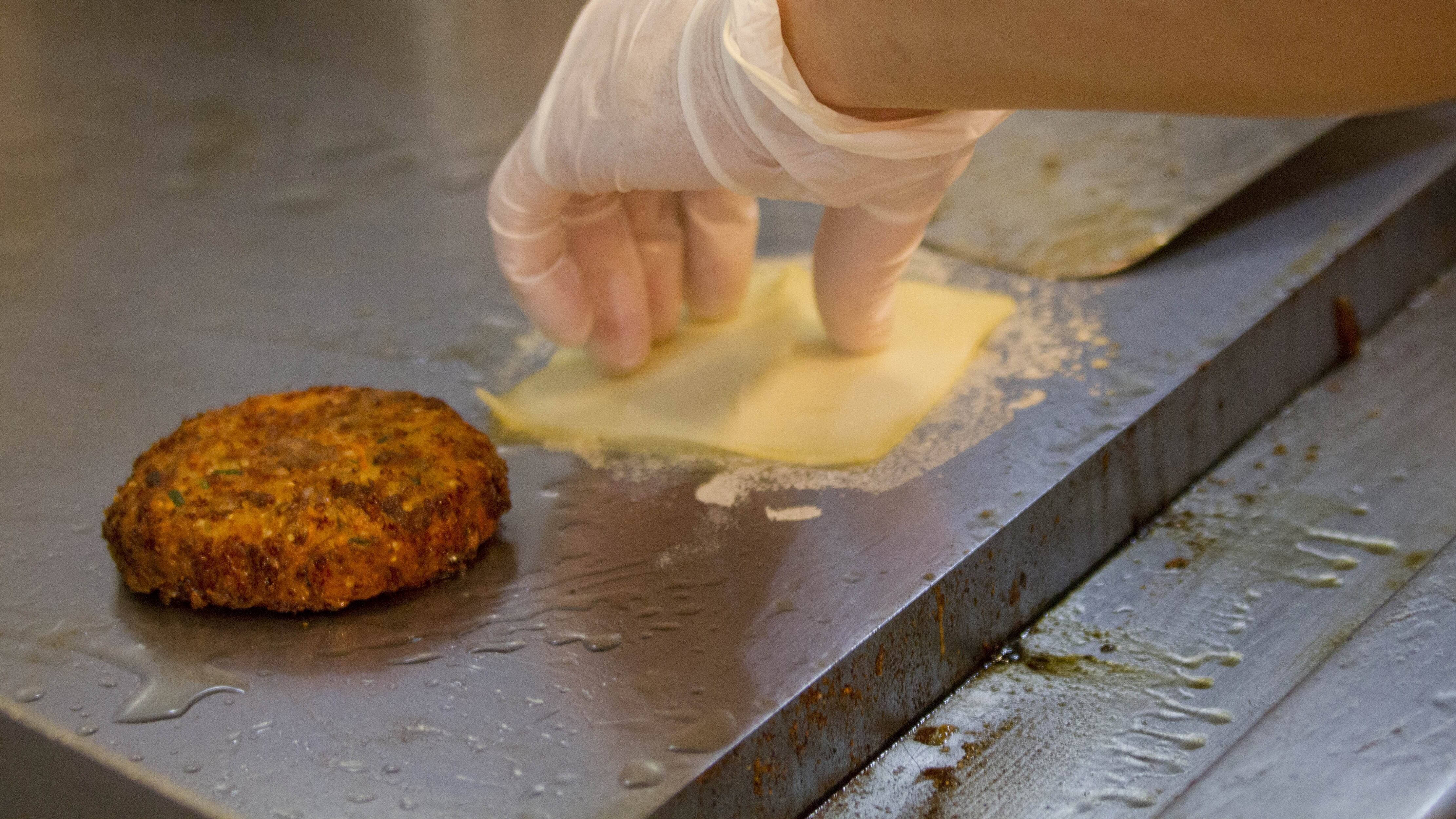
In this file photo from Tuesday, Jan. 27, 2015, a BurgerFi restaurant employee prepares to add cheese to a veggie burger as she grills an order at the Aventura, Fla., restaurant. (AP Photo/Wilfredo Lee)
Plant-based products that do not contain meat can continue to be labeled “sausages” or “burgers,” European lawmakers said Friday, when they rejected a proposal back by the meat industry to ban the terms.
In votes on issues relating to agricultural products, the European Parliament said that so-called veggie burgers, soy steaks and vegan sausages can continue to be sold as such in restaurants and shops across the union.
Europe’s largest farmers' association, Copa-Cogeca, had supported a ban, arguing that labeling vegetarian substitutes with designations bringing meat to mind was misleading for consumers.
On the opposite side of the debate, a group of 13 organizations including Greenpeace and WWF urged lawmakers to reject the proposed amendments, arguing that a ban would have not only exposed the EU “to ridicule," but also damaged its environmental credibility.
They said promoting a shift toward more plant-based diet is in line with the EU Commission's ambition to tackle global warming. Losing the ability to use the terms steak or sausage might make those plant-based products more obscure for consumers.
After the vote, the European Consumer Organization, an umbrella group bringing together consumers' associations, praised the MEPs for their “common sense."
“Consumers are in no way confused by a soy steak or chickpea-based sausage, so long as it is clearly labeled as vegetarian or vegan," the group said in a statement. “Terms such as ‘burger’ or ‘steak’ on plant-based items simply make it much easier for consumers to know how to integrate these products within a meal."
Together with Greenpeace, the group regretted that lawmakers accepted further restrictions on the naming of alternative products containing no dairy. Terms like ‘almond milk’ and ‘soy yogurt’ are already banned in Europe after the bloc's top court ruled in 2017 that purely plant-based products can't be marketed using terms such as milk, butter or cheese, which are reserved for animal products.
Bence Jendruszak, COO and Co-Founder of SEON, joined Cheddar News' Closing Bell, where he says his platform sees more victims of online fraud during economic downturns, but explains why his company's solution can stop that trend.
Andrew Miller, Chief Operating Officer at Benchmark Mineral Intelligence, joined Closing Bell to discuss the warning from Rivian's CEO about a possible EV battery shortage due to lack of access to key metals like lithium.
While the push for sustainable fashion has been gaining traction, traditional swimwear is often still made with toxic plastic fibers. Natalie Herzig joins Cheddar News to explain how her brand Argot Swim is sustainable from sourcing to shipping.
Mike Gauyo, writer and founder of Black Boy Writes Media, joins Cheddar News to talk about the new class of mentees for his Black Boy Writes/Black Girl Writes Mentorship Initiative.
Ron Carson, CEO and Founder of Carson Wealth, sits down with Cheddar's Hena Doba to share why he prioritizes giving back to his community and the world and to share the work being done by his charitable 'Dreamweaver Foundation.'
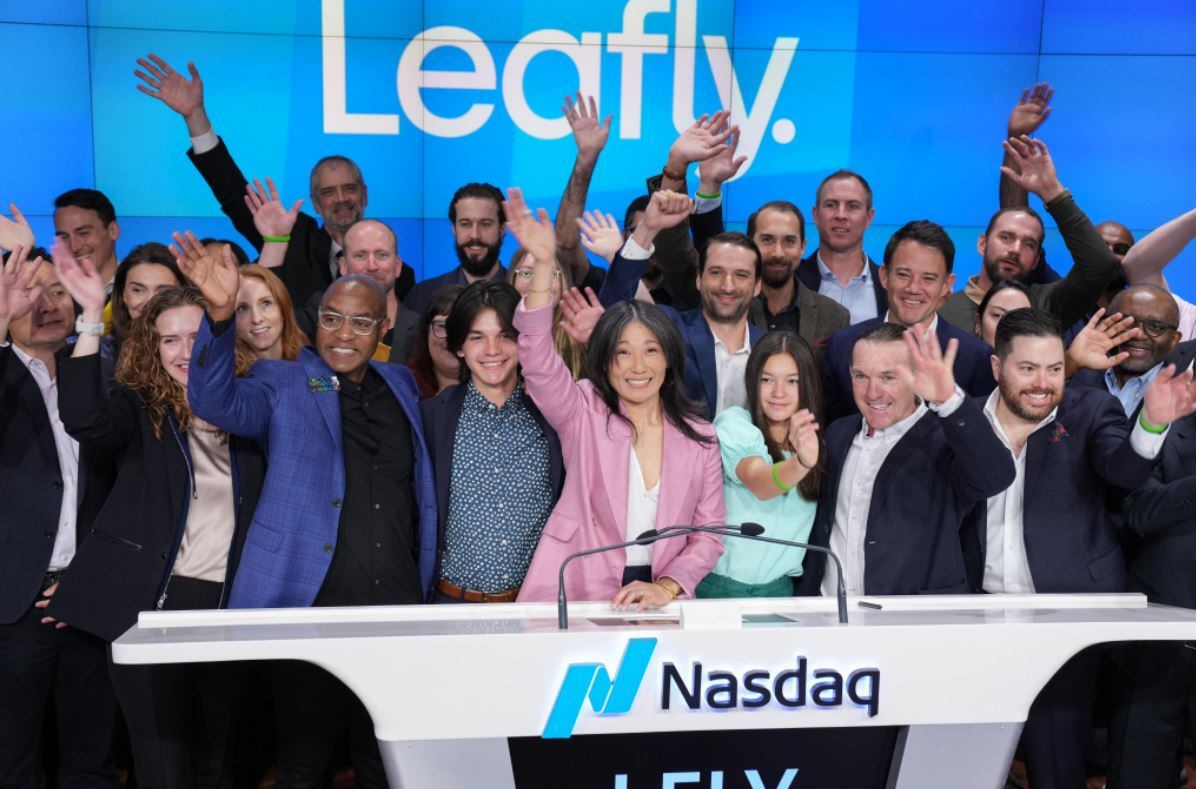
Fresh off of ringing the opening bell on the Nasdaq on the marijuana holiday, 4/20, Yoko Miyashita, CEO of cannabis website Leafly, joined Cheddar News to discuss the future of cannabis in the U.S. and the growth of her company going forward. "I think this is a new a new high, pardon the pun, but really elevating 4/20 from what used to be sort of an insider cultural moment to something that we're recognizing across the industry, really memorials the impact that this industry has," she said.
Fathom Digital Manufacturing, one of the largest on-demand digital manufacturing platforms in North America, went public late last year and serves the product development and manufacturing needs of companies such as Google, Amazon, Tesla, Johnson & Johnson, and more. CEO Ryan Martin joined Cheddar's Opening Bell to discuss what the IPO means to the company and how he thinks digital manufacturing can help mitigate supply chain issues seen throughout the pandemic. "We can take parts that would take 4-6 weeks condense that down into just days using additive manufacturing in many cases. And so it's all about speed," he said.