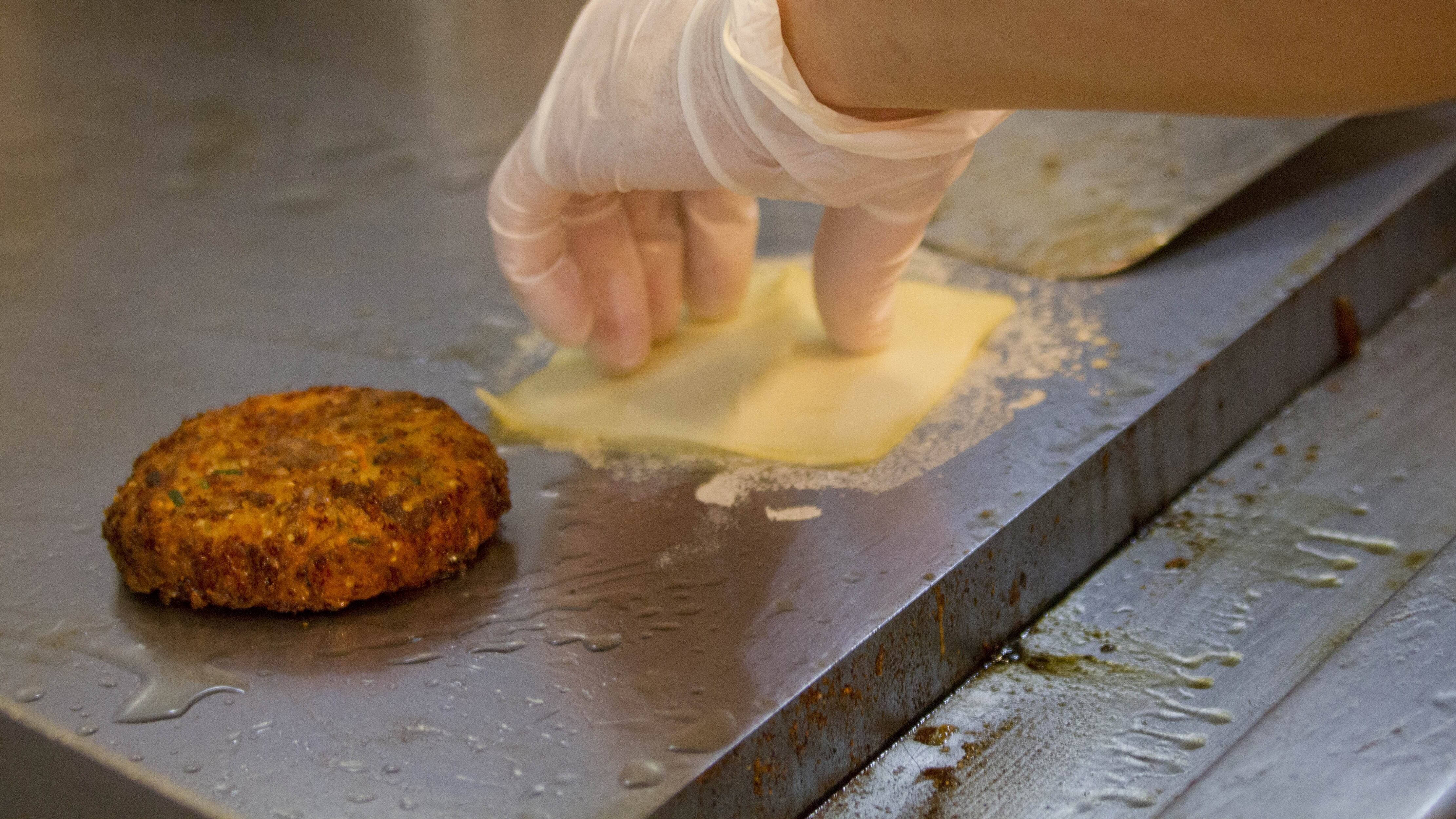
In this file photo from Tuesday, Jan. 27, 2015, a BurgerFi restaurant employee prepares to add cheese to a veggie burger as she grills an order at the Aventura, Fla., restaurant. (AP Photo/Wilfredo Lee)
Plant-based products that do not contain meat can continue to be labeled “sausages” or “burgers,” European lawmakers said Friday, when they rejected a proposal back by the meat industry to ban the terms.
In votes on issues relating to agricultural products, the European Parliament said that so-called veggie burgers, soy steaks and vegan sausages can continue to be sold as such in restaurants and shops across the union.
Europe’s largest farmers' association, Copa-Cogeca, had supported a ban, arguing that labeling vegetarian substitutes with designations bringing meat to mind was misleading for consumers.
On the opposite side of the debate, a group of 13 organizations including Greenpeace and WWF urged lawmakers to reject the proposed amendments, arguing that a ban would have not only exposed the EU “to ridicule," but also damaged its environmental credibility.
They said promoting a shift toward more plant-based diet is in line with the EU Commission's ambition to tackle global warming. Losing the ability to use the terms steak or sausage might make those plant-based products more obscure for consumers.
After the vote, the European Consumer Organization, an umbrella group bringing together consumers' associations, praised the MEPs for their “common sense."
“Consumers are in no way confused by a soy steak or chickpea-based sausage, so long as it is clearly labeled as vegetarian or vegan," the group said in a statement. “Terms such as ‘burger’ or ‘steak’ on plant-based items simply make it much easier for consumers to know how to integrate these products within a meal."
Together with Greenpeace, the group regretted that lawmakers accepted further restrictions on the naming of alternative products containing no dairy. Terms like ‘almond milk’ and ‘soy yogurt’ are already banned in Europe after the bloc's top court ruled in 2017 that purely plant-based products can't be marketed using terms such as milk, butter or cheese, which are reserved for animal products.
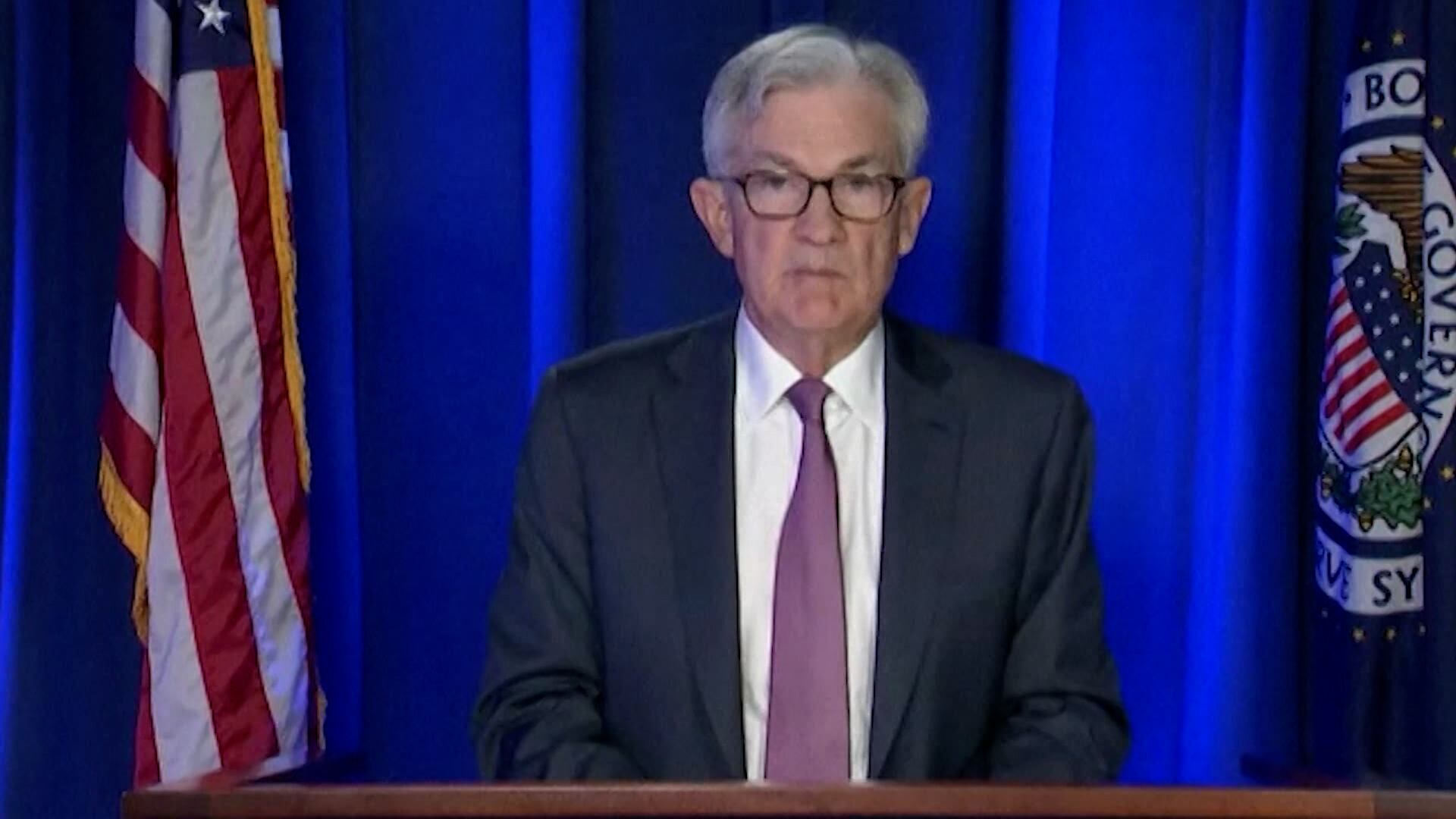
Brian Shepardson, VP & Senior Portfolio Manager at James Investments, discusses the takeaways from this week's earnings and forecasts market reaction as Fed Chair Powell signals a 50-basis point hike in May.
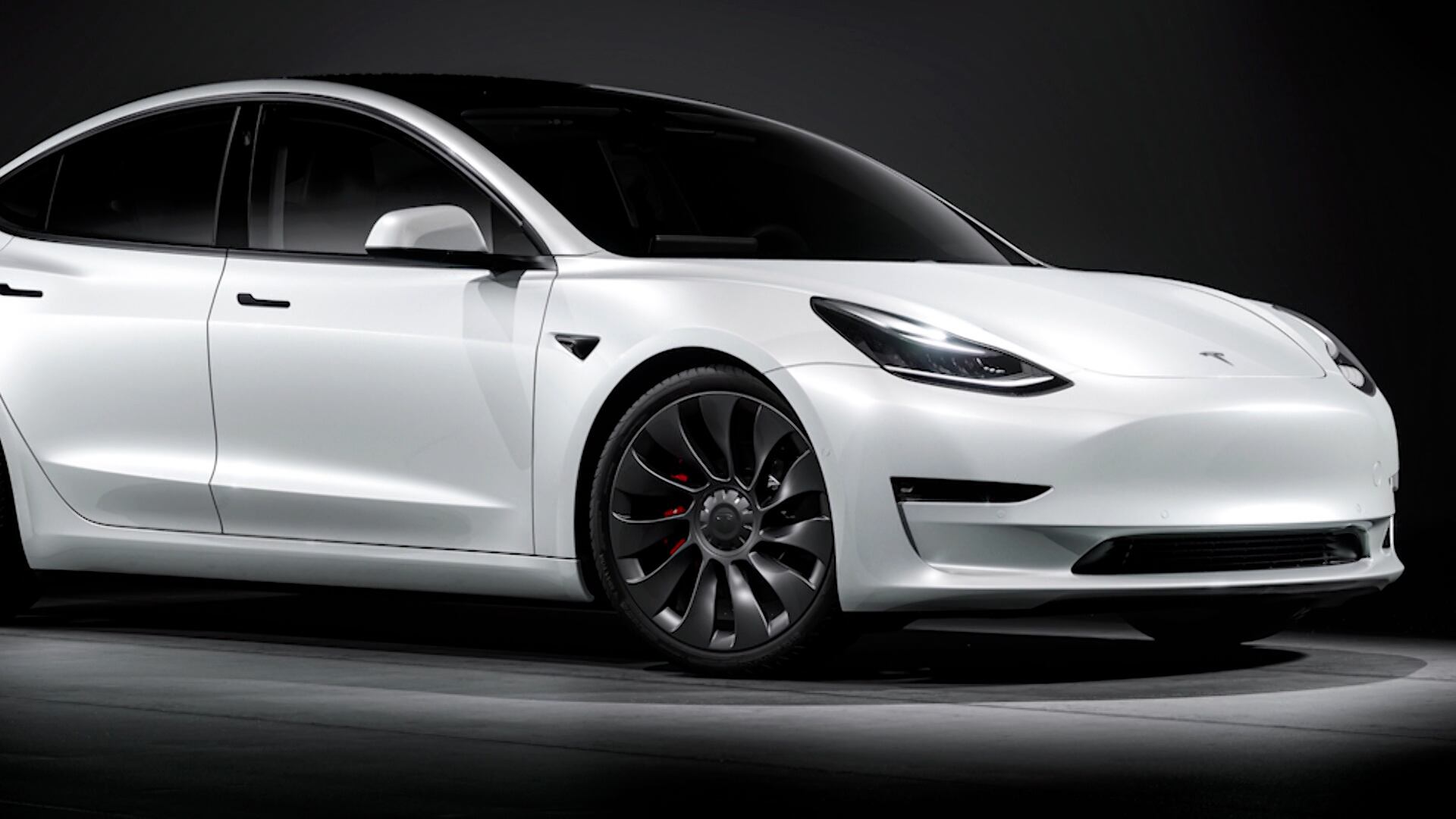
Patrick Healey, President & Chief Investment Officer at Caliber Financial Partners, breaks down Tesla's blowout earnings report and highlights the challenges the Fed will face if interest rate hikes are front-loaded.
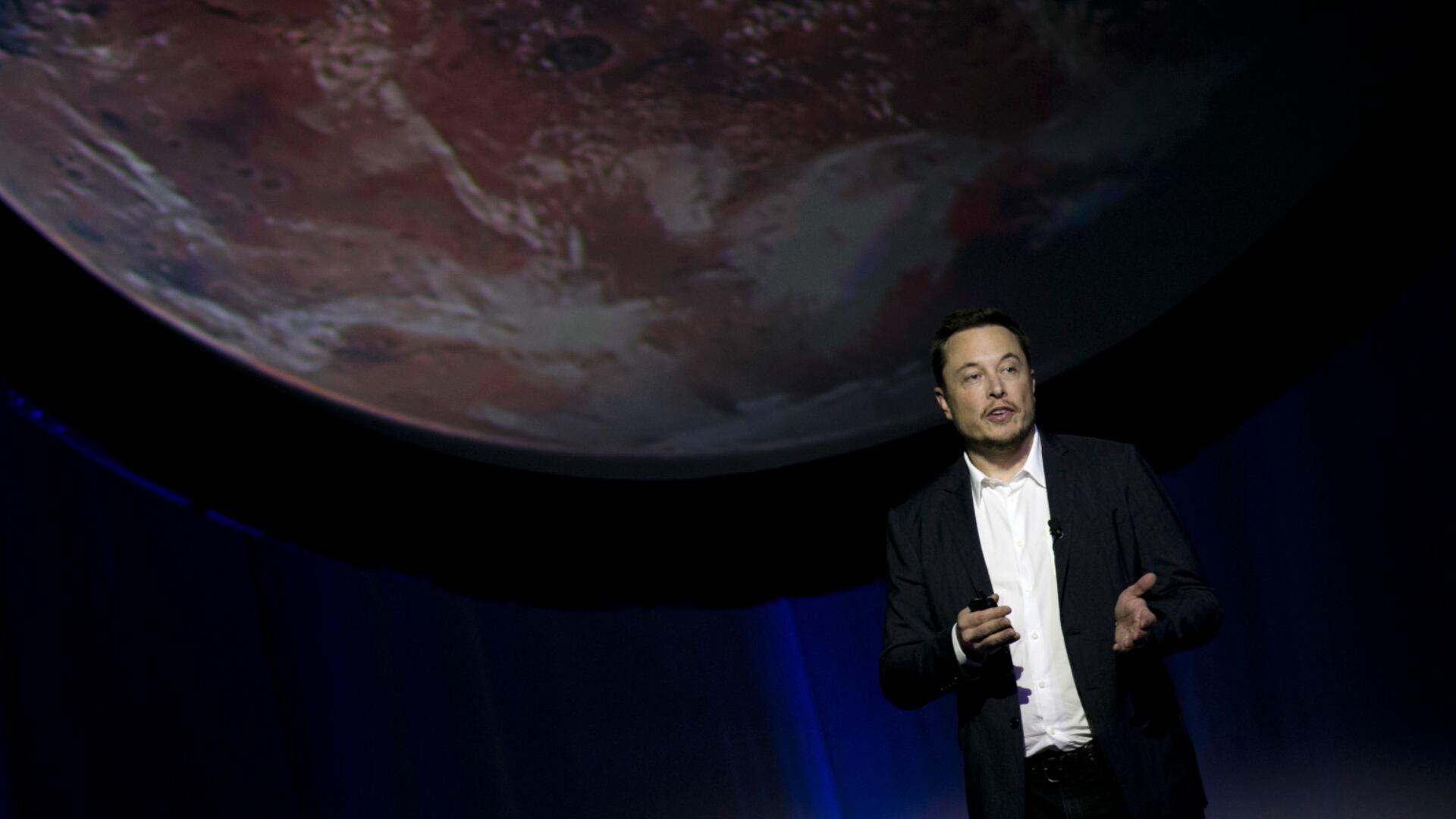
Debra Aho Williamson, Principal Analyst for Insider Intelligence, breaks down the details of Elon's Twitter buyout and highlights concerns over regulating Big tech.
Florida Governor Ron DeSantis has signed into law a bill that strips Disney World of its special self-governing status. This came after Disney spoke out against Florida's so-called “Don’t Say Gay” bill, some saying in retaliation of that. Ben Means, Professor of Law and the John T. Campbell Chair in Business and Professional Ethics at the University of South Carolina School of Law, breaks down how the new law might impact Disney’s business moving forward.
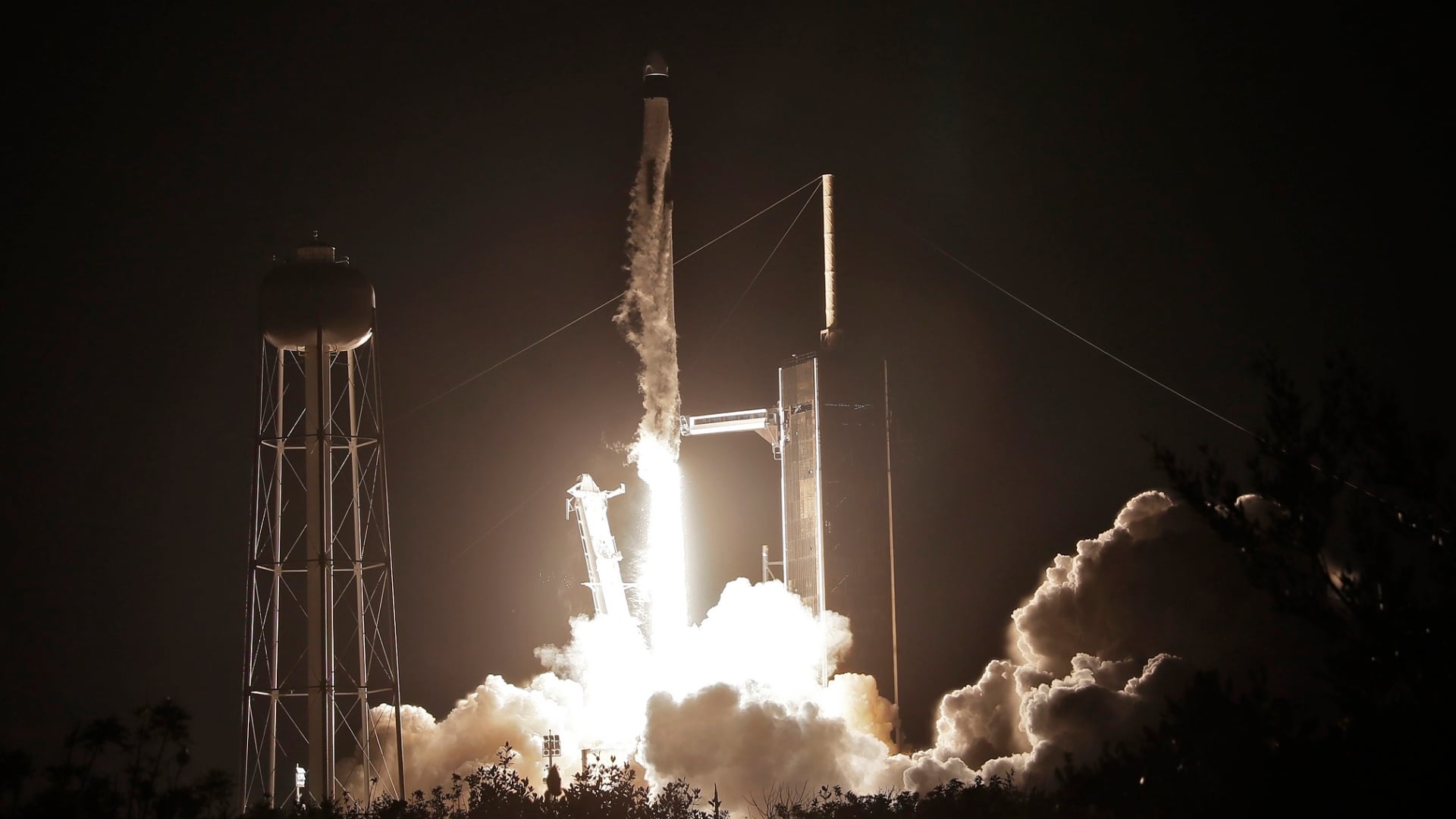
Catching you up on what you need to know on April 27, 2022, with Tesla stocks absorbing an initial hit following Elon Musk's purchase of Twitter, Russia pausing its natural gas supplies to Poland and Bulgaria, NASA's SpaceX Crew-4 mission taking off, and more.
General Motors reported a Q1 net income of $2.9 billion and a raise in their full-year guidance. This comes as the auto giant steps up production of its electric vehicles amid production headwinds. Paul Jacobson joined Cheddar News to talk about the earnings report and its ongoing electric vehicle strategy. "One of the things I'm most proud of is the fact that we're continuing to lean in and accelerate on our electric vehicle journey," he said. "When you think about it, we're going to produce 400,000 vehicles over the next two years by the end of 2023, and we'll have production capabilities up and will produce more than a million vehicles in North America alone in 2025."
Members-only home swapping network Kindred recently announced its launch alongside a $7.75 million seed round led by Andreessen Horowitz. Homeowners and renters can exchange homes on Kindred's platform, which the company says allows members to travel and take advantage of remote-work flexibility at the fraction of the cost of a hotel or rental home. Justin Palefsky and Tas Amina, co-founders of Kindred, join Cheddar News' Closing Bell to discuss.