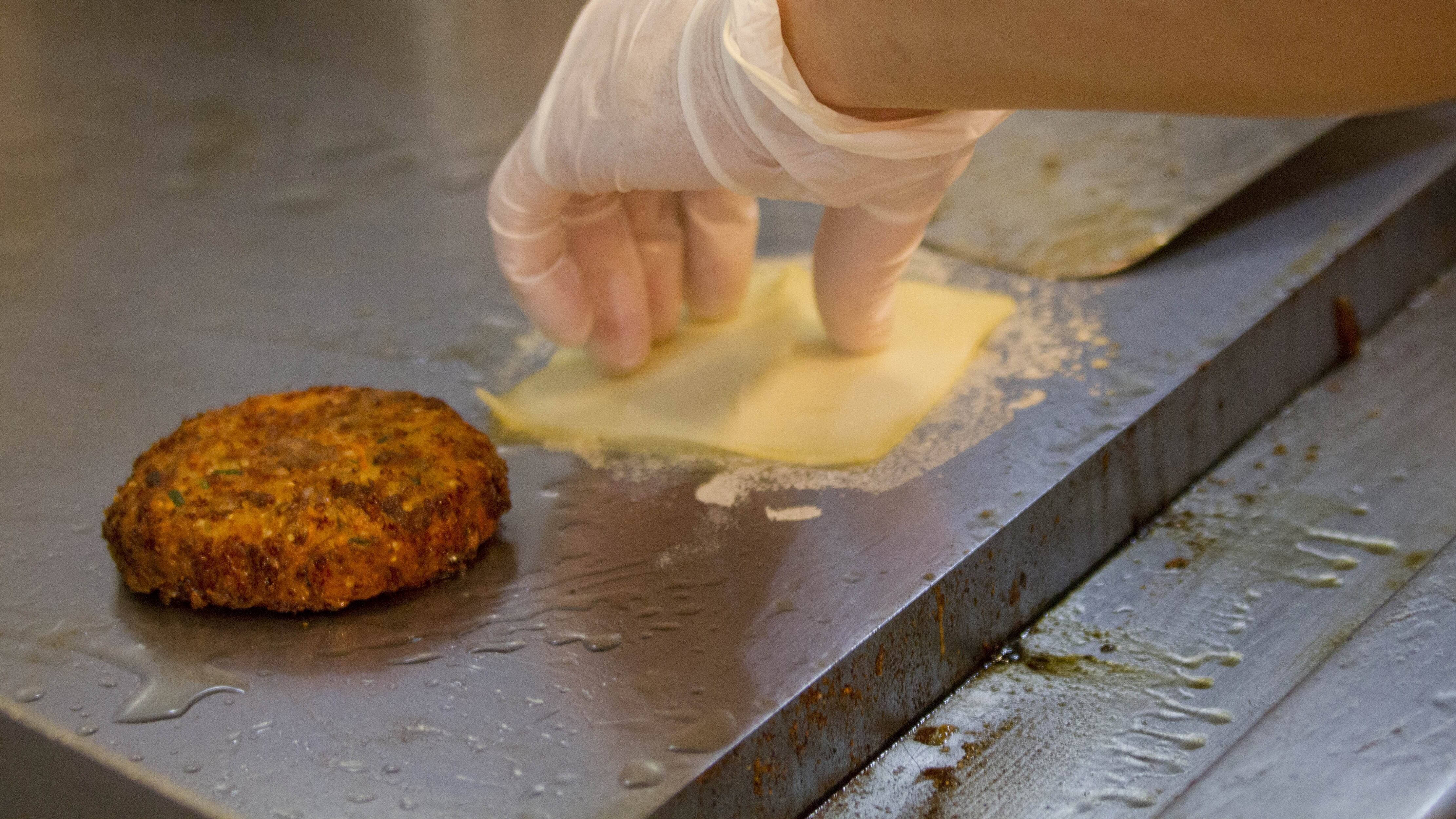
In this file photo from Tuesday, Jan. 27, 2015, a BurgerFi restaurant employee prepares to add cheese to a veggie burger as she grills an order at the Aventura, Fla., restaurant. (AP Photo/Wilfredo Lee)
Plant-based products that do not contain meat can continue to be labeled “sausages” or “burgers,” European lawmakers said Friday, when they rejected a proposal back by the meat industry to ban the terms.
In votes on issues relating to agricultural products, the European Parliament said that so-called veggie burgers, soy steaks and vegan sausages can continue to be sold as such in restaurants and shops across the union.
Europe’s largest farmers' association, Copa-Cogeca, had supported a ban, arguing that labeling vegetarian substitutes with designations bringing meat to mind was misleading for consumers.
On the opposite side of the debate, a group of 13 organizations including Greenpeace and WWF urged lawmakers to reject the proposed amendments, arguing that a ban would have not only exposed the EU “to ridicule," but also damaged its environmental credibility.
They said promoting a shift toward more plant-based diet is in line with the EU Commission's ambition to tackle global warming. Losing the ability to use the terms steak or sausage might make those plant-based products more obscure for consumers.
After the vote, the European Consumer Organization, an umbrella group bringing together consumers' associations, praised the MEPs for their “common sense."
“Consumers are in no way confused by a soy steak or chickpea-based sausage, so long as it is clearly labeled as vegetarian or vegan," the group said in a statement. “Terms such as ‘burger’ or ‘steak’ on plant-based items simply make it much easier for consumers to know how to integrate these products within a meal."
Together with Greenpeace, the group regretted that lawmakers accepted further restrictions on the naming of alternative products containing no dairy. Terms like ‘almond milk’ and ‘soy yogurt’ are already banned in Europe after the bloc's top court ruled in 2017 that purely plant-based products can't be marketed using terms such as milk, butter or cheese, which are reserved for animal products.
Zoom reported solid third quarter earnings, with a beat on revenue and EPS, but did warn of slowed growth as the pandemic wanes. For more on the company’s third quarter earnings and their innovation plans post-pandemic, Kelly Steckelberg, CFO, Zoom joined Cheddar’s Opening Bell to discuss.
As Black Friday and Cyber Monday shopping continues, Shopify is tracking sales across the more than 1 million independent and direct-to-consumer brands it powers globally. The e-commerce giant's live map captures data in real time with metrics such as sales per minute and orders per minute, demonstrating the impact independent business have around the world. Ritu Khanna, Shopify's managing director for North America, gives insight into the trends the company is seeing this year.
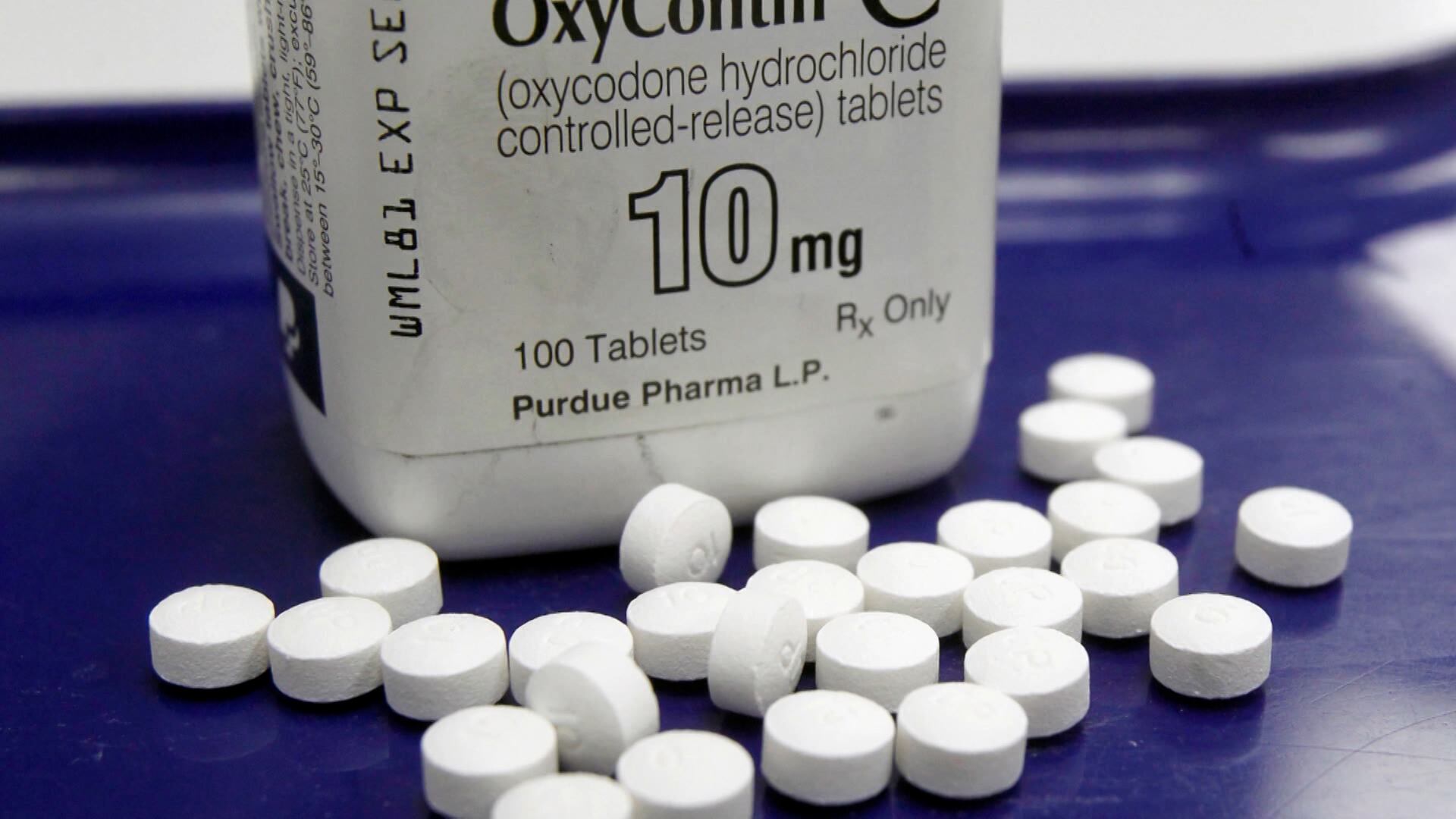
A federal jury has found CVS, Walmart, and Walgreens responsible for distributing millions of painkillers in two Ohio counties, which as a result fueled the opioid crisis there. The verdict could set the tone for cities and counties across the country that want to hold pharmacies accountable for their role in the opioid epidemic. Barak Lurie, partner and principal attorney at Lurie and Kramer, joined Cheddar to discuss why he thinks the verdict will be overruled.
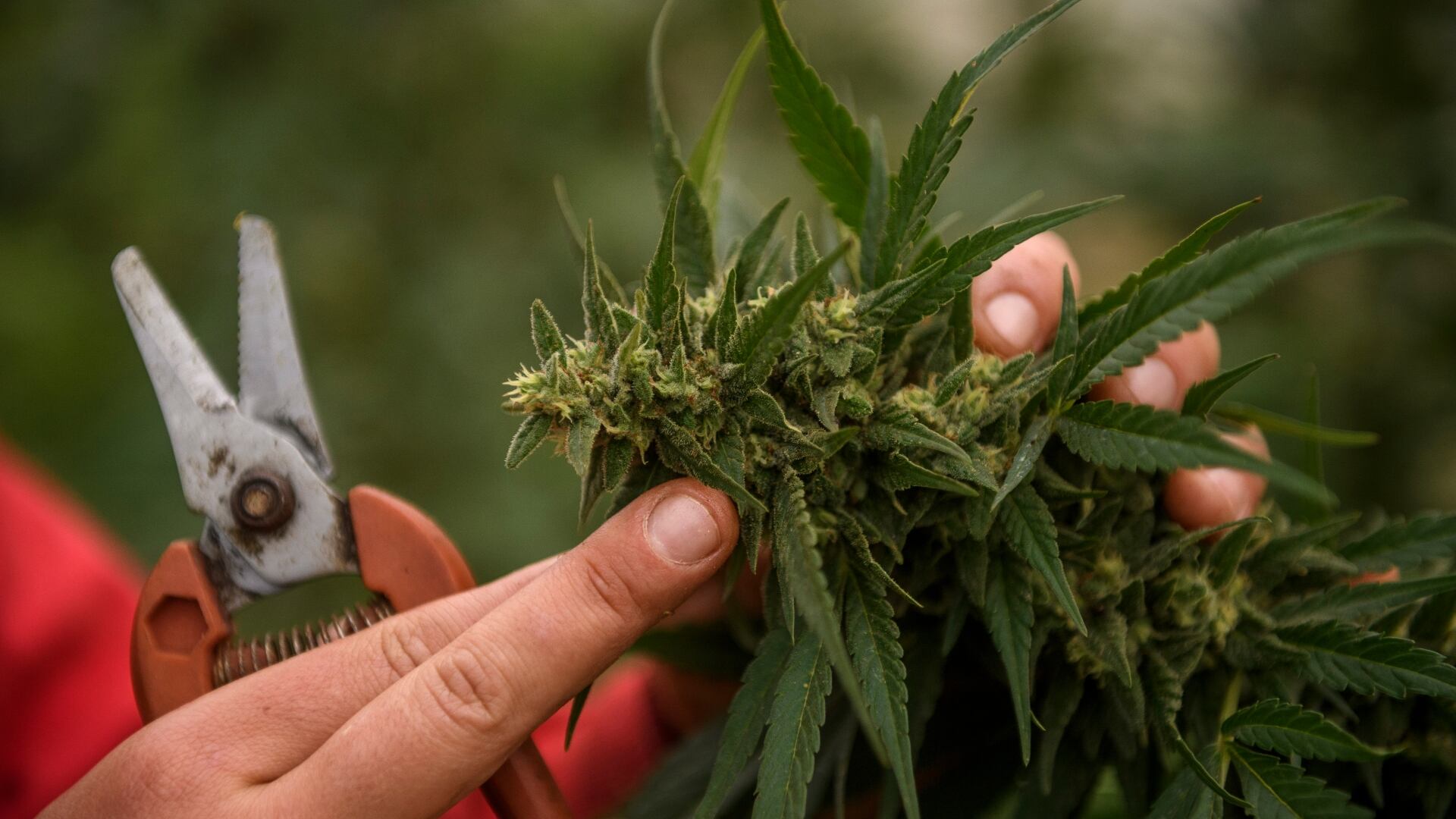
Natalie Fertig, Federal Cannabis Policy Reporter for Politico Pro, joined Cheddar to discuss the shift among republicans to support federally legalizing marijuana.
Bitcoin has officially entered bear market territory. The cryptocurrency is down 20% from an all-time high of nearly $69,000 dollars, which it hit earlier this month. Experts mark the new potentially vaccine-resistant coronavirus variant as the reason for the dip. Patrick McConlogue, CEO of Overlin, joins Cheddar News to discuss.
Carlo and Baker cover the latest developments with the Omicron variant, and break down what we know and what we still don't. Plus, a relatively tame Black Friday, and more.