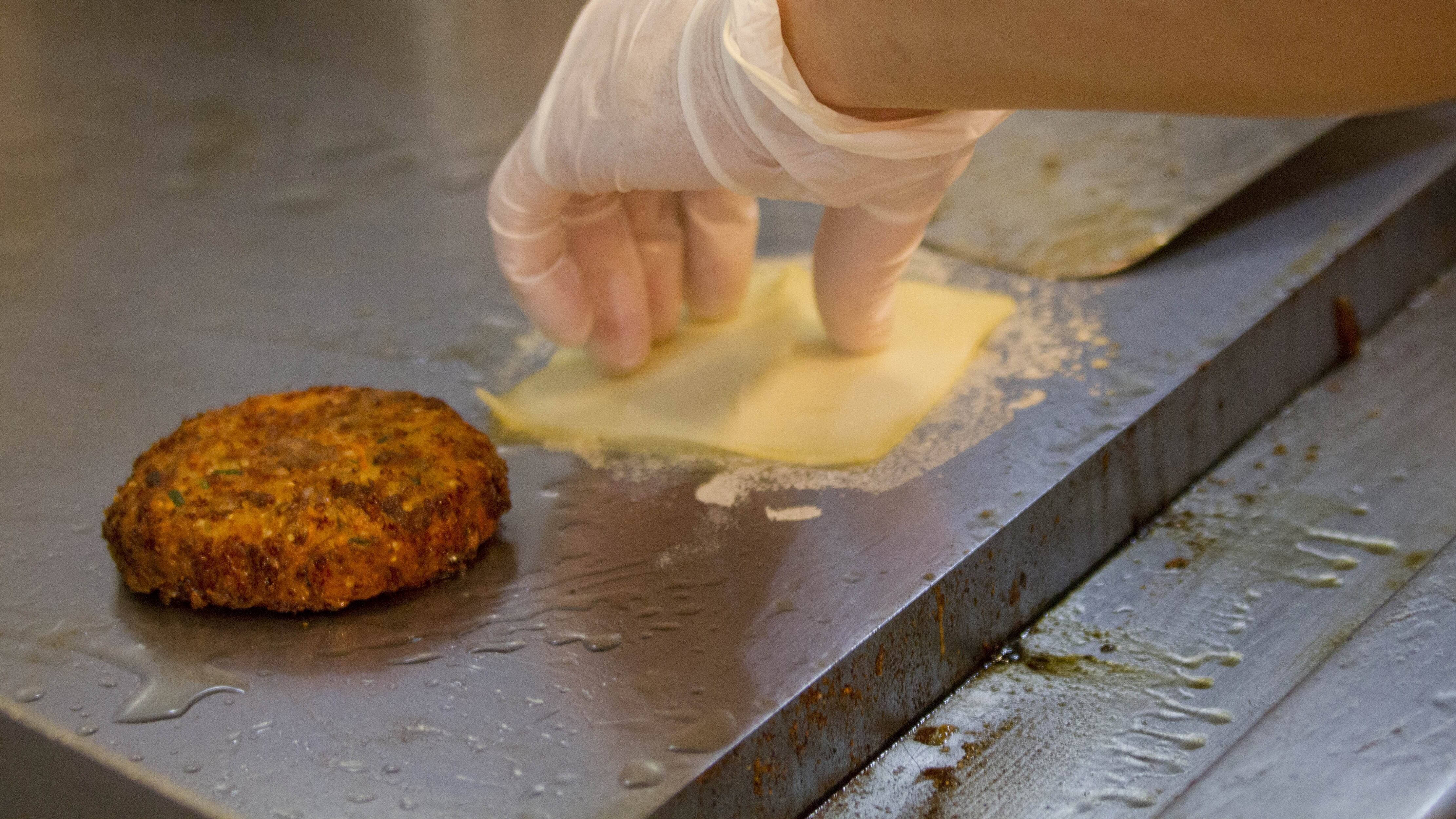
In this file photo from Tuesday, Jan. 27, 2015, a BurgerFi restaurant employee prepares to add cheese to a veggie burger as she grills an order at the Aventura, Fla., restaurant. (AP Photo/Wilfredo Lee)
Plant-based products that do not contain meat can continue to be labeled “sausages” or “burgers,” European lawmakers said Friday, when they rejected a proposal back by the meat industry to ban the terms.
In votes on issues relating to agricultural products, the European Parliament said that so-called veggie burgers, soy steaks and vegan sausages can continue to be sold as such in restaurants and shops across the union.
Europe’s largest farmers' association, Copa-Cogeca, had supported a ban, arguing that labeling vegetarian substitutes with designations bringing meat to mind was misleading for consumers.
On the opposite side of the debate, a group of 13 organizations including Greenpeace and WWF urged lawmakers to reject the proposed amendments, arguing that a ban would have not only exposed the EU “to ridicule," but also damaged its environmental credibility.
They said promoting a shift toward more plant-based diet is in line with the EU Commission's ambition to tackle global warming. Losing the ability to use the terms steak or sausage might make those plant-based products more obscure for consumers.
After the vote, the European Consumer Organization, an umbrella group bringing together consumers' associations, praised the MEPs for their “common sense."
“Consumers are in no way confused by a soy steak or chickpea-based sausage, so long as it is clearly labeled as vegetarian or vegan," the group said in a statement. “Terms such as ‘burger’ or ‘steak’ on plant-based items simply make it much easier for consumers to know how to integrate these products within a meal."
Together with Greenpeace, the group regretted that lawmakers accepted further restrictions on the naming of alternative products containing no dairy. Terms like ‘almond milk’ and ‘soy yogurt’ are already banned in Europe after the bloc's top court ruled in 2017 that purely plant-based products can't be marketed using terms such as milk, butter or cheese, which are reserved for animal products.
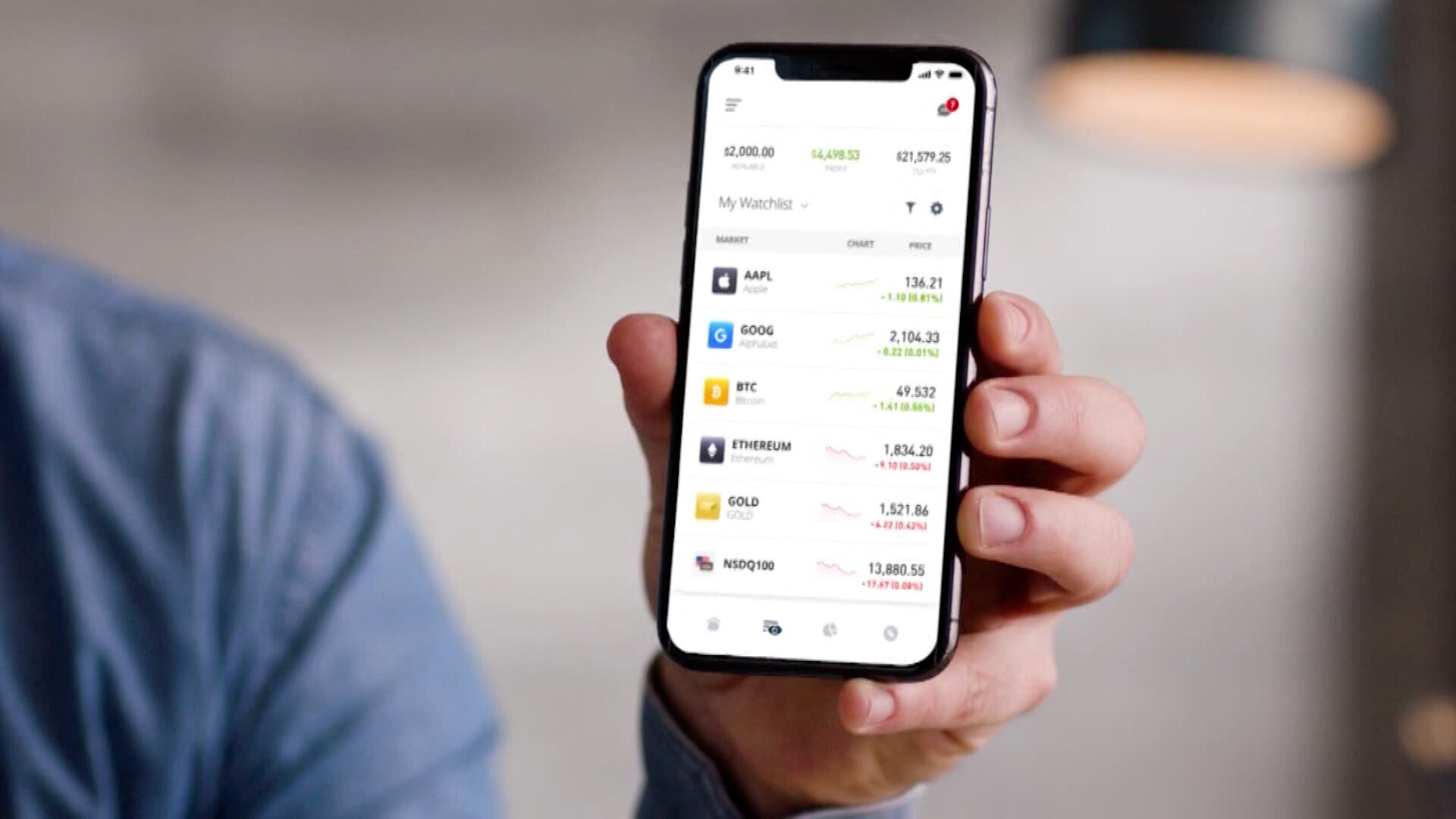
eToro, the social trading platform that offers crypto, forex, and equities, recently announced that it's giving U.S. users the option to include stocks and ETFs as part of their investment portfolios. Lule Demmissie, CEO of eToro U.S., joined Cheddar to talk about the company’s expanded offerings. "We felt, although crypto is a fantastic asset class, that individuals benefit from having a broader access to different kinds of investments, and equities is definitely one of them," Demmissie noted.
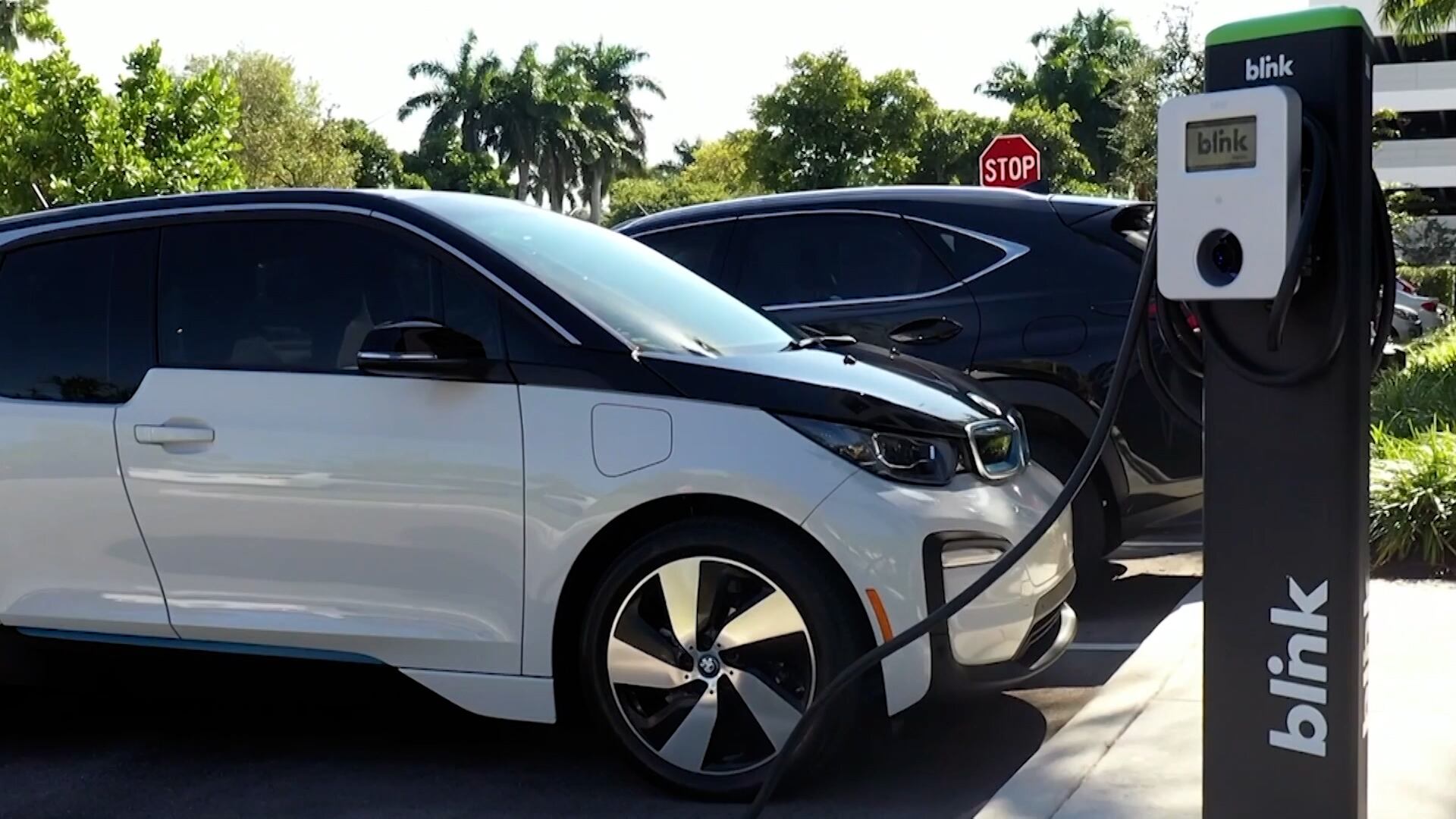
Coming off of CES, Blink Charging announced a partnership with legacy automaker General Motors to provide charging stations for its newest electric cars. The company specializes in stations they own and operate that also accommodate residential and commercial locations. Michael D. Farkas, founder and CEO, noted that they "don’t discriminate” when it comes to locating their chargers while also taking the philosophy of seeing their hardware more like hot water heaters rather than smartphones constantly in need of upgrading. "We believe it's one of the reasons why we were selected by GM," Farkas said. "These dealerships have to invest in these locations and make sure that this hardware is workable for a very, very long period of time."
Simeon Siegel, managing director and senior analyst at BMO Capital Markets joins Cheddar News to discuss CNBC's report that Peloton plans to halt production, despite the company's CEO denying those claims.
Mona Zhang, states cannabis policy reporter at POLITICO Pro joins Cheddar News to discuss major factors that caused Canada's retail marijuana sales to drop last year.
Jackie Rotman, founder and CEO of the Center for Intimacy Justice joins Cheddar News to talk about why Facebook is banning ads by companies targeting women's sexual health but not ads catered to men.
TikTok recently announced that it is testing a paid subscription model. The news comes days after Instagram publicized a similar service. TikTok has made $2.3 billion from in-app purchases, but mostly through tips, in 2021, showing that its users may be open to spending money on the platform.
The NCAA voted to streamline their constitution at their annual convention on Thursday. Each of the three college divisions can decide how student-athletes can make money from outside sources but still restricts schools from directly paying its players.
Netflix beat its earnings projections for Q4 — but the stock still plummeted as the streaming pioneer cut back on its forecast for future subscribers. Michael Robinson, the chief technology strategist at Money Map Press, joined Cheddar to discuss the report and what's driving the downward pressure on its shares. "It's the growth is really what's worrying people," he said. "'A' we have slowing economic growth, and 'B' we've got slowing growth for this company, as 'C' we have an increase in competition."