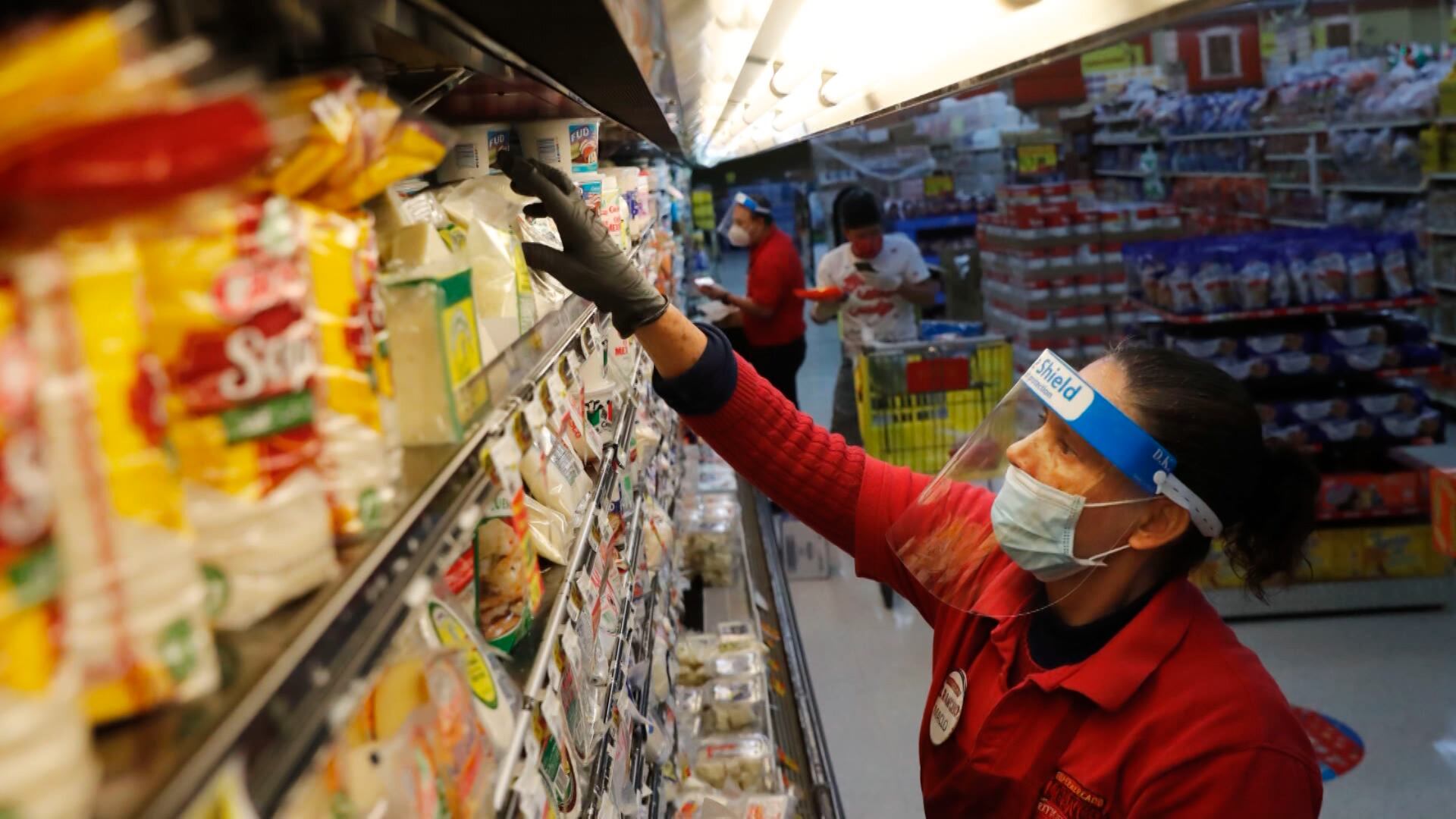
The number of Americans applying for unemployment benefits fell for the sixth straight week as the U.S. economy, held back for months by the coronavirus pandemic, reopens rapidly.
Jobless claims fell by 9,000 to 376,000 from 385,000 the week before, the Labor Department reported Thursday. The number of people signing up for benefits exceeded 900,000 in early January and has fallen more or less steadily ever since. Still, claims are high by historic standards. Before the pandemic brought economic activity to a near-standstill in March 2020, weekly applications were regularly coming in below 220,000.
Nearly 3.5 million people were receiving traditional state unemployment benefits the week of May 29, down by 258,000 from 3.8 million the week before.
Businesses are reopening rapidly as the rollout of vaccines allows Americans to feel more comfortable returning to restaurants, bars and shops. The Labor Department reported Tuesday that job openings hit a record 9.3 million in April. Layoffs dropped to 1.4 million, lowest in records dating back to 2000; 4 million quit their jobs in April, another record and a sign that they are confident enough in their prospects to try something new.
“As life normalizes and the service sector continues to gain momentum, we expect initial jobless claims to continue to trend lower,″ said Joshua Shapiro, chief U.S. economist at the economic and financial consulting firm Maria Fiorini Ramirez, Inc.
In May, the U.S. economy generated 559,000 million new jobs, and the unemployment rate dropped to 5.8% from 6.1% in April. Many economists expected to see even faster job growth. The United States is still short 7.6 million jobs from where it stood in February 2020.
But employers are posting vacancies faster than would-be applicants can fill them. Many Americans are contending with health and childcare issues related to COVID-19 and with career uncertainty after the coronavirus recession wiped out many jobs for good. Some are taking their time looking for work because expanded federal jobless benefits pay more than their old jobs.
Many states are scheduled to begin dropping the federal benefits this month. Altogether, 15.3 million people were receiving some type of jobless aid the week of May 22; a year earlier, the number exceeded 30 million.
Sky Harbour, a company developing private aviation infrastructure, is gearing up to land on Wall Street. The company announced plans to go public through a SPAC deal with Yellowstone Acquisition Company, valuing the combined venture at $777 million. The company will trade on the New York Stock Exchange as $SKYH.
Dish Network is reportedly in discussions to merge with DirecTV. According to the NY Post, the two sides are currently 'trying to iron out the details.' The competitors have had talks in the past -- over the course of the past 20 years, but those talks been halted by the DOJ over antitrust concerns. Lydia Moynihan, Business Reporter, NY Post joined Cheddar's Opening Bell to discuss.
Stocks closed higher Wednesday, with the Nasdaq making gains for the third day in a row despite this morning's CPI data showing inflation continues to run hot. The report showed that CPI ticked up to 7% in December, and while it was the biggest jump since 1982, the data was broadly in line with Wall Street's expectations. Mark Lehmann, CEO of JMP Securities, a Citizens Company, joins Cheddar News' Closing Bell to discuss today's close, the Fed's proposed monetary tightening, and more.
As more and more consumers are experiencing empty shelves at their grocery stores, Phil Lempert, editor of SupermarketGuru.com, spoke with Cheddar's Ken Buffa to discuss the changes in the supply chain that have trickled down into our grocery stores. "It's really three major factors: number one is climate change, number two is labor, and number three is transportation," he explained. Lempert also called on people to shop with local, independent grocers, calling it "critical to our infrastructure."
CPI rose 7% from a year prior in December, showing that inflation has continued to increase at its fastest pace since June 1982. Consumers are feeling the pressure when it comes to food, apparel, and used car prices, but got some relief in December as energy prices ticked slightly lower month-over-month. How will this ongoing inflation streak impact U.S. monetary policy as the Federal Reserve says it's prepared to implement aggressive tactics like raising interest rates? John Leer, Chief Economist at Morning Consult, joins Cheddar News' Closing Bell to discuss December's CPI data, what it means for consumers, how the Federal Reserve can help limit inflation, and more.
One startup is working to reverse climate change one seed at a time. Terraformation is a global forest accelerator that provides tools, training, financing, and business support to help scale forest restoration projects worldwide. Forests naturally absorb carbon and Terraformation says that reforestation is a safe, low-cost, and scalable solution to the climate crisis. Yee Lee, VP of growth at Terraformation, joins Cheddar Climate to discuss.