By Paul Wiseman
The U.S. economy surprisingly accelerated to a 2.4% annual growth rate from April through June, showing continued resilience in the face of steadily higher interest rates resulting from the Federal Reserve’s 16-month-long fight to bring down inflation.
Thursday’s estimate from the Commerce Department indicated that the gross domestic product — the economy’s total output of goods and services — picked up from the 2% growth rate in the January-March quarter. Last quarter's expansion was well above the 1.5% annual rate that economists had forecast.
Driving last quarter's growth was a burst of business investment. Excluding housing, business spending surged at a 7.7% annual rate, the fastest such pace since early 2022. Companies plowed more money into factories and equipment. Increased spending by state and local governments also helped fuel the economy's expansion in the April-June quarter.
Consumer spending, the heart of the nation's economy, was also solid last quarter, though it slowed to a 1.6% annual rate from a robust 4.2% pace in the first quarter of the year.
Investment in housing, though, fell, weakened by the weight of higher mortgage rates.
"This is a strong report, confirming that this economy continues to largely shrug off the Fed’s aggressive rate increases and tightening credit conditions,’’ said Olu Sonola, head of U.S. economics at Fitch Ratings. “The bottom line is that the U.S. economy is still growing above trend, and the Fed will be wondering if they need to do more to slow this economy.”
In fighting inflation, which last year hit a four-decade high, the Fed has raised its benchmark rate 11 times since March 2022, most recently on Wednesday. The resulting higher costs for a broad range of loans — from mortgages and credit cards to auto loans and business borrowing — have taken a toll on growth.
Still, they have yet to tip the United States into a widely forecast recession. Optimism has been growing that a recession isn’t coming after all, that the Fed can engineer a so-called “soft-landing” — slowing the economy enough to bring inflation down to its 2% annual target without wrecking an expansion of surprising durability.
This week, the International Monetary Fund upgraded its forecast for U.S. economic growth for all of 2023 to 1.8%. Though that would be down from 2.1% growth for 2022, it marked an increase from the 1.6% growth that the IMF had predicted for 2023 back in April.
At a news conference Wednesday after the Fed announced its latest quarter-point rate hike, Chair Jerome Powell revealed that the central bank’s staff economists no longer foresee a recession in the United States. In April, the minutes of the central bank’s March meeting had revealed that the Fed’s staff economists envisioned a “mild” recession later this year.
In his remarks, Powell noted that the economy has proved resilient despite the Fed’s rapid rate hikes. And he said he still thinks a soft landing remains possible.
By any measure, the American job market has shown itself to be remarkably strong. At 3.6% in June, the unemployment rate hovers just above a five-decade low. A surge in retirements after COVID-19 hit in early 2020 has contributed to a shortage of workers across the country, forcing many companies to raise wages to attract or keep staffers.
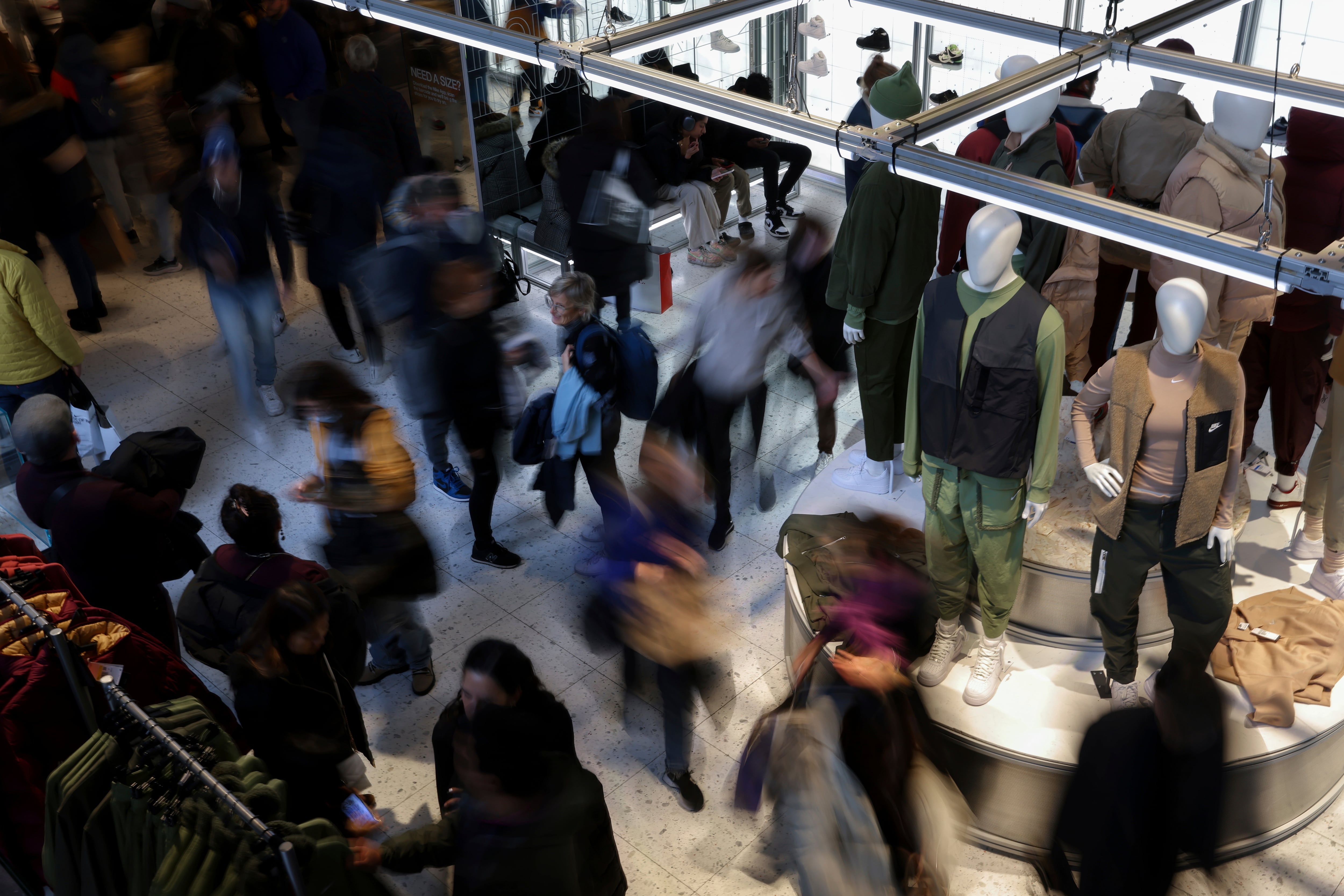
Higher pay and job security are giving Americans the confidence and financial wherewithal to keep shopping. Indeed, consumer spending, which drives about 70% of economic activity, rose at a 4.2% annual rate from January through March, the fastest quarterly pace in nearly two years. Americans have kept spending — crowding airplanes, traveling overseas and flocking to concerts and movie theaters.
And the Conference Board, a business research group, reported Tuesday that Americans this month are in their sunniest mood in two years, based on the board’s reading of consumer confidence.
Indeed, many consumers are finally enjoying some relief from spiking prices: Year-over-year inflation, which peaked at 9.1% in June 2022, has eased consistently ever since. Inflation-adjusted hourly pay rose 1.4% in June from a year earlier, the sharpest such gain since early 2021.
“Inflation is easing, moving in the right direction," said Rubeela Farooqi, chief U.S. economist at High Frequency Economics. ”In other words, the Fed is achieving what it wants without causing damage to the economy, so they don’t need to push too hard from this point on.''
Still, Farooqi suggested, the surprisingly healthy GDP report makes it somewhat more likely that the Fed will raise rates again because the economy appears to be "much stronger'' than what the central bank would like to see. With stronger growth comes a greater likelihood of high inflation.
But Thursday’s GDP report contained some encouraging news for the Fed’s inflation fighters: One measure of prices — the personal consumption expenditures index — rose at a 2.6% annual rate last quarter, down from a 4.1% pace in the January-March quarter, to the lowest level since the end of 2020.
Though that is still above the Fed's 2% inflation target, it amounts to “another welcome sign of disinflation,” said Mike Fratantoni, chief economist at the Mortgage Bankers Association.
The Biden White House's Council of Economic Advisers estimated Thursday that investment in factories and other manufacturing facilities added 0.4 percentage point of growth last quarter, the largest such proportion since 1981. President Joe Biden pushed the Inflation Reduction Act and the CHIPS Act last year to encourage domestic manufacturing. Michael Feroli, chief U.S. economist at JP Morgan Chase, agreed that much of last quarter's uptick in business investment was “likely in response to recent federal incentives.’’
“This progress wasn’t inevitable or accidental,’’ the president said in a statement. “It is Bidenomics in action.’’
The risk remains that the weight of ever-higher interest rates will eventually slow borrowing so much — for homes, cars, renovations, business expansions and other costly expenses — as to pull the economy into recession.
Among the economy’s weakest links has been the housing market. In June, sales of previously occupied homes sank to their slowest pace since January. The problem is that a near-historic low number of homes for sale and higher mortgage rates kept many would-be homebuyers on the sidelines. Sales fell 19% compared with June 2022 and were down 23% through the first half of the year.
AP Writer Josh Boak contributed to this report.