By Tim Sullivan and Matt Sedensky
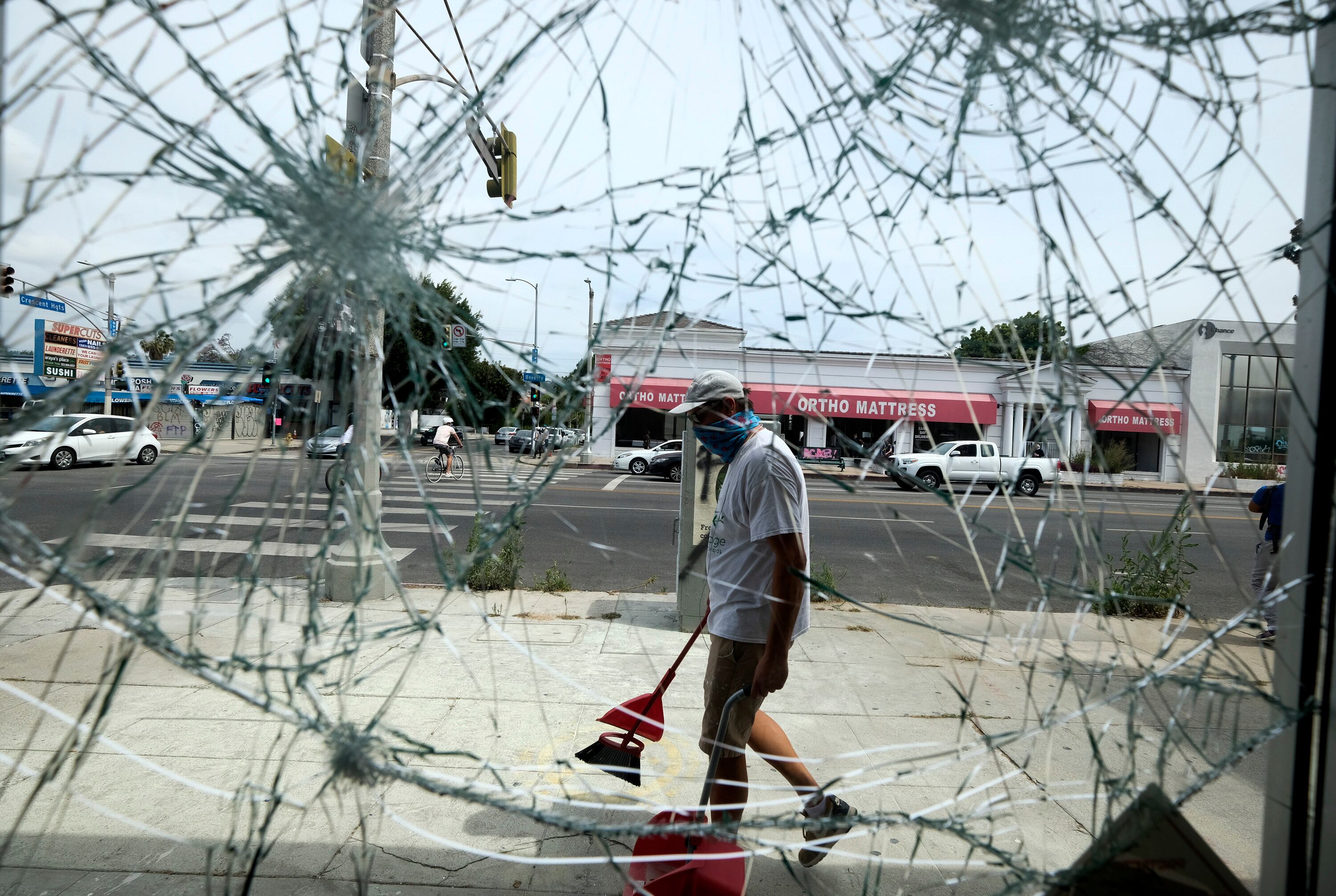
America’s cities boarded up windows, swept up glass and covered graffiti Sunday as the country's most significant night of protests in a half-century spilled into another day of unrest fueled by killings of black people at the hands of police.
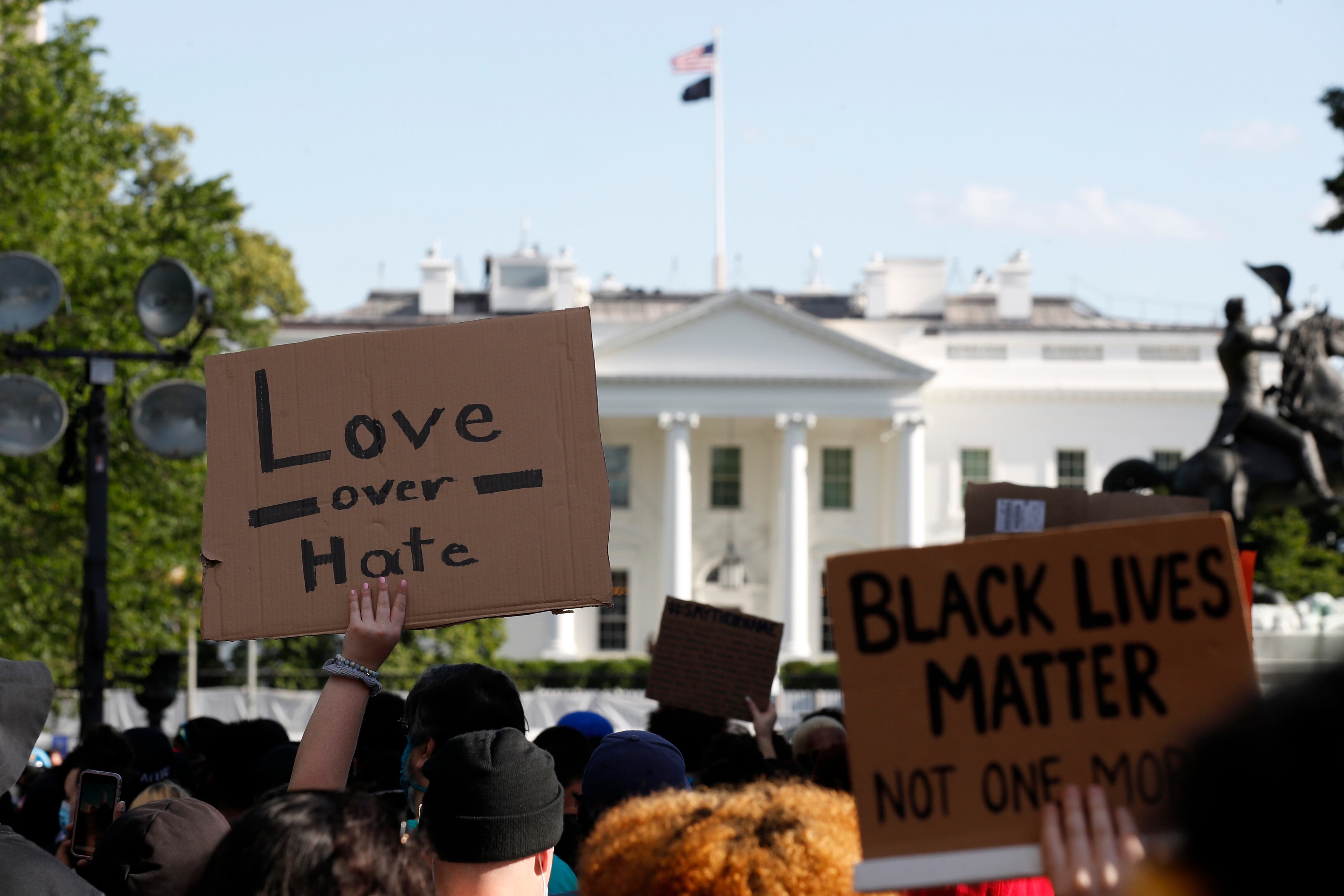
The turbulence sparked by the death of George Floyd — a black man who died after a white Minneapolis police officer pressed a knee into his neck for several minutes — shook not only the streets of New York and Los Angeles, but dozens of smaller communities such as Fargo, North Dakota, and Lincoln, Nebraska. The damage extended even to buildings near the White House.
“They keep killing our people,” said Mahira Louis, 15, who marched with her mother and several hundred others through downtown Boston on Sunday. “I’m so sick and tired of it.”
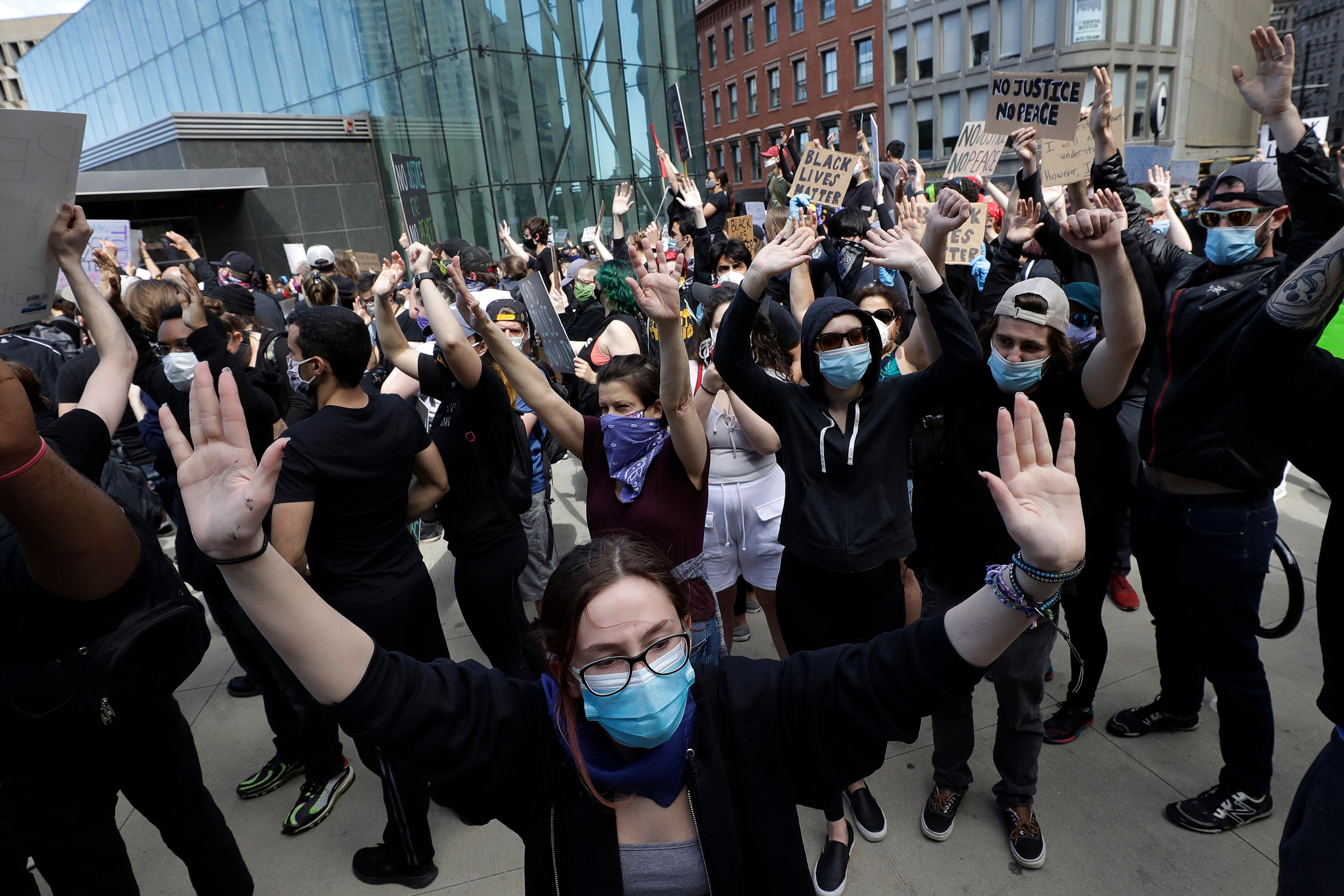
Peaceful protests involving tens of thousands of people on Saturday gave way, in some places, to violence, with police vehicles torched, stores emptied and objects hurled at officers. The police response varied from restrained to aggressive, with officers at times firing tear gas and rubber bullets.
Police and peaceful protesters alike pleaded for a stop to violence, saying it weakened calls for justice and reform.
“It only hurts the cause,” said Danielle Outlaw, head of the police force in Philadelphia, where more than 200 people were arrested as fires and looting engulfed the heart of the city.
Disgust over generations of racism in a country founded by slaveholders combined with a string of recent racially charged killings to stoke the anger. Adding to that was angst from months of lockdowns brought on by the coronavirus pandemic, which has disproportionately hurt communities of color, not only in terms of infections but in job losses and economic stress.
The droves of people congregating for demonstrations threatened to trigger new outbreaks, a fact overshadowed by the boiling tensions.
“Maybe this country will get the memo that we are sick of police murdering unarmed black men,” said Lex Scott, founder of Black Lives Matter Utah. “Maybe the next time a white police officer decides to pull the trigger, he will picture cities burning.”
The scale of the protests, sweeping from coast to coast and unfolding on a single night, rivaled the historic demonstrations of the civil rights and Vietnam War eras.
Curfews were imposed in major cities around the U.S., including Atlanta, Chicago, Denver, Los Angeles, San Francisco and Seattle. About 5,000 National Guard soldiers and airmen were activated in 15 states and Washington, D.C.
In Minneapolis, police, state troopers and National Guard members showed new force Saturday in breaking up demonstrations after three days of police largely avoiding engaging protesters.
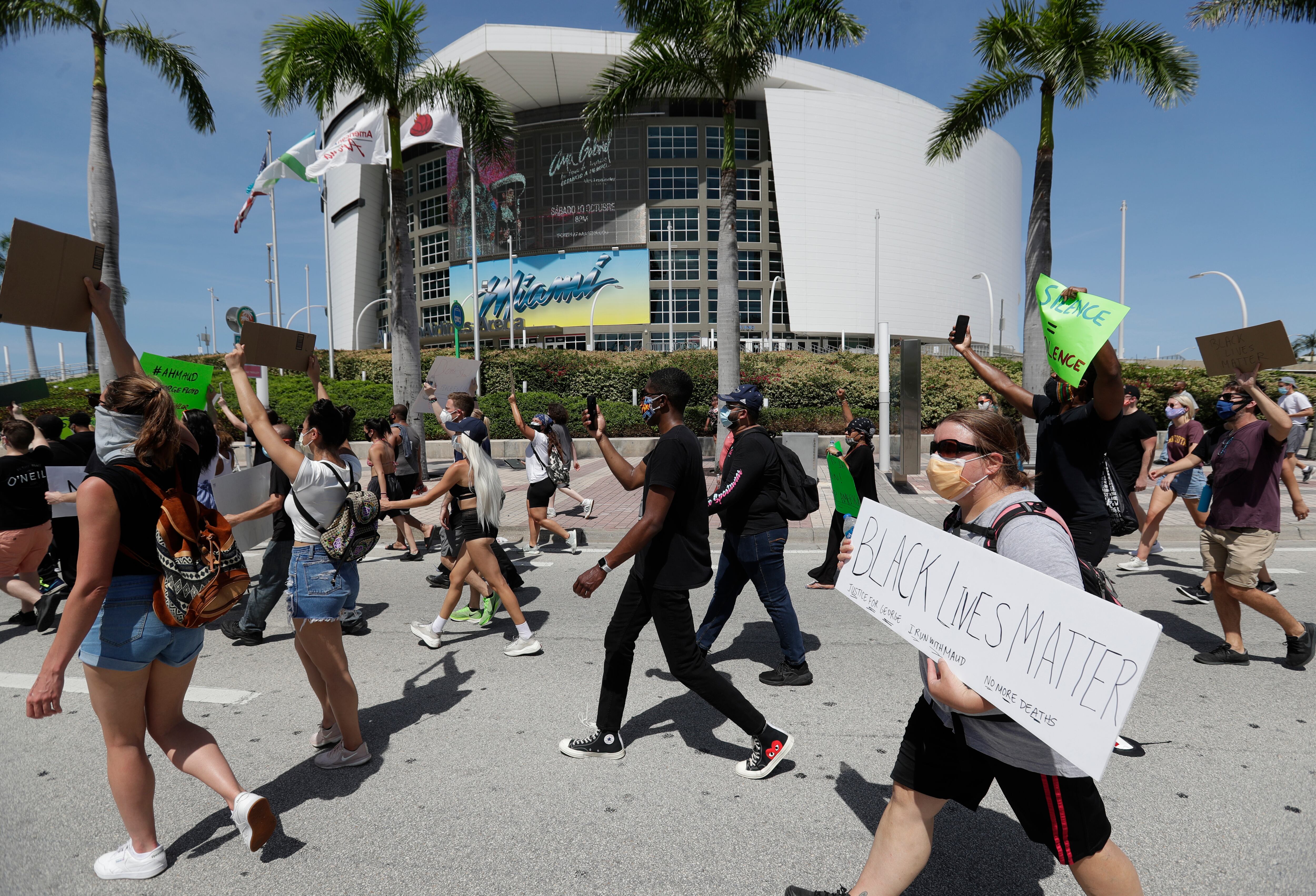
Dozens of protests were underway or expected Sunday, from Miami to Kansas City to San Francisco. They went forth largely without incident, but sparks of crime continued.
In Philadelphia, people robbed stores in broad daylight, and at least one more police vehicle was set ablaze. Streets leading downtown were closed. Chicago likewise restricted downtown access and called in the National Guard.
At the Minneapolis intersection where Floyd was killed, people gathered with brooms and flowers, saying it was important to protect what they called a “sacred space.” The intersection was blocked with the traffic cones while a ring of flowers was laid out.
Among those descending on Minneapolis was Michael Brown Sr., the father of Michael Brown, whose killing by a police officer in Ferguson, Missouri, set off unrest in 2014.
“I understand what this family is feeling. I understand what this community is feeling,” he said.
County Commissioner Angela Conley said the demonstrations and confrontations with police would continue until the other three officers who were at the scene when Floyd was pinned down are arrested and prosecuted. The officer who held his knee on Floyd’s neck, Derek Chauvin, was charged last week with murder. All four officers have been fired.
“We’ll continue to have this militarized presence in our community until justice is done,” Conley said.
In tweets Sunday, President Donald Trump blamed anarchists and the media for fueling the violence. Attorney General William Barr pointed a finger at “far left extremist” groups. Police chiefs and politicians accused outsiders of coming in and causing the problems.
Few parts of America were untouched. Protesters set fires inside Reno’s city hall, and police launched tear gas at rock-throwing demonstrators in Fargo, North Dakota. In Salt Lake City, demonstrators flipped a police car and lit it on fire. Police said six people were arrested and an officer was injured after being struck in the head with a baseball bat.
By Sunday, the fury had spread to Europe, where thousands gathered in London’s Trafalgar Square, clapping and waving placards despite government rules barring crowds because of the COVID-19 pandemic.
In New York, a video Saturday showed two police cruisers lurching into a crowd of demonstrators who were pushing a barricade against one of them and pelting it with objects. Several people were knocked to the ground. It was unclear if anyone was hurt.
“The mistakes that are happening are not mistakes. They’re repeated violent terrorist offenses, and people need to stop killing black people,” Brooklyn protester Meryl Makielski said.
In Indianapolis, two people were reported dead in bursts of downtown violence, adding to deaths reported in Detroit and Minneapolis in recent days.
Buildings around the U.S. were defaced with spray-painted messages, from the facade of St. Patrick's Cathedral in New York to the historic Hay-Adams hotel near the White House. Some of Floyd's gasped last words — “I can't breathe” — were repeated, alongside anti-police messages.
Crews near the White House worked to replace windows that had been shattered with large pieces of wood. Buildings for blocks were marked with graffiti, including curses about Trump. Shattered glass still covered the sidewalks. The damaged buildings included the Department of Veterans Affairs, directly across the street from the White House.
Some leaders prepared to put more soldiers in the streets. Georgia Gov. Brian Kemp authorized the deployment of up to 3,000 National Guard troops to Athens, Savannah and any other cities where more demonstrations were planned. Kemp had already approved up to 1,500 Guardsmen to help enforce a 9 p.m. Saturday curfew in Atlanta.
This week’s unrest recalled the riots in Los Angeles nearly 30 years ago after the acquittal of the white police officers who beat Rodney King, a black motorist who had led them on a high-speed chase. The protests of Floyd’s killing have gripped many more cities, but the losses have yet to approach the staggering totals LA saw during five days of rioting in 1992, when more than 60 people died, 2,000-plus were injured and thousands arrested, with property damage topping $1 billion.
Sedensky reported from Philadelphia. Associated Press journalists across the U.S. contributed to this report.