By Kevin Freking

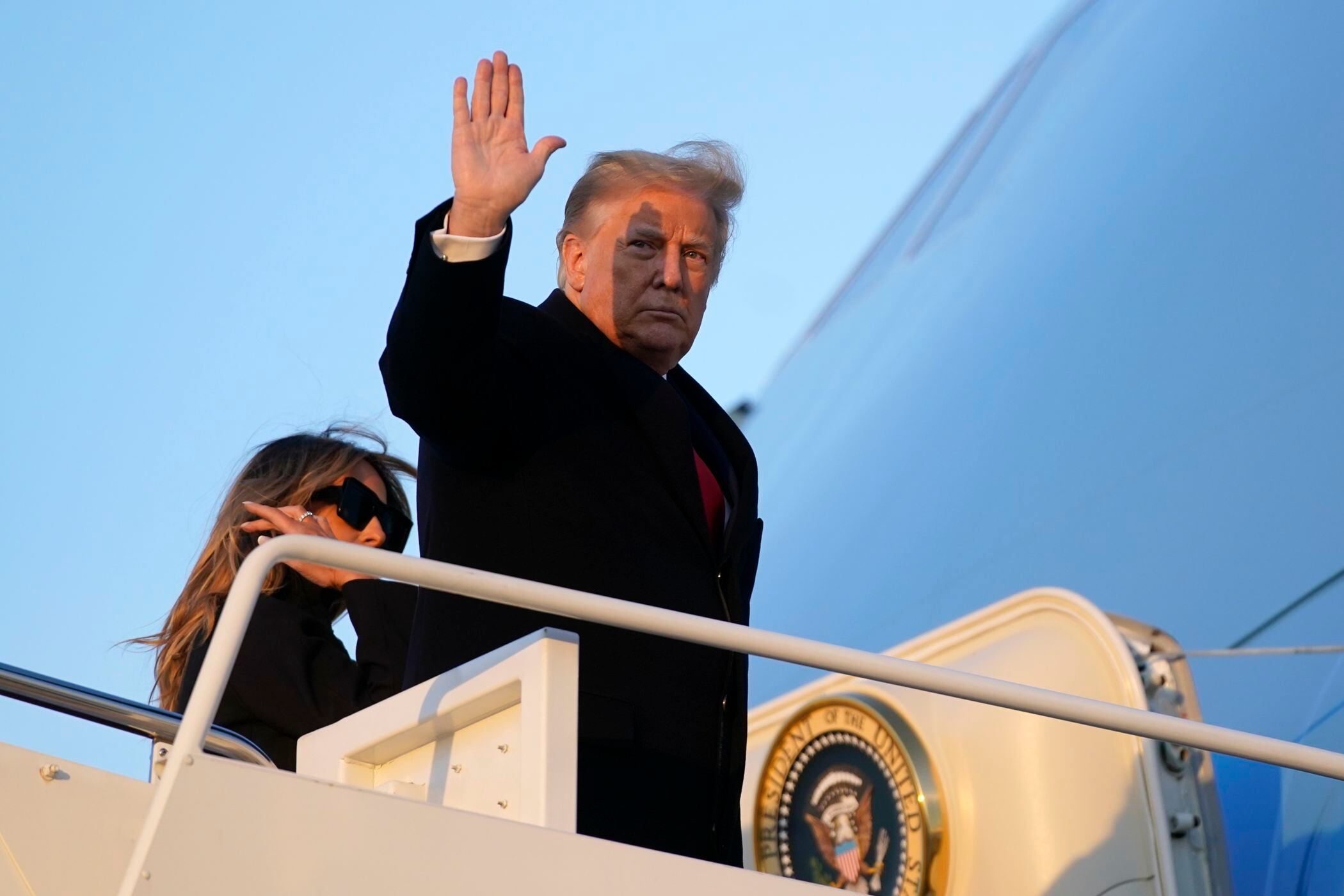
President Donald Trump on Wednesday vetoed the annual defense policy bill, following through on threats to veto a measure that has broad bipartisan support in Congress and potentially setting up the first override vote of his presidency.

The bill affirms 3% pay raises for U.S. troops and authorizes more than $740 billion in military programs and construction.

The action came while Trump was holed up at the White House, stewing about his election loss and escalating his standoff with Republicans as he pushed fraudulent conspiracy theories and tried to pressure them to back his efforts to overturn the results.

The House was poised to return Monday, and the Senate on Tuesday, to consider votes to override the president’s veto.

Trump's move provoked swift condemnation, with House Speaker Nancy Pelosi calling it “an act of staggering recklessness that harms our troops, endangers our security and undermines the will of the bipartisan Congress.”

Sen. Jim Inhofe, R-Okla., chairman of the Senate Armed Services Committee, avoided any criticism of Trump, but called the NDAA “absolutely vital to our national security and our troops. ... Our men and women who volunteer to wear the uniform shouldn’t be denied what they need — ever.”

Long before issuing the veto, Trump offered a series of rationales for rejecting it. He has called for lawmakers to include limits on social media companies he claimed are biased against him — and to strip out language that allows for the renaming of military bases such as Fort Benning and Fort Hood that honor Confederate leaders. Without going into detail, he has claimed the biggest winner from the defense bill would be China.

In his veto message to the House, Trump cited those objections and stated that the measure “fails to include critical national security measures, includes provisions that fail to respect our veterans and our military’s history, and contradicts efforts by my Administration to put America first in our national security and foreign policy actions. It is a ‘gift’ to China and Russia.”

He also wrote: “Numerous provisions of the Act directly contradict my Administration’s foreign policy, particularly my efforts to bring our troops home.

Both the House and Senate passed the measure by margins large enough to override a veto from the president. Trump had vetoed eight bills previously, but those vetoes were sustained because supporters did not gain the two-thirds vote needed in each chamber for the bill to become law without Trump’s signature.

In advance of the veto, Senate Majority Leader Mitch McConnell, R-Ky., has said the bill would help deter Chinese aggression. Other GOP backers of the measure, including Sen. John Thune of South Dakota, the second-ranking Senate leader, and Rep. Mike Gallagher of Wisconsin, a member of the House Armed Services Committee, have tweeted that the bill would counter threats from countries such as China.

Sen. Jack Reed of Rhode Island, the top Democrat on the Armed Services Committee, said Trump’s declaration that China was the biggest winner in the defense bill was false. Reed also noted the shifting explanations Trump had given for the veto.

“President Trump clearly hasn’t read the bill, nor does he understand what’s in it,” Reed said. “There are several bipartisan provisions in here that get tougher on China than the Trump Administration has ever been.”

The measure guides Pentagon policy and cements decisions about troop levels, new weapons systems and military readiness, military personnel policy, and other military goals. Many programs can only go into effect if the bill is approved, including military construction.

McConnell, in a rare break with Trump, had urged passage despite Trump’s threat to veto it. McConnell said it was important for Congress to continue its nearly six-decade-long streak of passing the defense policy bill.

Updated on December 23, 2020, at 4:48 p.m. ET with the latest information.

Share:
More In Politics
Snap, Youtube, TikTok to Face Questioning from Lawmakers
Later today House Republicans will grill Snap, Tiktok and Youtube on how their products affect the mental health of teenagers. It comes after a report revealed that Facebook's photo sharing platform, Instagram, can be harmful to teen's mental health. Rishi Bharwani, Director of Partnerships and Policy, Accountable Tech joined Cheddar's Opening Bell to discuss.
Paid Family Leave Program in Flux
As the White House and Congressional leaders work towards finalizing the legislative framework of the Build Back Better budget deal, paid family leave, one of the hallmarks of President Joe Biden's Social Safety Net agenda, still stands in flux. Molly Day, Executive Director, Paid Leave for the U.S. joined Cheddar's Opening Bell to discuss why the finalization of this bill is imperative.
New York City Workers Protest Vaccine Mandate
Marjorie Mesidor, Esq., Partner, Phillips and Associates, PLLC and Dr. Anthony Santela, professor of health administration and university covid coordinator at the University of New Haven join J.D. Durkin and None Of The Above to talk about the expected fallout from New York City's vaccine mandate.
COP26 Summit In Glasglow Officially Underway
Leaders around the world have come together to discuss plans to bring action towards the Paris Agreement along with solutions on how to solve the evolving climate change crisis at the COP26 Summit. President and CEO of Center for International Environmental Law Carroll Muffett, joined Cheddar to discuss more.
What's Next for World Leaders After COP26 Commitments to Abate Climate Change
Rachel Cleetus, the policy director and lead economist of the climate and energy program for the Union of Concerned Scientists, joined Cheddar to break down some of the key goals from the COP26 summit and why leaders must focus on the science of climate change instead of getting bogged down by petty politics and the fossil fuel industry. "The main thing they have to do, make sure we're cutting our emissions sharply within this decade because the science shows that we have to cut global emissions in half by 2030 if we're going to meet our goals of averting some of the most catastrophic impacts of climate change," she said.
Election Day, Climate Pledges & Cautionary TV Tale
Carlo and Baker cover the big races to watch on this off-cycle Election Day, the concrete pledges starting to come out of COP26, Jeffrey Epstein keeps causing CEOs to lose their jobs, and Ryan Murphy's TV hit that wasn't.
November Begins with Record Closes, Clorox Reports Earnings
The Dow, S&P, and Nasdaq begin November by not only ending Monday's session higher but with a record close as well. Melissa Armo, Founder and Owner of The Stock Swoosh, has her eye on major economic storylines and joins Cheddar News' Closing Bell to discuss what role the news could play on Wall Street.
Climate-Focused Investing in Focus at COP26
The UN climate change conference kicked off on Sunday with about 120 world leaders and delegates gathering in Glasgow, Scotland this week, as experts continue to warn about the harms of heightened emissions and the effects on climate change. The topic of ESG investing is expected to be a top priority at the summit. Jefferies global head of ESG and sustainability research Aniket Shah joined Cheddar News' Closing Bell to discuss.
Schools Reconsider Gifted and Talented Programs Amid Race, Class Disparities
Gifted and talented education programs in schools throughout the United States are falling under greater scrutiny as the race and class divide in the programs remain wide. Marcia Gentry, a professor of educational studies and the director of the Gifted Education Research and Resource Institute at Purdue University, joined Cheddar to weigh in on if advanced tracking for students can also be equitable for lower income students and students of color.
Supreme Court Weighs in on Texas Abortion Law
The Supreme Court is now weighing in on one of the nation's most restrictive abortion laws. The Texas law, which was enacted on September 1, bans abortions after six weeks of pregnancy. In addition, it allows any private citizen to sue anyone who helps a woman get an abortion. Jimmy Hoover, Supreme Court Editor-At-Large at Law360, joined Cheddar News to discuss more.
Load More