The Trump administration last week rescinded a Obama-era rule that asked HUD recipients to measure and consider fixes to racial segregation in their communities.
President Donald Trump then followed up the decision with a tweet that critics say was an explicit appeal to white, suburban voters.
"His tweet was aimed at a strategy of appealing to racial resentment and really people's worst ideas about how our communities should be structured," David Sanchez, director of research and development for the National Community Stabilization Trust, told Cheddar. "Attitudes like that are a big reason why we have such severe segregation by race, class, and opportunity in this country, and unfortunately the president is trying to use those fears to benefit himself politically."
The loss of the rule itself has gotten less attention, in part due to its low profile as more of a regulatory tweak than an aggressive federal policy.
The Affirmatively Furthering Fair Housing Rule that Trump's HUD eliminated asked municipalities and housing authorities to account for racial bias in their communities by writing a report and issuing recommendations, but it did not force municipalities to address segregation directly.
"It was about gathering data," Sanchez said. "It was about getting people talking about segregation. But it wasn't about forcing communities to do anything."
In the long-term, though, he added that cutting the rule will only contribute to the ongoing economic divide between the suburbs and cities.
"It's going to continue to concentrate economic resources, social privilege in certain people who can afford to live in high-opportunity communities," Sanchez said. "In the same way the COVID crisis has supercharged inequality in this country, this is just another step in that direction."
Christopher Wolfe, CIO at First Republic Private Wealth Management, joins Cheddar News' Closing Bell, where he says he is surprised that the first quarter was the first down period in a long time, but adds that the second quarter could be difficult with a lot of volatility expected.
Jeffrey Small, President of Arbor Financial, joins Chedar News' Closing Bell, where he breaks down why stocks closed near session lows on Wednesday and tells viewers what to expect ahead of next earnings season.
Uber and Lyft drivers are cruising in Washington State, the first U.S. state to set an earnings standard for drivers for the ride-hailing companies. Governor Jay Inslee signed the new minimum pay standard into law Thursday, which also gives drivers access to perks like paid sick time and family medical leave. John Logan, Director of Labor and Employment Studies at San Francisco State University, joins Cheddar News' Closing Bell to discuss.
Jeremy Berke, senior reporter on the cannabis industry for Business Insider, joins Cheddar Politics to discuss developments in cannabis legalization at the federal level. He helps break down the bill and what legalization efforts might look like in the Senate.
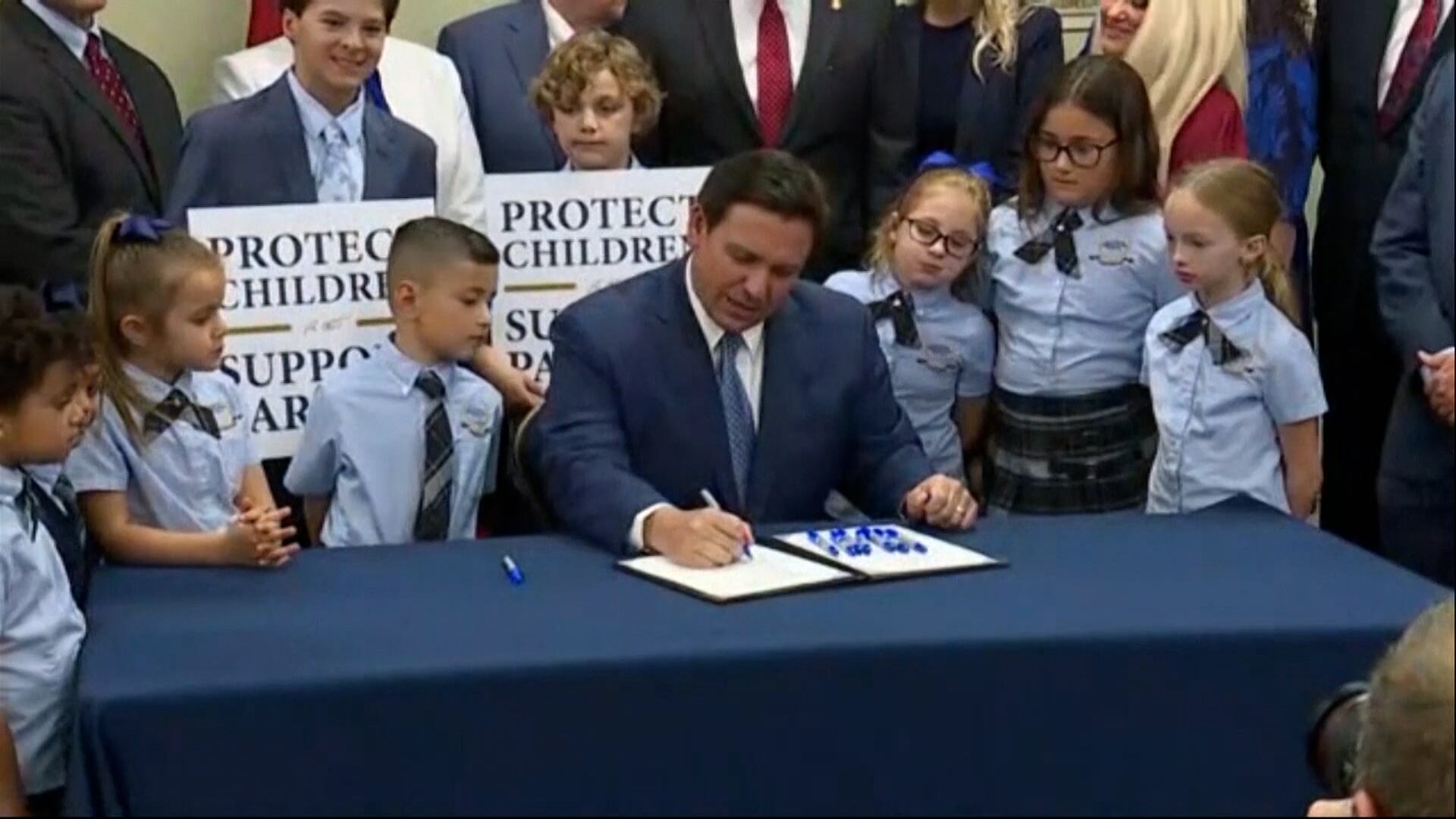
Selene San Felice, Tampa Bay reporter for Axios Local, and Jennifer Levi, director of the Transgender Rights Project at GLBTQ Legal Advocates & Defenders (GLAD) join Cheddar Politics to discuss the impact of the new law targeting LGBTQ communities in Florida schools.
Ryan Barber, justice correspondent at Insider, joins Cheddar Politics to discuss the latest developments in the January 6 investigation, including texts between Ginni Thomas, the wife of Supreme Court Justice Clarence Thomas, and former White House Chief of Staff Mark Meadows.
Joel Rubin, former Deputy Assistant Secretary of State and president of the Washington Strategy Group, joins Cheddar Politics to discuss the latest developments in the Russian invasion of Ukraine.
The head of Russia’s space program says the future of the ISS hangs in the balance after the U.S., EU, and Canadian space agencies missed a deadline to meet Russian demands for lifting sanctions on Russian enterprises and hardware.
President Joe Biden called for a war crimes trial against Russian President Vladimir Putin and said he’d seek more sanctions after reported atrocities in Ukraine.
Catching you up on what you need to know on April 4, 2022, with reports of Russian war crimes in Ukraine, a weekend shooting in Sacramento killing six and injuring 12, Mexico ending its gas subsidization for U.S. drivers, and the University of South Carolina winning the women's NCAA basketball championship, and more.