By Deb Riechmann and Matthew Lee
President Donald Trump announced Friday that Sudan will start to normalize ties with Israel, making it the third Arab state to do so as part of U.S.-brokered deals in the run-up to Election Day.
The deal, which would deepen Sudan’s engagement with the West, follows Trump's conditional agreement this week to remove the North African nation from the list of state sponsors of terrorism if it pays compensation to American victims of terror attacks.
It also delivers a foreign policy achievement for Trump just days before the U.S. election and boosts his embattled ally, Israeli Prime Minister Benjamin Netanyahu. Recently, the United States brokered diplomatic pacts between Israel and the United Arab Emirates and Bahrain. Jordan recognized Israel in the 1990s.
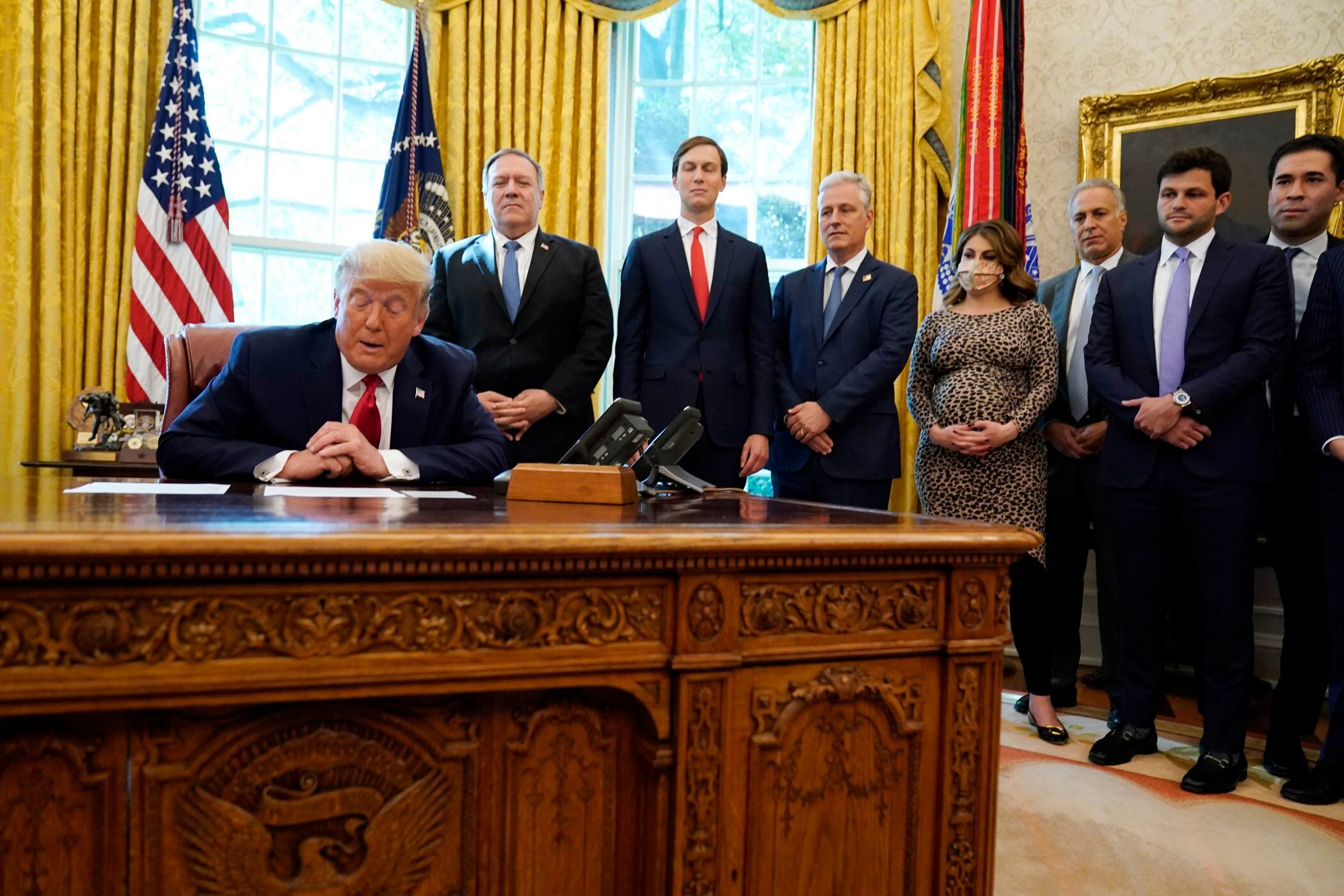
Trump invited reporters into the Oval Office while he was on the phone with the leaders of Israel and Sudan. Trump said Sudan had demonstrated a commitment to battling terrorism. “This is one of the great days in the history of Sudan,” Trump said, adding that Israel and Sudan have been in a state of war for decades.
“It is a new world,” Netanyahu said over the phone. “We are cooperating with everyone. Building a better future for all of us.”
Netanyahu has made it a priority to forge ties with formerly hostile countries in Africa and the Arab world in the absence of any progress with the Palestinians during his more than decade in office. The deal also is aimed at unifying Arab countries against their common adversary, Iran.
These recent recognitions of Israel have undermined the traditional Arab consensus that there can be no normalization with Israel before the establishment of an independent Palestinian state. The Palestinians say the recognitions amount to betrayal, while Israel says the Palestinians have lost what they have seen as their “veto” over regional peace efforts.
The deal with Sudan will include aid and investment from Israel, particularly in technology and agriculture, along with further debt relief. It comes as Sudan and its transitional government teeter on the edge. Thousands have protested in the country’s capital Khartoum and other regions in recent days over dire economic conditions.
Trump’s announcement, the morning after the final presidential debate with Democrat Joe Biden, came after Sudan followed through on its pledge to deliver $335 million to compensate American victims of past terror attacks and their families. The money is meant for victims of the 1998 bombings of the U.S. Embassies in Kenya and Tanzania by the al-Qaida network while its leader, Osama bin Laden, was living in Sudan. Trump said on Tuesday that one the funds were transferred, he would remove Sudan from the list.
The removal of the terror designation opens the door for Sudan to get international loans and aid needed to revive its battered economy and rescue the country’s transition to democracy.
Sudan is on a fragile path to democracy after a popular uprising last year led the military to overthrow the longtime autocrat, Omar al-Bashir. A military-civilian government rules the country, with elections possible in late 2022.
Sudanese Prime Minister Abdalla Hamdok thanked Trump for signing the executive order to remove Sudan from the terrorism list and said in a statement that he hoped to complete the process in a “timely manner.”
The normalization agreement had been in the works for some time but was finalized when Trump’s Mideast peace team, led by Jared Kushner and Avi Berkowitz, visited the region earlier this week to mark the first commercial flight between Israel and Bahrain and then went on to the United Arab Emirates, according to U.S. officials.
Unlike with Bahrain and the UAE, there has been a state of hostilities between Sudan and Israel, even if they had not been in direct conflict.
Key to the agreement was Sudan’s deposit of $335 million into an escrow account to pay compensation to victims of the 1998 bombings of the U.S. embassies in Kenya and Tanzania. A senior U.S. official said Sudan had borrowed the money needed to pay that amount.
Unmentioned in the joint statement was that Sudan has agreed, according to the senior U.S. official, to designate Lebanon’s Hezbollah movement as a terrorist organization, something that Israel has long sought from its neighbors and others in the international community.
Kushner said that other normalization agreements between Israel and Arab nations are in the works but would not predict which countries or when those deals might be completed.
Associated Press writers Jonathan Lemire in Washington, Josef Federman in Jerusalem, and Isabel DeBre in Dubai contributed to this report.
Updated October 23, 2020, at 12:34 pm with Trump comments, background, AP photo