By Darlene Superville
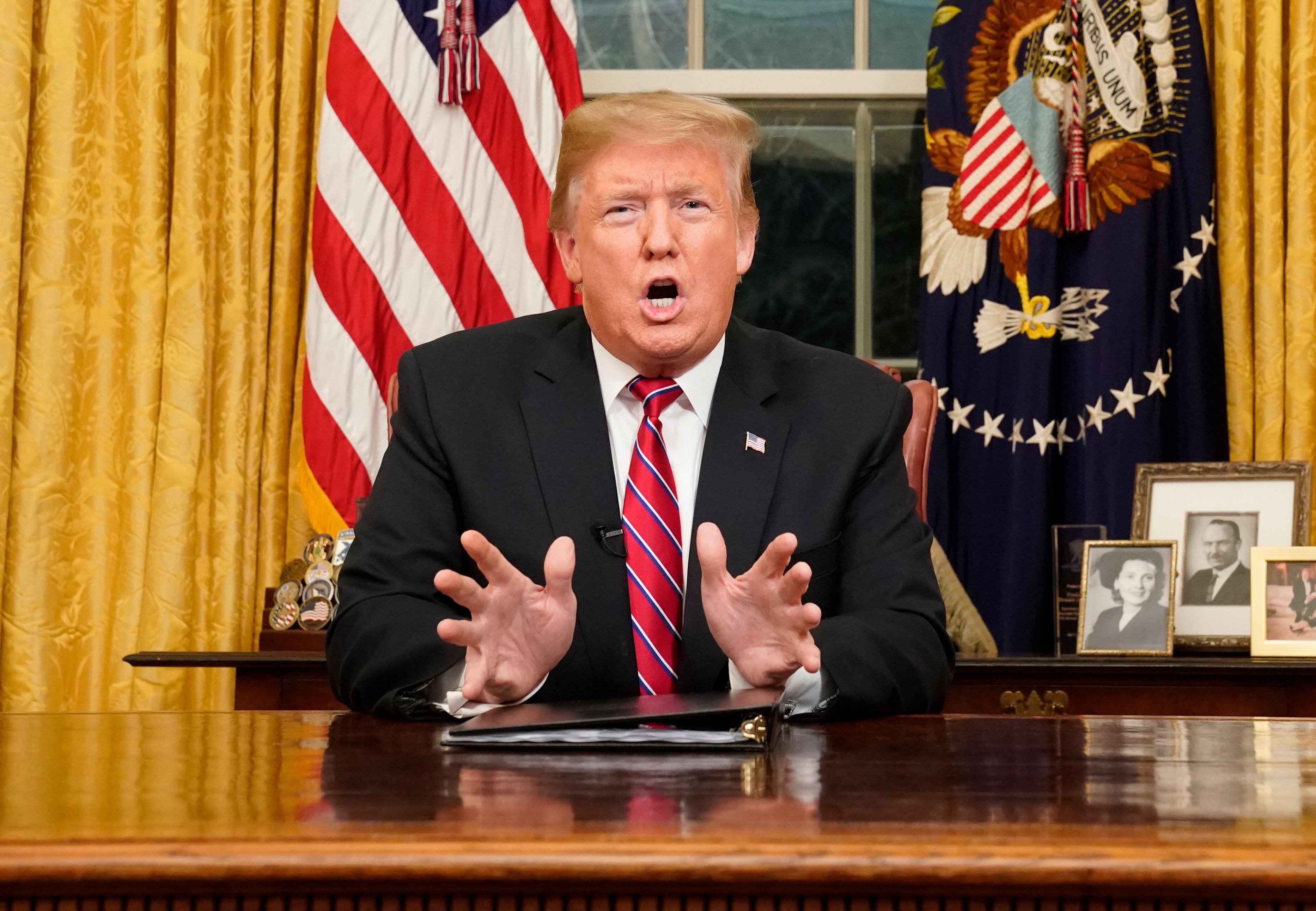
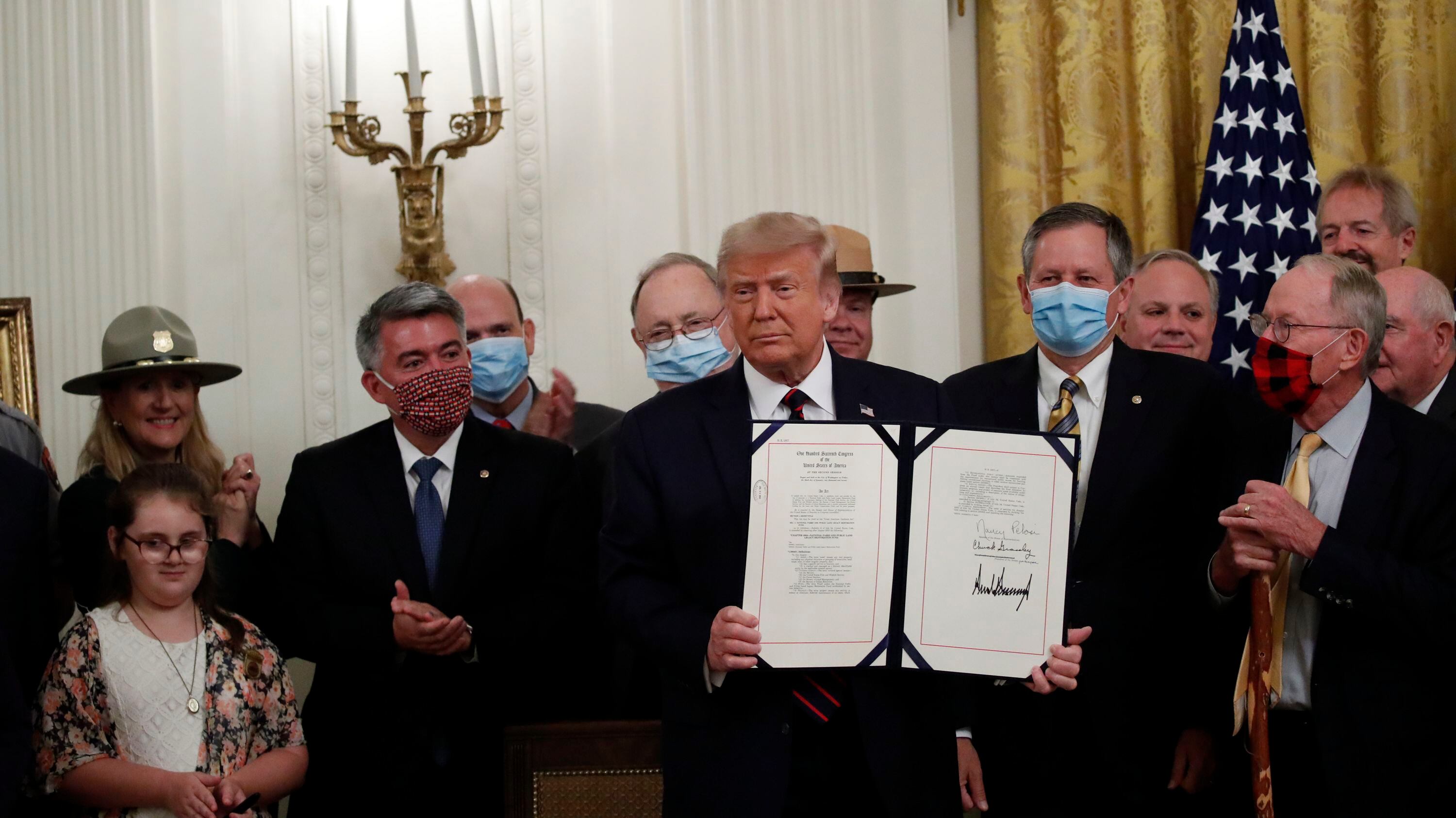
President Donald Trump on Tuesday signed into law legislation that will devote nearly $3 billion annually to conservation projects, outdoor recreation, and maintenance of national parks and other public lands. The measure was overwhelmingly approved by Congress.
"There hasn't been anything like this since Teddy Roosevelt, I suspect," Trump said about the 26th president, who created many national parks, forests, and monuments to preserve the nation's natural resources.
Supporters say the Great American Outdoors Act is the most significant conservation legislation enacted in nearly half a century. Opponents counter that the money isn't enough to cover the estimated $20 billion maintenance backlog on federally owned lands.
The law requires full, mandatory funding of the popular Land and Water Conservation Fund and addresses the maintenance backlog facing America's national parks and public lands. The law would spend about $900 million a year — double current spending — on the conservation fund and another $1.9 billion per year on improvements at national parks, forests, wildlife refuges, and range lands.
Trump in his budgets to Congress had previously recommended slashing the amount of money allocated to the fund, but he reversed course and called for full funding in March.
Supporters say the legislation will create at least 100,000 jobs while restoring national parks and repairing trails and forest systems.
The park maintenance backlog has been a problem for decades, through Republican and Democratic administrations.
The House and the Senate cleared both bills by overwhelming bipartisan margins this summer.
Among the bills' congressional champions are Republican Sens. Cory Gardner of Colorado and Steve Daines of Montana. Both are among the Senate's most vulnerable incumbents, and each represents a state where the outdoor economy and tourism at sites such as the Rocky Mountain and Yellowstone national parks play an outsize role.
Daines and Gardner persuaded Trump to support the legislation at a White House meeting this year.
The late Rep. John Lewis, D-Ga., sponsored the original measure that passed the House and contained Senate amendments.
Ivanka Trump, the Republican president's daughter, and adviser, also supported the legislation.
President Trump talked about the beauty of the national parks on Tuesday, ticking off the names of some of them but tripping over Yosemite, one of the best known, and badly mispronouncing it twice.
"We want every American child to have access to pristine outdoor spaces, where young Americans experience the breathtaking beauty of the Grand Canyon when their eyes widen in amazement as Old Faithful burst into the sky when they gaze upon Yosemite's, Yosemite's, towering sequoias, their love of country grows stronger and they know that every American has truly a duty to preserve this wondrous inheritance," Trump said, pronouncing Yosemite's as yoh-SEH'-mytz instead of yoh-SEM'-it-eez.
The legislation's opponents, mostly Republicans, complain it would not eliminate an estimated $20 billion maintenance backlog on 640 million acres (259 million hectares) of federally owned lands. The legislation authorizes $9.5 billion for maintenance over five years.
Lawmakers from Gulf Coast states also complained that their states receive too small a share of revenue from offshore oil and gas drilling that is used to pay for the conservation fund.
___
This story has been corrected to show the area with the maintenance backlog is 640 million acres, not 640 acres.