By Lisa Mascaro and Jill Colvin
The House voted overwhelmingly Monday to increase COVID-19 relief checks to $2,000, meeting President Donald Trump’s demand for bigger payments and sending the bill to the GOP-controlled Senate, where the outcome is uncertain.
Democrats led passage, 275-134, their majority favoring additional assistance, but dozens of Republicans joined in approval. Congress had settled on smaller $600 payments in a compromise over the big year-end relief bill Trump reluctantly signed into law. Democrats favored higher payments, but Trump's push put his GOP allies in a difficult spot.
The vote deeply divided Republicans who mostly resist more spending. But many House Republicans joined in support, preferring to link with Democrats rather than buck the outgoing president. Senators were set to return to session Tuesday, forced to consider the measure.
House Speaker Nancy Pelosi declared, “Republicans have a choice: Vote for this legislation or vote to deny the American people” the assistance she said they need during the pandemic.
The showdown could end up as more symbol than substance. Senate Majority Leader Mitch McConnell, R-Ky., has declined to say publicly how the Senate will handle the bill when Democrats there try to push it forward for a vote on Tuesday.
The legislative action during the rare holiday week session may do little to change the $2 trillion-plus COVID-19 relief and federal spending package that Trump signed into law Sunday, one of the biggest bills of its kind providing relief for millions of Americans.
Rep. Kevin Brady of Texas, the chairman of the Ways and Means Committee, acknowledged the division and said Congress had already approved ample funds during the COVID-19 crisis. “Nothing in this bill helps anybody get back to work,” he said.
The package the president signed into law includes two parts — $900 billion in COVID-19 aid and $1.4 trillion to fund government agencies. It will deliver long-sought cash to businesses and individuals and avert a federal government shutdown that otherwise would have started Tuesday, in the midst of the public health crisis.
Aside from the direct $600 checks to most Americans, the COVID-19 portion of the bill revives a weekly pandemic jobless benefit boost — this time $300, through March 14 — as well as a popular Paycheck Protection Program of grants to businesses to keep workers on payrolls. It extends eviction protections, adding a new rental assistance fund.
The COVID-19 package draws and expands on an earlier effort from Washington. It offers billions of dollars for vaccine purchases and distribution, for virus contact tracing, public health departments, schools, universities, farmers, food pantry programs and other institutions and groups facing hardship in the pandemic.
Americans earning up to $75,000 will qualify for the direct $600 payments, which are phased out at higher income levels, and there's an additional $600 payment per dependent child.
Read More: Will I Get a Stimulus Check? What You Need to Know About the Second Round of Payments
Meantime the government funding portion of the bill keeps federal agencies nationwide running without dramatic changes until Sept. 30.
Together with votes Monday and Tuesday to override Trump’s veto of a sweeping defense bill, the attempt to send much higher pandemic-era checks to people is perhaps the last standoff of the president’s final days in office as he imposes fresh demands and disputes the results of the presidential election. The new Congress is set to be sworn in Sunday.
Trump's sudden decision to sign the bill in Florida, where he is spending the holidays, came as he faced escalating criticism from lawmakers on all sides over his eleventh-hour demands. The bipartisan bill negotiated by Treasury Secretary Steven Mnuchin had already passed the House and Senate by wide margins. Lawmakers had thought they had Trump's blessing after months of negotiations with his administration.
The president's defiant refusal to act, publicized with a heated video he tweeted just before the Christmas holiday, sparked chaos, a lapse in unemployment benefits for millions, and the threat of a government shutdown in the pandemic. It was another crisis of his own making, resolved when he ultimately signed the bill into law.
In his statement about the signing, Trump repeated his frustrations with the COVID-19 relief bill for providing only $600 checks to most Americans and complained about what he considered unnecessary spending, particularly on foreign aid — much of it proposed by his own budget.
While the president insisted he would send Congress “a redlined version” with spending items he wants removed, those are merely suggestions to Congress. Democrats said they would resist such cuts.
For now, the administration can only begin work sending out the $600 payments.
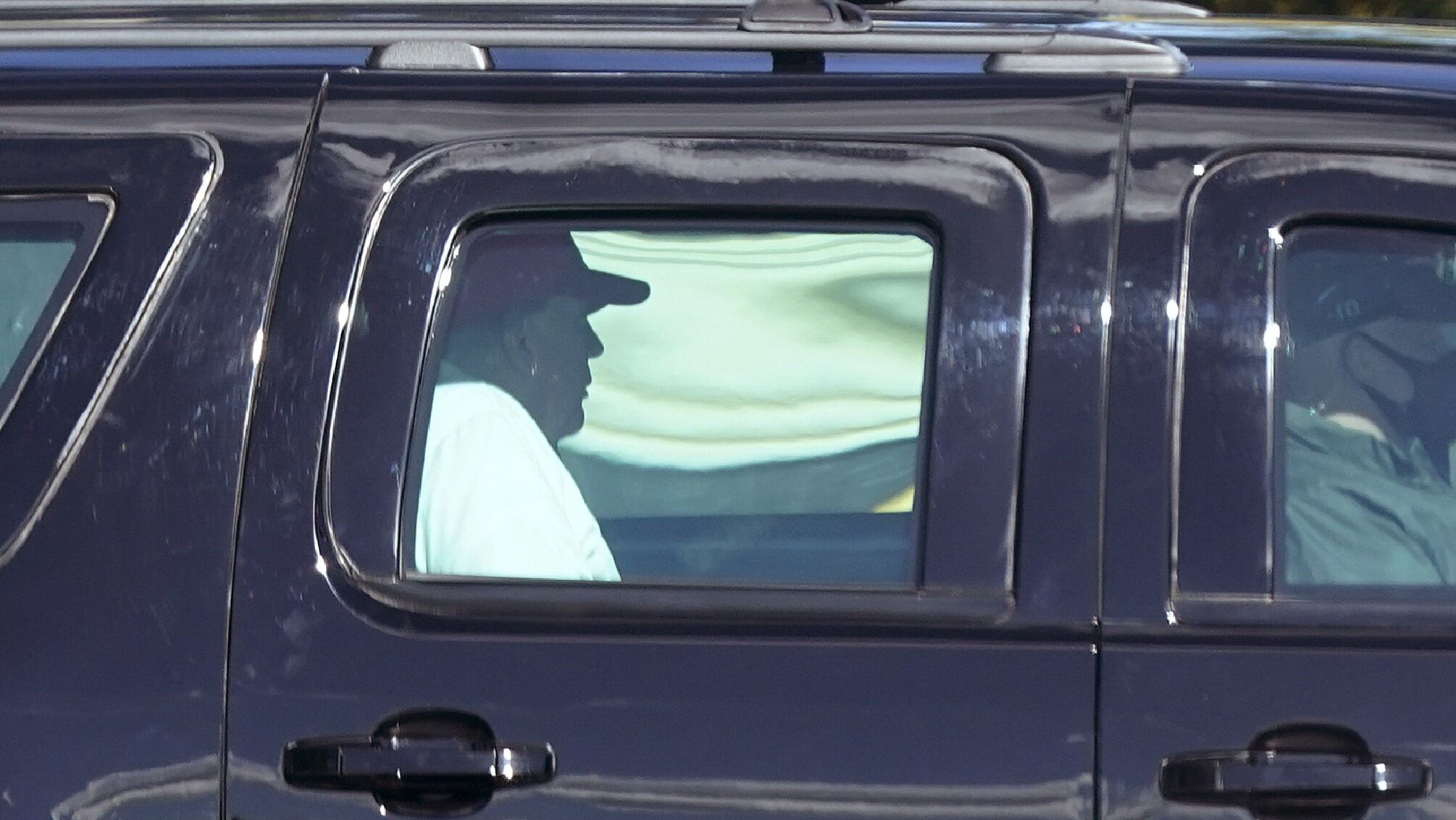
A day after the signing, Trump was back at the golf course in Florida, the state where he is expected to move after President-elect Joe Biden is sworn in on Jan. 20.
Republican Rep. Mo Brooks of Alabama, a conservative who supported Trump's extraordinary and futile challenge of the election results, counted himself Monday among the opponents of a more generous relief package and Trump's call for higher payments.
“It’s money we don’t have, we have to borrow to get and we can’t afford to pay back," he said on “Fox and Friends."
But Republican Rep. Elise Stefanik of New York said she was open to the idea of $2,000 checks. “Many Americans are in dire need of relief," she said on the show.
Altogether, Republicans and Democrats alike swiftly welcomed Trump's decision to sign the bill into law.
“The compromise bill is not perfect, but it will do an enormous amount of good for struggling Kentuckians and Americans across the country who need help now,” said Senate Majority Leader Mitch McConnell, R-Ky. “I thank the President for signing this relief into law."
Senate Democratic leader Chuck Schumer, D-N.Y., said he would offer Trump’s proposal for $2,000 checks for a vote in Senate — putting Republicans on the spot.
“The House will pass a bill to give Americans $2,000 checks," Schumer tweeted. “Then I will move to pass it in the Senate.” He said no Democrats will object. "Will Senate Republicans?”
Democrats are promising more aid to come once Biden takes office, but Republicans are signaling a wait-and-see approach.
Biden told reporters at an event in Wilmington, Delaware, that he supported the $2,000 checks.
___
Colvin reported from West Palm Beach, Florida. Associated Press writer Andrew Taylor contributed to this report.
Updated on December 28, 2020, at 6:55 p.m. ET with the latest details.