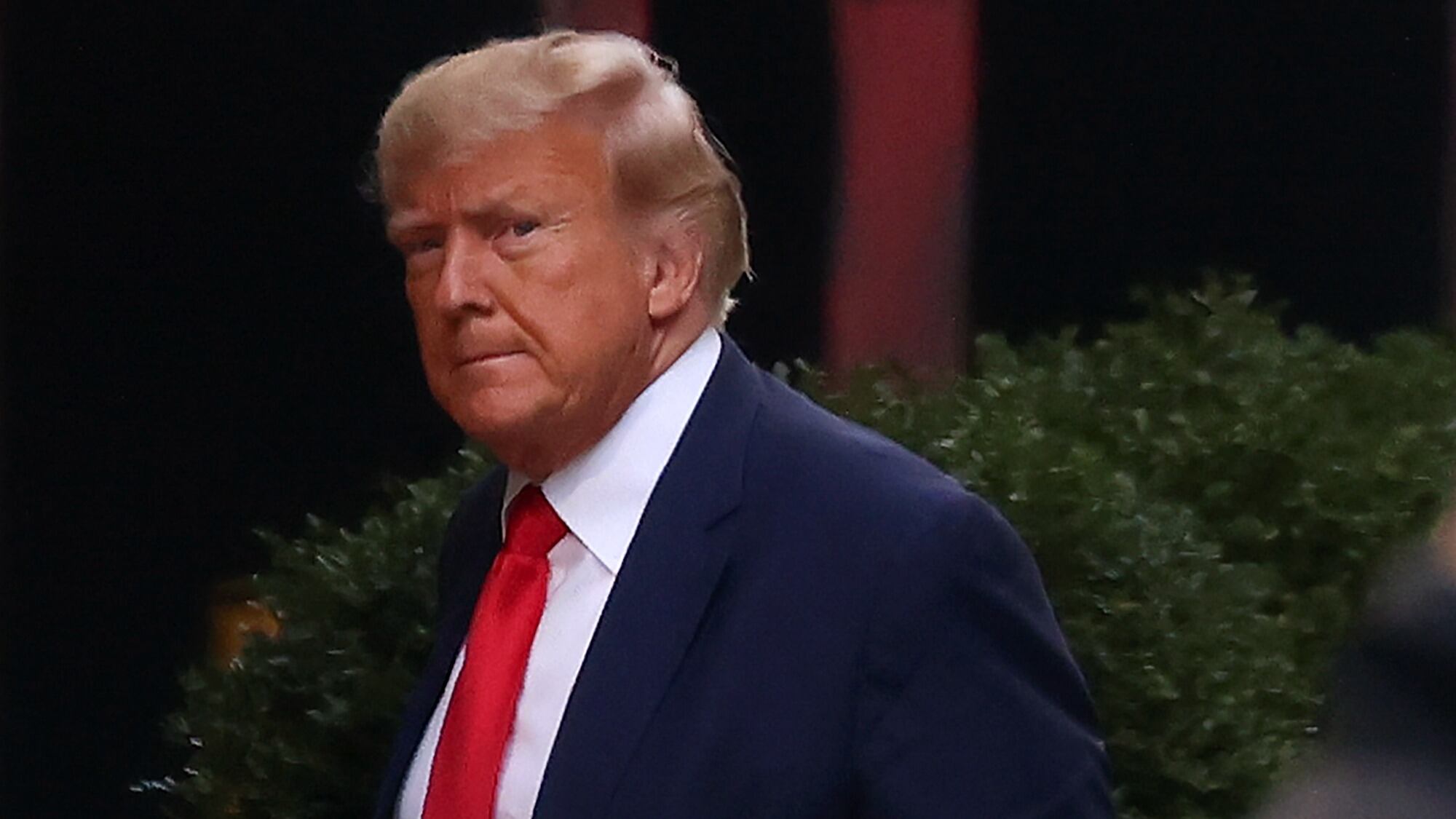
Donald Trump has now been indicted in a fourth case, with the former president being charged Monday in Georgia over his efforts to overturn his 2020 general election defeat in the state.
The probe by Fulton County District Attorney Fani Willis began shortly after the release of a recording of a Jan. 2, 2021, phone call between Trump and Georgia Secretary of State Brad Raffensperger in which the then-president suggested that Raffensperger could “find 11,780 votes” — just enough to overtake Joe Biden.
Trump, a Republican, has described his phone call to Raffensperger as “perfect" and has portrayed the prosecution by the Democratic district attorney as politically motivated.
Here’s a look at some of the other top probes against Trump as he campaigns for the 2024 Republican nomination:
CLASSIFIED DOCUMENTS CASE
Special counsel Jack Smith has been leading two federal probes related to Trump, both of which have resulted in charges against the former president.
The first charges to result from those investigations came in June when Trump was indicted on charges he mishandled top secret documents at his Florida estate. The indictment alleged that Trump repeatedly enlisted aides and lawyers to help him hide records demanded by investigators and cavalierly showed off a Pentagon “plan of attack” and classified map.
A superseding indictment issued in July added charges accusing Trump of asking for surveillance footage at his Mar-a-Lago estate to be deleted after FBI and Justice Department investigators visited in June 2022 to collect classified documents he took with him after leaving the White House. The new indictment also charged him with illegally holding onto a document he’s alleged to have shown off to visitors in New Jersey.
In all, Trump faces 40 felonies in the classified documents case. The most serious charge carries a penalty of up to 20 years in prison.
Walt Nauta, a valet for Trump, and Carlos De Oliveira, the property manager at Trump’s Florida estate, have been charged in the case with scheming to conceal surveillance footage from federal investigators and lying about it.
Trump and Nauta have pleaded not guilty. De Oliveira is scheduled to be arraigned Tuesday.
U.S. District Judge Aileen Cannon set a trial date of May 20, 2024. If that date holds, it will mean a possible trial will not start until deep into the presidential nominating calendar and probably well after the Republican nominee is clear — though before that person is officially nominated at the Republican National Convention.
ELECTION INTERFERENCE
Smith's second case against Trump was unveiled in August when the former president was indicted on felony charges for working to overturn the results of the 2020 election in the run-up to the violent riot by his supporters at the U.S. Capitol.
The four-count indictment includes charges of conspiracy to defraud the United States government and conspiracy to obstruct an official proceeding: the congressional certification of Biden’s victory. It describes how Trump repeatedly told supporters and others that he had won the election, despite knowing that was false, and how he tried to persuade state officials, Vice President Mike Pence and finally Congress to overturn the legitimate results.
After a weekslong campaign of lies about the election results, prosecutors allege that Trump sought to exploit the violence at the Capitol by pointing to it as a reason to further delay the counting of votes that sealed his defeat.
In their charging documents, prosecutors referenced a half-dozen unindicted co-conspirators, including lawyers inside and outside of government who they said had worked with Trump to undo the election results and advanced legally dubious schemes to enlist slates of fake electors in battleground states won by Biden.
The Trump campaign called the charges “fake” and asked why it took 2 1/2 years to bring them.
HUSH MONEY SCHEME
Trump became the first former U.S. president in history to face criminal charges when he was indicted in New York in March on state charges stemming from hush money payments made during the 2016 presidential campaign to bury allegations of extramarital sexual encounters.
He pleaded not guilty to 34 felony counts of falsifying business records. Each count is punishable by up to four years in prison, though it’s not clear if a judge would impose any prison time if Trump were convicted.
The counts are linked to a series of checks that were written to his lawyer Michael Cohen to reimburse him for his role in paying off porn actor Stormy Daniels, who alleged a sexual encounter with Trump in 2006, not long after Melania Trump gave birth to their son, Barron. Those payments were recorded in various internal company documents as being for a legal retainer that prosecutors say didn’t exist.
The former president is next set to appear in state court on Jan. 4, before Republicans begin their nominating process in earnest.
NEW YORK CIVIL CASES
New York Attorney General Letitia James has sued Trump and the Trump Organization, alleging they misled banks and tax authorities about the value of assets including golf courses and skyscrapers to get loans and tax benefits.
That lawsuit could lead to civil penalties against the company if James, a Democrat, prevails. She is seeking a $250 million fine and a ban on Trump doing business in New York. Manhattan prosecutors investigated the same alleged conduct but did not pursue criminal charges.
A civil trial is scheduled in state court for October.
In a separate civil case in federal court in New York, Trump was found liable in May of sexually abusing and defaming former magazine columnist E. Jean Carroll in the mid-1990s. The jury rejected Carroll’s claim that Trump had raped her in a dressing room.
Trump was ordered to pay $5 million to Carroll. He has appealed and has adamantly denied her accusations. In July, a federal judge upheld the jury's verdict against Trump, rejecting the former president’s claims that the award was excessive.