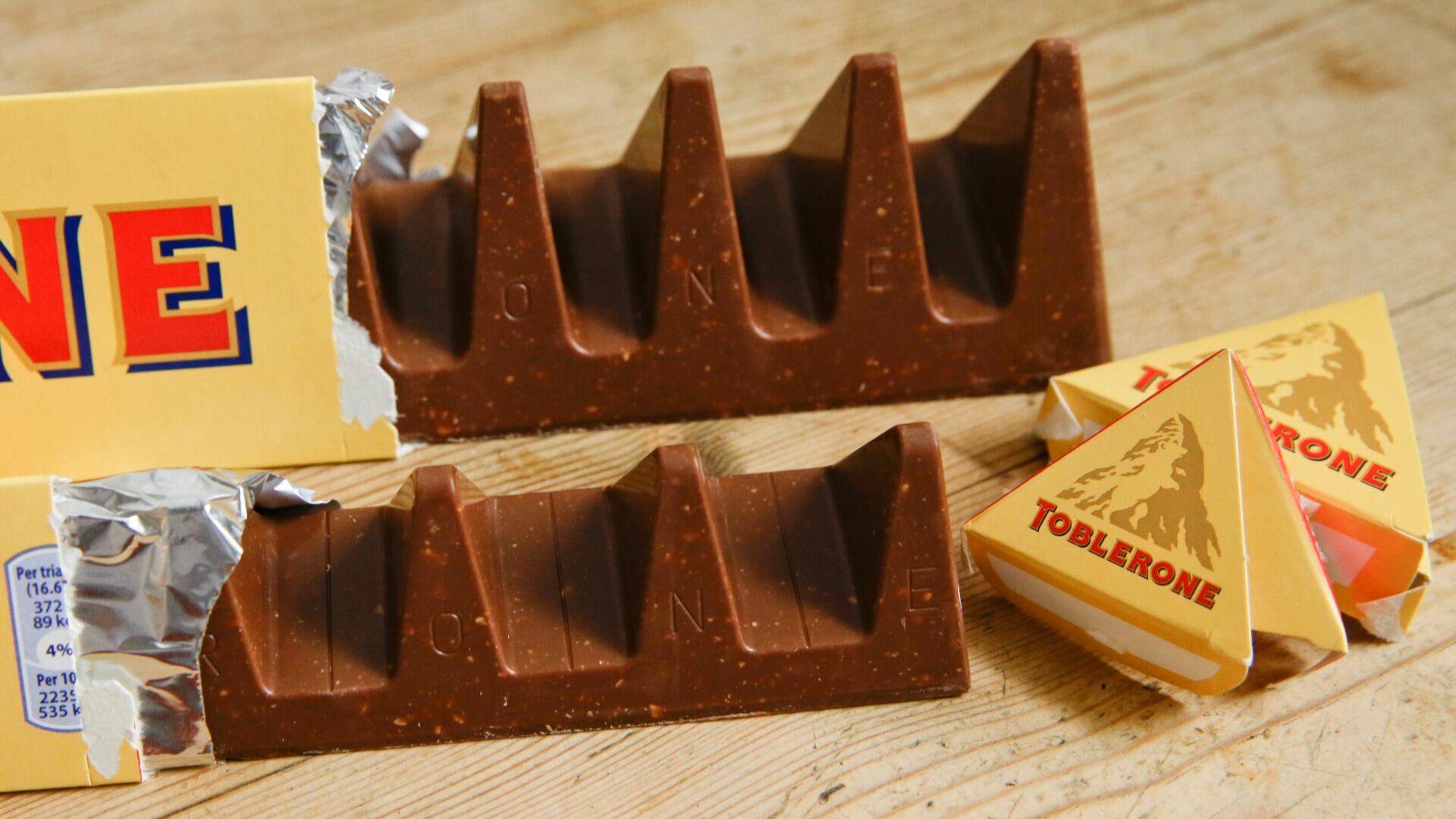
The makers of Toblerone are stripping images of Switzerland's famed Matterhorn and the Swiss flag from the packaging of the milk-chocolate treat as they move some production to Slovakia.
Mondelez International of Deerfield, Illinois, which owns the Swiss-born brand, said Monday that it's in the process of adapting the packaging of Toblerone products to conform with strict rules in Switzerland about how products qualify for the coveted “Swissness” moniker — perceived by some as a standard of quality.
“The redesign of the packaging introduces a modernized and streamlined mountain logo that is consistent with the geometric and triangular aesthetic,” Mondelez spokeswoman Livia Kolmitz said in an email.
In June, the company announced plans to outsource production of some Toblerone chocolates later this year to Bratislava, the Slovak capital — where wages and the cost of living are far lower than in wealthy, expensive Switzerland.
The packaging change affects 35- and 50-gram (1.2- to 1.8-ounce) bars that will be made in Slovakia: Larger, 100-gram “tablets” will still be produced in Bern, the Swiss capital, the company says.
A law on “Swissness” of products was adopted in 2017 and aims to protect the cachet of Swiss manufacturing. When it comes to foods, two criteria have to be met: At least four-fifths of the raw materials that go into the product have to come from Switzerland, and the processing that gives a product its “essential characteristics” must be carried out in Switzerland.
The chocolate bar, made of honey and almond nougat, is distinctive for its triangular “peak” shape that evokes a mountain range and matching triangular packaging — sold in scores of countries and duty-free shops around the globe.
Toblerone has already been produced in other countries — notably late into the last century. The treat was invented 115 years ago by Swiss confectioner Theodor Tobler, with the brand name a fusion of the family name and the Italian word “torrone” — nougat.
Mondelez has already run into blowback from its changes to Toblerone in the past: A move years ago to widen the gaps between the chocolate peaks — reducing the weight of the bars but keeping the price the same, known as “shrinkflation” — fanned outrage in Britain, where the change mostly took effect.