The 'Sex Recession:' How Tech is Contributing to Young People Doing It Less
*By Max Godnick*
If you're searching for hook-ups on social media or via dating apps, you're probably doing it wrong.
Young people are having less sex [according to the latest cover story in The Atlantic](https://www.theatlantic.com/magazine/archive/2018/12/the-sex-recession/573949/), and technology is contributing to the generational dry spell.
According to the Centers for Disease Control, only 41 percent of high-school students reported having had sex in 2015 compared to 51 percent in 1991. In 2014, the average American had sex 54 times a year, down from 62 times in the late 1990s.
From economic stress to a rise in anxiety rates, researchers have pegged the decline on a variety of potential factors. But like most everything at the core of millennial sociology ー social media and technology might be to blame for the so-called "sex recession."
"It seems like they would make things easier, and for some people they do, but they don't work they don't work that well for a lot of people," Kate Julian, senior editor at The Atlantic, said of dating apps Thursday in an interview on Cheddar.
"They can be demoralizing and inefficient."
She pins part of the problem on the gamification of online dating ー people report using apps like Tinder for upwards of an hour and a half a day, not to find a potential partner but instead, "for an ego boost or for a diversion," Julian said.
"They're not necessarily following through on it with real-life interactions."
And then, there's porn.
According to Julian, researchers aren't quite sure how the rise in pornography led to a drop in sex, but it's undoubtedly a factor.
"We can say that over the period of time that digital porn has existed, people have reported masturbating a lot more," she explained.
Online porn isn't only causing young people to have less sex ー it's also making sex worse.
"Porn may be changing the way people are having sex to some extent," Julian said. "There are a lot of things that are prevalent in porn that maybe your average person doesn't want to experience," she added citing practices popularized in porn like non-consensual choking.
"It really didn't want to make them come back for more."
But some people are still getting luckyー and possibly even in record numbers.
Julian acknowledged that the sweeping statistical analysis may not reflect the experiences of individuals whose sex lives have been helped by the destigmitazation and digitization of sex.
"Some people very well may be having more sex than ever and there's some data that suggests that, we're just talking about averages," she said.
For full interview [click here](https://cheddar.com/videos/the-atlantic-explains-why-young-people-are-having-less-sex).
In what could be the biggest deal in video games history, Microsoft's purchase of Activision Blizzard underlines the company's aggressive push in gaming and beyond into its long-term vision of being top dog in the metaverse. Adam Hollander, former director of gamification at Microsoft and founder of Hungry Wolves NFT, joined Cheddar's Opening Bell to discuss. “Microsoft always plays chess, not checkers," he said, describing the price tag as an opportunity cost. "It's about integrating Activision Blizzard in with Azure and Windows and Xbox and Hololens and Minecraft and everything else that they're doing for the inevitable goal of being the major player in the next phase of the internet."
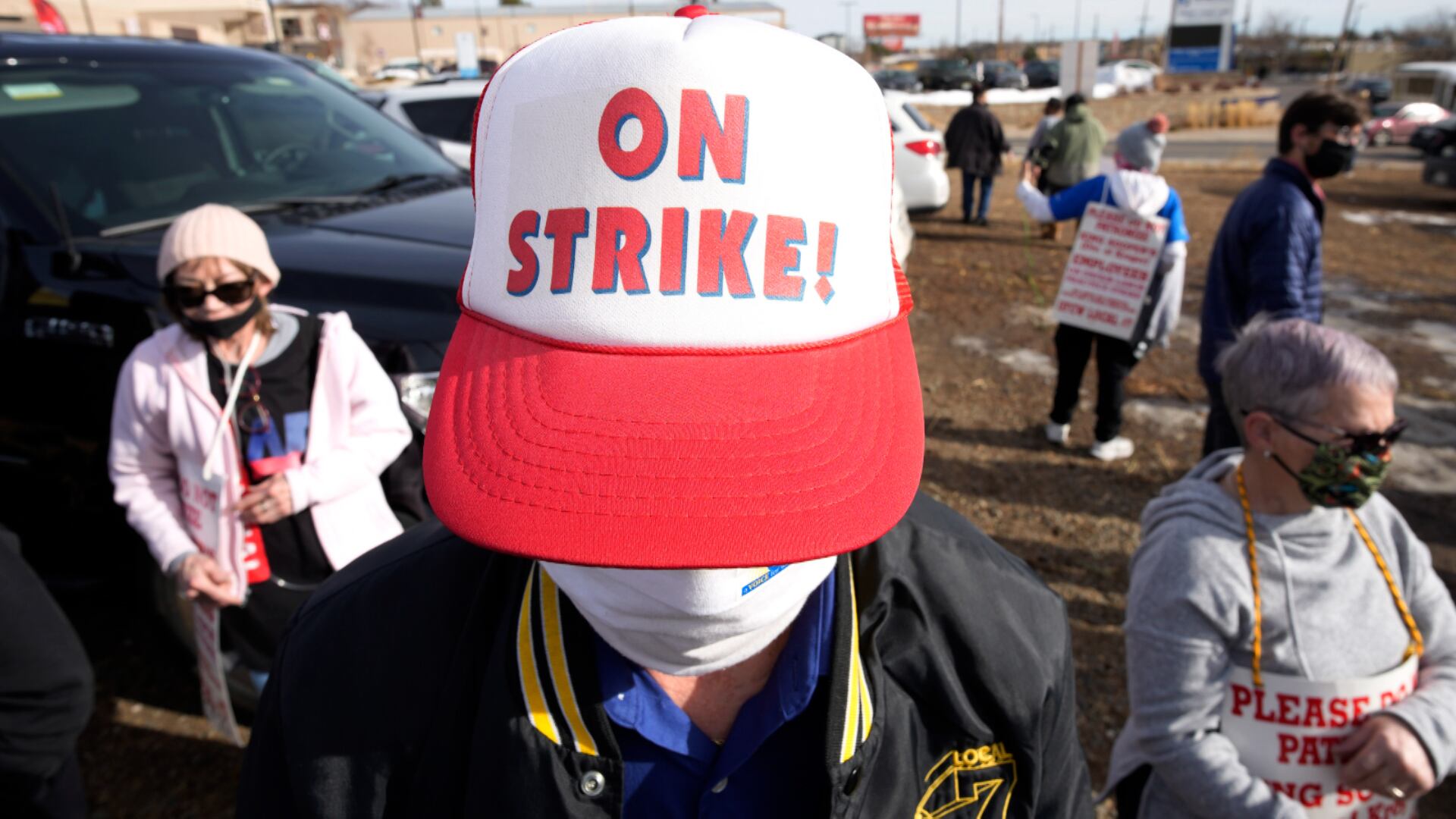
Jordan Zakarin, Media Producer at A More Perfect Union, joined Cheddar News to break down the latest from Colorado, where at least 8,700 Kroger employees walked off the job in demand of increased benefits and wages.
Food waste is a major contributor to greenhouse gas emissions in the United States. Strella Biotechnology is trying to solve the problem by introducing new technology to a business that's been around for generations -- farming. The 24-year-old CEO created hi-tech sensors that interpret the shelf life of produce and alert farmers when fruits and vegetables are ready to be sent to supermarkets. The company says the process can help farmers make money, reduce food waste and increase the quality of produce. Strella Biotechnology's co-founder and CEO Katherine Sizov and co-founder and COO Jay Jordan joined Cheddar Climate to discuss.
Norbu Tenzing, Vice President of the American Himalayan Foundation and the son of the first Sherpa to ever summit Everest, joins Cheddar Reveals to discuss how Sherpa's put themselves in danger for clients, and the dangers of Everest's 'Death Zone.'
Gordon Janow, Director of Programs at Alpine Ascents, joins Cheddar Reveals to discuss how to get mentally and physically prepared to climb Mount Everest.
Netflix may not be staying at the top of the streaming wars, according to some wary investors, as competition heats up and it raises prices yet again. Tuna Amobi, director and senior equity analyst at CFRA Research, spoke with Cheddar about what investors should be considering should they stick with the streaming pioneer or drop the investment. "I think it's always mostly about the subscriber growth for the Q4, which is going to be an indicator of how the company has been navigating the speed bumps that we saw early in the year," said Amobi.
Daniel Loría, SVP content strategy and editorial director at Boxoffice Media, joins Cheddar News to discuss what helped 'Scream' score number one at the box office and what it means for the horror genre.
Dave Levinthal, deputy Washington Bureau chief at Insider, joins Cheddar News to discuss Gallup's new survey that reveals more Americans leaned Republican by the end of 2021.