By Jill Lawless
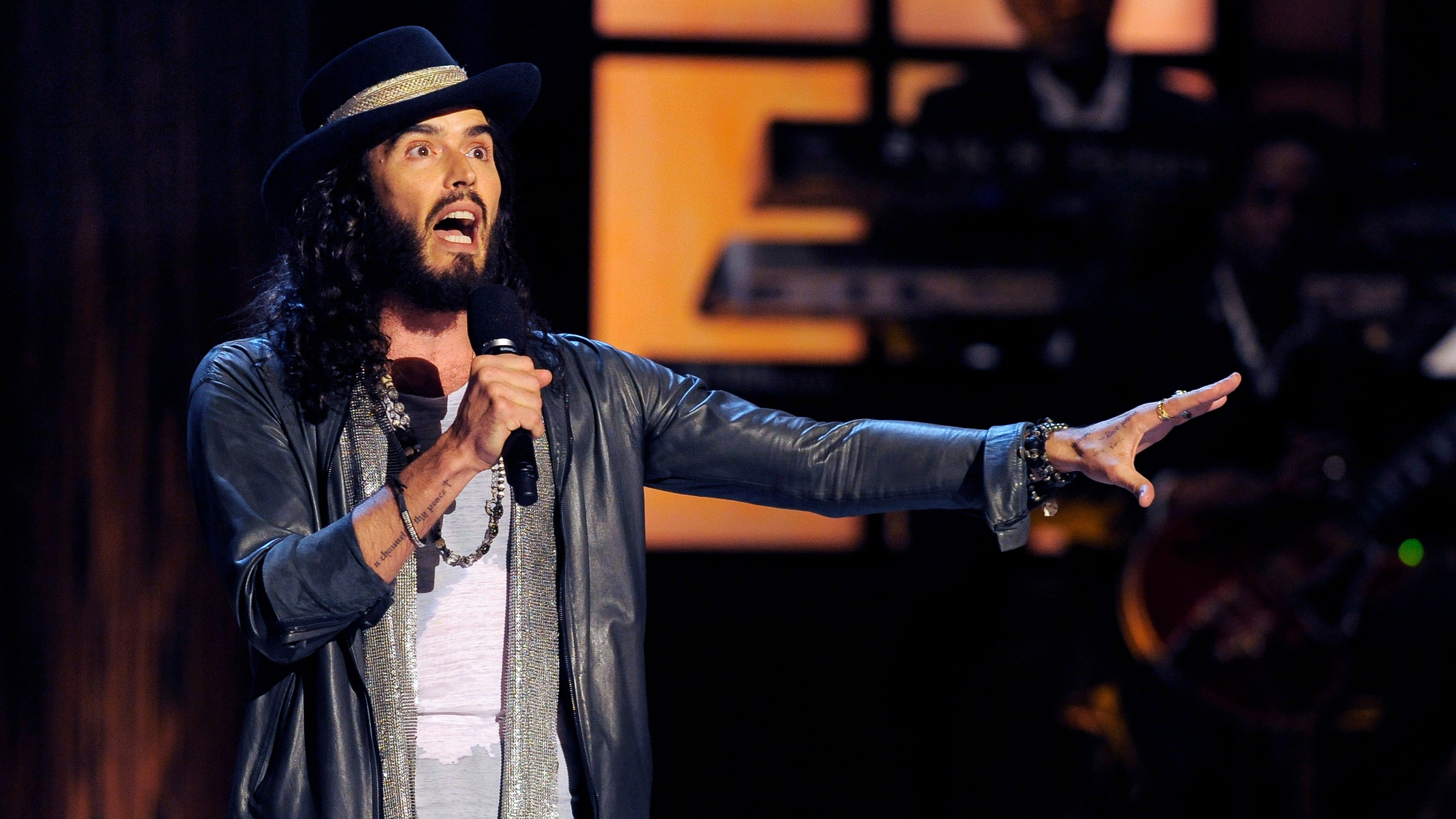
British police said Monday that they had received a sexual assault allegation after media outlets published claims by several women against Russell Brand. Promoters postponed the remaining dates in a string of live gigs by the comedian, who denies the allegations.
A talent agency and a publisher also parted company with Brand over the claims, which have left the U.K. entertainment industry facing questions about whether the comedian’s bad behavior went unchallenged because of his fame.
Brand, 48, denies allegations of sexual assault made by four women in a Channel 4 television documentary and The Times and Sunday Times newspapers. The accusers, who have not been named, include one who said she was sexually assaulted during a relationship with him when she was 16. Another woman says Brand raped her in Los Angeles in 2012.
London's Metropolitan Police force said that since the allegations were made public it had received “a report of a sexual assault which was alleged to have taken place in Soho in central London in 2003." That is three years before the earliest of the alleged assaults reported by the media outlets.
The police force said "officers are in contact with the woman and will be providing her with support.” It did not identify the alleged perpetrator as Brand, but referred to the newspaper and TV allegations in its statement. Police urged "anyone who believes they may have been a victim of a sexual offence, no matter how long ago it was, to contact us.”
In a video statement released Friday in response to the media claims, Brand said that his relationships were “always consensual.”
The Times said Monday that more women had contacted the newspaper with allegations against Brand and they would be “rigorously checked.”
Max Blain, spokesman for Prime Minister Rishi Sunak, said the claims were “very serious and concerning.” Conservative legislator Caroline Nokes, who chairs the House of Commons Women and Equalities Committee, urged police in both Britain and the United States to investigate the “incredibly shocking” allegations.
“This merits and needs a criminal investigation, because for too long we have seen men -- and the perpetrators of these sorts of crimes are almost invariably men -- not being held to account for their behaviors and their actions,” she told BBC radio.
The claims have renewed debate about the “lad culture” that flourished in Britain in the 1990s and early 2000s, and the misogyny that still percolates on the internet.
The allegations reported by the newspapers and Channel 4 cover the period between 2006 and 2013, when Brand was a major star in Britain with a growing U.S. profile.
Known for his unbridled and risqué standup routines, he hosted shows on radio and television, wrote memoirs charting his battles with drugs and alcohol, appeared in several Hollywood movies and was briefly married to pop star Katy Perry between 2010 and 2012.
Brand was suspended by the BBC in 2008 for making lewd prank calls to “Fawlty Towers” actor Andrew Sachs in which he boasted about having sex with Sachs’ granddaughter. He quit his radio show in the wake of the incident, which drew thousands of complaints to the publicly funded broadcaster.
The BBC, Channel 4 and the production company behind the “Big Brother” reality series – spinoffs of which were hosted by Brand -- all say they have launched investigations into Brand’s behavior and how complaints were handled.
Brand also has been dropped by talent agency Tavistock Wood, which said it had been “horribly misled” by him. Publisher Bluebird, an imprint of Pan Macmillan, said it had decided to “pause” future publishing with Brand.
Supporters of Brand asked why the allegations were being made years after the alleged incidents. The women said that they only felt ready to tell their stories after being approached by reporters, with some citing Brand’s newfound prominence as an online wellness influencer as a factor in their decision to speak.
Victims and the media also have to take account of Britain’s claimant-friendly libel laws, which put the burden of proof on those making allegations.
In recent years Brand has largely disappeared from mainstream media but has built up a large following online with videos mixing wellness and conspiracy theories. His YouTube channel, which has more than 6 million subscribers, has featured COVID-19 conspiracy theories, vaccine misinformation and interviews with controversial broadcasters including Tucker Carlson and Joe Rogan.
He also has continued to tour as a comedian, performing to hundreds of people in a London venue on Saturday evening as the Channel 4 documentary was broadcast. He had been due to perform Tuesday in Windsor, west of London, but promoters said the rest of the tour was being postponed.
Ellie Tomsett, a senior lecturer in media and communications at Birmingham City University who studies Britain’s standup circuit, said Brand was a product of a live comedy scene that was riddled with misogyny – and still is, despite progress made by women and others to diversify the comic landscape.
“When we’ve had a rise of popular feminism … we’ve also had a rise in popular misogyny epitomized by the likes of (social media influencer) Andrew Tate, but evident in all aspects of society, and definitely reflected on the U.K. comedy circuit,” Tomsett said
“More and more things are springing up to try and counter this, but the idea that it’s something that happened in the past and doesn’t happen anymore is, quite frankly, nonsense," she added.