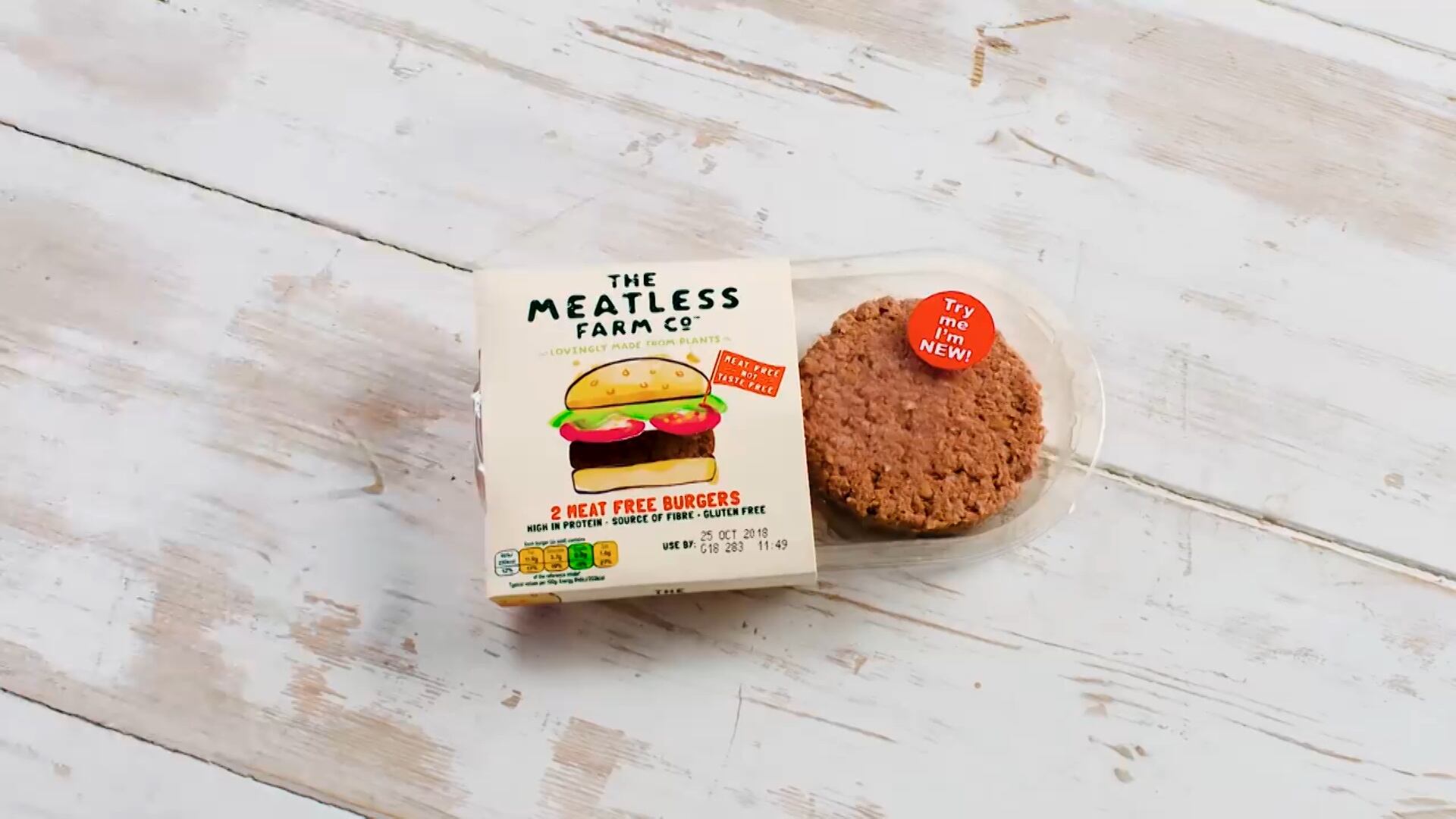
As The Meatless Farm Co. inks a new six-month deal with Whole Foods, the CEO of the British plant-based meat alternative startup tells Cheddar that he hopes to take on U.S. titans Impossible Foods and Beyond Meat.
"[Whole Foods is] the tip of the spear when it comes to retailing in the U.S," The Meatless Farm CEO Rob Woodall told Cheddar.
"It allows us to come into the U.S. and understand the dynamics of the market," he explained. "After six months of working with them, we'll then look to expand out further into the U.S."
Last week, news of the deal triggered share prices in Beyond Meat ー which has seen one of, if not the most, successful public offerings in 2019 ー to fall by up to 10 percent. "It was a signal that we're coming to the U.S. And the markets are responding to more competition," Woodall said.
A Whole Foods spokesperson said in an email that its stores sell "hundreds" of plant-based meat alternative products. But Woodall argues that The Meatless Farm doesn't necessarily compete with many of those brands.
"There's a lot of legacy brands. There's a lot of vegetarian and vegan brands in Europe, and in the U.S. as well. I think the difference here is that we're not primarily targeting vegans or vegetarians. We're trying to target what we call flexitarians, or meat-reducers," the executive said.
In part, the company also hopes to stand out with its roots across the pond. "We're more of a European flavor. Maybe our brand is slightly more European appeal. But there's clearly demand for us in the U.S," said Woodall.
He explained that a Meatless Farm's beef-style, plant-based burger might not taste as "smoky" as its American counterpart.
Still, the company targets the same consumers as Impossible Foods and Beyond Meat. "Our foods are trying to replicate those center-of-plate items. Things like sausages, things like ground beef, things like beef burgers," said Woodall.
The Meatless Farm's arrival in the U.S. comes as businesses face widespread shortages of products from Impossible Foods, which has built its brand by supplying restaurants and fast casual chains. Beyond Meat has already scooped up some of that unfilled demand.
Woodall adds that he doesn't see interest in plant-based meat as ephemeral. "This is not a fad. It's a trend, which starts with young people. We talk about cradle-to-grave loyalty," he said.
To counteract any potential issues with supply, Woodall says his company has just expanded into a new factory, and that it's already searching for additional manufacturing partners.
"We're also looking at Asia, too, for manufacturing partners. We recognize that the space is moving quickly," said Woodall. "We think with the right planning, we'll be fine when it comes to meeting the demands."