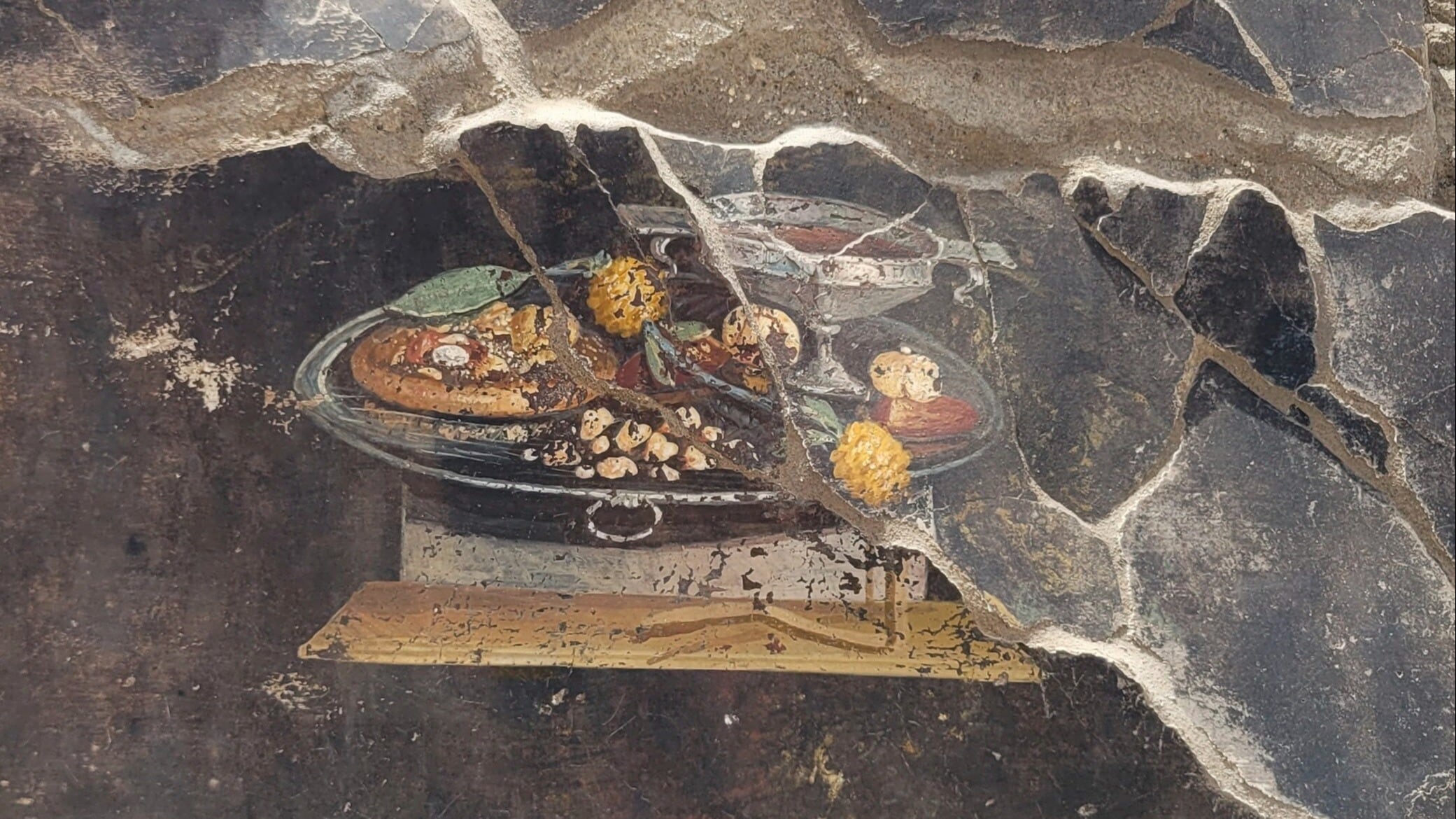
This picture provided on Tuesday, June 27, 2023, by the Pompeii Archaeological Park shows the wall of an ancient Pompeian house with a fresco depicting a table with food. The fresco was found in the atrium of a house in Insula 10 of Regio IX under excavation, to which a bakery was annexed, already partially explored between 1888 and 1891 and whose investigations were resumed last January. (Pompeii Archaeological Park via AP, ho)
A still-life fresco discovered recently in the Pompeii archaeological site looks like a pizza, but it's not, experts at the archaeological site said Tuesday.
They noted that key ingredients needed to make Italy's iconic dish — tomatoes and mozzarella — were not available when the fresco was painted some 2,000 years ago.
Tomatoes were only introduced to Europe from the Americas a few centuries ago, and some histories have it that the discovery of mozzarella led directly to the invention of pizza in nearby Naples in the 1700s.
The image is instead believed to be a focaccia covered with fruit, including pomegranate and possibly dates, finished with spices or a type of pesto, experts said. In the fresco, it is served on a silver plate and a wine chalice stands next to it.
The contrast of the frugal meal served in a luxurious setting, denoted by the silver tray, is not unlike modern-day pizza, “born as a poor-man’s dish in southern Italy, which has won over the world and is served even in starred restaurants," said Gabriel Zuchtriegel, director of the Pompeii archaeological site.
The ancient Roman city of Pompeii was destroyed in the eruption of nearby Mount Vesuvius in 79 A.D. The sudden and deadly event left much of the structure intact, embalmed in volcanic ash, and the site is now a major archaeological project and tourist attraction.
The Coldiretti ag lobby immediately seized on the discovery of the fresco to promote pizza — invented as a quick meal for the working poor — as a national treasure. Today, pizza represents one-third of the food budget of foreign visitors and generates total annual revenues of 15 billion euros ($16.4 billion) in Italy.
The art of the Neapolitan pizzamaker was put on UNESCO’s intangible cultural heritage list in 2017, recognized for its four phases of dough preparation and for being baked exclusively in a wood oven at 485 degrees Celsius (905 degrees Fahrenheit.)
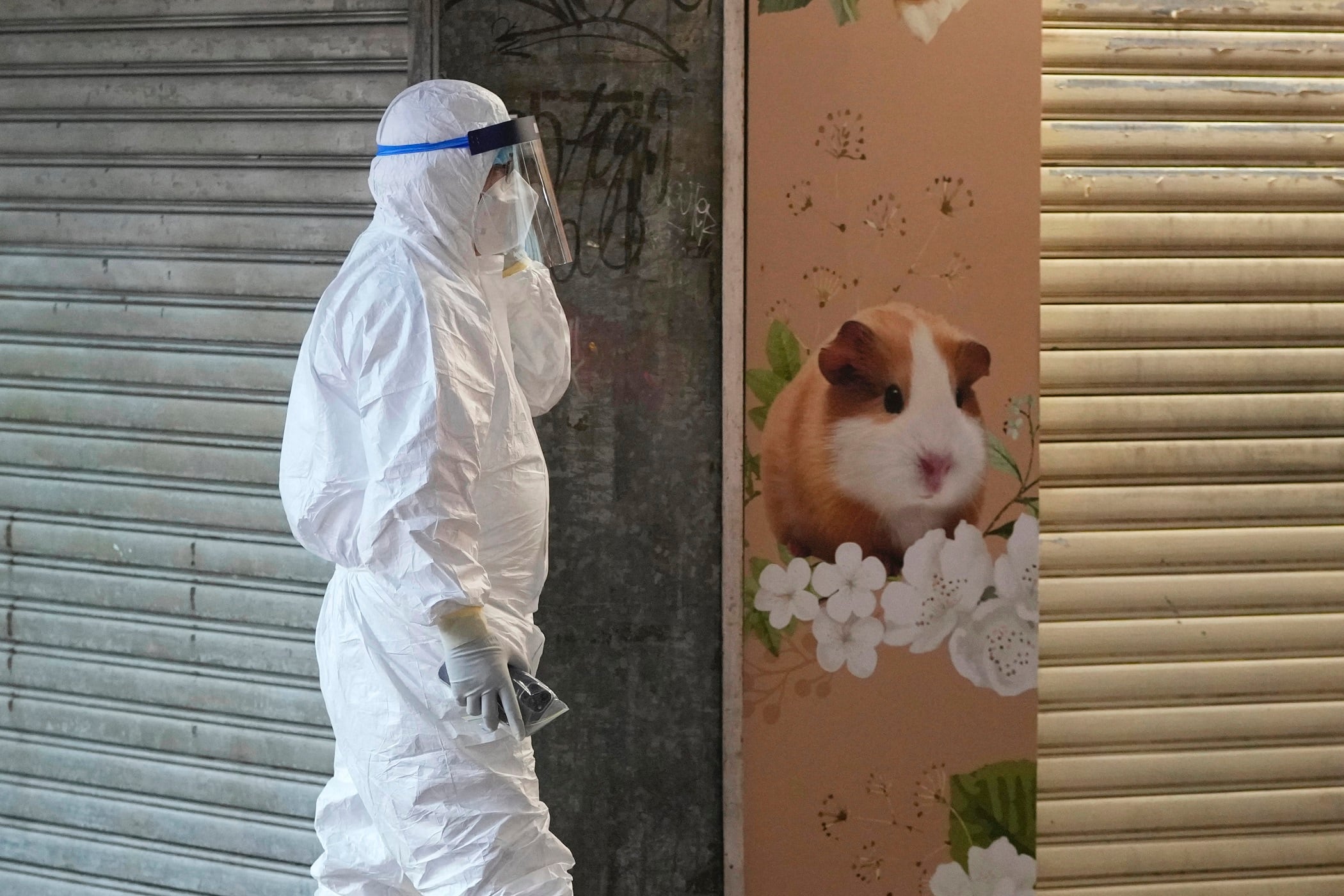
Hong Kong authorities say they will kill about 2,000 small animals, including hamsters, after several tested positive for the coronavirus at a pet store where an employee was also infected.
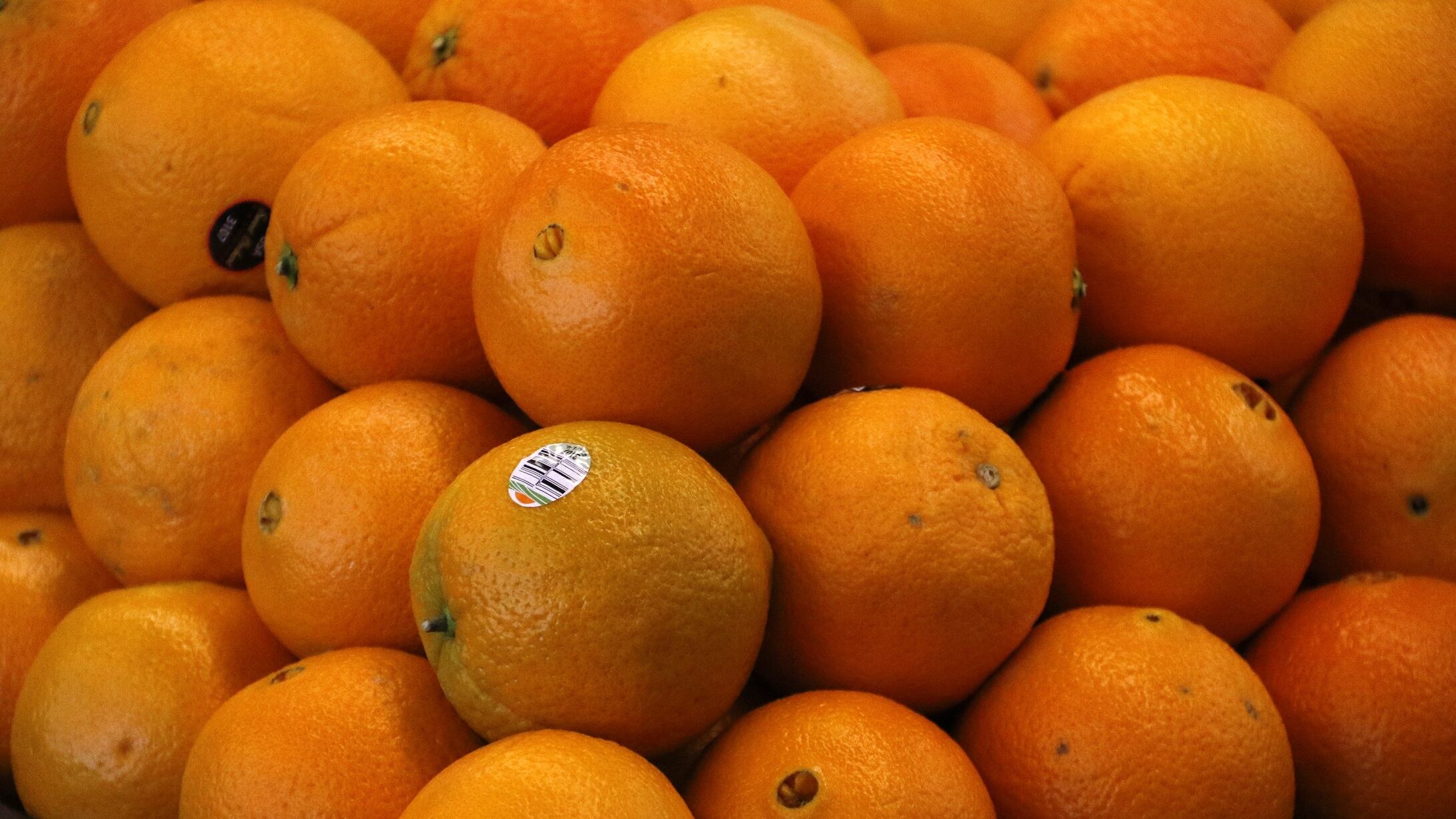
Senate takes on voting rights, orange juice is about to get more expensive, and Silicon Valley takes on the crows. Here is all the news you Need2Know for Tuesday, January 18, 2021.
As food prices continue to rise, the cost of eating at home is starting to outweigh the cost of eating out. According to the Labor Department, grocery prices jumped a whopping 6.5 percent in December, while restaurant prices rose only 6 percent. Daniel Ammen, the senior director of project management and purchasing at restaurant management company Front Burner Brands, joined Cheddar to discuss how its own restaurant, The Melting Pot, is navigating the cost differential and how its restaurants overall are dealing with ongoing staffing shortages.
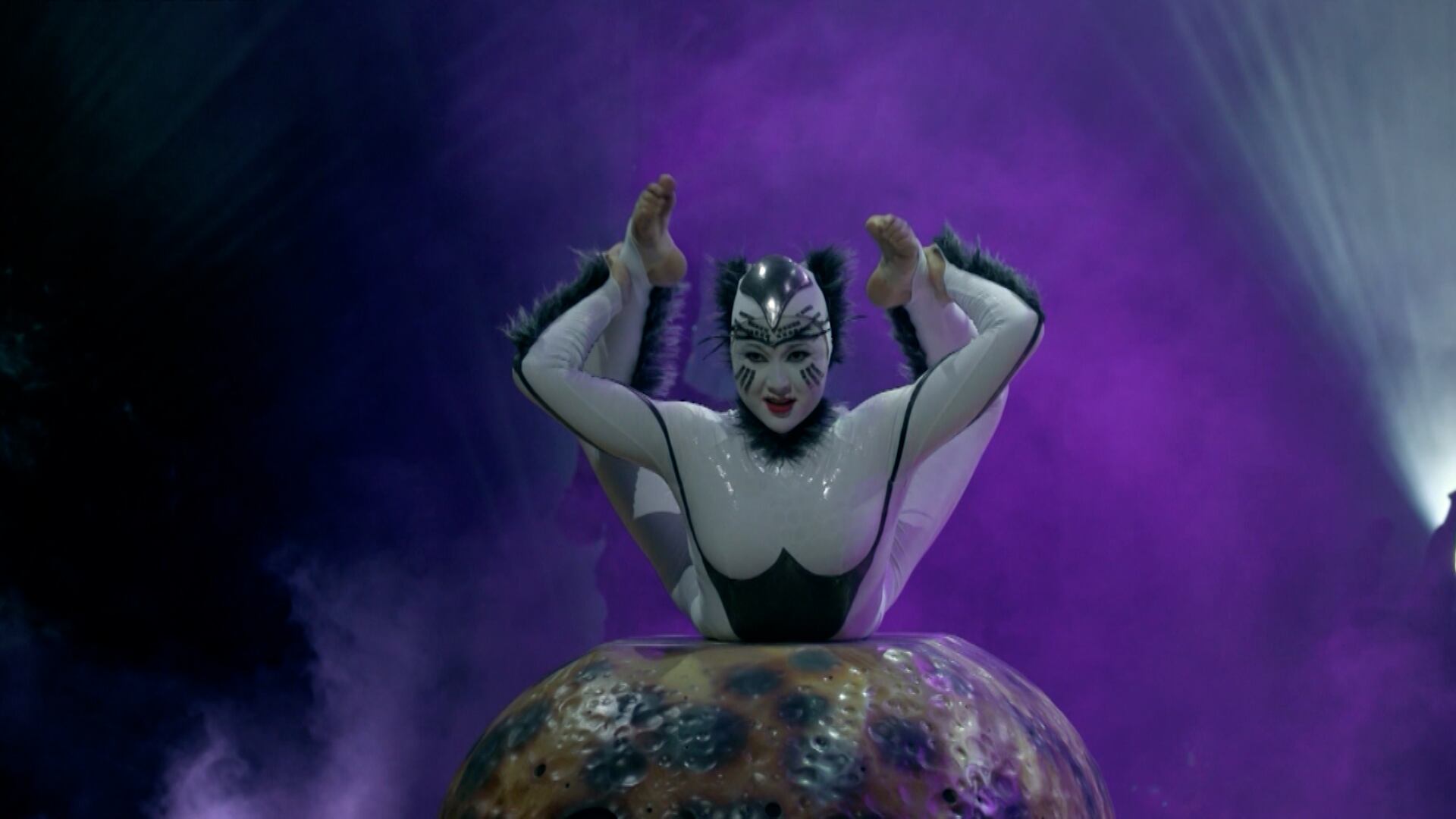
Svetlana Mitsuko Delous, dancer and aerial artist with Cirque Du Soleil, joins Cheddar News to talk about the return of the OVO show at the Microsoft Theater in Los Angeles this March.
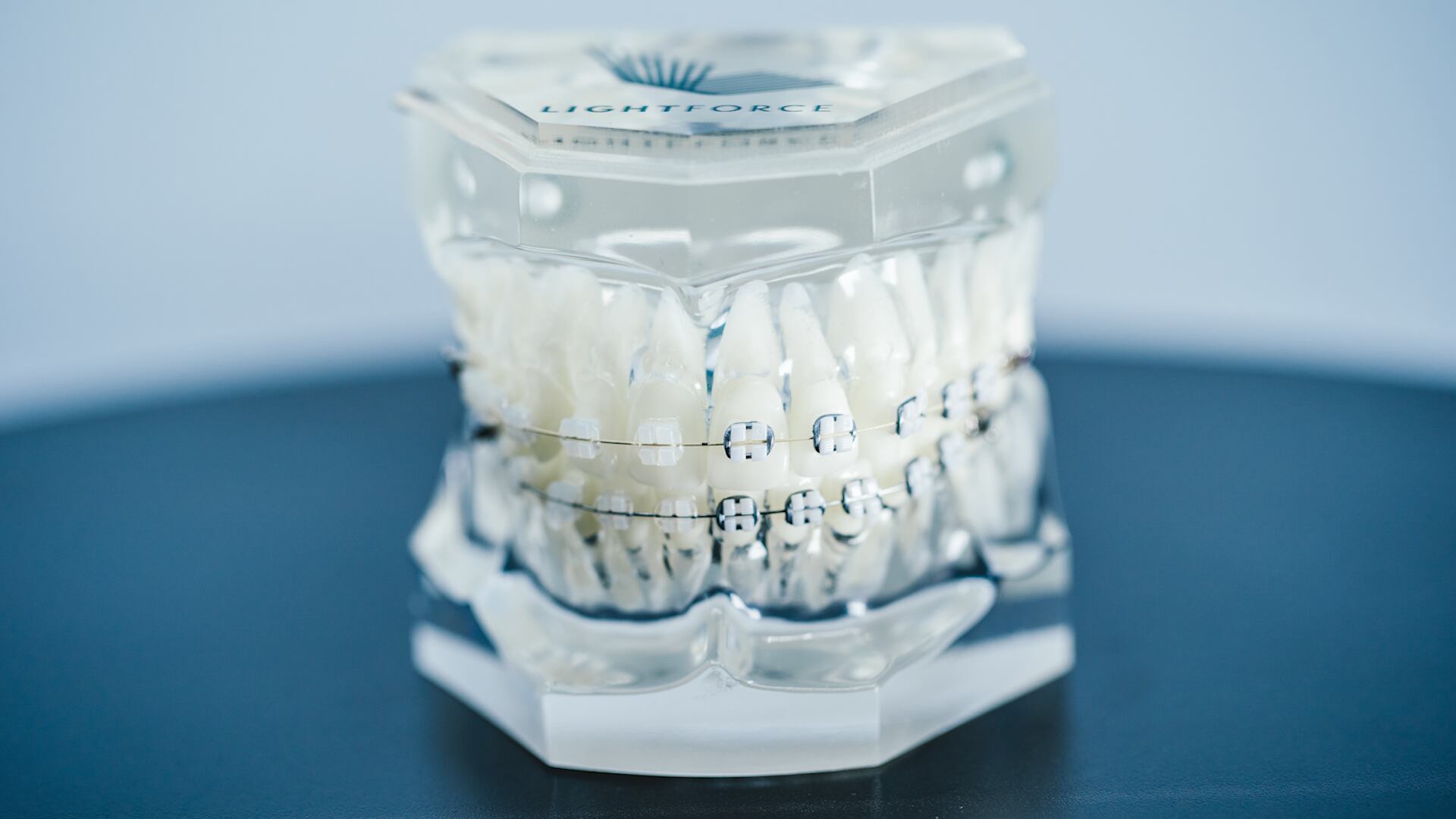
Alfred Griffin, the CEO and Co-Founder of LightForce, joins Cheddar Innovates to discuss how 3D printing is making braces more affordable and personalized, and what this means for the future of orthodontics.
Alex Garden, Chairman and CEO at Zume, joins Cheddar Innovates to discuss how individuals can take steps to end their reliance on plastic, and Zume's partnership with global robotics company ABB to put sustainability at the forefront.