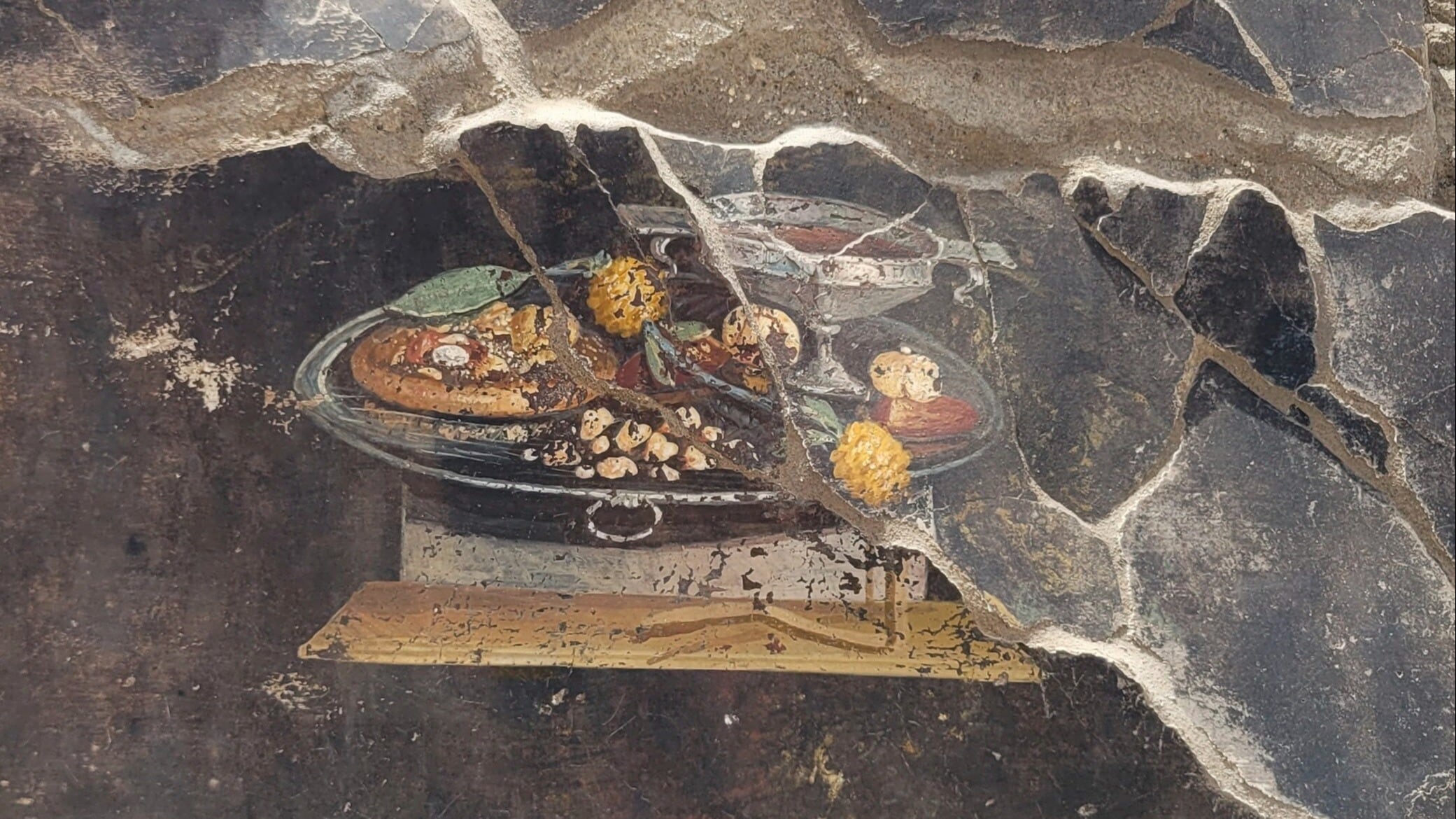
This picture provided on Tuesday, June 27, 2023, by the Pompeii Archaeological Park shows the wall of an ancient Pompeian house with a fresco depicting a table with food. The fresco was found in the atrium of a house in Insula 10 of Regio IX under excavation, to which a bakery was annexed, already partially explored between 1888 and 1891 and whose investigations were resumed last January. (Pompeii Archaeological Park via AP, ho)
A still-life fresco discovered recently in the Pompeii archaeological site looks like a pizza, but it's not, experts at the archaeological site said Tuesday.
They noted that key ingredients needed to make Italy's iconic dish — tomatoes and mozzarella — were not available when the fresco was painted some 2,000 years ago.
Tomatoes were only introduced to Europe from the Americas a few centuries ago, and some histories have it that the discovery of mozzarella led directly to the invention of pizza in nearby Naples in the 1700s.
The image is instead believed to be a focaccia covered with fruit, including pomegranate and possibly dates, finished with spices or a type of pesto, experts said. In the fresco, it is served on a silver plate and a wine chalice stands next to it.
The contrast of the frugal meal served in a luxurious setting, denoted by the silver tray, is not unlike modern-day pizza, “born as a poor-man’s dish in southern Italy, which has won over the world and is served even in starred restaurants," said Gabriel Zuchtriegel, director of the Pompeii archaeological site.
The ancient Roman city of Pompeii was destroyed in the eruption of nearby Mount Vesuvius in 79 A.D. The sudden and deadly event left much of the structure intact, embalmed in volcanic ash, and the site is now a major archaeological project and tourist attraction.
The Coldiretti ag lobby immediately seized on the discovery of the fresco to promote pizza — invented as a quick meal for the working poor — as a national treasure. Today, pizza represents one-third of the food budget of foreign visitors and generates total annual revenues of 15 billion euros ($16.4 billion) in Italy.
The art of the Neapolitan pizzamaker was put on UNESCO’s intangible cultural heritage list in 2017, recognized for its four phases of dough preparation and for being baked exclusively in a wood oven at 485 degrees Celsius (905 degrees Fahrenheit.)
Online tutoring service Paper recently raised $270 million in a Series D funding round. Paper says its online platform serves nearly two million students and offers unlimited, 24/7 academic support via its multilingual tutors. The company partners directly with school districts instead of families, and says this allows it to provide personalized tutoring to all students regardless of their socioeconomic status. Philip Culter, co-founder and CEO of Paper, joined Cheddar News' Closing Bell to discuss.
As we celebrate Black History Month, Cheddar is highlighting prominent Black Americans who are carving their own historic paths and trailblazing in their fields. Today we feature activist Tamika Mallory.
More money to battle COVID-19, ViacomCBS gets a new name - again, and some Nintendo are angry! Here is all the news you Need2Know for Thursday, February 17, 2022.
As coronavirus cases decline, many people are going out again, eating at restaurants, taking long-delayed vacations, attending concerts, and more. But, despite social activities returning to normal, many companies are still working remotely. In fact, only a third of U.S. employees have returned to the office, according to Kastle Systems, which monitors building-access cards. Brian Kropp, chief of research for Gartner's HR practice, joined Cheddar's Opening Bell to discuss the state of the return-to-work debate.
Swedish electric motorcycle maker Cake says its mission is to inspire society to adopt a zero-emission lifestyle. The company admits this is a lofty goal that covers a lot of ground - so it's starting with the world of urban mobility and last-mile deliveries. The company also has an agreement in place with NorthVolt to continually improve the environmental impact of batteries for electric vehicles. Stefan Ytterborn, Founder & CEO of Cake, joins Cheddar Climate to discuss.
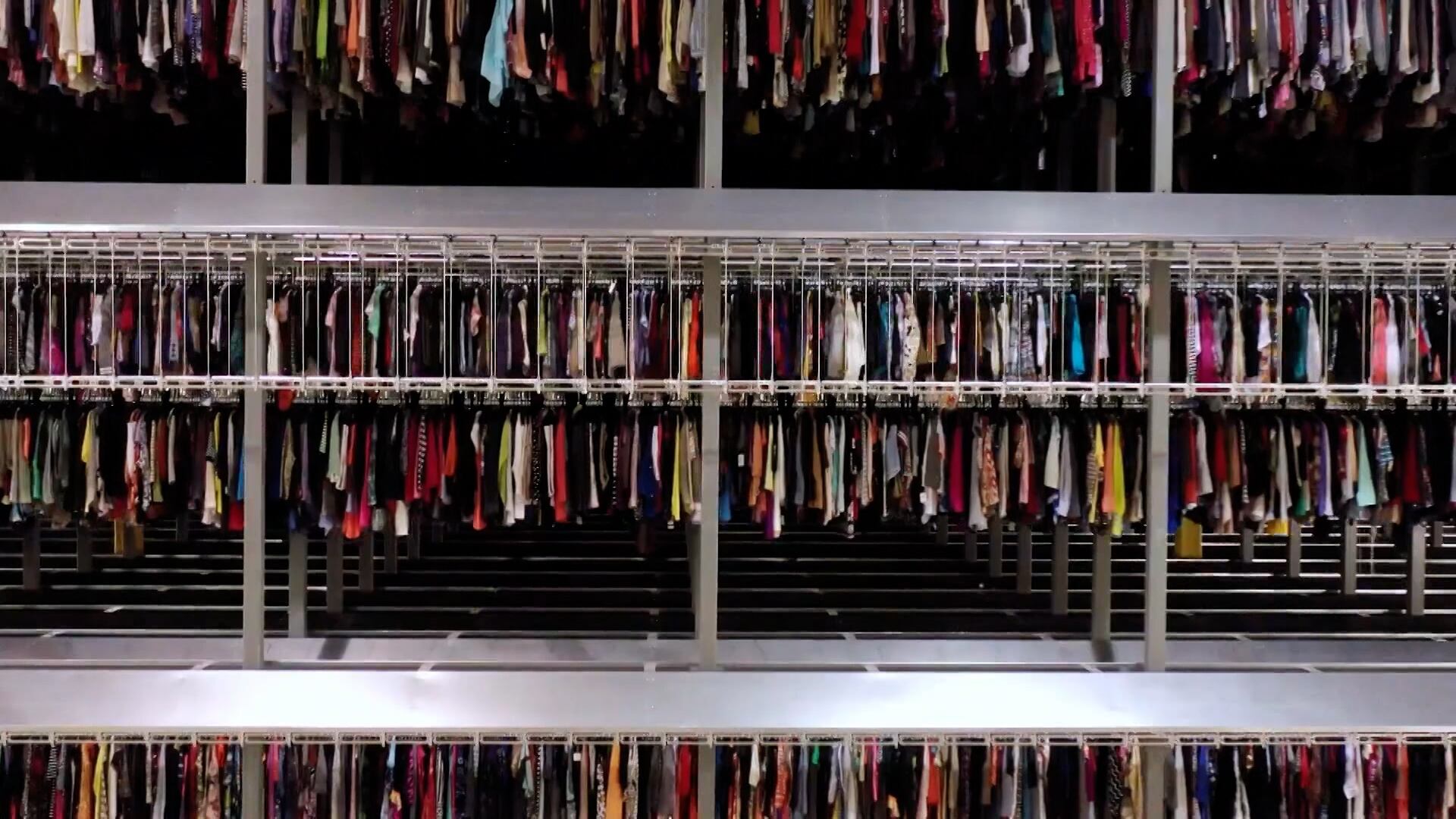
One retailer and publicly-traded company says it is on a mission to inspire a new generation of consumers to think secondhand - first. thredUP is one of the world's largest resale platforms for women's and kids' apparel, shoes, and accessories. The company says it is changing the way consumers shop and ushering in a more sustainable future for the fashion industry. Anthony Marino, President of thredUP, joins Cheddar Climate to discuss.
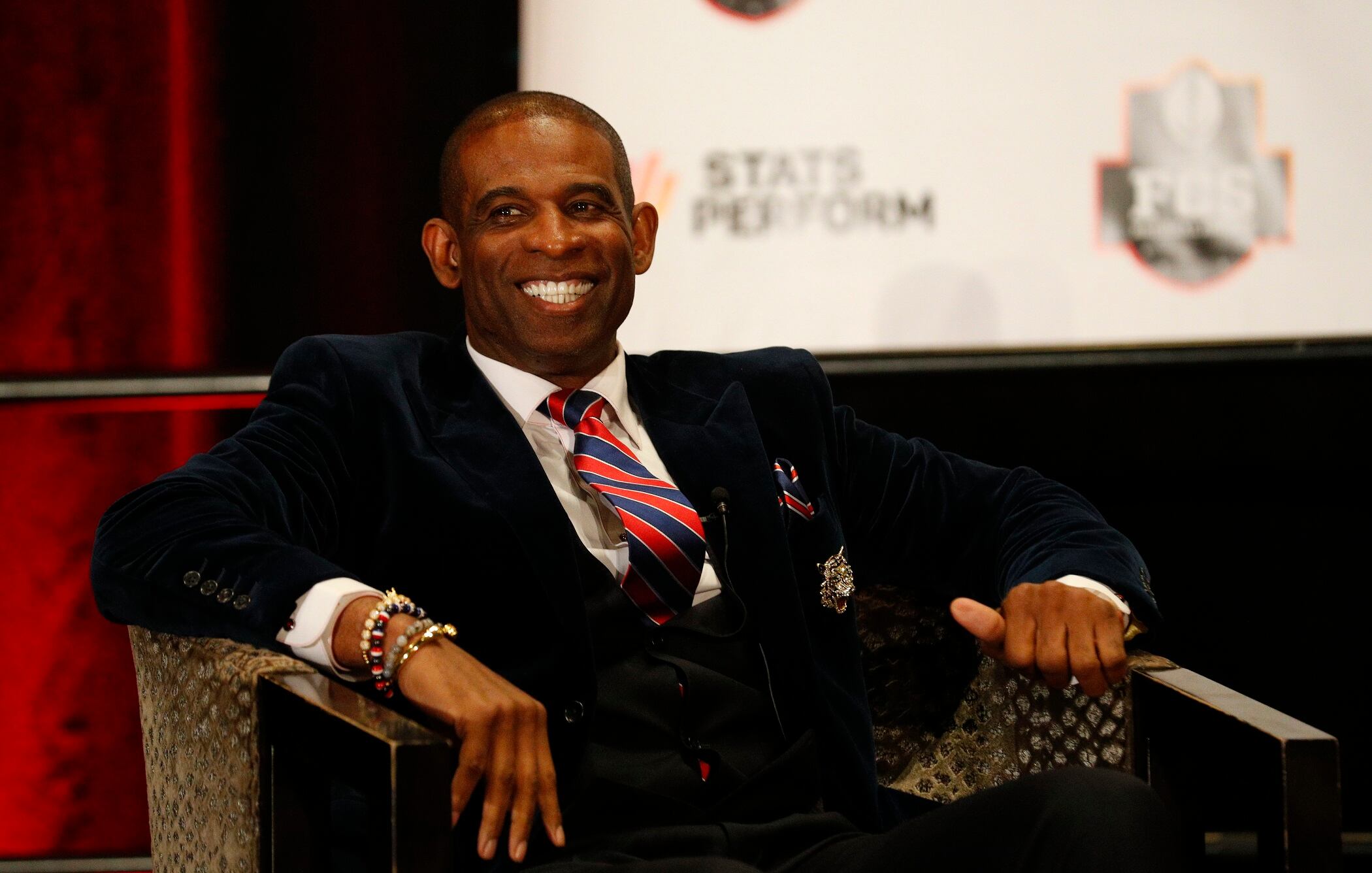
As we celebrate Black History Month, Cheddar is highlighting prominent Black Americans who are carving their own historic paths and trailblazing in their fields. Today we feature NFL all-time great and current college coach Deion Sanders.
Prince Andrew settles with Epstein victim, BlockFi is fined $100 million, and we all turned back into the Super Bowl this year. Here is all the news you Need2Know for Wednesday, February 16, 2022.
As we celebrate Black History Month, Cheddar is highlighting prominent Black Americans who are carving their own historic paths and trailblazing in their fields. Today we feature poet and activist Amanda Gorman.