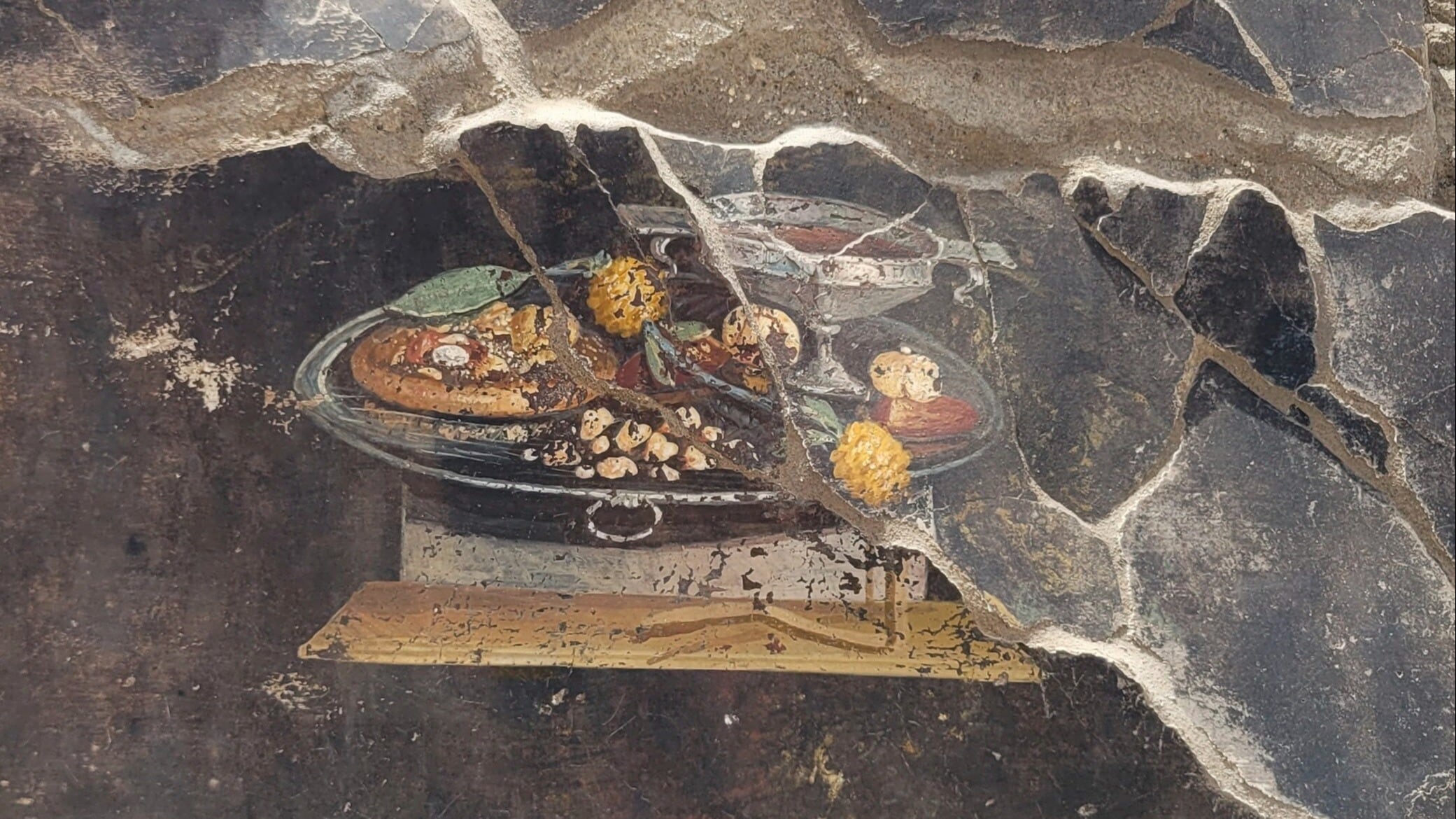
This picture provided on Tuesday, June 27, 2023, by the Pompeii Archaeological Park shows the wall of an ancient Pompeian house with a fresco depicting a table with food. The fresco was found in the atrium of a house in Insula 10 of Regio IX under excavation, to which a bakery was annexed, already partially explored between 1888 and 1891 and whose investigations were resumed last January. (Pompeii Archaeological Park via AP, ho)
A still-life fresco discovered recently in the Pompeii archaeological site looks like a pizza, but it's not, experts at the archaeological site said Tuesday.
They noted that key ingredients needed to make Italy's iconic dish — tomatoes and mozzarella — were not available when the fresco was painted some 2,000 years ago.
Tomatoes were only introduced to Europe from the Americas a few centuries ago, and some histories have it that the discovery of mozzarella led directly to the invention of pizza in nearby Naples in the 1700s.
The image is instead believed to be a focaccia covered with fruit, including pomegranate and possibly dates, finished with spices or a type of pesto, experts said. In the fresco, it is served on a silver plate and a wine chalice stands next to it.
The contrast of the frugal meal served in a luxurious setting, denoted by the silver tray, is not unlike modern-day pizza, “born as a poor-man’s dish in southern Italy, which has won over the world and is served even in starred restaurants," said Gabriel Zuchtriegel, director of the Pompeii archaeological site.
The ancient Roman city of Pompeii was destroyed in the eruption of nearby Mount Vesuvius in 79 A.D. The sudden and deadly event left much of the structure intact, embalmed in volcanic ash, and the site is now a major archaeological project and tourist attraction.
The Coldiretti ag lobby immediately seized on the discovery of the fresco to promote pizza — invented as a quick meal for the working poor — as a national treasure. Today, pizza represents one-third of the food budget of foreign visitors and generates total annual revenues of 15 billion euros ($16.4 billion) in Italy.
The art of the Neapolitan pizzamaker was put on UNESCO’s intangible cultural heritage list in 2017, recognized for its four phases of dough preparation and for being baked exclusively in a wood oven at 485 degrees Celsius (905 degrees Fahrenheit.)
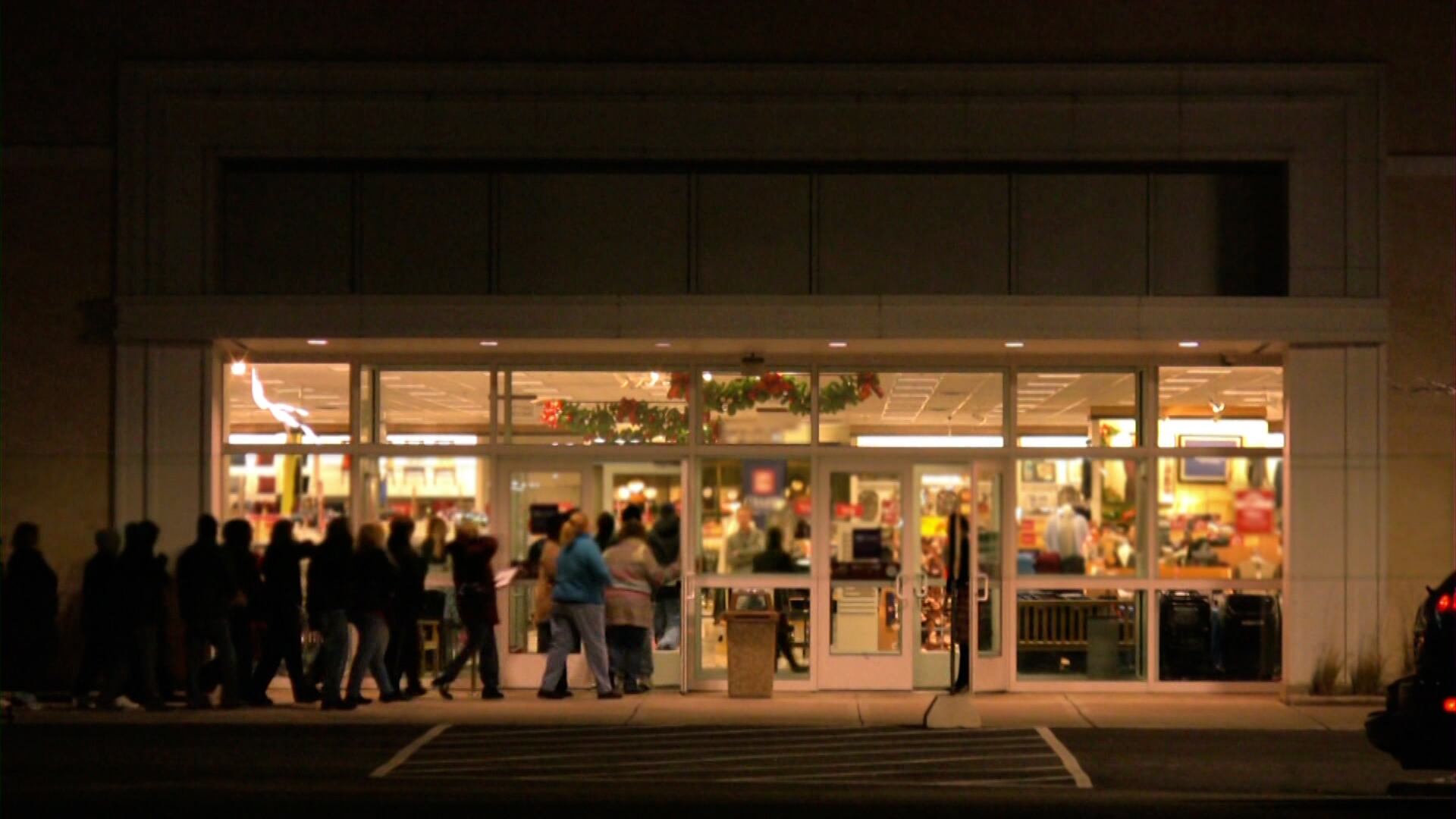
The typical holiday rush to malls and other retail outlets on "Super Saturday" fell by 26 percent compared to 2019. Melissa Gonzalez, CEO and founder of retail strategist Lionesque Group, told Cheddar that shopping habits had already been changing. "I just think there's a shift in general. And then there's just a lot more pre-planning, and I don't think that's going to go away," she said. "You saw a lot of holiday gift guides go out earlier and deals go out earlier, so I think that's just going to be a trend going forward." She also discussed how cryptocurrency is going to play a role in retail in 2022.
Jeanenne Tornatore, travel expert, media personality, content creator, and former Orbitz senior editor, joins Cheddar News' Closing Bell, where she runs through items flyers should be mindful of this holiday season as the omicron coronavirus variant continues to spread.
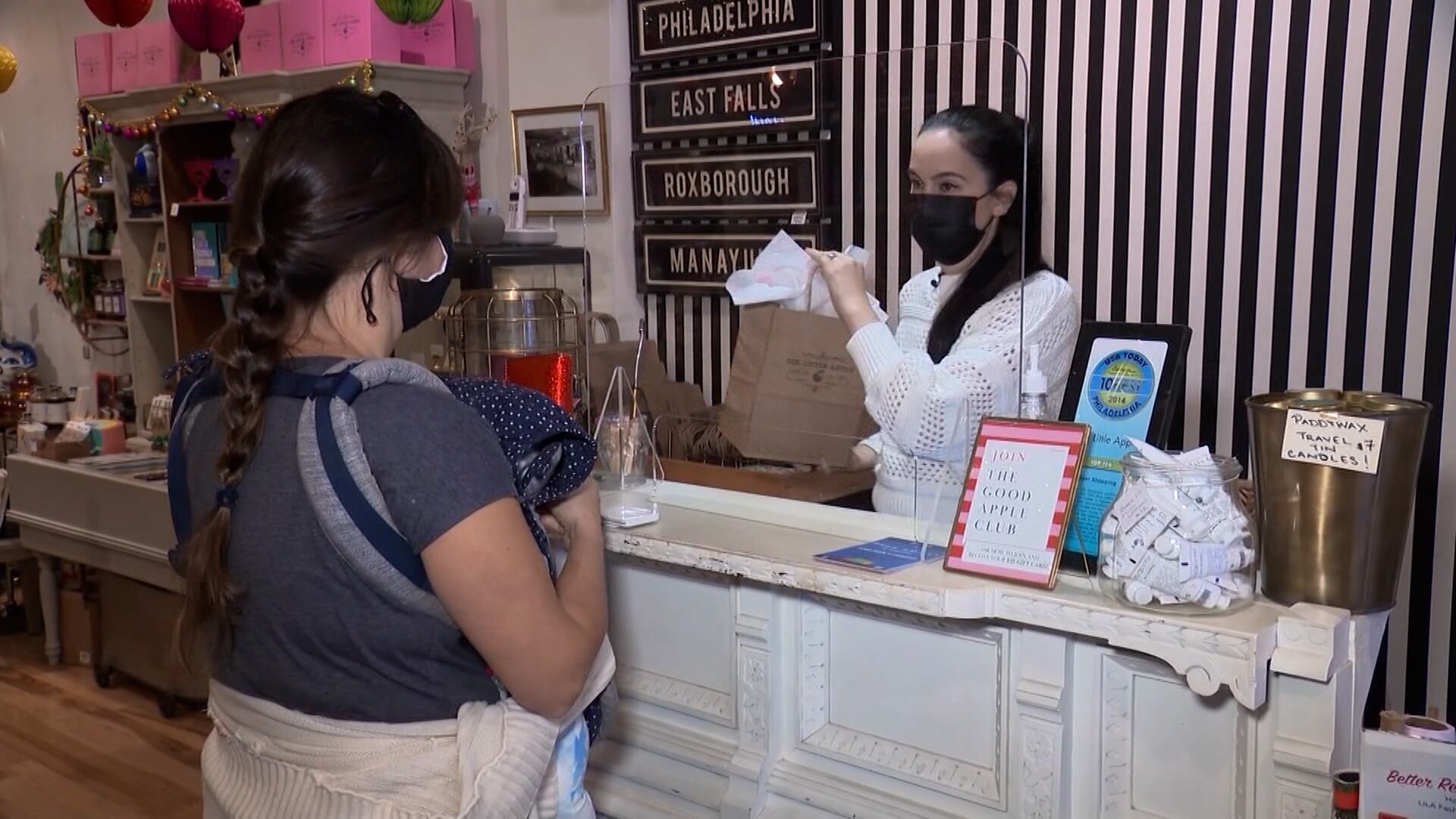
With only two days left until Christmas, last-minute shoppers are facing major issues caused by supply chain shortages and the rising omicron variant. Kristen Gall, president of Rakuten Rewards, joins Cheddar News to discuss.
Waze launched its first-ever "Year in Rear View" survey. Andrew Stober, Waze Head of Public Partnerships and Carpool, takes a look back at the year in travel to see the places we drove the most, the books and music that kept us entertained, and what we can expect in 2022.
Juan Perez Jr., education reporter for Politico, breaks down why Black Americans are leaving Chicago and how political controversy is impacting representation.
Marvel's "Spiderman: No Way Home" is the third highest-grossing film of the year and could be the only one to reach the $1 billion mark of 2021 with ticket sales already surpassing $750 million.