Flying in the age of coronavirus comes packed with uncertainty about the health status of fellow travelers. Now, Florida's Tampa International Airport is running a pilot program that offers on-the-spot COVID-19 tests for travelers.
With more than 120 people participating in the optional testing per day, Joe Lopano, Tampa International Airport CEO, said the program is showing promising results.
"We've had some customers who have tested positive and Baycare, the healthcare professionals, have a discussion with that passenger and tell them that they should not continue on their way and passengers have accepted it," Lopano told Cheddar.
The airport offers two tests, the $125 PCR nasal swab, which usually takes 3 to 4 days to yield results, and the $50 rapid Antigen test. The cost of both tests, Lopano said, can be covered by insurance companies if travelers provide a receipt from the airport.
Testing at the airport, according to Lopano, will not have much impact on overall travel time. In fact, those not checking a bag only need to account for an additional 30 minutes as a cushion, he added.
"It's immediate testing. Sometimes you have to wait in a short line. You'll get your results in 15 minutes, so it really is not a very time-consuming function and it's very convenient," Lopano said.
While other airports have implemented testing for specific destinations, Lopano said Tampa is the first to offer widespread testing for passengers on all flights arriving and departing. The pilot program is likely to continue running through the holiday season as the number of participants and customer satisfaction is assessed.
For Lopano, offering a testing site at the airport is not only maintaining passenger safety but can also help revitalize a struggling travel industry that is fighting to get customers off the ground.
"It's a high priority because we need to do whatever we can to create confidence in the travel experience and now that widespread testing is available, the technology is available, what better way to do that than right at the airport," he said.
David Stryzewski, CEO of Sound Planning Group, joins Cheddar News' Closing Bell, where he says he believes pent-up demand is driving stocks higher and explains how Wednesday's Fed decision continues to impact investor sentiment.
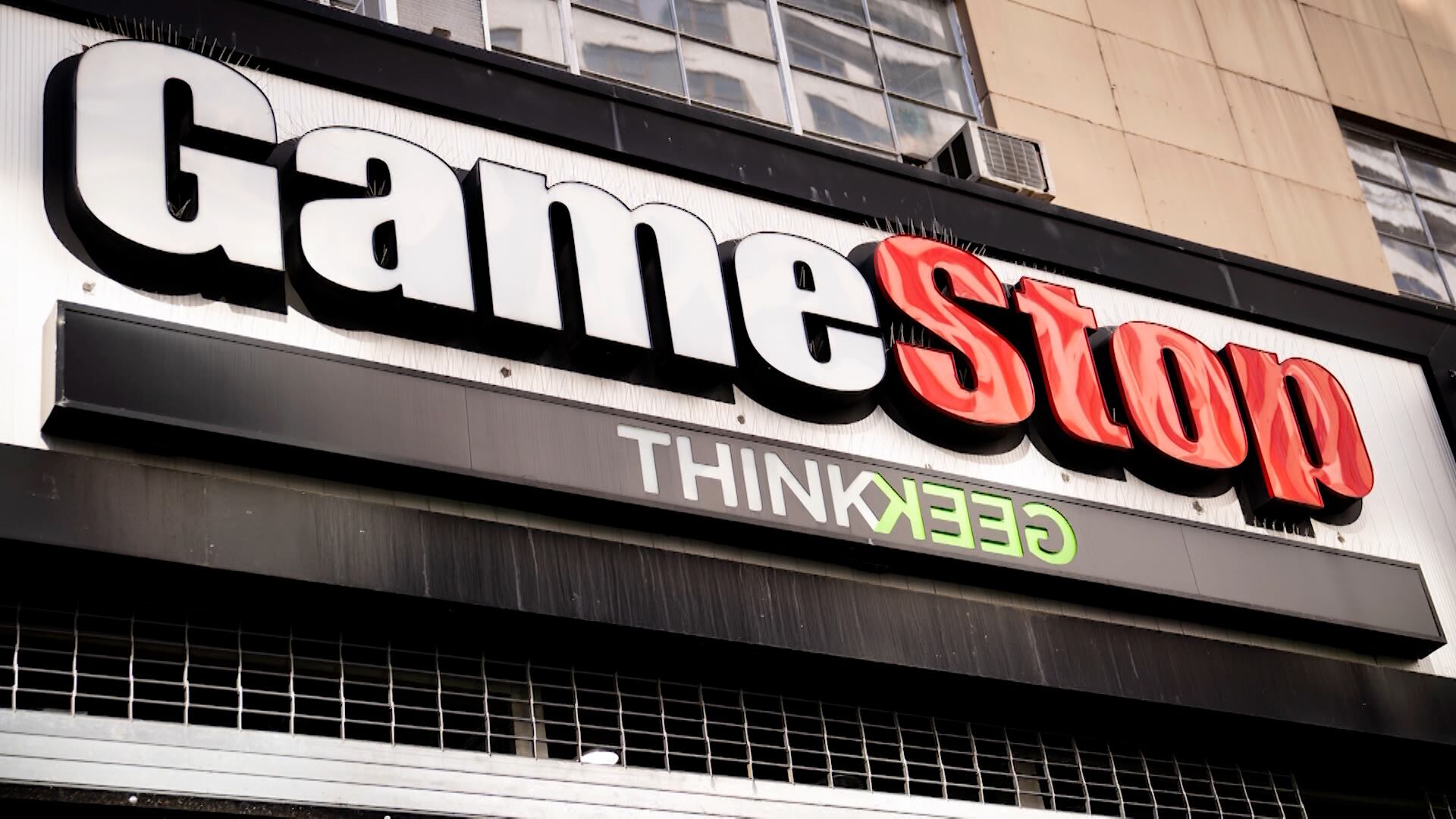
Mario Stefanidis, Vice President of Research at Roundhill Investments, joins Cheddar News' Closing Bell, where he explains why shares of GameStop soared on Wall Street despite mixed results. Stefanidis also breaks down GameStop's NFT plans, which the company is expected to launch over this summer.
Neonvest is a platform connecting startups and entrepreneurs with experts in the VC space. The startup says it's in the process of raising a seed round of approximately $2.5 million from a mix of angel and institutional investors. Aakash Shah, co-founder of NeonVest, joins Cheddar News' Closing Bell to discuss.
The Russia-Ukraine conflict is becoming a global one: as the West isolates Russia's economy with sanctions and China contemplates an alliance of sorts with Russia, global trade relationships and globalization as we know it could change dramatically. John Leer, Chief Economist at Morning Consult, joins Closing Bell to discuss what the invasion means for globalization, global trade and growth, the U.S. economy and consumer, and more.
March Madness kicked off this month as more and more states are legalizing sports betting — and some major upsets almost immediately busting many a bracket. Jay Croucher, the director of trading at the sportsbook PointsBet, joined Cheddar News to talk about the tournament and the current top picks. "There's not too much difference in terms of the busiest days of the year between the Super Bowl and the first day of March Madness," he said.
The Bill Gates-founded Breakthrough Energy company invested $80 million in Verdox Inc. to facilitate efficient, lower-cost technolog to remove carbon from the air and emission sources. CEO of Verdox, Brian Baynes, joined Cheddar News to discuss the investment, how the company's tech works, and where he sees it going. "We anticipate that with technologies like ours, we potentially can get to the scale of about a million tons per year within 5-10 years," he said. "And then ultimately we need to be doing this at the scales of billions of tons per year and ultimately about 10 billion tons per year in the year 2050."
Amazon closed its deal to buy MGM's many content brands for $8.5 billion, and Michael Pachter, a managing director at Wedbush Securities, joined Cheddar News to discuss the e-commerce giant's second-largest acquisition to date and how he thinks it will all pay off. "To make a movie today, you just can't even think about it for less than 30 million bucks, so 4,000 movies, I mean that's several billion dollars worth of assets," he said, noting how it would also add to Amazon's little-known ad-supported IMDb TV service. "I don't know that the IMDb TV guys actually talk to the Amazon Prime Video guys, but a lot of content, it makes the value of a Prime subscription much, much greater, and people are far, far less likely to churn even if they're only buying one package every three months."